
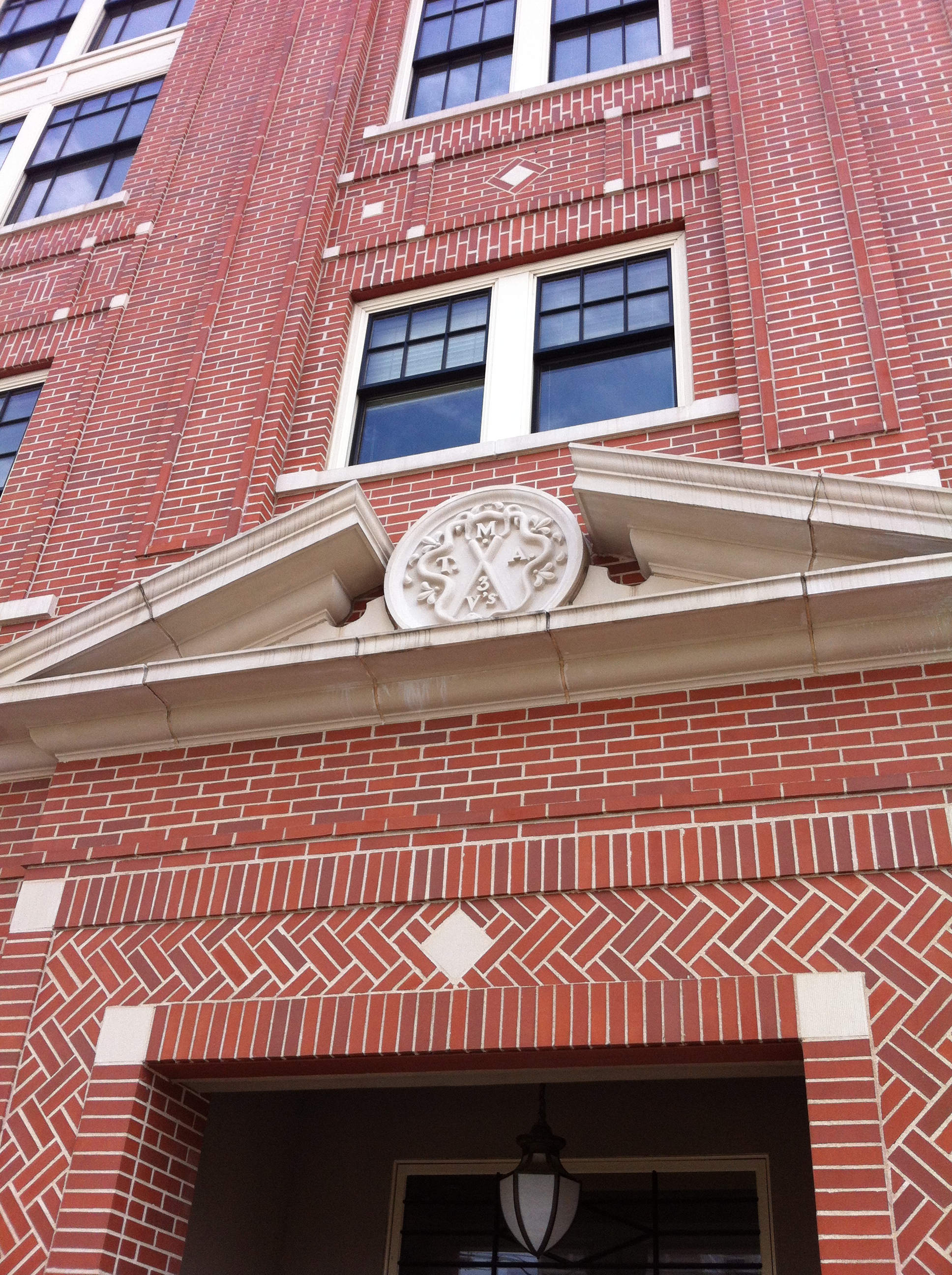
 As part of Arkansas Heritage Month, today’s Architeaser focuses on the cornice over the entrance to the Mosaic Templars Cultural Center.
The Mosaic Templars Cultural Center began as a dream by community leaders who had grown up attending events at the Mosaic Templars of American National Grand Temple. This had been a centerpiece of African American life not just for Little Rock but for the mid-south.
In 1992, the building was slated for demolition so that a fast-food restaurant could be built on the lot. In late 1993, the City of Little Rock purchased the building for $110,000 to save it from demolition as organizers were raising funds for the restoration. In 2001, the City transferred ownership to the State of Arkansas for the establishment of the Mosaic Templars Cultural Center.
Originally, the Center planned to restore the 1913 Mosaic Templars of America National Grand Temple, but the original building was destroyed by fire in March 2005. The new 35,000 square feet interior is a state-of-the-art museum complex with exhibits, classroom, staff offices, and an Auditorium that seats 400 people. The façade of the new structure is a facsimile of the 1913 building complete with the Annex building façade, which burned in 1984.
The cornice which is featured today is a copy of the original cornice. The original cornice, as well as the cornerstone, are some of the few things which survived the 2005 fire. The original cornice is on display.
A museum of the Department of Arkansas Heritage, the Mosaic Templars Cultural Center is dedicated to collecting, preserving, interpreting, and celebrating African American history, culture and community in Arkansas from 1870 to the present, and informs and educates the public about black achievements – especially in business, politics and the arts.
Through special events, education programs, ongoing research and exhibits such as the Arkansas Black Hall of Fame, the museum celebrates Arkansas’s African American heritage. Tours of the museum provide a detailed look at the history of African Americans in Little Rock and Arkansas.
 Little Rock Culture Vulture