
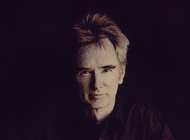
 Tonight at 8, the Oxford American magazine presents the final concert of their 2014-2015 Jazz Series at South on Main, featuring the Bennie Wallace Quartet!
The OA jazz series is sponsored by the University of Central Arkansas College of Fine Arts and Communication. Doors open at 6:00 PM with dinner and drinks available at that time. The concert begins at 8:00 PM.
Single tickets are $30 for reserved seats at tables and $20 for general admission. Purchasing a reserved seat assigns you to a specific guaranteed seat at a table. However, seating at tables is family-style, and unless you purchase the entire table, you will be seated with other patrons. General admission tickets are good for barstools and standing room, available on a first-come, first-served basis. For ticketing questions, please contact Metrotix at (800) 293-5949.
An improbable combination of the old masters’ deep, impetuous sound on one hand and a nearly avant-garde approach to phrasing and intervals on the other, Bennie Wallace has been hailed by the New York Arts Journal as “the most important reed player since Dolphy’s and Coleman’s startling work in the early sixties.”
In January 1999, DownBeat magazine described Wallace as “a modernist who understands the past.” Wallace possesses an uncommon knowledge of the music of his predecessors—not just Dolphy, Coltrane, and Coleman, but their mentors as well. Wallace has spent a great deal of time studying early saxophone masters such as Hawkins, Johnny Hodges, Ben Webster, and Don Byas. Assimilating much of the history of his instrument, he has remolded it into a unique personal style that defies easy categorization. It is a style that, while reflecting its heritage, is fresh sounding and contemporary. Wallace’s tone is full and resonant, whether articulating a post-bop expressionism or a quiet romanticism. His prodigious technique is indispensable to an approach that, at fast tempos, explores the extremes of the instrument with virtuosic arpeggios, scales, and melodic fragments, but on ballads transforms into a warm, often delicate lyricism.
Bennie Wallace the composer complements Wallace the performer. While Wallace’s written music reflects many of the myriad streams of twentieth-century composition—including the French Impressionists and American classical composers, as well as Ellington and Strayhorn and such songwriters as Gershwin, Porter, and Kern—it, like his playing, is also informed by improvising jazz musicians, from Armstrong to the present.
 Little Rock Culture Vulture