Black History Month – Dave Chappelle at Robinson Center

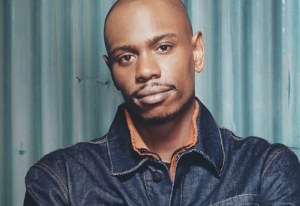
davechappelleOn June 13, 2012, comedian Dave Chappelle appeared at Robinson Center as he was just starting to emerge from a several year self-imposed hiatus.  The night before the Little Rock stint, he had appeared in Memphis.

Lindsey Millar wrote a review of Chappelle’s show which is available here (and has been referenced elsewhere as others scratched their heads from his appearances at other places).  A YouTube video shows Chappelle reacting to the crowd at Robinson calling the Hogs.  He was amused/confused.

Born in Washington DC to two academics, he was raised in Maryland.  He graduated from Washington’s Duke Ellington School of the Arts, where he studied theatre.  He then moved to New York City to pursue a career as a comedian.  He also started acting in movies and toured as an opening act for Aretha Franklin.  As his profile rose, he started making appearances in TV shows and movies in addition to performing stand up.

In 2003, he launched the “Chappelle’s Show” on Comedy Central.  After two successful seasons, he walked off the set during planning for a third season, which cost him a $50 million contract.

From 2006 to 2013, he made a few appearances in stand-up shows and gave a few interviews.  But most of the time he kept a low profile.  Since 2013, he has slowly started making more appearances. In 2014, he appeared on TV programs to promote a Radio City Music Hall appearance.  He also acted in the 2015 film Chi-Raq.  In November 2016, he hosted “Saturday Night Live.”


Black History Month – Maya Angelou and Robinson Center

1414mayaOn February 23, 1998, Maya Angelou appeared with the Arkansas Symphony Orchestra in a concert at Robinson Center.  The evening featured Dr. Angelou narrating Joseph Schwantner’s tribute to Dr. Martin Luther King Jr., “New Morning for the World.”

Dr. Angelou, a former resident of Stamps, Arkansas, was not a stranger to Little Rock. She had appeared before at Wildwood Park and would later appear at the Clinton Presidential Center.

A former Poet Laureate of the United States and Tony nominated actor, she won a Grammy Award for her reading of “On the Pulse of the Morning” which had been written for the first inauguration of Bill Clinton as President of the United States.

A poet, author, educator, dancer, singer, actor, and activist, she wrote seven autobiographies. The most notable was arguably I Know Why the Caged Bird Sings.  Born in St. Louis, she spent part of her childhood in Arkansas before moving to California.  She led a peripatetic life both geographically and career-wise ending as a professor at Wake Forest and residing in North Carolina.  It was there that she died in May 2014.

Black History Month – Andre Watts at Robinson Center

andre-wattsClassical pianist Andre Watts has performed at Robinson Center with the Arkansas Symphony Orchestra.

In 1963, 16 year old Andre Watts won a piano competition to play in the New York Philharmonic’s Young People’s Concert at Lincoln Center, conducted by Leonard Bernstein.  Within weeks of the contest the renowned conductor tapped Watts to substitute for the eminent but ailing pianist Glenn Gould, for a regular performance with the New York Philharmonic Orchestra. The performance was televised nationally, with Watts playing Liszt’s E-flat Concerto, and his career was launched.

Born in Germany to an American soldier and a Hungarian mother, he grew up on military bases.  At age 8, his family moved to Philadelphia. Following his 1963 performance, he won a Grammy in 1964 (at age 17) for Best New Classical Artist.

Since the 1960s, he has maintained a busy concert schedule. Along the way, he played for President Nixon’s first inaugural concert, graduated from college, been featured on PBS Live from Lincoln Center, toured Japan and Europe and the US.  At age 26, he received an honorary doctorate from Yale.  In 2004, he was appointed to the music faculty at the University of Indiana.  At age 70, he still performs concerts.  In 2011, he received the National Medal of the Arts.

Black History Month – Natalie Cole at Robinson Center

natalie-coleOn April 3, 2005, Natalie Cole performed at Robinson Center with the Arkansas Symphony Orchestra.  She also performed a retro-duet with her late-father, Nat King Cole.  As noted previously on this blog, he had graced the Robinson stage himself in the 1940s and 1950s.  Helaine Freeman from the Arkansas Democrat-Gazette noted that “Cole took her listeners through music genres that included a bit of jazz, a dash of blues and a fistful of R&B/pop.”

Cole was born in 1950 the daughter of the crooner and of singer Maria Hawkins Cole.  At age 6 she sang on her father’s Christmas album and started performing publicly at age 11.  After attending private schools, she attended both the University of Massachusetts and University of Southern California.  After college, she was signed with Capitol Records, her father’s label.  Her first album was released in 1975, which garnered her a Grammy Award for Female R&B Vocal Performance.

Throughout the 1970s, she had a series of successful albums. She became the first female singer to have two platinum albums in one year.  In the 1980s, her recording career slowed down, but by the late part of the decade, she had a resurgence.

In 1991, she recorded the album Unforgettable…with Love in which she sang songs her father had made famous.  The best known track was the title song, “Unforgettable” in which she dueted with him.  It won Album of the Year, Record of the Year, and Traditional Pop Vocal Performance of the Year at the Grammy Awards.

In the 2000s, she continued to sing and record switching between R&B and jazz genres.  She also started performing with symphony orchestras.

She cancelled several concerts in December 2015 and died on December 31, 2015.

Black History Month – Daisy Bates and Robinson Center

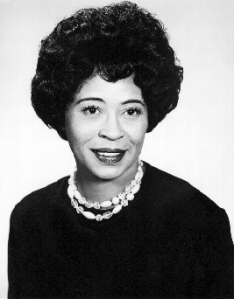
bates daisyToday is the Daisy Bates Holiday in the State of Arkansas.  So it is an appropriate day to pay tribute to Mrs. Bates, who played a leading role in the Little Rock Integration Crisis of 1957.

Daisy Lee Gatson Bates and her husband were important figures in the African American community in the capital city of Little Rock.  Realizing her intense involvement and dedication to education and school integration, Daisy was the chosen agent after nine black students were selected to attend and integrate a Little Rock High School.  Bates guided and advised the nine students, known as the Little Rock Nine, when they enrolled in 1957 at Little Rock Central High School. President Clinton presented the Little Rock Nine with the Congressional Gold Medal and spoke at the 40th anniversary of the desegregation while he was in office.

When Mrs. Bates died, a memorial service was held at Robinson Center on April 27, 2000.  Among the speakers were President Bill Clinton, Secretary of Transportation Rodney Slater, and Rev. Rufus K. Young, pastor of the Bethel AME Church.  Others in attendance included Lt. Gov. Winthrop Paul Rockefeller, Mayor Jim Dailey, Presidential diarist Janis Kearney, former senator and governor David Pryor, and five members of the Little Rock Nine:  Carlotta Walls Lanier, Ernest Green, Minnijean Brown Trickey, Jefferson Thomas, and Elizabeth Eckford.

It was during his remarks at the service that President Clinton announced he had asked that Bates’ south-central Little Rock home be designated as a national historic landmark.

Black History Month – Wiley Branton and Robinson Auditorium

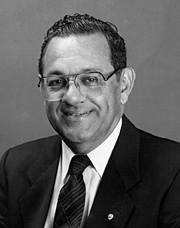
brantonMost of the people who are being featured this month have played at Robinson Center.  But today’s entry, Wiley A. Branton, Sr. worked to integrate Robinson Center.

In 1962, he filed a suit on behalf of several African American residents of Little Rock to integrate the City’s public facilities including Robinson Auditorium.  (The City Board and the Auditorium Commission were named in the lawsuit.)  In 1963, the decision came down and the facilities had to integrate.

This lawsuit was just one of many in which Branton paved the way for equal opportunities for all.  He helped desegregate the University of Arkansas School of Law and later filed suit against the Little Rock School Board in a case that went to the U.S. Supreme Court as Cooper v. Aaron.

A native of Pine Bluff, he graduated from what is now UAPB. After first being refused admission, he later became the fifth African American to attend the UA Law School and the third to graduate.  From 1953 to 1962, he had a law practice in Pine Bluff.  Between 1962 and 1965, Branton worked with representatives of the major African-American civil rights organizations to register almost 700,000 new black voters in eleven Southern states. Following that, he became executive director of the President’s Council on Equal Opportunity and help coordinate implementation of the Civil Rights Act of 1964. He spent 1965 to 1967 at the Justice Department, before becoming executive director of the United Planning Organization (UPO).  After working with a couple of other organizations, he returned to private practice in 1971.  In December 1977 it was announced that Branton would be the new dean of Howard University School of Law. After five years, he joined the law firm of Sidley and Austin in its Washington DC office.

Branton died of a heart attack in December 1988.  Eleven hundred mourners gathered at a memorial service at the Washington National Cathedral in Washington, D.C. Among those present was Supreme Court Justice Thurgood Marshall. The eulogy was delivered by Vernon E. Jordan, Jr..  Then-Gov. Bill Clinton spoke at the Pine Bluff memorial service for Branton.

Black History Month – Gladys Knight at Robinson Center

gladys-knight-14On February 18, 1995, Gladys Knight rocked the rafters of Robinson Center.  She returns to Robinson on April 3, 2017.

Georgia-born, Knight began performing gospel music at age four. After winning a national talent competition, she and some relatives formed a singing group called “The Pips.” Later it became known as Gladys Knight and the Pips.  The group debuted their first album in 1960, when Knight was just sixteen. W

ith Knight singing lead and The Pips providing lush harmonies and graceful choreography, the group went on to achieve icon status, having recorded some of the most memorable songs of the 1960s, 1970s and 1980s. Top 20 hits, like “Every Beat of My Heart,” “Letter Full of Tears,” “I Heard it Through the Grapevine” and “If I Were Your Woman,” “Neither One of Us (Wants to be the First to Say Goodbye),” “I’ve Got to Use My Imagination,” “Best Thing to Ever Happen to Me” and the #1 smash “Midnight Train to Georgia” established Gladys Knight and The Pips as the premiere pop/R&B vocal ensemble in the world.

In 1995, Knight earned her star on the Hollywood Walk of Fame, and the next year, Gladys Knight & The Pips were inducted into the Rock ‘N’ Roll Hall of Fame.  Knight published an autobiography, “Between Each Line of Pain and Glory” (a line taken from her million selling recording “Best Thing That Ever Happened to Me”), in 1997, and the next year, she and The Pips were presented with the Lifetime Achievement Award from the Rhythm & Blues Hall of Fame. In 2004, Knight received the “Lifetime Achievement Award” at the annual BET Awards ceremony. All told, Knight has recorded more than 38 albums over the years.