Black History Month – The National Black Political Convention at Robinson Center in 1974

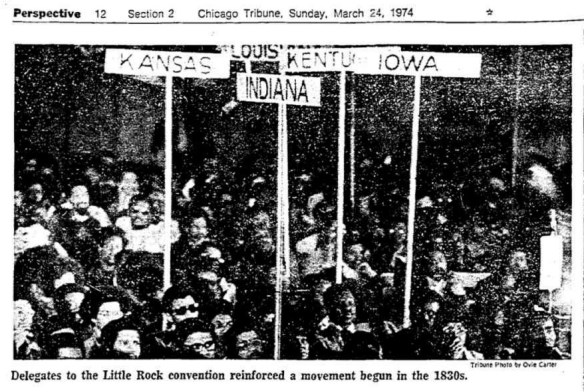
Chicago Tribune photo

Chicago Tribune photo

In March 1974, Little Rock hosted the second National Black Political Convention at the Joseph T. Robinson Auditorium and Camelot Hotel (now a Doubletree Hotel). The first convention was held in Gary, Indiana, in 1972, and garnered much publicity, producing a National Black Political Agenda that included demands for the election of a proportionate number of black representatives to Congress, community control of schools, and national health insurance.

There were approximately 1,700 delegates from 31 states at the Convention.

The Little Rock convention was co-convened by Congressman Charles Diggs of Detroit, Michigan; Mayor Richard Hatcher of Gary, Indiana; and poet Amiri Baraka. Plenary speakers included Atlanta Mayor Maynard Jackson and comedian and activist Dick Gregory. Jesse Jackson was also in town for the convention. The convention featured a testimonial and tribute to local civil rights leader Daisy Bates at Central High School.

The 1972 convention had called for African Americans to form their own party separate from the Democrats and Republicans.  Two years later, few elected leaders came to Little Rock.  As leaders of established political parties started to embrace African Americans, many seemed to find it more advantageous to participate within the party framework.

Some of the delegates to Little Rock expressed frustration.  They were not there, they told the press, to listen to speeches.  They were there to take actions.  Over 200 resolutions were submitted, which were difficult for the body to consider.

It was ironic that Daisy Bates was honored. While many in the convention were espousing the Black Separatist movement, Mrs. Bates spent her career focused on integration.  A series of articles in the Chicago Tribune discussed the challenges of the conventions many different viewpoints.  Another challenge the convention faced was financial.  The organizers refused to accept funds from white-owned companies or foundations. And there simply were not many African American owned funding sources which existed, let alone were interested in funding it.

Nonetheless, the Convention left its mark on attendees.  And it did showcase that Little Rock had made progress since 1957.

Black History Month – Duke Ellington refuses to play segregated Robinson Auditorium

Newspaper ad for the concert that was not to be

Newspaper ad for the concert that was not to be

Seventy-seven years ago today, Robinson Memorial Auditorium officially opened.  Today’s Black History Month feature is on an event that did NOT take place at Robinson.

In August 1961, it was announced that Duke Ellington would perform in concert at Robinson Center.  He had previously played there in the 1940s and early 1950s.  His concert was set to be at 8:30 pm on Tuesday, September 5.

Due to the changes of times, the NAACP had a relatively new rule that they would boycott performers who played at segregated venues.  When it became apparent that Robinson would remain segregated (African Americans restricted to the balcony), the NAACP announced they would boycott any future Ellington performances if he went ahead and played Robinson.

The music promoters in Little Rock (who were white) petitioned the Robinson Auditorium Commission asking them to desegregate Robinson – even if for only that concert.  The Commission refused to do so.  Though the auditorium was finding it harder to book acts into a segregated house, they felt that if it were integrated, fewer tickets would be sold.

Ellington cancelled the concert.

Robinson remained segregated until a 1963 judge’s decision which integrated all public City of Little Rock facilities (except for swimming pools).

Black History Month – The Biggest Show of 1951 at Robinson Auditorium (with Duke Ellington, Nat King Cole and Sarah Vaughan)

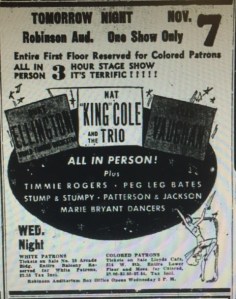
big-show-1951On November 7, 1951, Duke Ellington and His Orchestra, Nat King Cole and His Trio, and Sarah Vaughan headlined a three hour stage show which was billed nationally as “The Biggest Show of 1951.”

The tour launched in September 1951 and continued through December.  Also part of the show were Marie Bryant leading the dancers, vaudevillian Peg Leg Bates, comedian Timmie Rogers, comedians Stump and Stumpy and comedians Patterson and Jackson.  The tour played New England, parts of Canada, and the South.  At some venues in the South, the white musicians in Ellington’s orchestra were not allowed to play on stage with the African American musicians.  Sometimes he referred to his drummer as a light-skinned Haitian.

This was not the first visit for Cole or Ellington.  The former had been there in 1943 and 1944.  The latter had played there in 1949.

At the concert in Little Rock, there is no reference to problems with the musicians appearing on stage together. In a role reversal, white audience members were restricted to the balcony, while the orchestra and mezzanine levels were reserved for African American audience members.  (Many Southern venues would not even allow African Americans to attend events there at all, or to be in the same audience as whites.)  There were separate box offices.  White patron tickets were available at the Arcade Building. Tickets were $2.55 with tax included.  African Americans could purchase tickets at Lloyds Cafe on West 9th Street. Tickets ranged from $5.66 down to $2.44 with tax included.  The Robinson Box Office would be open a couple of hours before the concert began.

The advertisements did not provide instructions as to which doors were to be used to enter the building, so it was likely that the patrons headed to the balcony were able to enter through the three main front doors, while the orchestra and mezzanine level patrons had to enter in the one segregated door to the east of the main doors.

Black History Month – Al Jarreau and Robinson Center

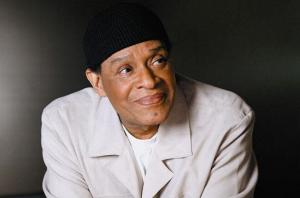
aljWhile he made a few subsequent visits in the intervening years, Al Jarreau’s first visit to Little Rock was in May 2002, when he performed with the Arkansas Symphony Orchestra at Robinson Center Music Hall.

By that time, Jarreau was a Grammy winning artist with a decades long career.  He received a total of seven Grammy Awards (and several other nominations). So in a way it was fitting that he died on the day that the 2017 Grammy Awards were handed out.

Jarreau’s unique vocal sounds lent itself to many different styles of music.  He would sing jazz, R&B, and standards from the American songbook.  While his recordings were a delight, seeing him perform in concert was even better due to the joy in his face as he was performing.

Born in Milwaukee, he was the son of a minister and church musician.  Growing up singing music, he sang in groups while in college (though his degree was in psychology).  While working as a rehab counselor in San Francisco in the late 1960s, he started performing in music clubs in the Bay Area.  In 1968, he made music his primary vocation. (But education remained a key focus of his philanthropic and volunteer activities.)

In the 1970s and 1980s, he recorded and toured extensively.  In the 1990s, he did not record as much, but kept up his touring schedule.  He also played the Teen Angel on Broadway in a revival of Grease.  He kept touring up until earlier this year.  On February 8, after being hospitalized, he announced his retirement from touring.

Black History Month – James Earl Jones and Robinson Center

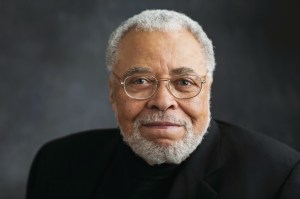
james_earl_jones_headshotActor James Earl Jones has made several appearances in Central Arkansas over the years.  He has appeared at Robinson Center with the Arkansas Symphony Orchestra.  On February 12, 1999, he narrated Aaron Copland’s “Lincoln Portrait” and Alexander Miller’s “Let Freedom Ring” with the Symphony in a concert at Robinson Center.  (It was the 190th birthday for Lincoln.)

Born in Mississippi, he spent most of his childhood in Michigan.  After service in the Army during the Korean War, he moved to New York to study theatre.  In the late 1950s he started alternating between Broadway (where he often played a servant) and Off Broadway (where he played leading roles).  His first film appearance was in Dr. Strangelove….  From the 1960s onward he has alternated between stage, film and TV.  In the 1980s, he added voice work to his repertoire.

In 1969 and in 1987, he won Tony Awards for Actor in a Play (The Great White Hope and Fences, respectively).  His other Tony nominations have been for revivals of On Golden Pond and The Best Man.  He was nominated for an Oscar in 1970 for reprising The Great White Hope on film.  He received two Emmy Awards in 1991 – the only actor to ever win two in the same year.

In 2008, he won the Screen Actors Guild Lifetime Achievement Award, and in 2011 he was given an Honorary Oscar.  In 2002, he was a Kennedy Center Honors recipient.

He is probably best loved for his work as the voice of Darth Vader in many of the Star Wars films as well as his voicework in The Lion King.

Black History Month – Lionel Hampton and Robinson Auditorium

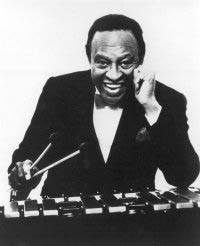
lionelhampton2Bandleader Lionel Hampton made several stops at Robinson Center throughout his career.

Born in 1908 in Louisville, he and his mother bounced around to Alabama and Wisconsin before settling in Chicago in 1916.  Originally a drummer, he started playing around with the vibraphone. In 1930, Louis Armstrong asked him to play the vibes on a couple of tracks for an album – and a new career was born.

In 1936, he started playing with Benny Goodman in an integrated trio and quartet.  In 1940, he left Goodman to form his own big band.  It was with this group that he would appear at Robinson Auditorium.  He continued to tour from the 1950s up until the 1980s.  Though he had to curtail his performance schedule after suffering a stroke onstage in 1991, he would perform from time to time in the 1990s.  His last performance was in 2001 not long before his death.

In his career, he received the 1992 Kennedy Center Honors, 1996 National Medal of the Arts, and numerous honorary degrees.

Black History Month – Ella Fitzgerald and Robinson Auditorium

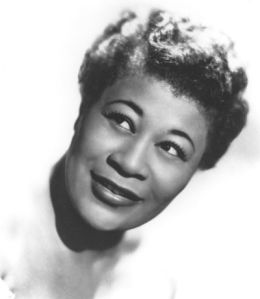
ellaElla Fitzgerald appeared at Robinson Auditorium in the 1940s.  She made the stops as she crisscrossed the US performing her hit songs.

Born in Virginia in 1917, she was raised in Yonkers. At 17 she won a contest at the Apollo Theatre which launched her career.  Saxophonist Benny Carter and bandleader Chick Webb were both instrumental in helping her establish her career.  She would tour with Webb until his death, and then took over as bandleader.

In 1938, at the age of 21, Ella recorded a playful version of the nursery rhyme, “A-Tisket, A-Tasket.” The album sold 1 million copies, hit number one, and stayed on the pop charts for 17 weeks.

She later toured with Dizzy Gillespie’s band and there met Ray Brown. The two would marry and adopt a son, Ray Jr.  Though they divorced in 1952, they remained friends.

In the late 1940s through the 1960s, Ella joined the Philharmonic tour, worked with Louis Armstrong on several albums and began producing her songbook series. From 1956-1964, she recorded covers of other musicians’ albums, including those by Cole Porter, Duke Ellington, the Gershwins, Johnny Mercer, Irving Berlin, and Rodgers and Hart.

As she moved into the 1970s, Ella kept performing. She also started receiving honors and honorary degrees.  She was a recipient of the Kennedy Center Honors in 1979.  In 1987, President Reagan bestowed upon her the National Medal of the Arts.  Her final concert was in 1991 at Carnegie Hall.  She died in June 1996 in California.