May 30 Architeaser: National Old Line Building

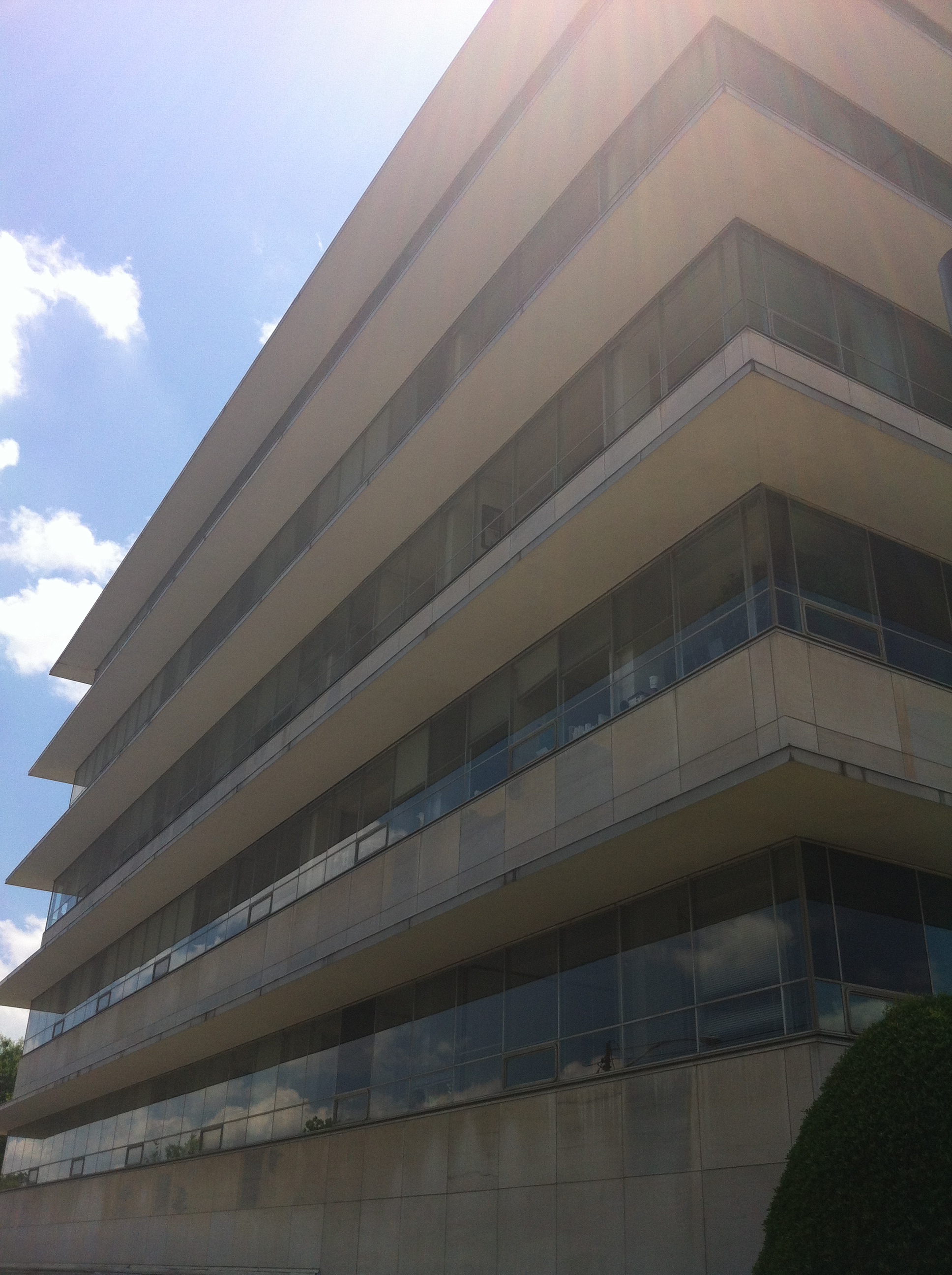
In 1955 the National Old Line Insurance Building was opened.  This seven story structure has been described as “perhaps the finest example of the International Style of architecture in Arkansas.”  Over the years, the building has switched ownership and changed names several times.

Over the years the building has generated controversy. Because of its height (7 stories) and architectural style, it has often been derided as detracting from the look of the adjacent Arkansas State Capitol Building.  There have been several suggestions that the building be torn down and replaced by a parking lot or a lower and more architecturally-sympathetic building.  Conversely, there have also been attempts to expand the building.  Neither school of thought has succeeded.

Today the building is known as the 501 Building (an homage to its address on Woodlane as well perhaps as a nod to the area code of Central Arkansas).  It houses many state offices.IMG_5660

May 28 Architeaser: AP&L Building

20130527-140356.jpg

The Arkansas Arts Center just opened an exhibit on Bauhaus architecture. Though Little Rock doesn’t have any strictly Bauhaus style buildings, there are a few buildings designed in the International Style which was related to Bauhaus.

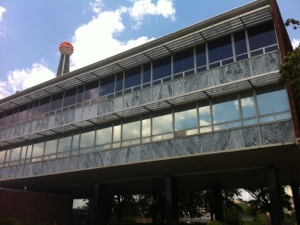
The Arkansas Power & Light Building on Louisiana and 9th Streets was announced in 1953 and completed in 1959. The design was by Fred Arnold of the Wittenberg Delony & Davidson firm. The reason for the delay was due to uncertainty regarding a rate case and labor contracts.

The four story building features a combination of glass, marble and brick. The second and third stories float over an open space as they extend eastward. In 2010, the marble panels on the second and third stories were replaced because of buckling. They were replaced with marble from the same quarry as the original marble.

The orb atop the building once bore the likeness of Reddy Kilowatt, a mascot used by AP&L as well as many other electric utilities in the post-World War II era. When AP&L changed its name to Entergy Arkansas (as part of the system-wide rebranding of various companies into Entergy), the orb was replaced with one which features a three-dimensional version of the Entergy logo.

Bauhaus architecture school focus of exhibit at Arkansas Arts Center

bauhausOrganized by Foto+Synthesis Incorporated, Bauhaus twenty-21: An Ongoing Legacy – Photographs by Gordon Watkinson runs through September 22.  

This exhibition conveys the architectural history, design and enduring philosophies of the Bauhaus, a German expression meaning “house for building” and the name of an important German School principle of architecture and design.

The exhibition offers a unique perspective on Bauhaus design philosophy as it relates to architecture and its relevance in today’s society. The Bauhaus school was founded by Walter Gropius in 1919 and introduced principles that shaped the foundation of modern architecture. Conceived as a project encompassing architecture, design and photography, Bauhaus twenty-21 not only conveys the architectural history, but also illustrates the enduring philosophies of the Bauhaus.

The exhibition is comprised of 77 photographs, plans and elevations and furniture that capture the essence of Bauhaus design and its influence on modern architecture and design.

Arts Center, studioMain present lecture on Bauhas tonight.

bauhaus

Photograph by Gordon Watkinson
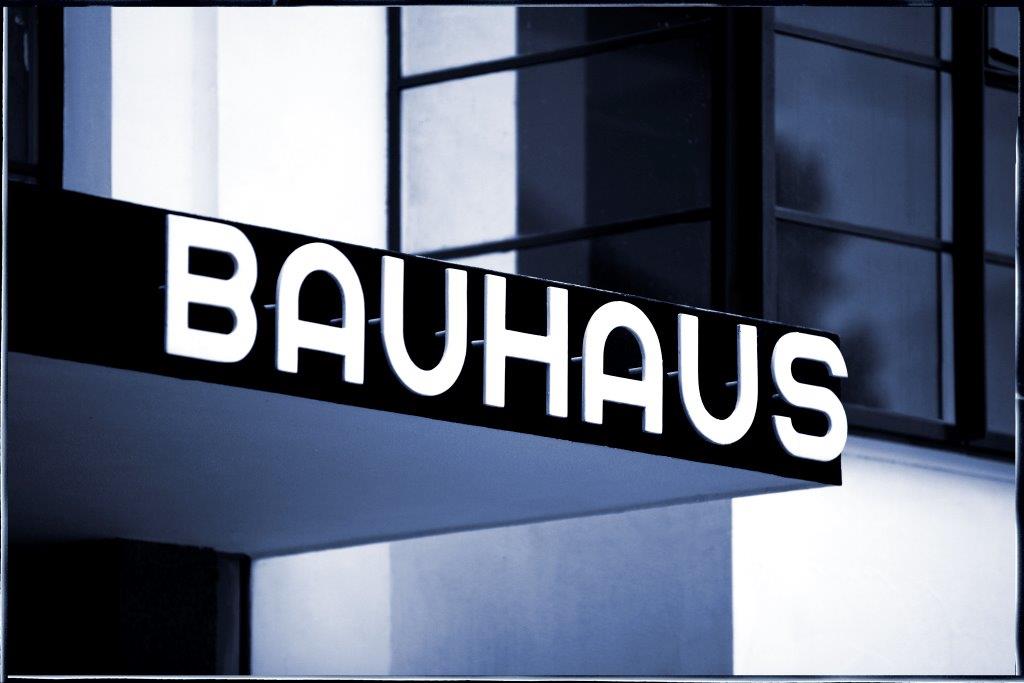
Bauhaus Building – ‘Bauhaus Sign’

The Arkansas Arts Center, the state’s premiere center for visual and performing arts, together with studioMain, presents a special symposium, “From the Bauhaus to Our House,” discussing the history and influence of the Bauhaus movement to be held Friday, May 24, at 5 p.m., in the Arkansas Arts Center Lecture Hall. This symposium is in conjunction with the Arts Center’s current exhibition, Bauhaus twenty-21: An Ongoing Legacy – Photographs by Gordon Watkinson, on view May 24 – September 1, in the Winthrop Rockefeller Gallery.

“The Arts Center is pleased to be hosting such a notable panel of expert speakers,” said Arkansas Arts Center director of education Lou Palermo. “The Bauhaus movement was inspired by a world-changing vision to unite artists and craftsmen, and we will take a deeper look into that vision with the upcoming symposium. We are so excited to be partnering with studioMain to be able to offer this event to our friends and members of the Arkansas Arts Center.”

There will then be an hour break for viewing the exhibit and refreshments, followed by a 7 p.m. discussion with a panel of architectural experts in the design fields. Admission is free and no ticket required. The symposium will feature four of the top speakers in the state to discuss this important movement in architectural history. They are as follows: Dr. Floyd Martin (UALR, Art History), John Greer (WER Architects and Historic Preservation Alliance of Arkansas), Mia Hall (UALR, Applied Design) and Dr. Ethel Goodstein-Murphree (UA Fay Jones School of Architecture).

This exhibition conveys the lasting philosophies of the Bauhaus, a German expression meaning “house for building” and the name of an important German School principle of architecture and design. The Bauhaus school was founded by Walter Gropius in 1919 and introduced the sleek, functional architecture that is found in many of today’s modern buildings.

The exhibition is comprised of photographs, plans and elevations, and furniture that capture the essence of Bauhaus design and its influence on architecture. By pairing Bauhaus buildings with contemporary examples by leading architects, Gordon Watkinson explores the legacy of such modern ideas as passive solar, radiant heat and prefabricating housing.

May 23 Architeaser: First Security Amphitheatre

DSCF5168Today’s Architeaser is the new First Security Amphitheatre in Riverfront Park.  It is built on the same pad as the original amphiteatre which opened in 1988, so this marks the 25th anniversary of an amphitheatre in Riverfront Park.

The amphitheatre was designed by Mike Steelman of SCM Architects, with construction overseen by Flynn Remodeling and Construction.  The curved roof mimics the curved trusses of the Junction Bridge (visible in the background) and the Clinton Presidential Bridge which flank either side of amphitheatre.

The sloped roofing and wooden ceiling are designed to send the music out to the audience better (and to keep performers drier) than the previous stage covering did.  Though not visible in the photos, the roof is sheathed in teal metal to match the First Security Bank color scheme.  The seats in the amphitheatre will be replaced later this summer and and have the same color.

In recognition of the financial commitment made by Riverfest and the festival’s status as a cultural touchstone for the amphitheatre, the stage is known as Riverfest Stage.

The First Security Amphitheatre will be a focal point of this weekend’s Riverfest.

May 21 Architeaser

IMG_5553

Today’s architeaser looks at the unique water spouts on the Museum Center building.  Built as a railroad terminal in 1927, it later served as the press building for the Arkansas Democrat. In 1998, a $12 million adaptive reuse was completed. The building is now home to restaurants, offices and the namesake Museum of Discovery.

One of the other occupants of the building is Riverfest.  The staff and volunteers are busy at this time getting ready for the three day festival this weekend.

QQA Preservation Conversation: Tour of Woodruff House

woodruff houseThe latest Quapaw Quarter Association Preservation Conversation is this evening.  Instead of being at Curran Hall, this one is a tour of the William Woodruff House, located at 1017 East 8th Street. The program will begin at 5pm this evening.  This tour is one of the QQA’s activities for Arkansas Heritage Month.

The William E. Woodruff House was built in 1852-3 and placed on the National Register of Historic Places in 1989. In 2007, the Historic Preservation Alliance of Arkansas place the Woodruff House on its Most Endangered List.

Woodruff was the founder of the Arkansas Gazette. The two and one-half story house sits on three lots just two blocks east of I-30, near the MacArthur Park Historic District and the rapidly developing River Market District. Originally built in the Greek Revival Style, the house has many Colonial Revival elements, dating from an early 20th century remodeling. The footprints of outbuildings are still evident on the property, and the original cistern is located nearby.

The Quapaw Quarter Association’s mission is to promote the preservation of Little Rock’s architectural heritage through advocacy, marketing and education.

Incorporated in 1968, the QQA grew out of an effort to identify and protect significant historic structures in Little Rock during the urban renewal projects of the early 1960s. Throughout its existence, the QQA has been a driving force behind historic preservation in Greater Little Rock.