
Black History Month Spotlight: Fatima Robinson

bhm fatimaAs a critically acclaimed dancer, choreographer and director, Fatima Robinson is the woman behind the moves for some of today’s top music artists including OutKast, the Black Eyed Peas, Will Smith, Mary J. Blige and the late Aaliyah. Her eclectic, fluid, urban style has made her one of the hottest choreographers in the field.

Born in Little Rock, Robinson moved to Los Angeles at the age of four with her mother and two younger sisters. After completing high school at the age of 16, Robinson became a certified cosmetologist and worked for a time as a professional hairdresser while dreaming of operating her own hair salon like her mother. Ultimately, however, Robinson’s love for dance would become the catalyst for dreams even bigger than she ever dared to dream.

Her “big break” came when film director John Singleton asked her to choreograph the video for Michael Jackson’s “Remember the Time” single. Since then, she has gone on to receive numerous accolades and awards including being named by Entertainment Weekly magazine as one of the “100 Most Creative People in Entertainment”, and more recently, the October 2004 issue of Essence magazine singled her out as one of 40 “Women Who are Shaping the World.”

Recognition for Robinson’s art continues to mount. After seven nominations, in 2004 she walked away with the MTV Video Music Award for Best Choreography in a Music Video.  Fatima recently directed and choreographed Cee-Lo Green’s new Las Vegas show “Loberace,” and choreographed commercials for Nike and Heineken with director Rupert Sanders. Fatima also notably choreographed the 2011 Super Bowl Halftime show with the Black Eyed Peas, 2012 Coachella Tupac Hologram, HBO Inauguration event for President Barack Obama, and the Sony Pictures movie Sparkle, starring Jordin Sparks and Whitney Houston. Fatima also choreographed the 2007 and 2009 Oscars, making her the second African American woman in history to do so.

In 2004, she was inducted into the Arkansas Black Hall of Fame.  For more on Fatima Robinson and other inductees into the Arkansas Black Hall of Fame, visit the permanent
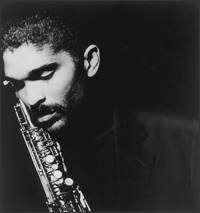
Black History Month Spotlight: Art Porter Jr.

bhm art jr.Just like his father and namesake, Art Porter Jr. was a talented musician on a variety of instruments and in a variety of musical genres.

Arthur Lee (Art) Porter Jr. was born in Little Rock on August 3, 1961. Porter began his music career under the tutelage of his father, legendary jazz musician, Arthur Porter, Sr. who surrounded him with everything musical. He performed proficiently on drums, saxophone and piano. He was classically trained but his performances ranged across jazz, rhythm and blues, funk, and ballads.

During high school, under the supervision of Sterling Ingram, private teacher and band director at Parkview High School, Art Jr. was selected to be a member of the Arkansas All-State Band for three consecutive years.  At age 16, he was awarded the “Most Talented Young Jazz Artist in America” by the National Association for Jazz Education.

During Porter’s youth, his playing while underage in venues where liquor was sold proved controversial. Bill Clinton, then attorney general, established a framework for the legislature that would allow minors to work in such venues with parental supervision. Act 321 known as The “Art Porter Bill” became Arkansas law.

Porter graduated from Northeastern University in Chicago, Illinois, in 1986 with a BA degree in music education and performance. While in college, he won two certificates for excellence in jazz at the Notre Dame University Festival of Music in South Bend, Indiana. He later earned graduate hours at Roosevelt University studying music education and performance, and at Virginia Commonwealth University where he studied under the tutelage of Ellis Marsalis, patriarch of the Marsalis jazz family. Jack McDuff, a renowned jazz organist, heard Porter’s performances and asked him to join his band. His first performance while on tour with McDuff was in a New Orleans jazz club.

Porter started the Art Porter Quartet in Chicago and developed a loyal following in the area. He continued to write his own music and in 1991 was offered a contract to record on the Verve label, a division of Polygram Classics and Jazz.

Art burst on the music scene with his debut album, Pocket City (1992), followed by Straight to the Point (1993). In 1994, his third album, Undercover, placed Porter solidly on the “wave” radio charts with R&B artists as well as “cool jazz” artists. During this same year, he performed at Carnegie Hall for the Polygram Anniversary Celebration. His final album, Lay Your Hands on Me (1996), contained the radio favorite “Lake Shore Drive.”

Many of his compositions were expressions of his spirituality, such as the song “Lay Your Hands on Me.” Porter performed at the inaugural ceremonies of President Bill Clinton in 1993. During the inaugural prayer service, in collaboration with his father, he received a standing ovation for his solo renditions of “Amazing Grace” and “My Tribute.”

Porter traveled the world with performances but no matter where his music would carry him, he always returned to his beloved hometown of Little Rock. He conducted workshops for music students at his alma maters, Dunbar Magnet Junior High School and Parkview Arts and Science Magnet School. He was a founder of the Art Porter Sr. Music Education, Inc. (now the Art Porter Music Education, Inc. in memory of Art Sr. and Art Jr.), a nonprofit organization that provides scholarships to musically talented Arkansas students who need financial assistance to pursue their dream of obtaining a musical degree.

Porter died on November 23, 1996, in a boating accident in Thailand. He had just completed a performance at the Thailand International Golden Jubilee Jazz Festival commemorating the fiftieth anniversary of King Bhumibol Adulyadej’s reign.  In 2013, he was posthumously inducted into the Arkansas Black Hall of Fame.  For more on Art Porter Jr. and other inductees into the Arkansas Black Hall of Fame, visit the permanent exhibit at the Mosaic Templars Cultural Center. That museum is an agency of the Department of Arkansas Heritage.
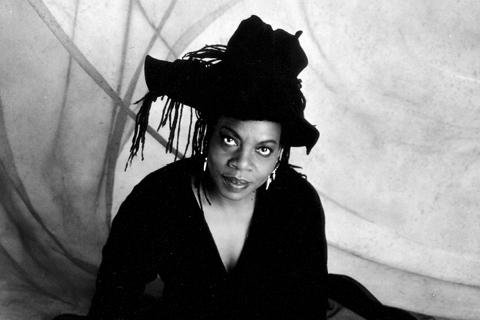
Black History Month Spotlight – Art Porter Sr.

bhm art srArthur Lee (Art) Porter Sr. was a pianist, composer, conductor, and music teacher. His musical interest spanned from jazz to classical and spirituals.

Born on February 8, 1934 in Little Rock, he began his music education at home. He played in church at age eight; played his first recital at twelve; and, by fourteen, hosted a half-hour classical music radio program on KLRA-AM. He earned a bachelor’s degree in music from Arkansas AM&N College (now UAPB) in May 1954. The next year, he married Thelma Pauline Minton. Following his marriage, he pursued graduate study a the University of Illinois, University of Texas and Henderson State University.

He began his teaching career at Mississippi Valley State University in 1954.  When he was drafted into the Army, his musical talents were responsible for him being assigned as a chaplain’s assistant in New York.  In the late 1950s he returned to Little Rock and taught at Horace Mann High School, Parkview High School and Philander Smith College.

He also started playing piano jazz in the evenings. This led to the creation of the Art Porter Trio, which became THE music group for events.  Many musicians who came to Arkansas to perform in Little Rock or Hot Springs would often stop by and join in with Porter as he played.  From 1971 to 1981 he hosted The Minor Key musical showcase on AETN.  His Porterhouse Cuts program was shown in 13 states.

Often encouraged to tour, he instead chose to stay based in Arkansas.  He did, from time time, perform at jazz or music festivals.   He also performed classical piano with the Arkansas Symphony Orchestra, founded the Art Porter Singers, and created a music group featuring his four oldest children.  Though Porter received many honors and awards, he found particular satisfaction in the “Art Porter Bill” enacted by the state legislature, which allowed minors to perform in clubs while under adult supervision. Porter’s children thus were able to perform with him throughout the state. Governor Bill Clinton, at the time a huge fan and friend of Porter, often joined Porter’s group on his saxophone.

In January 1993, Porter and his son Art Porter, Jr., performed at festivities in Washington DC for the Presidential Inauguration of his friend Bill Clinton.  In July 1993, he died of lung cancer.  He was eulogized at Bethal AME Church, where he had been organist for 35 years.  He is buried at Little Rock National Cemetery.  Today his legacy lives on in the Art Porter Music Education Fund as well as in the lives of the many musicians and fans he touched.

He was posthumously inducted into the Arkansas Black Hall of Fame in 1994.  For more on Art Porter Sr. and other inductees into the Arkansas Black Hall of Fame, visit the permanent exhibit at the Mosaic Templars Cultural Center. That museum is an agency of the Department of Arkansas Heritage.

Black History Month Spotlight: Amina Claudine Myers

bhm aminaAmina Claudine Myers was born in Conway County and grew up in the Dallas/Fort Worth area.  She started singing and playing the piano and organ as a child in church choirs.  Returning to Arkansas, she graduated in concert music and music education from Philander Smith College in the early 1960s. After graduation, Myers moved to Chicago where she taught music, attended classes at Roosevelt University and worked with musicians such as Sonny Stitt and Gene Ammons. In 1966 she joined the AACM in Chicago, focusing on vocal compositions and arrangements, and recording her first jazz album with Kalaparusha Maurice McIntyre in 1969.

In 1976 Myers relocated to New York City, where she intensified her compositional work and expanded it into the realm of Off-Broadway productions. She also continued performing and recording as a pianist and organist. In 1985 she joined Charlie Haden’s Liberation Music Orchestra. Notable collaborations also include recordings with Bill Laswell, Marian McPartland, the Art Ensemble of Chicago, Archie Shepp, David Murray, Arthur Blythe, Frank Lowe, Leroy Jenkins, Jim Pepper and Ray Anderson.

In 1976 Amina moved to NY and became involved with the creative musicians that had migrated from Chicago and St. Louis, playing music in the lofts of NYC.  For a year she became a teacher at SUNY ((State Univ. of NY) developing the gospel chorus there.  Myers received several grants from the National Endowments for the Arts, Meet the Composer and NY Foundation for the Arts.                                                                           .

Myers began touring Europe with The Lester Bowie Quintet and The NY Organ Ensemble around 1978.  This began her European (all of Western Europe, Hungary, Turkey and Poland), Japanese, Canadian and U.S. performances of concerts, festivals and clubs as a soloist, with her trio, quartet, sextet and voice choir. This included workshops, seminars and residencies in universities and schools in the U.S. as well as Europe. Myers had the opportunity to perform in Cape Town, South Africa at The North Sea Jazz Festival with saxaphonist/composer Archie Shepp and to Accra, Ghana (West Africa) with composer/ vibraphonist Cecilia Smith during their jazz festival.

Myers’ works of blues, jazz, gospel and extended forms continues.  She teaches privately, giving lessons in theory, composition, piano, voice, organ, classical piano and assisting clients interested in stage/ performances. Amina  has  performed at Lincoln Center, Carnegie Hall, Town Hall, The Brooklyn Academy of Music, The Iridium Club, Birdland and other sites with her groups and with other artists and still continues to perform nationally and internationally.

She is a 2001 inductee into the Arkansas Black Hall of Fame.  For more on Amina Claudine Myers and other inductees into the Arkansas Black Hall of Fame, visit the permanent exhibit at the Mosaic Templars Cultural Center. That museum is an agency of the Department of Arkansas Heritage.

Black History Month Spotlight – Jimmy McKissic

bhm mckissicJames Henry “Jimmy” McKissic was born March 16, 1940 in Little Rock and was raised in Pine Bluff by his parents, Rev. James E. McKissic and Rosa Daniels McKissic.  He spent a lot of time in church and by age 3 was playing church hymns by ear. His mother was his piano teacher until age 13. At that point, she decided he needed professional instructors. He soon developed the dream of someday playing at Carnegie Hall.

Growing up in Pine Bluff in the late 1950s and early 1960s, he was well known for musical talent in both the white and African American communities.  He served as a musical coach for a Miss Pine Bluff contestant, Frances Jane Anderson, who later went on to become Miss Arkansas and first runner up to Miss America.  Today, she is better known as Frances Cranford.


As a young man Jimmy played for St. Paul Missionary Baptist Church and the Mt. Calvary Baptist, where his father pastored. He also played for other churches in Pine Bluff and the surrounding area.  He earned a B.S. in Music Education from A.M.&N. College (now UAPB) which was followed by additional study with Marjorie Petray of Berkeley, before receiving a Hertz Scholarship to further his piano and musical training in Geneva, Switzerland. He worked at the American Church in Paris, where he was in charge of young adults for two years.

Establishing residency in Cannes, France, Jimmy’s personality led him to become one of Europe’s most popular entertainers. He performed concerts all over the globe including Switzerland (Geneva, Lucerne, Davos), Franc (Paris, Biarritz, Nice, Cannes), Morocco, England, Kenya (Nairobi, Mombasa), Syria, Holland, Bangkok, Singapore and Brazil, among others. He performed in numerous cities and states in the USA including Arkansas, California, Mississippi, Texas and New York. During his lifetime, while spending 49 years of his life abroad Jimmy played for three U.S. presidents. He also performed 28 at Carnegie Hall in New York City.

After that debut, Jimmy considered it a privilege to invite people to attend his concerts “without charge”. He would say, “To whom much is given, much is required.” He often closed his classical concerts with hymns and/or popular songs as a reminder of his roots and his celebration of the universal nature of music. People from all over the world would come to hear him play from as far away as Australia or as close as Washington, D.C.  He later served on the musical faculty of the University of California, Berkeley.

A PBS documentary, “How Do You Get to Carnegie Hall,” chronicles his odyssey from Pine Bluff to New York, with scores of stops and detours in between.  In 1994, he was inducted into the Arkansas Black Hall of Fame.  Regardless of where he lived or worked, he continued to visit Arkansas and support endeavors in the state.  In 2006, he lent his talents to a fundraiser for the Mosaic Templars Cultural Center.  Four years later, he made the rafters shake in capacity concerts at that now-opened museum as well as the Clinton Presidential Center.  In addition to his musical talent and winning personality, he was known for his unique fashion sense (deliberately not matching his shoes was one trademark).

Two years ago today (February 13, 2013), McKissic died. His funeral services were held on the campus of UAPB, where he had spent so much time growing up.

For more on Jimmy McKissic and other inductees into the Arkansas Black Hall of Fame, visit the permanent exhibit at the Mosaic Templars Cultural Center. That museum is an agency of the Department of Arkansas Heritage.

Black History Month Spotlight: Dr. Patricia McGraw

bhm mcgrawDr. Patricia Washington McGraw is an educator and author.  Now retired from the University of Central Arkansas where she was a professor of English and African/African American Studies, McGraw is recognized for her achievements as an educational/civic leader and social advocate.  She has received over 300 teaching excellence and community service awards on the local, state and national levels.

McGraw graduated from San Francisco State College in 1957 and received her master’s degree in special studies in American literature from the college in 1967. In 1982 she earned her Ph.D. in sociolinguistics and Black studies from Washington University in St. Louis. She graduated with honors from each institution.

Despite her status as a retired professor, McGraw remains an active force in her community and abroad. From 1983-1994 she owned and operated The McGraw Learning Institute: Abilities Unlimited, a private school for African-American children. She has served as a literary consultant to two youth groups and has been an African storyteller at various museums throughout Central Arkansas.  She has co-hosted televisions shows and is the creator of a one-woman show, A Profile of Four Black Women: Look Upon Them and Be Renewed, that has received rave reviews and has been performed over 400 times in Africa, the West Indies and Canada.

Dr. McGraw is a noted author having published several books and more than 500 articles and works of poetry. Her work as a humanitarian has taken her to Africa seven times, having visited 18 countries on the continent. In 1999, on Lake Kivu, between the East African countries of Rwanda and the Republic of the Congo, members of the Rwandese Parliament presented an island to her.

She was inducted into the Arkansas Black Hall of Fame in 2004.  For more on Dr. McGraw and other inductees into the Arkansas Black Hall of Fame, visit the permanent exhibit at the Mosaic Templars Cultural Center. That museum is an agency of the Department of Arkansas Heritage.

Black History Month Spotlight: Deborah Mathis

bhm deborahDeborah Mathis has deep Arkansas roots.  She grew up in Little Rock the daughter of Rev. Lloyd Myers, a Baptist minister, and Rachel A. Myers Jones, a teacher.

Her journalistic pursuits began as early as junior high school, when she became the first black editor of West Side Junior High’s school newspaper. In 1970 she became the first black and first female editor of Central High School’s Tiger student newspaper. From the early 70′s through the early 90′s, Mathis was busy establishing herself as a journalist and broadcaster. She served in various positions ” reporter, editor, columnist and anchor ” at statewide media outlets including the Arkansas Democrat, Arkansas Gazette, KARK-Channel 4, KTH V-Channel 11, and KATV-Channel 7 From Arkansas, Mathis career took her to briefly to Jackson, Mississippi before she landed in Washington, D.C., where she was a White House Correspondent for Gannett News Service from 1993-2000.

Since 1992, Mathis has been a syndicated columnist, appearing in more than 100 U.S. publications and periodicals. She is also a contributor to such outlets as USA Today and BlackAmericaWeb.com and a frequent commentator on political and public affairs talk shows such as PBS’s Frontline, CNNs Inside Politics NPR’s All Things Considered America’s Black Forum and Oprah, to name a few. She also field-produced, wrote and narrated two nationally aired documentaries: “Edukashun: The Cost of Failure” (1982) and “Return of the Little Rock Nine” (1987).

Mathis is the author of Yet A Stranger Why Black Americans Still Don’t Feel at Home, Sole Sisters: The Joy and Pains of Single Black Women and What God Can Do: How Faith Changes Lives for the Better.  She has also been an assistant professor at Northwestern University’s Medill School of Journalism (Washington office).  In 2003, she was inducted into the Arkansas Black Hall of Fame.

For more on Deborah Mathis and other inductees into the Arkansas Black Hall of Fame, visit the permanent exhibit at the Mosaic Templars Cultural Center. That museum is an agency of the Department of Arkansas Heritage.