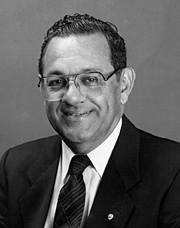
Women’s History Month – Janis Kearney, first presidential diarist

Janis Kearney is the only person to have held the title of U.S. Presidential Diarist. In 1995 she was appointed to that position by President Bill Clinton.

After graduating from the University of Arkansas, she was hired by the State of Arkansas as a program manager.  Nine years later, she became managing editor for the Arkansas State Press. She later purchased it from owner Daisy Bates.

In 1992, she took a leave from the paper to work on the Clinton presidential campaign.  Following the election, she worked in the transition office, the White House, and the U.S. Small Business Administration until her appointment as Presidential Diarist.

In 2001, she moved to Chicago and started working on a book, while also having fellowships at Harvard and DePaul.  In 2004, she founded Writing Our World Press and published her first book, Cotton Field of Dreams.  Her Clinton biography, Conversations: William Jefferson Clinton-From Hope to Harlem was published in 2006.  Since then she has also published a novel, a biography of Daisy Bates, and the second part of her memoirs.
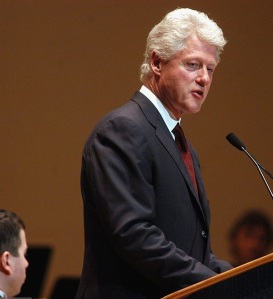
 

Little Rock Look Back: President Clinton performs with Arkansas Symphony

Former U.S. President Bill Clinton addresses the audience after reciting Martin Luther King’s famous speech, ‘I Have A Dream’, to the music of Alexander L. Miller at Robinson Auditorium March 25, 2003 in Little Rock. (Photo by Karen E. Segrave/Getty Images)

On March 25, 2003, former President Bill Clinton took the stage of Robinson Center Music Hall to perform with the Arkansas Symphony Orchestra. Entitled “Let Freedom Ring – A Patriotic Celebration,” the evening was a joint fundraiser for the Symphony and the Clinton Foundation.

Before a packed house, Clinton narrated Aaron Copland’s A Lincoln Portrait which weaves excerpts from Lincoln speeches with Copland’s own unique classical take on American heartland music.  Clinton also narrated Let Freedom Ring, a symphonic setting by Alexander Miller of Martin Luther King’s “I Have A Dream” speech.

The evening also consisted of Broadway veteran and Little Rock favorite Lawrence Hamilton singing “Wheels of a Dream” from the musical Ragtime.  On Broadway and on national tour, Hamilton had previously sung the song.

The Arkansas Symphony Orchestra also performed An American in Paris by George Gershwin and “Jupiter” from The Planets by Gustav Holst.  This final selection was a tribute to the seven astronauts who had died in the crash of the space shuttle Columbia on February 1, 2003.

David Itkin, who was then the musical director of the ASO, conducted the concert.

Women’s History Month – Dr. Joycelyn Elders

Being the second female and first African American female to serve as Surgeon General, was just another milestone in the career of Dr. Joycelyn Elders.
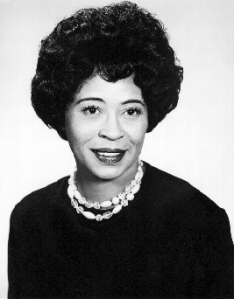
In 1960, she graduated from the University of Arkansas for Medical Sciences. Though not the first African American female to do so, she was very much in a minority for both her race and her gender.  In 1967, she would return to UAMS as a faculty member.

After two decades of service as a physician and educator, Governor Bill Clinton appointed her to lead the Arkansas Department of Health in 1987.  She was the first African American woman to lead that department.  She led that department until 1992.  At that point in time, President Bill Clinton tapped her to be Surgeon General.

Upon leaving the post of Surgeon General, she returned to UAMS as a professor. She is now a professor emeritus.  Dr. Elders is also in demand as a lecturer and panelist.

She has been inducted into the Arkansas Black Hall of Fame, Arkansas Women’s Hall of Fame, and the Arkansas Civil Rights Heritage Trail.

Black History Month – Aretha Franklin and Robinson Center

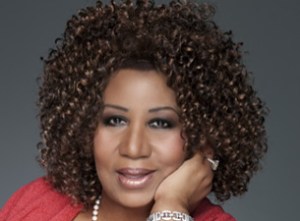
wjc-arethaTwo days before the Clinton Presidential Center opened, at Robinson Center Music Hall, patrons were warmed by the musical talents of Aretha Franklin.

She shared the Robinson stage with the Arkansas Symphony Orchestra.  The ASO brough Miss Franklin to town as part of the festivities surrounding the opening of the presidential library.  Long a favorite of the Clintons, Miss Franklin sang at his 1993 inaugural festivities the night before he took the oath of office.

Resplendent in a series of white dresses, Miss Franklin was in top form feeding off the love from the audience.  While backstage she may have been dealing with back and knee issues (which the Culture Vulture saw first hand), when she stepped on to the stage she was giving her all as she rolled through hit after hit from her starry career.  She sang, she played the piano, she entertained!

It was a sold out house and her voice and energy reached the last row of the balcony.

Born in Memphis, she moved to Detroit before age five and grew up singing at church.  After gaining some fame singing gospel songs, at 18 she switched to more secular music.  After initially singing for Columbia Records, she moved to Atlantic Records, later to Arista, and now has her own label.

Among her hits are “Respect,” “You Make Me Feel Like a Natural Woman,” “Chain of Fools,” “Think,” “Share Your love with Me,” “Bridge Over Troubled Water,” “Spanish Harlem,” “Break It to Me Gently,” “Jump to It,” “Get It Right,” and “Freeway of Love.”

Franklin received a star on the Hollywood Walk of Fame in 1979 and became the first woman inducted into the Rock and Roll Hall of Fame in 1987. NARAS awarded her a Grammy Legend Award in 1991, then the Grammy Lifetime Achievement Award in 1994, the same year she was a Kennedy Center Honoree in 1994.  In 1999, she received the National Medal of Arts from Bill Clinton.  George W. Bush bestowed her the Presidential Medal of Freedom in 2005.  She has 17 Grammy Awards and 14 additional nominations.

Black History Month – Maya Angelou and Robinson Center

1414mayaOn February 23, 1998, Maya Angelou appeared with the Arkansas Symphony Orchestra in a concert at Robinson Center.  The evening featured Dr. Angelou narrating Joseph Schwantner’s tribute to Dr. Martin Luther King Jr., “New Morning for the World.”

Dr. Angelou, a former resident of Stamps, Arkansas, was not a stranger to Little Rock. She had appeared before at Wildwood Park and would later appear at the Clinton Presidential Center.

A former Poet Laureate of the United States and Tony nominated actor, she won a Grammy Award for her reading of “On the Pulse of the Morning” which had been written for the first inauguration of Bill Clinton as President of the United States.

A poet, author, educator, dancer, singer, actor, and activist, she wrote seven autobiographies. The most notable was arguably I Know Why the Caged Bird Sings.  Born in St. Louis, she spent part of her childhood in Arkansas before moving to California.  She led a peripatetic life both geographically and career-wise ending as a professor at Wake Forest and residing in North Carolina.  It was there that she died in May 2014.

Black History Month – Daisy Bates and Robinson Center

bates daisyToday is the Daisy Bates Holiday in the State of Arkansas.  So it is an appropriate day to pay tribute to Mrs. Bates, who played a leading role in the Little Rock Integration Crisis of 1957.

Daisy Lee Gatson Bates and her husband were important figures in the African American community in the capital city of Little Rock.  Realizing her intense involvement and dedication to education and school integration, Daisy was the chosen agent after nine black students were selected to attend and integrate a Little Rock High School.  Bates guided and advised the nine students, known as the Little Rock Nine, when they enrolled in 1957 at Little Rock Central High School. President Clinton presented the Little Rock Nine with the Congressional Gold Medal and spoke at the 40th anniversary of the desegregation while he was in office.

When Mrs. Bates died, a memorial service was held at Robinson Center on April 27, 2000.  Among the speakers were President Bill Clinton, Secretary of Transportation Rodney Slater, and Rev. Rufus K. Young, pastor of the Bethel AME Church.  Others in attendance included Lt. Gov. Winthrop Paul Rockefeller, Mayor Jim Dailey, Presidential diarist Janis Kearney, former senator and governor David Pryor, and five members of the Little Rock Nine:  Carlotta Walls Lanier, Ernest Green, Minnijean Brown Trickey, Jefferson Thomas, and Elizabeth Eckford.

It was during his remarks at the service that President Clinton announced he had asked that Bates’ south-central Little Rock home be designated as a national historic landmark.

Black History Month – Wiley Branton and Robinson Auditorium

brantonMost of the people who are being featured this month have played at Robinson Center.  But today’s entry, Wiley A. Branton, Sr. worked to integrate Robinson Center.

In 1962, he filed a suit on behalf of several African American residents of Little Rock to integrate the City’s public facilities including Robinson Auditorium.  (The City Board and the Auditorium Commission were named in the lawsuit.)  In 1963, the decision came down and the facilities had to integrate.

This lawsuit was just one of many in which Branton paved the way for equal opportunities for all.  He helped desegregate the University of Arkansas School of Law and later filed suit against the Little Rock School Board in a case that went to the U.S. Supreme Court as Cooper v. Aaron.

A native of Pine Bluff, he graduated from what is now UAPB. After first being refused admission, he later became the fifth African American to attend the UA Law School and the third to graduate.  From 1953 to 1962, he had a law practice in Pine Bluff.  Between 1962 and 1965, Branton worked with representatives of the major African-American civil rights organizations to register almost 700,000 new black voters in eleven Southern states. Following that, he became executive director of the President’s Council on Equal Opportunity and help coordinate implementation of the Civil Rights Act of 1964. He spent 1965 to 1967 at the Justice Department, before becoming executive director of the United Planning Organization (UPO).  After working with a couple of other organizations, he returned to private practice in 1971.  In December 1977 it was announced that Branton would be the new dean of Howard University School of Law. After five years, he joined the law firm of Sidley and Austin in its Washington DC office.

Branton died of a heart attack in December 1988.  Eleven hundred mourners gathered at a memorial service at the Washington National Cathedral in Washington, D.C. Among those present was Supreme Court Justice Thurgood Marshall. The eulogy was delivered by Vernon E. Jordan, Jr..  Then-Gov. Bill Clinton spoke at the Pine Bluff memorial service for Branton.