
Little Rock Look Back: Robert Catterson–Doctor, Soldier, LR Mayor

R_F_Catterson_BGen_ACWOn this date in 1835, future Little Rock Mayor Robert Francis Catterson was born in Indiana, the son of Irish immigrants.  He studied medicine in Ohio and established a medical practice in Indiana upon completion of his studies.

With the outbreak of the Civil War, he enlisted as a private in the Union Army.  Throughout the war, he was promoted and was eventually mustered out as a brigadier general in 1866.  During his service, he participated in the siege of Vicksburg, the Battle of Chattanooga, the Atlanta Campaign and Sherman’s March to the Sea.

Following his departure from the military, Catterson decided not to return to medical practice.  He moved to Arkansas and worked for a brief time in the cotton commodities field.  He later returned to military service commanding a militia fighting the Ku Klux Klan.  Catterson was appointed US Marshal and would also command the Brooks troops during the Brooks-Baxter War in Little Rock.

In November 1871, he was elected Mayor of Little Rock. His election ended a tumultuous two-year period where the Little Rock City Council tried unsuccessfully to remove Mayor A. K. Hartman.  Mayor Catterson served a relatively quiet two year term in office until November 1873.

Following the completion of his term, Mayor Catterson moved to Minnesota. He later moved to Texas where he died on March 30, 1914 at the age of 79.  He is buried in the San Antonio National Cemetery.
Little Rock Look Back: J. G. Botsford, LR’s 29th Mayor

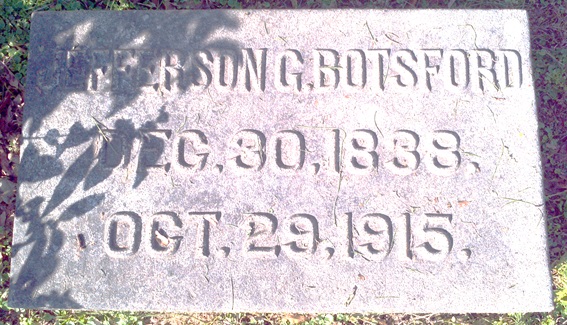
Botsford GraveOn December 30, 1838, future Little Rock Mayor Jefferson George Botsford was born in Port Huron, Michigan.  He married Charlotte Adelia Henry on June 13, 1867.  She had been born in Massachusetts, but moved to Little Rock with her parents and grandparents.

The couple had seven children: Nellie, Charlotte, Harriett, James, Edward, George and Charles. Nellie, James and Charles died in childhood.

Botsford had served in the Union Army and fought in frontier battles against Indians.  Among his commercial involvements in Little Rock were serving as mail contractor between Little Rock and Baton Rouge, proprietor of Anthony House, organizer of Merchants National Bank and president of the White River Valley & Texas Railroad.

In 1868, Botsford was elected to the Little Rock City Council.  The City Council suspended Mayor A. K. Hartman in February 1870.  Elected in 1869, he was disliked by the aldermen, the press and a portion of the public.  A court order overturned the suspension in June 1870.  In January 1871, Mayor Hartman was again suspended by the Council.  This time, Botsford was declared Mayor.  However Hartman also still claimed the title of Mayor through the remainder of his term in November 1871.

After stepping down as Mayor with the election of Robert Catterson in November 1871, Botsford returned to private life.  He died on October 29, 1915 and is buried at Mount Holly Cemetery.

Little Rock Look Back: Gen. R. F. Catterson MD, Little Rock’s 30th Mayor

R_F_Catterson_BGen_ACWOn this date in 1835, future Little Rock Mayor Robert Francis Catterson was born in Indiana, the son of Irish immigrants.  He studied medicine in Ohio and established a medical practice in Indiana upon completion of his studies.

With the outbreak of the Civil War, he enlisted as a private in the Union Army.  Throughout the war, he was promoted and was eventually mustered out as a brigadier general in 1866.  During his service, he participated in the siege of Vicksburg, the Battle of Chattanooga, the Atlanta Campaign and Sherman’s March to the Sea.

Following his departure from the military, Catterson decided not to return to medical practice.  He moved to Arkansas and worked for a brief time in the cotton commodities field.  He later returned to military service commanding a militia fighting the Ku Klux Klan.  Catterson was appointed US Marshal and would also command the Brooks troops during the Brooks-Baxter War in Little Rock.

In November 1871, he was elected Mayor of Little Rock. His election ended a tumultuous two-year period where the Little Rock City Council tried unsuccessfully to remove Mayor A. K. Hartman.  Mayor Catterson served a relatively quiet two year term in office until November 1873.

Following the completion of his term, Mayor Catterson moved to Minnesota. He later moved to Texas where he died on March 30, 1914 at the age of 79.  He is buried in the San Antonio National Cemetery.

Little Rock Look Back: Jefferson George Botsford

Botsford GraveOn December 30, 1838, future Little Rock Mayor Jefferson George Botsford was born in Port Huron, Michigan.  He married Charlotte Adelia Henry on June 13, 1867.  She had been born in Massachusetts, but moved to Little Rock with her parents and grandparents.

The couple had seven children: Nellie, Charlotte, Harriett, James, Edward, George and Charles. Nellie, James and Charles died in childhood.

Botsford had served in the Union Army and fought in frontier battles against Indians.  Among his commercial involvements in Little Rock were serving as mail contractor between Little Rock and Baton Rouge, proprietor of Anthony House, organizer of Merchants National Bank and president of the White River Valley & Texas Railroad.

In 1868, Botsford was elected to the Little Rock City Council.  The City Council suspended Mayor A. K. Hartman in February 1870.  Elected in 1869, he was disliked by the aldermen, the press and a portion of the public.  A court order overturned the suspension in June 1870.  In January 1871, Mayor Hartman was again suspended by the Council.  This time, Botsford was declared Mayor.  However Hartman also still claimed the title of Mayor through the remainder of his term in November 1871.

After stepping down as Mayor with the election of Robert Catterson in November 1871, Botsford returned to private life.  He died on October 29, 1915 and is buried at Mount Holly Cemetery.

Little Rock Look Back: Mayor Robert Francis Catterson

R_F_Catterson_BGen_ACWOn this date in 1835, future Little Rock Mayor Robert Francis Catterson was born in Indiana, the son of Irish immigrants.  He studied medicine in Ohio and established a medical practice in Indiana upon completion of his studies.

With the outbreak of the Civil War, he enlisted as a private in the Union Army.  Throughout the war, he was promoted and was eventually mustered out as a brigadier general in 1866.  During his service, he participated in the siege of Vicksburg, the Battle of Chattanooga, the Atlanta Campaign and Sherman’s March to the Sea.

Following his departure from the military, Catterson decided not to return to medical practice.  He moved to Arkansas and worked for a brief time in the cotton commodities field.  He later returned to military service commanding a militia fighting the Ku Klux Klan.  Catterson was appointed US Marshal and would also command the Brooks troops during the Brooks-Baxter War in Little Rock.

In November 1871, he was elected Mayor of Little Rock. His election ended a tumultuous two-year period where the Little Rock City Council tried unsuccessfully to remove Mayor A. K. Hartman.  Mayor Catterson served a relatively quiet two year term in office until November 1873.

Following the completion of his term, Mayor Catterson moved to Minnesota. He later moved to Texas where he died on March 30, 1914 at the age of 79.  He is buried in the San Antonio National Cemetery.