
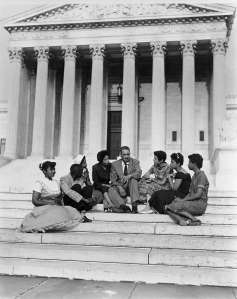
Thurgood Marshall, of the NAACP, sits on the steps of the Supreme Court Building after he filed an appeal in the integration case of Little Rock’s Central High School. The students are, from left: Melba Pattillo, Jefferson Thomas, Gloria Ray, escort Daisy Bates, Marshall, Carlotta Walls, Minnijean Brown, and Elizabeth Eckford. (AP Photo, file)
On September 29, 1958, the U.S. Supreme Court issued its decision in Cooper v. Aaron. That decision held that Little Rock public officials were required to implement a desegregation plan in compliance with the Brown v. Board decision.
The Court found that “the federal judiciary is supreme in the exposition of the law of the Constitution” and all state officials must adhere to the Court’s decisions and follow the rules laid down in those decisions in similar future cases.
The genesis for the Cooper v. Aaron court case was the Little Rock School Board seeking a delay in further implementation of the plan to integrate schools.
After the events of 1957-1958, the School Board was reluctant to have another year of integration, even if it were severely limited. The school board caved to this political pressure, filing a request for a two-and-a-half-year delay in implementing desegregation. The district court granted the request, but the court of appeals reversed. Chief Justice Earl Warren called a Special Term of the Supreme Court into session to consider the case. The stage was set for Cooper v. Aaron.
In their decision, the Warren Court made it clear that resistance to Brown would not be tolerated. The Court went on to state that “the federal judiciary is supreme in the exposition of the Constitution” and “the interpretation of the Fourteenth Amendment enunciated by this Court in the Brown case is the supreme law of the land.”
 On September 28, 1905, the first meeting of the Pulaski Heights City Council took place. The newly elected Mayor was J. H. Joslyn, the Recorder was F. D. Leaming, and new Alderman present were E. E. Moss, Maxwell Coffin and C. C. Thompson. Pulaski Heights had been incorporated on August 1, 1905. At that time its population was estimated at between 300 and 400.

 Sixty years ago today the Little Rock Nine entered Central High School and stayed. On one hand, this brought to the end a nearly month long standoff between segregationists and those who wanted to obey the U.S. Supreme Court’s Brown v. Board decision.
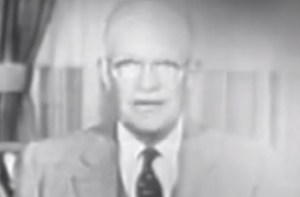 On September 24, 1957, President Dwight Eisenhower ordered the 101st Airborne to Little Rock to ensure that the Little Rock Nine would be able to enter Central High School.
 On Monday, September 23, 1957, the Little Rock Nine entered Central High School for a few hours.
 Little Rock Culture Vulture