
48 Hours with Mattie D

In June 2006, I had the privilege of seeing Matt DeCample at work during a weekend of the 48 Hour Film Project.

I was allowed to tag along to take photos and document the experience of the 48 Hour Film Project process. (Photos which I cannot seem to find, but are tucked away somewhere on a disc to be found in time.)

We were gathered at the Public Theatre space for a brief pep talk before Matt and Drake Mann went to the drawing. It was there that the team would learn its Genre, the character’s name, the prop, and the line of dialogue that had to be included in the film.

In their absence, someone had cracked, “I don’t care what genre we get, as long as it isn’t Action. I mean how do you shoot and edit an action film in 48 hours?”  So of course when Matt and Drake walked in — the genre was Action.

Matt was so clearly in his element. Just a look at him and one could tell that the wheels were turning in his mind. He led the group through brainstorming.  I don’t remember who actually came up with the final idea, but I suspect it was Matt.

The Action genre was to be played out in an office. A worker had only a few minutes to get a fax sent (remember it was 2006) and had to dodge a number of obstacles along the way in order to get it done.

And we were off!

Matt was the screenwriter — and to play one of the distractions, an impatient boyfriend who kept calling the office worker as she was trying to finish her task.  Chris Cranford was the director, cinematographer, and editor. Seeing Matt and Chris, two guys who loved films, talk in a kind of short-hand was entertaining.  The opening credits stripped across books in a law library in a manner similar to the opening of Hitchcock’s North by Northwest – something that Matt and Chris thought not only would be fun to create but would also add a layer to the movie evoking a Hitchcokian tone.

We broke around 1 in the morning. Matt went to work on the script.

A few hours later we gathered in a downtown law firm. Matt had about half the script written and the rest outlined. It was enough that Chris could map out the shots and start the filming.

As is the case with any film, there are always adjustments that need to be made. Matt was unfazed. When not needed for a scene, he was often set up in an office typing away at the script. Or he was helping the camera crew. Or he was entertaining everyone with a wry observation about something.

Throughout the 48 Hours Matt was very much the man with the plan for the project. He did not lead from the front or the top, however, He led from the center of the pack in a collaborative and encouraging manner — because that was Matt.

I don’t think he slept any the weekend.  He did not intrude on the editing or scoring processes (Buddy Habig created an original score which added immensely to the film), he contributed insight and was a sounding board. And quite frankly, he just reveled in the entire process and the somewhat absurdity of what was being undertaken. He loved every second of it.

I cannot remember everyone who was in the film. (I tried to find it on YouTube, but the earliest films from Little Rock were 2007.)  I do remember the late, great Fran Austin played the overbearing boss whose demand set the scenario in motion.  Ruth Shepherd played the overeager office manager trying to get everyone to sign a greeting card. She popped up several times as an obstacle. Once she handed the card to me in an uncredited cameo of my right hand.

But the person who pops up in my mind the most is Mattie D. I am sure when I find those photos again I will see him in many of them. He seemed to be everywhere.

And just like with everything he undertook whether in his professional career or as an avocation – he was always completely Mattie D.

Women Making History – Irma Hunter Brown

Irma Hunter Brown served in the Arkansas House of Representatives from January 1981 until January 2003.  She was the first African American woman to be elected to the Arkansas General Assembly in either house.

In 2003, she was sworn in as a State Senator, becoming the first African American woman in that body, as well.

In 2015, she was included in the Arkansas Civil Rights Heritage Trail.  Other honors include recipient of the Distinguished Citizen award, Philander Smith College, Little Rock, 1981; fellow, Institute Politics, 1975.

Little Rock Look Back: Little Rock becomes a First Class City

On March 9, 1875, the City of Little Rock became a City of the First Class in Arkansas. It was the first city in the state to receive this designation.

This was in conjunction with the adoption of the Arkansas Constitution of 1874 which created this status.  The Constitution defines them as: “All cities, which at the last federal census had, or now have, a population exceeding two thousand five hundred (2,500) inhabitants shall be deemed cities of the first class.”

March 9 is just one of several dates Little Rock could celebrate as a birthday.

  • January 6, 1866 – Little Rock government resumes operations following the Civil War
  • November 2, 1835 – Little Rock is incorporated as a City
  • November 7, 1831 – Little Rock is incorporated as a Town
  • October 27, 1825 – Little Rock given the right to elect a governing board of trustees
  • June 1, 1821 – Little Rock officially becomes capital of Arkansas
  • April 9, 1722 – Jean Batiste Benard de La Harpe sees Le Petite Roche

There could also be the dates in 1812 when William Lewis built the first home in Little Rock (a shack) or in February 1820 when the first permanent settlement was established.  But neither of those have exact dates that are remembered.

50th anniversary of Sgt. Pepper’s on the Arkansas Symphony bill for the weekend

No photo description available.

The Arkansas Symphony Orchestra, Philip Mann, Music Director and Conductor, presents the third concert of the 2018-2019 Acxiom Pops Live! season: Classical Mystery Tour: Sgt. Pepper’s, Saturday, March 9 at 7:30 p.m., Sunday, March 10 at 3:00 p.m. at the Robinson Center.

The four musicians in Classical Mystery Tour look and sound just like The Beatles, but Classical Mystery Tour is more than just a rock concert. The show presents more than two dozen Beatles tunes performed exactly as they were originally recorded. Concertgoers will hear “Penny Lane” with a live trumpet section, experience the beauty of “Yesterday” with an acoustic guitar and string quartet, and enjoy the classical/rock blend on “I Am the Walrus.”

To celebrate the 50th anniversary of the groundbreaking album “Sgt. Pepper’s Lonely Hearts Club Band,” Classical Mystery Tour has added a special “Sgt. Pepper’s” section to their concert, featuring the title track plus such iconic songs as “With a Little Help From My Friends,” Lucy in the Sky with Diamonds,” “She’s Leaving Home,” “Being for the Benefit of Mr. Kite,” “When I’m 64,” and “A Day in the Life.”

The Pops Live! Series is sponsored by Acxiom. The media sponsor for the Pops Live! Series is The Point 94.1.


Women Making History: Myra Jones

The late, great Myra Jones was born on March 8. So today we highlight her.
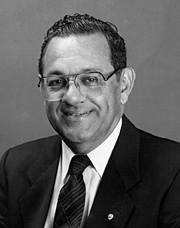
Myra Jones was elected to the Little Rock City Board in 1976. She served eight years on the Board, including four years as Vice Mayor of Little Rock.  She was the first female to serve as Vice Mayor of Little Rock.  In a nod to changing times, she was the first woman to be referred to in the City minutes by her own first and last name instead of being Mrs. followed by her husband’s name.

From 1985 to 1998, she served seven terms in the Arkansas House of Representatives and was the first woman to chair a standing committee:  the City, County and Local Government Committee.

Following her retirement from the legislature, she continued in business. She served on the board of Noram Energy (formerly ArkLa) for seventeen years becoming one of the first women from Arkansas to serve on a Fortune 500 Board. She later served as a local affairs lobbyist for the real estate industry. She once again became a fixture at Little Rock City Hall until her death in 2012.

A graduate of Oberlin College, she was a lifelong musician and would return in the summer to her native South Dakota to play clarinet with the Belle Fourche Cowboy Band. She had first joined the band as a high school senior.  Once it was reconstituted in 1980, the band (complete with white chaps, white hats, and red shirts) would play for the Black Hills Rodeo in Belle Fourche, march in the Fourth of July parade, and perform concerts in the area.

Little Rock Look Back: Suit filed calling to integrate LR public facilities

Attorney Wiley Branton, who filed the law suit

Attorney Wiley Branton, who filed the law suit

On March 8, 1962, 22 members of the Council on Community Affairs filed a lawsuit in U.S. District Court against the city Board of Directors for the desegregation of “public parks, recreational facilities, Joseph T. Robinson Auditorium and all other public facilities.”  The members included journalists, dentists, attorneys, school teachers and other members of Little Rock’s African American professional class.  Attorney Wiley Branton, Sr., filed the suit.

Though the City’s Auditorium Commission was mentioned in the suit, they were not served with papers. So when media contacted them, they made no comment.

Historian John A. Kirk has written, “Members of the City Board were willing to admit that the desegregation of public facilities was ‘a foregone conclusion’ if the case went to court, but they remained committed to fighting the lawsuit if only to buy time to devise other methods to avoid desegregation.”

The decision was rendered in February 1963 that the City must integrate its public facilities.

In 1951, the City’s library facilities had been integrated followed by the bus system in 1956. Both of these had been accomplished without incident.  Of course the same was not said for the integration of the public schools in 1957.

In 1961, there had been attempts to have Robinson Auditorium integrated after Duke Ellington threatened to cancel a concert rather than play to a segregated crowd.  The Auditorium Commission refused to change its policy, and Ellington did not play the concert.

Based on efforts of the Council of Community Affairs working with white business leaders, downtown lunch counters and businesses were integrated starting in January 1963.  The efforts of the Council of Community Affairs and the white business leaders are commemorated in the Arkansas Civil Rights Heritage Trail with medallions in front of the Little Rock Regional Chamber building.

Rhythm & Soles tonight

Join Untapped for Rhythm & Soles, their 5th annual fundraising gala, held on March 8, 2019 at 7:30pm at Cranford & Co. in Downtown Little Rock’s Creative Corridor.

Guests will enjoy dessert, open bar of beer and wine, an exciting raffle and silent auction of fantastic, one-of-a-kind items, and entertainment throughout the evening. Performers will include Untapped’s professional company dancers and the Untapped Youth Ensemble.

Tickets are $45 for adults, $30 for students, and are available online now through the event date. Tickets will also be available for purchase at the door.