Little Rock Look Back: Creation of the Arkansas Territory

Arkansas TerritoryOn March 2, 1819, the Arkansas Territory was authorized by an act of Congress, to take effect  on July 4, 1819.

The Arkansas Territory was created from the portion of the Missouri Territory. It originally encompassed all of what is now Arkansas and much of what is now Oklahoma. The westernmost portion of the territory was removed on November 15, 1824, a second westernmost portion was removed on May 6, 1828, reducing the territory to the extent of the present state of Arkansas.

The Territorial capital was Arkansas Post from July 1819 until June 1821. At that point in time it was moved to Little Rock. In 1819, there was no permanent settlement in Little Rock. It would my be until early 1820 that a permanent settlement would be established.  On 1818, the Quapaw Treaty had anticipated a future settlement in Little Rock.

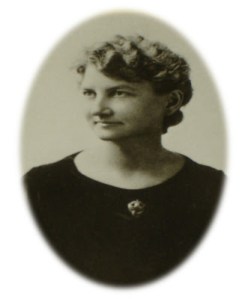
Women’s History Month – Erle Chambers, first woman sworn-in to Arkansas House of Representatives

rep-erle-chambersFirst woman sworn in as a member of the Arkansas General Assembly: Erle Chambers

Miss Chambers of Little Rock was elected in 1922 at the same time as Frances Hunt of Pine Bluff. But because members were sworn in based on their last names, she was actually sworn in first.

She had trained as an attorney at both the University of Arkansas and the University of Chicago, but never practiced law.  She served as Pulaski County probation officer from 1913 until 1917. At that time, she went to work for the Tuberculosis Association, where she would work until her death in 1941.

Miss Chambers served in the Arkansas General Assembly from 1923 until 1926.

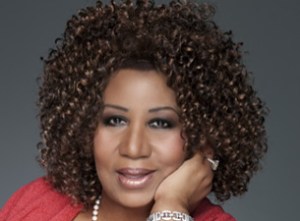
Black History Month – Aretha Franklin and Robinson Center

wjc-arethaTwo days before the Clinton Presidential Center opened, at Robinson Center Music Hall, patrons were warmed by the musical talents of Aretha Franklin.

She shared the Robinson stage with the Arkansas Symphony Orchestra.  The ASO brough Miss Franklin to town as part of the festivities surrounding the opening of the presidential library.  Long a favorite of the Clintons, Miss Franklin sang at his 1993 inaugural festivities the night before he took the oath of office.

Resplendent in a series of white dresses, Miss Franklin was in top form feeding off the love from the audience.  While backstage she may have been dealing with back and knee issues (which the Culture Vulture saw first hand), when she stepped on to the stage she was giving her all as she rolled through hit after hit from her starry career.  She sang, she played the piano, she entertained!

It was a sold out house and her voice and energy reached the last row of the balcony.

Born in Memphis, she moved to Detroit before age five and grew up singing at church.  After gaining some fame singing gospel songs, at 18 she switched to more secular music.  After initially singing for Columbia Records, she moved to Atlantic Records, later to Arista, and now has her own label.

Among her hits are “Respect,” “You Make Me Feel Like a Natural Woman,” “Chain of Fools,” “Think,” “Share Your love with Me,” “Bridge Over Troubled Water,” “Spanish Harlem,” “Break It to Me Gently,” “Jump to It,” “Get It Right,” and “Freeway of Love.”

Franklin received a star on the Hollywood Walk of Fame in 1979 and became the first woman inducted into the Rock and Roll Hall of Fame in 1987. NARAS awarded her a Grammy Legend Award in 1991, then the Grammy Lifetime Achievement Award in 1994, the same year she was a Kennedy Center Honoree in 1994.  In 1999, she received the National Medal of Arts from Bill Clinton.  George W. Bush bestowed her the Presidential Medal of Freedom in 2005.  She has 17 Grammy Awards and 14 additional nominations.

Little Rock Look Back: And the Oscar goes to…”Nine from Little Rock”

AMPAS Nine from LROn April 5, 1965, the Academy Award for Best Documentary, Short Subject went to the film “Nine from Little Rock.”

Narrated by Jefferson Thomas, Charles Guggenheim’s documentary looks at the nine African-American students who enrolled in Little Rock Central High School in 1957. Thomas, one of the students reflects on the state of race relations in the seven years that had elapsed (up to 1964).  The film also focuses on Ernest Green, Elizabeth Eckford and Thelma Mothershed.

Guggenheim both directed and co-wrote the film. The latter credit was shared with Shelby Storck, who also produced the film.   The film had been commissioned by George Stevens, Jr., for the United State Information Agency.

The Oscar that night was Guggenheim’s first of four.  His others would be for: 1968’s “Robert Kennedy Remembered” (Live Action Short), 1989’s “The Johnstown Flood” (Documentary Short) and 1994’s “A Time for Justice” (Documentary Short).  His son Davis Guggenheim won the Oscar for Documentary, Feature for An Inconvenient Truth.

The film was digitally restored by the Motion Picture Preservation Lab for the 50th anniversary of its win for Best Short Documentary at the 1965 Academy Awards.  It is available for purchase on DVD and can also be viewed in its entirety on YouTube

Black History Month – Maya Angelou and Robinson Center

1414mayaOn February 23, 1998, Maya Angelou appeared with the Arkansas Symphony Orchestra in a concert at Robinson Center.  The evening featured Dr. Angelou narrating Joseph Schwantner’s tribute to Dr. Martin Luther King Jr., “New Morning for the World.”

Dr. Angelou, a former resident of Stamps, Arkansas, was not a stranger to Little Rock. She had appeared before at Wildwood Park and would later appear at the Clinton Presidential Center.

A former Poet Laureate of the United States and Tony nominated actor, she won a Grammy Award for her reading of “On the Pulse of the Morning” which had been written for the first inauguration of Bill Clinton as President of the United States.

A poet, author, educator, dancer, singer, actor, and activist, she wrote seven autobiographies. The most notable was arguably I Know Why the Caged Bird Sings.  Born in St. Louis, she spent part of her childhood in Arkansas before moving to California.  She led a peripatetic life both geographically and career-wise ending as a professor at Wake Forest and residing in North Carolina.  It was there that she died in May 2014.

Little Rock Look Back: US Supreme Court decision in BATES V. LITTLE ROCK

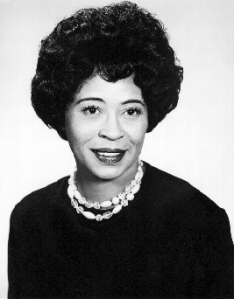
bates daisyOn February 23, 1960, the U. S. Supreme Court handed down a decision in the case of Daisy BATES et al., Petitioners, v. CITY OF LITTLE ROCK et al.  This case had been argued before the Court in November 1959.

Daisy Bates of Little Rock and Birdie Williams of North Little Rock were the petitioners.  Each had been convicted of violating an identical ordinance of an Arkansas municipality by refusing a demand to furnish city officials with a list of the names of the members of a local branch of the National Association for the Advancement of Colored People. The question for decision was whether these convictions can stand under the Due Process Clause of the Fourteenth Amendment to the United States Constitution.

The Little Rock ordinance (10,638) was passed on October 14, 1957. It charged that certain non-profits were actually functioning as businesses and using non-profit status to skirt the law. Therefore it required the non-profits to disclose their members and sources of dues.  North Little Rock passed an identical ordinance.

(Mayor Woodrow Mann was not present at the meeting of the LR Council when the ordinance was passed. But he signed all of the resolutions and ordinances approved that night.  Ordinance 10,638 was the only legislation that night which had also been signed by Acting Mayor Franklin Loy.  Mayor Mann crossed through Loy’s name and signed his own.)

Mrs. Bates and Mrs. Williams as keepers of the records for their respective chapters of the NAACP refused to comply with the law.  While they provided most of the information requested, they contended they did not have to provide the membership rosters and dues paid.

After refusing upon further demand to submit the names of the members of her organization, each was tried, convicted, and fined for a violation of the ordinance of her respective municipality. At the Bates trial evidence was offered to show that many former members of the local organization had declined to renew their membership because of the existence of the ordinance in question. Similar evidence was received in the Williams trial, as well as evidence that those who had been publicly identified in the community as members of the National Association for the Advancement of Colored People had been subjected to harassment and threats of bodily harm.

Each woman was convicted in the court of Pulaski Circuit Court, First Division, William J. KirbyJudge. They were fined $25 a person.  On appeal the cases were consolidated in the Supreme Court of Arkansas in 1958. The convictions were upheld by five justices with George Rose Smith and J. Seaborn Holt dissenting.

Mrs. Bates and Mrs. Williams then appealed to the U. S. Supreme Court.  The pair’s legal team included Robert L. Carter and George Howard, Jr. (who would later become a federal judge).  Little Rock City Attorney Joseph Kemp argued the case for the City.  The arguments before the U. S. Supreme Court were heard on November 18, 1959.

The SCOTUS decision was written by Associate Justice Potter Stewart.  He was joined by Chief Justice Earl Warren and Associate Justices Felix Frankfurter, Tom C. Clark, John M. Harlan II, William J. Brennan and Charles E. Whittaker.  Justices Hugo Black and William O. Douglas wrote a concurring opinion.

The U. S. Supreme Court reversed the lower courts.

In sum, there is a complete failure in this record to show (1) that the organizations were engaged in any occupation for which a license would be required, even if the occupation were conducted for a profit; (2) that the cities have ever asserted a claim against the organizations for payment of an occupation license tax; (3) that the organizations have ever asserted exemption from a tax imposed by the municipalities, either because of their alleged nonprofit character or for any other reason.

We conclude that the municipalities have failed to demonstrate a controlling justification for the deterrence of free association which compulsory disclosure of the membership lists would cause. The petitioners cannot be punished for refusing to produce information which the municipalities could not constitutionally require. The judgments cannot stand.

In their concurring opinion, Justices Black and Douglas wrote that they felt the facts not only violated freedom of speech and assembly from the First Amendment, but also aspects of the Fourteenth Amendment. They wrote that the freedom of assembly (including freedom of association) was a principle to be applied “to all people under our Constitution irrespective of their race, color, politics, or religion. That is, for us, the essence of the present opinion of the Court.”

Neither the Gazette or Democrat carried any reaction from City leaders. There was a City Board meeting the evening of the decision. If it was mentioned, the minutes from the meeting do not reflect it.

Arkansas Attorney General Bruce Bennett, on the other hand, was very vocal in his outrage. The city laws were known as Bennett Laws because they had been drafted by him as ways to intimidate African Americans and others he viewed as agitators.

In 1960 Bennett was challenging Governor Orval Faubus for the Democratic gubernatorial nomination.  In reaction to the to the Supreme Court he vowed that, if elected Governor, he would “de-integrate” (a term he proudly took credit for coining) the state.

For his part, and not to be outdone by the AG, Faubus fretted that the Court’s decision meant that Communists would be able to give money to the NAACP.

Black History Month – Daisy Bates and Robinson Center

bates daisyToday is the Daisy Bates Holiday in the State of Arkansas.  So it is an appropriate day to pay tribute to Mrs. Bates, who played a leading role in the Little Rock Integration Crisis of 1957.

Daisy Lee Gatson Bates and her husband were important figures in the African American community in the capital city of Little Rock.  Realizing her intense involvement and dedication to education and school integration, Daisy was the chosen agent after nine black students were selected to attend and integrate a Little Rock High School.  Bates guided and advised the nine students, known as the Little Rock Nine, when they enrolled in 1957 at Little Rock Central High School. President Clinton presented the Little Rock Nine with the Congressional Gold Medal and spoke at the 40th anniversary of the desegregation while he was in office.

When Mrs. Bates died, a memorial service was held at Robinson Center on April 27, 2000.  Among the speakers were President Bill Clinton, Secretary of Transportation Rodney Slater, and Rev. Rufus K. Young, pastor of the Bethel AME Church.  Others in attendance included Lt. Gov. Winthrop Paul Rockefeller, Mayor Jim Dailey, Presidential diarist Janis Kearney, former senator and governor David Pryor, and five members of the Little Rock Nine:  Carlotta Walls Lanier, Ernest Green, Minnijean Brown Trickey, Jefferson Thomas, and Elizabeth Eckford.

It was during his remarks at the service that President Clinton announced he had asked that Bates’ south-central Little Rock home be designated as a national historic landmark.