
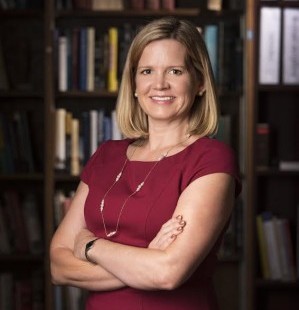
Dr. Clea Hupp of UALR Dept. of History discusses ‘Tribalism, Sectarianism, and Political Islam’ tonight as part of Evenings with History

Clea 2015Dr. Clea Hupp, Chair in the UALR Department of History will give a lecture on “‘Tribalism, Sectarianism, and Political Islam” at the 2015-16 Evenings with History Series at 7 p.m. Tuesday, Nov. 3, in the Ottenheimer Auditorium in the at the Historic Arkansas Museum in downtown Little Rock.

Current events in the Middle East are rooted in the politics of the 20th century. Communism, nationalism and imperialism left a footprint on the region and shaped the recent conflicts of the area. To what extent do cultural factors like tribalism and sectarianism influence the people of the Middle East, and how do they intersect with politics?

Dr. Hupp will look at the struggle between secularism and political Islam, and how the philosophical trends of the
region have influenced political movements.

The Evenings with History series is sponsored by the University History Institute and features presentations by UALR faculty members who share their current research.

Unknown-6An individual subscription to the series, at $50 annually, includes these benefits: Admission to all six lectures.

joint subscription to the series, at $90 annually, offers couples and friends a savings of $10.

Fellow of the Institute, at $250 annually, receives admission to the six lectures plus an invitation to special presentations for Fellows only. This often includes a private evening with a noted author.

The Institute also offers a Life Membership at $1,000.

Subscribers to the series help support historical research.  The presenters donate their time, and the University History Institute uses all proceeds from the series to encourage research at the University of Arkansas at Little Rock.  In recent years annual Institute grants, made possible by the Evenings with History series, have made major purchases of historical research materials for UALR.  Subscriptions and donations to the Institute are tax deductible as allowed by law.

For more information about the University History Institute and the full list of lectures and presenters for the 2015-16 series, go to Evenings with History.

Dolly Parton’s Imagination Library focus of Clinton School program tonight

uacs dpilimglib2cIn 1995, Dolly Parton launched an exciting new effort to benefit the children of her home county in East Tennessee. Parton’s vision was to foster a love of reading among her country’s preschool children and their families by providing them with the gift of a specially selected book each month.

Since launching 20 years ago, Dolly Parton’s Imagination Library has become the premier early childhood book-gifting program in the world, by mailing over 66 million books in Australia, Canada, the United Kingdom, and the United States.

Currently the program mails over 830,000 specially selected, age appropriate books monthly to registered children from birth to age five. Parton’s vision was to create a lifelong love of reading, prepare children for Kindergarten, and inspire them to dream more, learn more, care more, and be more.

Tonight at 6pm at the Clinton School, Jeff Conyers, the executive director of Dolly Parton’s Imagination Library, will discuss the program.

Family bonds and College Football, tonight at the Clinton School

uacs last seasonPolitical strategist Stuart Stevens will speak at the Clinton School this evening about his book, The Last Season: A Father, a Son and a Lifetime of College Football tonight at 6pm at the Clinton School.

In the fall of 2012, after serving as the top strategist for Mitt Romney’s 2012 presidential campaign, Stuart Stevens, having turned sixty, realized that he and his ninety-five-year-old father had spent little time together for decades. His solution: a season of attending Ole Miss football games together, as they’d done when college football provided a way for his father to guide him through childhood–and to make sense of the troubled South of the time. Now, driving to and from the games, and cheering from the stands, they take stock of their lives as father and son, and as individuals, reminding themselves of their unique, complicated, precious bond. Poignant and full of heart, but also irreverent and often hilarious, “The Last Season” is a powerful story of parents and children and the importance of taking a backward glance together while you still can.

Stuart is one of the nation’s most successful political strategists and media consultants. For twenty-five years, Stuart has been the lead strategist and media consultant for some of the nation’s toughest political campaigns such as Senator Portman, Senator Blunt, Governor Haley Barbour, Governor Tom Ridge and President George W. Bush in 2000 and 2004.

In 2014, he was lead strategist for Senator Thad Cochran’s come from behind runoff win and led an 8 state Super PAC campaign to help secure the new Senate Majority. Beginning his political career in his native Mississippi, Stuart first worked on Thad Cochran’s campaigns and has gone on to help elect more governors and US Senators than any other current Republican media consultant.

Stuart has written five books, published numerous essays and articles, written extensively for both film and television, is a former Fellow of the American Film Institute and a current weekly columnist for The Daily Beast.

Collegiate Sports during Great Depression focus of Clinton School address tonight

Democratic SportsDisparity in collegiate sports has been around since, well, the beginning of collegiate sports. Tonight at 6pm at the Clinton School, Brad Austin discusses “Democratic Sports: Men’s and Women’s College Athletics during the Great Depression.”

 

Austin is a professor of history at Salem State University, where he teaches undergraduate and graduate courses in modern American history, sports history, and history education, and has served as the chairperson of the American Historical Association’s Teaching Prize Committee.


In his new book “Democratic Sports: Men’s and Women’s College Athletics during the Great Depression,” Austin explores the funding cuts that America public universities suffered while they were also responsible for educating an increasing number of students. University leaders used their athletic programs to combat the crisis of mounting financial troubles, coupled with a perceived increase in the number of “radical” student activists, and to preserve “traditional” American values and institutions, prescribing different models for men and women.


In the book, Austin discusses the stark contrast of educators emphasizing the individualistic, competitive nature of men’s athletics in order to reinforce the existing American political and economic systems, while the prevailing model of women’s college athletics taught a communal form of democracy, denying women individual attention and high-level competition. “Democratic Sports” tells the important story of how men’s and women’s college athletic programs survived, and even thrived, during the most challenging decade of the twentieth century.

Architecture & Design Network focuses on architectural photographer Pedro E. Guerrero

pedro e guererroTonight at 6pm at the Arkansas Arts Center, the Architecture and Design Network, in collaboration with the Arkansas Educational Television Network (AETN), will present an  American Masters Series film “Pedro E. Guerrero: A Photographer’s Journey.”
Following the film, there will be a panel discussion with Dr. Ethel Goodstein-Murphree, Associate Dean, Fay Jones School of Architecture and Design, and Professor of Architecture, Chair; Brian Lang, Chief Curator, Arkansas Arts Center; and Tim Hursley, architectural photographer. A reception at 5:30 will take place prior to the screening and discussion.
Directed and produced by the award winning team of Ray Telles and Ivan Iturruaga, the American Masters Series film, Pedro E. Guerrero: A Photographer’s Journey, recounts the Arizona native’s life (1917-2012) and remarkable career. In 1939, the then 22 year old Guerrero, a novice photographer who had studied photography at the Art Center in Pasadena, CA, was hired by Frank Lloyd Wright to document the construction of Taliesin West, then being built on a site overlooking Paradise Valley. Wright’s spur of the moment decision to hire him led to a relationship that lasted until Wright’s death in 1959, interrupted only by the young man’s Army Air Corps service during WW II.
Guerrero’s twenty year association with Wright catapulted him into the center of modernist art and architecture. Moving to New York City following the war, while still working with Wright, Guerrero was much sought after by major magazines that focused on architecture and design. He also went on to photograph the work of sculptors Alexander Calder and Louise Nevelson as well the artists themselves.
In addition to  excerpts of interviews with art historians and critics long familiar with Guerrero’s work, the film offers a view of  his early life experience – his growing up in an Arizona town, not far from Taliesin West, where educational opportunities for offspring of families with Mexican roots were limited. While  he intended to study art after high school, his introduction to photography altered his course.
Support for  Architecture and Design Network (ADN), a non-profit organization, is provided  the Arkansas Arts Center, the Fay Jones School of Architecture and Design, the Central Arkansas Section of the Arkansas Chapter of the American Institute of Architects (AIA) and friends in the community. The film’s showing and the reception that precedes it are free and open to the public. For  additional information contact ardenetwork@mac.com.

Challenges of Democracy & Leadership in South topic of Clinton School noontime talk

Today at noon, the Clinton School Speaker Series will feature a program on democracy and leadership in the South.
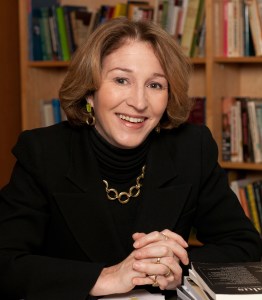
In “Uniting Mississippi,” Eric Thomas Weber, associate professor of public policy leadership at the University of Mississippi and executive director of the Society of Philosophers in America, applies a new, philosophically informed theory of democratic leadership to Mississippi’s challenges.  These challenges could also be applied to Arkansas and most Southern states.

the book begins with an examination of Mississippi’s apparent Catch-22, namely the difficulty of addressing problems of poverty without fixing issues in education first, and vice versa. These difficulties can be overcome if we look at their common roots, argues Eric Thomas Weber, and if we practice virtuous democratic leadership. Since the approach to addressing poverty has for so long been unsuccessful, Weber reframes the problem.

The challenges of educational failure reveal the extent to which there is a caste system of schooling. Certain groups of people are trapped in schools that are underfunded and failing. The ideals of democracy reject hierarchies of citizenship, and thus, the author contends, these ideals are truly tested in Mississippi. Weber offers theories of effective leadership in general and of democratic leadership in particular to show how Mississippi’s challenges could be addressed with the guidance of common values.

The book draws on insights from classical and contemporary philosophical outlooks on leadership, which highlight four key social virtues: wisdom, courage, moderation, and justice. Weber brings to bear each of the virtues of democratic leadership on particular problems, with some overarching lessons and values to advance.


Juggling Career and Family focus of Anne-Marie Slaughter remarks at Clinton School

AMS-alt2_300dpiThis evening at the Clinton School at 6pm, Anne-Marie Slaughter will be discussing her book Unfinished Business: Women, Men, Work, Family.

When Anne-Marie Slaughter, former dean of the Princeton University Woodrow Wilson School of Public and International Affairs, accepted her dream job as the first female Director of Policy Planning at the U.S. State Department in 2009, she was confident she could juggle the demands of her position in Washington, D.C., with the responsibilities of her family life in suburban New Jersey.

But then life intervened. Parenting needs caused her to make a decision to leave the State Department and return to an academic career that gave her more time for her family. After that decision and the reactions to it, she began to question the feminist narrative she grew up with and wrote an article for The Atlantic, “Why Women Still Can’t Have It All,” which created a firestorm, sparked intense national debate, and became one of the most-read pieces in the magazine’s history.

In her new book, “Unfinished Business: Women, Men, Work, Family,” Slaughter provides a powerful, persuasive, and deeply inclusive vision for how to finish the long struggle for equality between men and women, work and family.

Anne-Marie Slaughter, former dean of the Princeton University Woodrow Wilson School of Public and International Affairs, served as the first female Director of Policy Planning at the U.S. State Department. Slaughter is president and CEO of New America, a nonprofit think tank that is dedicated to the renewal of American politics, prosperity, and purpose in the digital age through big ideas, technological innovation, next generation politics, and creative engagement with broad audiences.