
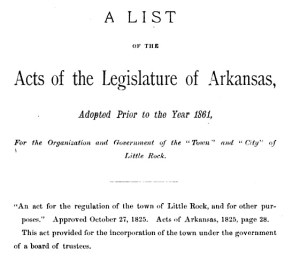
 Little Rock started functioning as the capital of Arkansas in June 1821. But by 1825 the settlement known as Little Rock was little more than a loosely defined group of structures. One hundred and ninety-three years ago today, on October 27, 1825,Territorial Governor George Izard signed legislation which started establishing a framework for Little Rock to function as a city.
It established that Little Rock citizens could elect a board of trustees to decide matters. Those trustees would choose one of their own to be a presiding officer. Though Little Rock would not be officially incorporated until 1831, this was the first step towards incorporation. The first trustees, elected for 1826, were Robert Crittenden, Joseph Henderson, Nicholas Peay, Bernard Smith and Isaac Watkins. Smith was chosen to be the presiding officer.
Crittenden had been largely responsible for the relocation of the capitol to Little Rock, where he owned a lot of land. He was a major political force in Arkansas politics during the territorial days. Watkins was a nephew of a signer of the Declaration of Independence. He had established the first tavern in Little Rock in 1821 and later he first mill in 1826. He was murdered in 1827 and the perpetrator was never captured.
Peay bought the tavern from Watkins in 1826 and continued in the tavern and hotel business the rest of his life. He later served on the Little Rock City Council and was acting mayor. His son Gordon Neill Peay served as Mayor of Little Rock. The Peay family also cofounded Worthen Bank and Christ Episcopal Church. Members of several branches of Mr. Peay’s descendants including the Worthen and Hurst families remain active in Little Rock affairs.
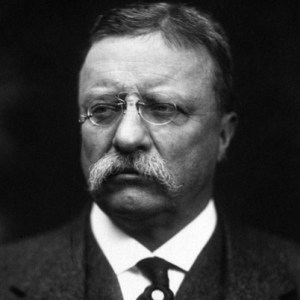 On October 25, 1905, President Teddy Roosevelt, recently elected to a four year term in his own right, made an appearance in Little Rock.
 One hundred and nine years ago today (October 24, 1909), William Howard Taft became the third sitting president to visit Little Rock. His visit is the shortest presidential visit to the city, to date.
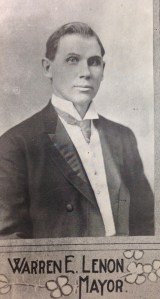 In April 1903, Warren E. Lenon took the oath of office and became Little Rock Mayor. He had previously served a decade on the City Council. A native of Iowa, Mr. Lenon was a banker and real estate developer.
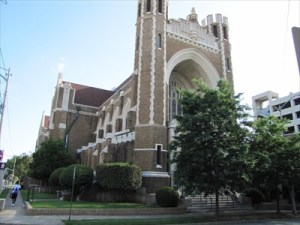 This weekend, Little Rock’s First Presbyterian Church will celebrate 190 years.
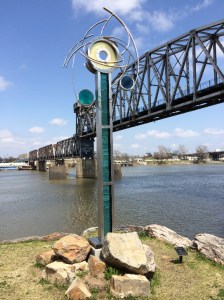 On October 19, 2012, the first winner of the Sculpture at the River Market public monument sculpture competition was dedicated.
 On October 18, 1820, Territorial Governor James Miller signed legislation designating Little Rock as the new capital for Arkansas. This was a mere 10 months after the first permanent settlement was established in Little Rock.
 Little Rock Culture Vulture