RobinsoNovember: Dr. William Grant Still

bhm StillLast night, the Arkansas Symphony Orchestra’s Opus Ball was the first public event in the William Grant Still Ballroom of Robinson Center.  This afternoon at 3pm, the Arkansas Symphony Youth Orchestra is playing a Still composition in a performance with Ballet Arkansas at the Albert Pike Memorial Temple on Scott Street.

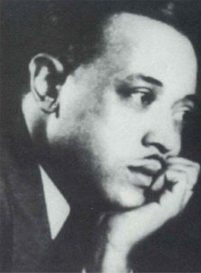
Dr. William Grant Still was a legend in his own lifetime.  Dr. Still, who wrote more than 150 compositions ranging from operas to arrangements of folk themes, is best known as a pioneer. He was the first African-American in the United States to have a symphonic composition performed by a major orchestra. He was the first to conduct a major symphony orchestra in the US; the first to conduct a major symphony in the south; first to conduct a white radio orchestra in New York City; first to have an opera produced by a major company. Dr. Still was also the first African-American to have an opera televised over a national network

Dr. Still was born May 11, 1895 in Woodville, Mississippi to parents who were teachers and musicians. When Dr. Still was only a few months old, his father died and his mother took him to Little Rock. Inspired by RCA Red Seal operatic recordings, his musical education began with violin lessons.

After his studies at Wilberforce University and the Oberlin Conservatory of Music, he played in orchestras and orchestrated for various employers including the great W. C. Handy. For several years he arranged and conducted the “Deep River Hour” over CBS and WOR.

In the 1920’s, Still made his first appearances as a serious composer in New York. Several fellowships and commissions followed. In 1994, his “Festive Overture” captured the Jubilee prize of the Cincinnati Symphony orchestra. In 1953, he won a Freedoms Foundation Award for “To You, America!” which honored West Point’s Sesquicentennial Celebration. In 1961, he received honors for this orchestral work, “The Peaceful Land”. Dr. Still also received numerous honorary degrees from various colleges and universities, as well as various awards and a citation from Arkansas Governor Dale Bumpers in 1972.

In 1939, Dr. Still married journalist and concert pianist Verna Avery, who became his principal collaborator. They remained together until Dr. Still’s death in 1978.  In a proclamation marking the centennial of Dr. Still’s birth, President Bill Clinton praised the composer for creating “works of such beauty and passion that they pierced the artificial barriers of race, nationality and time.”

In 1995, Dr. Still was posthumously inducted into the Arkansas Black Hall of Fame.

RobinsoNovember: First Dance at Robinson Center

RC-dance-orchestra

Jan Garber and his orchestra

Tonight the Arkansas Symphony Orchestra hosts its annual Opus Ball inside the new William Grant Still Ballroom at Robinson Center.  That the first public event in this space will be a dance is only appropriate.  The first public event in the original Robinson was also a dance.  It was held four months before the building even opened.

On October 4, 1939, the convention hall on the lower level was the site of a preview dance.  The pecan block flooring had been installed just the week before.

The first four people to enter the building as paying guests were Mr. and Mrs. Alfred Wilheim, Frances Frazier and Bill Christian.  Reports estimated 3,200 people attended and danced to the music of Jan Garber and His Orchestra.  By happenstance, Garber and his musicians had also played in Little Rock on January 26, 1937, the date of the election which approved the auditorium bonds.  Since Little Rock then did not have a suitable space, that appearance had been on the stage of the high school auditorium.


RobinsoNovember: Election Days in 1937, 1940 and 2013

Since today is Election Day, it is appropriate to look back at the three different campaigns to build, furnish, and restore Robinson Center Music Hall.  (Note, there have been at least two other General Capital Bond elections which contained money for Robinson, but those were not stand alone elections about the auditorium and have thus been excluded.

1937-robinson-election1937

On January 26, 1937, Little Rock voters were asked to approve three bond programs which would build a municipal auditorium, expand the City library, and construct a park for African Americans.  Each issue had its own group of supporters, though they all encouraged “Yes” votes for each question.  The “Forward Little Rock Committee” (sometimes referred to as the “Little Rock Forward Committee) was headed by W. H. Williams and led the charge for the auditorium.   The bonds for the auditorium would be $468,000 in general obligation bonds which would be paid off between 1940 and 1971.  This was toward a total cost of $760,000 for the entire project.

The campaign stressed the economic benefits from all the conventions which would be held in Little Rock after an auditorium was constructed.  The focus was as much, if not more, on the exhibition hall space as it was about the music hall space.   The Municipal Auditorium had the lowest level of support of all three issues, but it still passed overwhelmingly.  It is interesting to note that the design featured in the campaign ad bears little resemblance to the project which was actually constructed.

The final vote total was 1,518 for and 519 against. The project passed in each of the City’s 23 precincts.


1940-robinson-election1940

Because the project ran out of money, Robinson Auditorium opened in February 1940 with out any landscaping, furnishings in the meeting rooms, and a lack of equipment in various areas throughout the facility.  To remedy this, additional bonds for the auditorium were added to a request put to the voters on April 2, 1940.  The dollar amount was $30,000 for the completion of the project.  The other two issues were additional fire equipment and establishment of an administrative building at the municipal airport.

The campaign for the new bonds used a similar structure and message as the 1937 election to build the auditorium.  There were newspaper ads by the steering committee (this time simply called the Citizen’s Committee and led by Omar Throgmorton) and support from civic organizations.  One thing very different from the 1937 campaign was the presence of an actual building.  On Sunday, March 31, just two days before the election, there was an open house for the public to explore the edifice.  From 1:00 p.m. to 9:00 p.m., members of various Little Rock Boy Scout troops led 4,000 visitors on tours of the auditorium.  Visitors were shown all over the building; one scout calculated that the walking tour equated to two miles.  Though most people were from Little Rock, the guest registry indicated visitors from California and Pennsylvania

On election day, the Auditorium bonds passed with a vote of 1,413 to 423.  Every precinct in every ward of the city voted in favor of the new bonds.


restore-robinson-20132013

In an effort to bring Robinson Center Music Hall into the 21st Century, the Advertising and Promotion Commission (which took over administration of Robinson in 1971) leadership decided to dedicate the renewal of their bonds to the renovation of Robinson.  What had been built as a 1940 civic auditorium did not meet the artistic or convention needs of the 2010s.  The Restore Robinson Committee was led by former LR Mayor Jim Dailey, civic leader Charles Stewart and A&P Commissioner Capi Peck.  In campaign literature Mr. Stewart noted: “An upgraded Robinson will allow thousands of children and residents from Little Rock to enjoy future dance recitals, graduations and community gathering in a spectacular new performance and events center.”

Plans called for taking the historic building down to its exterior walls (except for the front lobby which remained).  The music hall level was to be dropped 30 feet to street level.  A new conference center would wrap around the northern facade of the structure.

The referendum passed with 5,183 For vs. 1,800 Against.

The building closed on July 1, 2014 with a ceremonial breaking of the stage flooring.  On July 1, 2015, the reconstruction “topping out” ceremony took place.  The ribbon cutting for the new structure will take place on November 10, 2016, at 10 a.m.

RobinsoNovember: E. E. “Ned” Beaumont

e-e-beaumontOnce Mayor J. V. Satterfield was ready to appoint a new Auditorium Commission, he chose longtime banker E. E. “Ned” Beaumont to lead it.

After graduating from Little Rock High School in 1910, Beaumont entered the banking world. His first stop was with State National Bank. In 1914, he moved to Exchange National Bank.  Four years later, he was hired by Bankers Trust Company. After sixteen years there, he joined Commercial National Bank.  He would be with them from 1934 until his death in 1968.

In January 1940, Mayor Satterfield appointed him to be chairman of the reconstituted Auditorium Commission.  As such, he took a leadership role as a spokesman for the facility during its opening in February 1940.  Beaumont served as chairman of the Commission from January 1940 until his death in July 1968.  During his tenure the building saw the touring industry change.  With the rise of Las Vegas and Miami and longterm performance destinations, fewer top name singers were touring by the mid-1950s.  The music scene also changed in content as it went from Big Band to rock and roll.  (No word on his thoughts of Elvis Presley.)

On August 19, 1968, the City Board of Directors adopted a resolution memorializing Beaumont’s contributions to Little Rock civic life.  In addition to his long service on the Auditorium Commission, he had also served as treasurer of the Little Rock School District and of the Pulaski County School District.

Get FREE tickets to Ark Symphony concert

aso-nov-30On Tuesday, November 1, starting at 10am, the Arkansas Symphony Orchestra will be giving away FREE tickets to their November 30 “Thank You to Little Rock” concert.

The tickets will be available on the front steps of Robinson from 10am until 6pm. If they run out of tickets earlier than 6pm, they will end it earlier.  So don’t wait until evening Rush Hour!

This November 30 concert will be presented to thank Little Rock voters for their support of the Restore Robinson project. It is also in appreciation of continued patronage by audiences as the Symphony has been performing in other venues.

Don’t miss on this opportunity to attend a historic event in the restored Robinson Center Music Hall!


Creative Class 2016: Jason Wiest

cc16-wiestAfter a career in journalism and public relations, Jason Wiest is now focusing more on the entertainment side of Little Rock.  As the owner of Club Sway, he programs a variety of music and theatrical events.
While Club Sway operates as a bar, most nights there are special performances.  Jason provides SWAY as a staging area for locally produced parties created by GlitterRock as well as featuring nationally known entertainers.

For the second year in a row, Club Sway is producing The Rocky Horror Show during Halloween.  The final two performances are tonight and tomorrow at 8:30pm.

Jason has also been an active board member with Ballet Arkansas, giving special assistance as they planned their move downtown. He has also been a supporter of film festivals in downtown Little Rock.

Creative Class 2016: Tatiana Roitman Mann

cc16-roitmanPianist Tatiana Roitman Mann has appeared as a soloist and recitalist across North America and Europe.  Last night she appeared with the Arkansas Symphony Orchestra at their River Rhapsodies Chamber Series.  On Friday, October 28, she will be one of the performers at Trinity Cathedral in “A Schubertiade” as part of their Chamber Music Series.

The BBC hailed her performance of  Gershwin’s Rhapsody in Blue with Oxford Pops Orchestra as “formidable…both accurate and with rarely seen joy.” Mann’s radio broadcasts include H.Villa-Lobos’ Mystic Sextet, on NPR’s Performance Today , and B.Bartok’s Contrasts  on New York’s classical music station, WQXR, G. Gershwin’s Rhapsody in Blue on Little Rock’s KLRE.  Tatiana’s recording of the original, big band version of Gershwin’s Rhapsody in Blue was released on Naxos in the album Jazz Nocturne – American Concertos of the Jazz Age.

As a performer of contemporary works, she premiered Speak No Evil by E. McKinley at the American Composer’s Forum, and performed For Don by M. Babbitt, with the composer in attendance, in celebration of his 90th birthday at Tanglewood’s Contemporary Music Festival.  As the recipient of the Peggy Rockefeller Memorial Fellowship at Tanglewood, she worked with James Levine, Dawn Upshaw, Yo-Yo Ma, Charles Rosen and Claude Frank.

Tatiana’s interpretations of solo, concerto and chamber repertoire are characterized by their warmth and emotional intensity. As a versatile artist whose engagements range from concerto, solo and chamber performances to I. Stravinsky’s Petrushka with the San Diego Symphony and the Mainly Mozart education series Joyful Noise, she strongly believes the only way that “art” music can remain pertinent in the 21st century is by conveying and elevating its emotional quintessence.

Tatiana’s recent concerto performances include L. van Beethoven’s Piano Concerto #4 op.58, C. Saint-Saens Concerto #4 op.44 in San Diego, CA, G. Gershwin’s Rhapsody in Blue with Bismarck-Mandan Symphony in ND, L. van Beethoven’s Choral Fantasy in Sydney, Australia, as well as Rhapsody in Blue with the Arkansas Symphony. During the 2016-2017 concert season Mann will return to River Rhapsodies for performances of works by F. Schubert and M. Ravel. Additional engagements include a solo recital in the “Arts and Life” series at Harding University, M. de Falla’s Evenings in the Gardens of Spain with Venice Symphony, FL under the baton of Maestro Imre Pallo, and other performances as a soloist and collaborator with various chamber music groups throughout the US.

Tatiana holds graduate degrees from Manhattan School of Music, the Royal Academy of Music in London and a DMA from University of Minnesota.