
THIS LITTLE PIGGY WENT TO MARKET comes to Arkansas Arts Center Children’s Theatre stage

This Little Piggy Went to MarketThe 2018–2019 Arkansas Arts Center Children’s Theatre continues this winter with This Little Piggy Went to Market. The show runs February 1– 17, 2019. Performances of This Little Piggy Went to Market are Fridays at 7 p.m. and Saturdays and Sundays at 2 p.m.

Hooray! Hooray! It’s Cajun market day! Little Piggy loves Cajun market day. So many good things to eat! So many good games to play! When Mama Piggy sends her precious piglet off to Boudreaux’s Bayou Market for flour and sugar and eggs – wearing the pretty little dress her grandma made – she reminds her of three things: Be kind to others; obey all the rules; and never stray from the market road.

Fairly squealing with excitement, Little Piggy trots off to town, promising to be good. But can such a fun-loving little pig keep her promise? Especially when her two best friends, Skinny Piggy and Curly Piggy, join the adventure? They are the two “rowdiest boys in the bayou,” after all.

This Little Piggy Went to Market was written by Keith Smith. The Arkansas Arts Center Children’s Theatre’s production of This Little Piggy Went to Market is directed by John Isner. Bradley D. Anderson is the Artistic Director. Original music was composed by Lori Isner, set design and technical direction by Frank Mott, costume design by Nikki Gray, properties design by Cathleen Brignac, and lighting design by Mike Stacks. Liz McMath is the stage manager.

The cast includes: Mark Hansen (Boudreaux), Anthony McBride (Thibodeaux and Curly Piggy); Stephen Jones (Fontenot and Skinny Piggy); Morgan Jones (Charmaine); Samantha Harrington (Little Piggy); Georgeann Burbank (Momma Piggy); and Hazel Ragsdell (Market Girl).

The Arkansas Arts Center Children’s Theatre will offer several events in conjunction with This Little Piggy Went to Market including a Pay-What-You-Can preview, opening night celebration and a pajama party. Full programming details can be found below.

Friday, February 1, 2019
Opening Night Dinner at Watercolor in the Park – 5 p.m.
Join us for dinner at Watercolor in the Park before the 7 p.m. opening night performance of This Little Piggy Went to Market! Make memories while enjoying a Cajun Buffet Dinner, with favorites like Cajun Spiced Pork Loin, Veggie Gumbo, PK Mac and Cheese, Hand Breaded Chicken Tenders, Strawberry Shortcake and more. Creative coloring placemats featuring activities and artwork from the show will be available for children to enjoy. Seatings at 5 p.m., 5:15 p.m., 5:30 p.m., 5:45 p.m., and 6 p.m.

Reservations recommended. Call 501-396-0390 for reservations

Friday, February 1, 2019
Opening Night Celebration: This Little Piggy Went to Market – 7 p.m.
After the show, enjoy a meet and greet with the cast, snacks and punch to celebrate the opening night of This Little Piggy Went to Market.

Friday, February 8, 2019
Pajama Night at This Little Piggy Went to Market – 7 p.m.
Toss on those cute pajamas and join us at the Children’s Theatre for the 7 p.m. performance of This Little Piggy Went to Market. Stickers are available at the Box Office before the show for children (and parents!) wearing pajamas.

Saturday, February 9, 2019
ASL Interpreted Performance – 2 p.m.
There will be American Sign Language interpreters at the 2 p.m. performance of This Little Piggy Went to Market. Visit the Box Office before the performance for seating assistance.

For more information, visit ArkansasArtsCenter.org/theatre or call 501-372-4000.
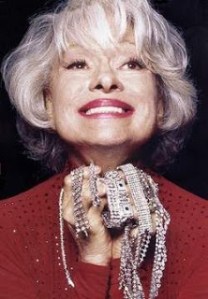
Rock the Oscars 2019: Carol Channing

On January 31, 1921, future “Little Girl from Little Rock” and Oscar nominee Carol Channing was born. Alas it was in Seattle.

After gaining the notice of New York critics and audiences in the musical revue, Lend an Ear, Channing achieved Broadway stardom playing fictional Little Rock native Lorelei Lee (the creation of Anita Loos) in Gentlemen Prefer Blondes.  In this show, which opened in December 1949, she introduced the Leo Robin-Jule Styne songs “Little Girl from Little Rock” and “Diamonds Are a Girl’s Best Friend.”

In 1964, she won the Actress in a Musical Tony for her second signature role playing the title character in Hello, Dolly!  Channing also earned a special Tony in 1968 for Dolly when it became the longest-running Broadway musical.

On November 15, 1966, Carol Channing opened a six day stint in HELLO, DOLLY! at Robinson Auditorium.  She would play 8 sold out shows over those six days.  She had just wrapped filming THOROUGHLY MODERN MILLIE (for which she would receive an Oscar nomination). She had specifically requested that Little Rock be added to the tour.

While in Little Rock, Channing was entertained at the Arkansas Governor’s Mansion and feted at parties.  She was made an honorary citizen of Little Rock, as well.  But she was here to perform. And perform she did. She was rarely known to miss a performance and always gave her utmost.  Bill Lewis, in his review in the ARKANSAS GAZETTE, stated “To hear Channing sing ‘Hello, Dolly!’ Is one of the great experiences of all musical theater to date…”

In 1993, she spent her birthday in Washington DC at a White House dinner for the National Governors’ Association.  This was the Clintons’ first official White House dinner after moving in to the residence eleven days prior.  President Bill Clinton led the crowd in singing “Happy Birthday” to her.  She remarked to the President that she was Christian Scientist and didn’t celebrate birthdays, which meant she didn’t get any older.  He replied that it meant the night was her first birthday (it was her 72nd in actuality).

She died earlier this month just two weeks shy of her 98th birthday.

Little Rock Look Back: A Municipal Auditorium approved by LR Voters in 1937

On January 26, 1937, Little Rock voters went to the polls to vote on three different municipal bond issues.  One of them was the construction of a municipal auditorium.

The bonds for the auditorium would be $468,000 in general obligation bonds which would be paid off between 1940 and 1971. This was toward a total cost of $760,000 for the entire project.

The official campaign for the auditorium was sponsored by the Little Rock Forward Committee which was led by W. H. Williams. In campaign advertisements it showed the value of conventions in New York City which was estimated at $100 per convention attendee. Little Rock organizers were estimating a $10 a day expenditure by visitors, which the committee stressed was very conservative. The campaign committee emphasized the importance of acting at that time due to the federal government money involved.

Various committees and organizations endorsed the auditorium project including the Little Rock Chamber of Commerce, Little Rock Federation of Women’s Clubs, and the Young Business Men’s Association.

The thrust of the campaign focused on the economic benefit to Little Rock as well as the fact that the auditorium would be for all citizens. This message was picked up in editorials by both the Democrat and Gazette. In editorials on January 23 and 25, the Democratopined that the benefits of the auditorium would be distributed among all classes of the citizenry. The next day, both papers ran editorials which touted the economic boon an auditorium would bring through conventions and meetings.

The Democrat’s approach broke down the current value of conventions to Little Rock with, what it termed, the city’s “existing inadequate” facilities. The paper emphasized a conservative estimate of what the added value to Little Rock’s economy would be with the new auditorium.

In expressing support for the auditorium the Gazette stressed the values for local, statewide and national groups. “An auditorium would provide a more convenient and better adapted community center for all kinds of local gathering,” and continued that it would make Little Rock “the logical meeting place for state conventions of every sort.” In discussing the value of state, regional and national meetings the paper stressed that the outside money spent by convention attendees has an impact beyond stores, hotels and restaurants.

Both papers also echoed the importance of the federal government financing to make this possible. The Democrat noted that the Public Works Administration grant and federal low cost loan made this an ideal time.

On January 26, 1937, Little Rock voters approved the auditorium bond by a vote of 1,518 to 519. It passed in each of the city’s 23 precincts. Little Rock Mayor R. E. Overman expressed his pleasure at the outcome of the vote and extended his thanks to the voters.

After the election, a Gazette editorial commented on the low turnout for the special election by commenting that the weather had been nice and there were no other barriers to voting. The editorial writer opined that those not voting in the election must not have been opposed to the endeavor.

Tonight at 5:30 – Learn more about becoming involved at Arkansas Rep

Interested in becoming more involved with The Rep? They are back in action and ready for a great 2019 season, but they cannot do it without community support!

On January 22 from 5:30pm to 7:00pm, the Arkansas Repertory Theatre will host an information session about volunteer and involvement opportunities.

Join them to learn about the ways you can volunteer at The Rep and impact the community.

Light refreshments will be provided.

The session will be at the Rep’s main building.

Little Rock Look Back: HAIR brings Age of Aquarius to Robinson Center

Ad for the original production of HAIR in Little Rock. Note the ticket prices. And that they could be purchased at Moses Music Shops.

Forty-seven years ago today, on January 18, 1972, the musical Hair settled in for a week-long run at Robinson Auditorium.  The saga to bring the national tour to Little Rock had actually begun eleven months earlier.

In February 1971, a young Little Rock attorney named Phil Kaplan petitioned the Little Rock Board of Censors to see if it would allow a production of Hair to play in the city. He was asking on behalf of a client who was interested in bringing a national tour to Arkansas’ capital city. The show, which had opened on Broadway to great acclaim in April 1968 after an Off Broadway run in 1967, was known for containing a nude scene as well for a script which was fairly liberally sprinkled with four-letter words. The Censors stated they could not offer an opinion without having seen a production.

By July 1971, Kaplan and his client (who by then had been identified as Southwest Productions) were seeking permission for a January 1972 booking of Hair from the City’s Auditorium Commission which was charged with overseeing operations at Robinson Auditorium. At its July meeting, the Commissioners voted against allowing Hair because of its “brief nude scene” and “bawdy language.”

Kaplan decried the decision. He stated that the body couldn’t “sit in censorship of legitimate theatrical productions.” He noted courts had held that Hair  could be produced and that the Auditorium Commission, as an agent for the State, “clearly can’t exercise prior censorship.” He proffered that if the production was obscene it would be a matter for law enforcement not the Auditorium Commission.

The Commission countered that they had an opinion from City Attorney Joseph Kemp stating they had the authority. One of the Commissioners, Mrs. Grady Miller (sister-in-law of the building’s namesake the late Senator Robinson, she had served on the Commission since 1940), expressed her concern that allowing Hair would open the door to other productions such as Oh! Calcutta!

On July 26, 1971, Southwest Productions filed suit against the Auditorium Commission. Four days later there was a hearing before federal Judge G. Thomas Eisele. Judge Eisele offered a ruling on August 11 which compelled the Auditorium Commission to allow Hair to be performed. Prior to the ruling, some of the Auditorium Commissioners had publicly stated that if they had to allow Hair, they would close it after the first performance on the grounds of obscenity. To combat this, Judge Eisele stated that the Commission had to allow Hair to perform the entire six day engagement it sought.

Upon hearing of the Judge’s ruling, Commissioner Emily Miller offered a succinct, two word response. “Oh, Dear!”

In the end, the production of Hair at Robinson would not be the first performance in the state.  The tour came through Fayetteville for two performances in October 1971 at Barnhill Arena.

On January 18, 1972, Hair played the first of its 8 performances over 6 days at Robinson Auditorium.  In his review the next day, the Arkansas Gazette’s Bill Lewis noted that Hair “threw out all it had to offer” and that Little Rock had survived.

The ads promoting the production carried the tagline “Arkansas will never be the same.”  Tickets (from $2 all the way up to $8.50–the equivalent of $12 to $51 in 2019 dollars) could be purchased at Moses Melody Shops both downtown and in “The Mall” (meaning Park Plaza). That business is gone from downtown, but the scion of that family, Jimmy Moses, is actively involved in building downtown through countless projects. His sons are carrying on the family tradition too.

Little Rock was by no means unique in trying to stop productions of Hair.  St. Louis, Birmingham, Los Angeles, Tallahassee, Boston, Atlanta, Charlotte NC, West Palm Beach, Oklahoma City, Mobile and Chattanooga all tried unsuccessfully to stop performances in their public auditoriums.  Despite Judge Eisele’s ruling against the City of Little Rock, members of the Fort Smith City Council also tried to stop a production later in 1972 in that city. This was despite warnings from City staff that there was not legal standing.

Within a few years, the Board of Censors of the City of Little Rock would be dissolved (as similar bodies also were disappearing across the US). Likewise, the Auditorium Commission was discontinued before Hair even opened with its duties being taken over by the Advertising and Promotion Commission and the Convention & Visitors Bureau staff.  This was not connected to the Hair decision; it was, instead, related to expanding convention facilities in Robinson and the new adjacent hotel.  Regardless of the reasons for their demise, both bygone bodies were vestiges of earlier, simpler and differently focused days in Little Rock.

Ten Minute Play Showcase auditions tonight

Image may contain: text

Auditions will be held on January 14th, between 6pm-9pm for the second annual Ten Minute Play Showcase produced by ACANSA Arts Festival and presented by Arkansas Repertory Theatre!

They are seeking actors ages 13+. Sides will be provided.

Rehearsals will run the month of February with the Showcase production on March 1st and 2nd at The Rep’s Annex Black Box.

Please email hjtrudell@theyarnstorytelling.com with questions.

First 2019 play for The Weekend Theater – THE RUNNER STUMBLES

Image may contain: 2 peopleThe Weekend Theater starts 2019 with a mystery.

A young nun has died under mysterious circumstances in a remote parish in northern Michigan, and her superior, Father Rivard, has been charged with her murder. The action alternates between interrogations, testimony, and scenes from the past.

The relationship which forms, inevitably, spells tragedy, but not until the end of the play in which the extent of their sacrifice is made clear and the identity of the murderer is revealed.

This play, by Milan Stitt, has been captivating audiences since it premiered at Hartford Stage in the 1970s. It is directed by: Laurel Burnette

The cast includes Chad Fulmer, Laura Landers, Drew Ellis, Elizabeth Reha, Mikhala Denney, Leigh Baker, Lee Hill, Jerry Green, and Matt White.

The production runs for eight performances over three weeks.

  • Friday, January 11 – 7:30pm
  • Saturday, January 12 – 7:30pm
  • Friday, January 18 – 7:30pm
  • Saturday, January 19 – 7:30pm
  • Sunday, January 20 – 2:30pm
  • Thursday, January 24 – 7:30pm
  • Friday, January 25 – 7:30pm
  • Saturday, January 26 – 7:30pm

The Box Office and the theater open one (1) hour prior to curtain. The House opens 30 minutes prior to curtain. Please arrive promptly. There will be no late admission. No Refunds or Exchanges