
Little Rock Look Back: The Aftermath of the Recall

The day after the recall election, there was still uncertainty.  The results were not uncertain – even the two boxes from Woodruff Elementary which were not counted until the the day after did not change the outcome.

The uncertainty stemmed from the process.  The School Board recall law which had been hastily passed by the Arkansas General Assembly (to be used as a tool against integration), had many glaring omissions. Written by Attorney General (and avowed segregationist) Bruce Bennett, it did not indicate when recalled members lost their seats – was it after election results were announced? After they were certified? Or after the new members were appointed?

In addition, the Election Commission was prepared to certify the results, but did not know to whom they were issuing the certification.  Because it was a citizen-initiated recall for a school district race, none of the pre-existing rules applied.  And again, the Bennett bill did not spell it out.

The Pulaski County Board of Education had to wait for the results to be certified before they could appoint the three new members.  Each of these new members would stand for re-election in December at the next School Board election.

In the interim, the School Board had a scheduled meeting set for two days after the election.  But with its membership uncertain and no pressing matters, the three retained members (Everett Tucker, Russell Matson and Ted Lamb) were considering postponing the meeting.

In the coming days, the Election Commission would meet and certify the results.  They ended up sending them to the County Judge.  One of the three members appointed to fill the vacancies was ineligible (he did not live in the district).  But by the end of June, the Little Rock School Board was back to six members.

A court ruling over the summer which struck down the law allowing the closure of schools, cleared the way for Little Rock high schools to reopen as integrated in the fall.  There would be much more legal wrangling in the weeks, months and years to come.  The rate at which the Little Rock public schools were integrated was much more focused on the word “deliberate” than on “speed.”

But on May 26, 1958, those matters were for another day.  The supporters of the fired 44 teachers and the three school board members who defended them were left to savor their victory.

A look at the voting by the City’s five wards shows that while individual precinct totals varied, Messrs. Lamb, Matson and Tucker all fared well in Wards 1 and 5 as well as in Cammack Village and Absentee voting.  Ben Rowland and Bob Laster fared well in Wards 2, 3, and 4 as well as the unincorporated area around Wilson Elementary.  Ed McKinley was supported in Wards 3 & 4 as well as the Wilson Elementary environs.

Here is a breakdown of the voting locations in each Ward to give a sense of the geographic location:

Ward 1 – 16th & Park, 14th & Pulaski, 15th & State, 28th & Wolfe, 23rd & Arch

Ward 2 – 316 E. 8th, 12th & Commerce, 424 E. 21st, 1101 E Roosevelt, 6th & Fletcher

Ward 3 – County Courthouse, 1116 W Markham, 11th & Ringo, 9th & Battery, Deaf School, 7th & Johnson, Cantrell Rd in Riverdale

Ward 4 – 4710 W 12th, 3515 W 12th, 24th & Garland, 22nd & Peyton, Broadmoor Methodist

Ward 5 – Markham & Elm, Kavanaugh & Beech, Cantrell & Pierce, Kavanaugh & Harrison, Kavanaugh & McKinley, 7524 Cantrell, H & Hayes

Little Rock Look Back: Gov. Baxter returns after end of Brooks-Baxter War

On the morning of May 19, 1874, Joseph Brooks cleaned out his belongings from the gubernatorial office in the 1842 Arkansas State Capitol (now the Old State House) and disappeared to points unknown.

The beginning of the end of his stint claiming to be Arkansas Governor came on May 15 when President US Grant accepted the recommendation of his Attorney General that found Elisha Baxter was the duly elected Governor of Arkansas.

Following Brooks’s departure, the grounds and building were in shambles.  A Gazette reporter noted that barricades had been built on the lawn of the building.  The front and back doors remained, but their facings had been removed to make it easier to roll big weapons and equipment in and out of the building.

Inside, furniture was in disarray and broken.  The bookcases in the state library had been turned on their sides to serve as tables.  The reporter described the smell as composed of “a mixed perfume of sour bacon and human beings.”

In preparation for the return of Gov. Baxter, crews were busy trying to restore order in the building. The Senate Chambers were nearly put back in order that day, but the House Chambers needed more attention.

As another illustration of the disarray in state government between April 15 and May 19, the state treasurer, Henry Page, told the newspaper that he had not cut a single check at the request of the Brooks administration.  He stated that he had not denied the request, he just delayed responding to it.

Finally that day, Governor Baxter arrived at the head of a ceremonial parade of carriages.  Among those who accompanied the governor was Arkansas Gazette founder William Woodruff.  In the next carriage, future US Senator and Attorney General Augustus Garland sat with reporters from the New York Times and Arkansas Gazette.

Upon arriving at the Capitol grounds, Baxter delivered a speech.  101 guns were fired in salute to him.  The cannon on the capitol grounds (nicknamed Old Lady Baxter) was shot off several times.  A retinue of Little Rock’s ladies pulled the lanyard to detonate the cannon.

As part of President Grant’s order to end the Brooks-Baxter War, the ground was laid for a new Arkansas Constitution, the end of Reconstruction, and the re-enfranchisement of Democratic voters.  In short order, the 1874 constitution, under which Arkansas still operates, was adopted.  Many of the Republicans and African American office holders soon found themselves out of power. And African Americans were completely disenfranchised.

It would be 92 years before Arkansas would again elect a Republican to be Governor.  The adoption of the new constitution took the term of governor and other constitutional officers from four years to two years.  In 1874, he retired to Batesville and lived there until his death in 1899.  Brooks remained in Little Rock until his death in 1877.

LR Women Making History – Kathy Webb

While Kathy Webb has had many titles over her career in public service, Advocate for Others probably encompasses all of them.
One of the most important committees at the Arkansas General Assembly is the Joint Budget Committee.  It is chaired by a senator and a representative.  In 2011 and 2012, as a state representative, Kathy Webb became the first woman to chair the committee.  

Considering that the first woman to be sworn in to the Arkansas General Assembly (Erle Chambers) was from Little Rock, and the first woman to chair a standing committee of the General Assembly (Myra Jones) was from Little Rock, it is fitting that the first woman to chair Joint Budget was also from Little Rock.

While women had been chairing committees for two decades, no female had ever led this committee.  During her tenure, Rep. Webb received praise from people in both houses and both parties for her leadership.  She served in the Arkansas General Assembly from 2007 until 2012.  During that time, she was also named the most effective legislator by Talk Business

Now, she is Vice Mayor of Little Rock.  Vice Mayor Webb is in her first term representing Ward 3 of Little Rock.  She will be vice mayor until December 2018.  Vice-Mayor Webb grew up in Arkansas and graduated from Little Rock Hall High. She earned a degree from Randolph-Macon Woman’s College and attended graduate school at the University of Central Arkansas. She has also participated in the Senior Executives in State and Local Government program at the John F. Kennedy School of Government at Harvard University.

After working in political advocacy in Washington D.C. and throughout the U.S. for several years, she spent over 20 years in the restaurant industry in Illinois, Tennessee, and Arkansas.

Her community involvement includes service on the UAMS College of Medicine Board of Visitors, Arkansas Hospice, and First United Methodist Church of Little Rock. She was the founding president of the Chicago-area affiliate of Susan G. Komen for the Cure.

Vice Mayor Webb has been honored by the Arkansas Kids Count Coalition, Just Communities of Arkansas, Arkansas Judicial Council, National Association of Women Business Owners, Sierra Club, Arkansas AIDS Foundation, Arkansas Chapter of the National Association of Social Workers, Pulaski County CASA, Interfaith Alliance for Worker Justice, Arkansas AARP, Arkansas Hospitality Association, Arkansas Municipal League, Hendrix College and Black Methodists for Social Renewal.

She is the Executive Director of the Arkansas Hunger Relief Alliance. The Alliance is the statewide umbrella organization for Feeding America food banks, food pantries and agencies and hunger activists and the education and advocacy clearinghouse on hunger issues in Arkansas

Little Rock Look Back: War Memorial Stadium approved

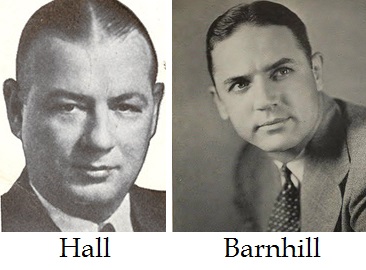
WMS Hall BarnhillOn March 18, 1947, Governor Ben T. Laney signed the bill into law which authorized the construction of War Memorial Stadium.

The plans for the stadium were the brainchild of Arkansas Secretary of State C.G. “Crip” Hall and University of Arkansas Athletic Director John Barnhill.

Apparently the Southwest Conference was threatening to kick Arkansas out because of an inadequate football facility. Since the University did not have the funds to build a new one on its campus, Barnhill and Hall decided that the state should build one. Many other states were building War Memorial facilities of a variety of natures. The duo decided that the new football facility could be a War Memorial Stadium to pay tribute to the men who died in the recently concluded World War II.  While the stadium was touted as being of use to all colleges in the state and a variety of other types of activities, it was very much designed to be a home for the Arkansas Razorbacks.

Getting the stadium through the Arkansas General Assembly was not easy.  The bill to create the stadium commission sailed through both houses. But even some who voted for it said they would oppose any funding bills.  When time came to vote for the funding, the bill fell far short of the three-quarters vote that was needed in the House for an appropriation bill.

WWII veterans were on both sides of the issue.  Some felt it was an appropriate way to honor those who died.  Others felt it was a gimmick to get the stadium approved.  Some of the opponents felt that a new state hospital for UAMS would be the more appropriate way to honor those who died during the war.  The debates were often heated and personal.

Overnight a new bill was created. It would pay for the stadium through the issuing of bonds. In addition to the state issuing bonds, any city which wished to bid for it would have to put up money for it as well as provide land.  This new bill would require only 51 votes to pass the House.  It was able to pass that threshold.  The Senate made a few amendments (mostly dealing with the composition of the stadium commission and the amount of dollars that the host city had to pledge).  Finally the House agreed to the Senate amendments and it went to Governor Laney.

The next hurdle for the stadium was choosing a location. That process would occupy stadium proponents throughout the spring and summer of 1947.

Little Rock Look Back: First Arkansas Razorback game at War Memorial Stadium

On September 18, 1948, the Arkansas Razorbacks took on Abilene Christian and won the game by a score of 40 to 6.  It was the first game of the season, and the Razorbacks went into the game ranked #13. They maintained that ranking for four weeks before falling out of national standings.  The team ended up with a season record of five wins and five losses. Playing four of their games at War Memorial that season, they were two and two in Little Rock. They were one and two in Fayetteville and amassed a 2-1 record on the road.

Dedication ceremony in 1948. Photo courtesy of the War Memorial Stadium Commission.

Dedication ceremony in 1948. Photo courtesy of the War Memorial Stadium Commission.

Prior to the game, the stadium was dedicated to the veterans of World War I and World War II in a ceremony led by former Razorback standout and Medal of Honor recipient Maurice “Footsie” Britt.  Though he would later be known for entering politics and becoming Arkansas’ first Republican Lieutenant Governor, in his college days he was known statewide as an outstanding Razorback football and baseball athlete.  During World War II, his bravery and courage allowed him to become first person in American history to earn all the army’s top awards, including the Medal of Honor, while fighting in a single war.

Also participating in the opening ceremony were a mass of high school marching bands from across the state. Reports indicate up to forty bands were on the field to play the National Anthem as part of the event.

The construction of the stadium had been a dream of Governor Ben T. Laney. He had encouraged the Arkansas General Assembly to create the stadium during the 1947 session.  In August of 1947, Little Rock was chosen as the location over Hot Springs and North Little Rock. West Memphis had abandoned its bid when it was unable to secure the necessary financial pledges.  Construction started in 1947 and continued up until opening day.  On the day of the game, newspaper photos showed heavy equipment grading the parking lot prior to paving.

Though it had been Laney’s dream, with the passing of the guard, a newspaper photo on the day after the dedication focused on the incoming governor, Sid McMath.  Because Arkansas was such a Democratic heavy state, the paper referred to him as Governor-designate even though it was six weeks prior to the 1948 General Election when he would face off against C. R. Black.  McMath won the race with 89.4% of the vote.

Women’s History Month – Kathy Webb, first female to chair Ark legislature Joint Budget Committee

One of the most important committees at the Arkansas General Assembly is the Joint Budget Committee.  It is chaired by a senator and a representative.  In 2011 and 2012, as a state representative, Kathy Webb became the first woman to chair the committee.  Considering that the first woman to be sworn in to the Arkansas General Assembly (Erle Chambers) was from Little Rock, and the first woman to chair a standing committee of the General Assembly (Myra Jones) was from Little Rock, it is fitting that the first woman to chair Joint Budget was also from Little Rock.

While women had been chairing committees for two decades, no female had ever led this committee.  During her tenure, Rep. Webb received praise from people in both houses and both parties for her leadership.  She served in the Arkansas General Assembly from 2007 until 2012.  During that time, she was also named the most effective legislator by Talk Business

Now, she is Vice Mayor of Little Rock.  Vice Mayor Webb is in her first term representing Ward 3 of Little Rock.  She will be vice mayor until December 2018.  Vice-Mayor Webb grew up in Arkansas and graduated from Little Rock Hall High. She earned a degree from Randolph-Macon Woman’s College and attended graduate school at the University of Central Arkansas. She has also participated in the Senior Executives in State and Local Government program at the John F. Kennedy School of Government at Harvard University.

Women’s History Month – Myra Jones, the first woman to serve both on LR City Board and in Arkansas General Assembly

myraFirst woman to serve on Little Rock City Board and in Arkansas General Assembly:  Myra Jones

Myra Jones was elected to the Little Rock City Board in 1976. She served eight years on the Board, including four years as Vice Mayor of Little Rock.  She was the first female to serve as Vice Mayor of Little Rock.  In a nod to changing times, she was the first woman to be referred to in the City minutes by her own first and last name instead of being Mrs. followed by her husband’s name.

From 1985 to 1998, she served seven terms in the Arkansas House of Representatives and was the first woman to chair a standing committee:  the City, County and Local Government Committee.

Following her retirement from the legislature, she continued in business. She served on the board of Noram Energy (formerly ArkLa) for seventeen years becoming one of the first women from Arkansas to serve on a Fortune 500 Board. She later served as a local affairs lobbyist for the real estate industry. She once again became a fixture at Little Rock City Hall until her death in 2012.

A graduate of Oberlin College, she was a lifelong musician and would return in the summer to her native South Dakota to play clarinet with the Belle Fourche Cowboy Band. She had first joined the band as a high school senior.  Once it was reconstituted in 1980, the band (complete with white chaps, white hats, and red shirts) would play for the Black Hills Rodeo in Belle Fourche, march in the Fourth of July parade, and perform concerts in the area.