
Little Rock Look Back: Movie Stars Descend on Robinson Auditorium

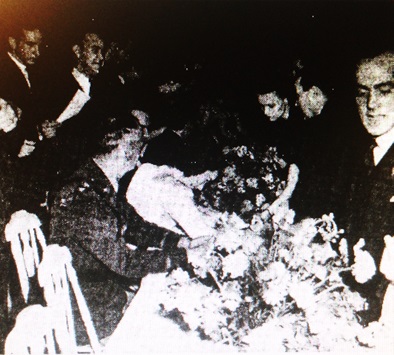
Autograph seekers crowd around the actors at the Movie Ball (photo from Arkansas Gazette)

Autograph seekers crowd around the actors at the Movie Ball (photo from Arkansas Gazette)

As final preparations were being made for the opening of the Joseph Taylor Robinson Municipal Auditorium in early 1940, a glamorous evening took place in Robinson’s lower level convention hall on February 1.

In conjunction with a meeting of film executives and movie theatre owners sponsored by Robb and Rowley Theaters (which later became the United Artists theatre chain), several Hollywood actors were in Little Rock and headlined a Movie Ball. While in Little Rock, Maureen O’Hara, Phyllis Brooks, Arleen Whelan, Tim Holt and Gene Autry had also made a variety of public appearances.

Mr. Autrey had to miss the ball because he had to return to Hollywood early to attend to business matters. Actress Ilona Massey had also been scheduled to attend the events but was unable due to illness.

The quartet who did appear at the Movie Ball caused quite a scene. Upon their entrance, so many of the attendees crowded around for autographs that the evening’s grand march could not take place (a newspaper headline in the Democrat innocently used the word “orgy” to describe the crowd). After two attempts, Little Rock Mayor J. V. Satterfield (who was escorting Miss O’Hara) and the other members of the Little Rock host delegation led the Hollywood foursome to their reserved table. For quite a while that evening, the table was besieged by autograph seekers.
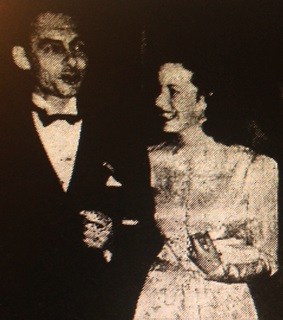
Mayor J V Satterfield escorting actress Maureen O'Hara at the Movie Ball (photo from Arkansas Democrat)

Mayor J V Satterfield escorting actress Maureen O’Hara at the Movie Ball (photo from Arkansas Democrat)

Though it is unknown as to whether he sought an autograph, photos from the evening showed a very satisfied Mayor Satterfield with Miss O’Hara on his arm. Satterfield family lore joked that Mrs. Satterfield (who had stayed home that night to tend to a sick son) was not a fan of Miss O’Hara’s films after that evening.

The Movie Ball showed Little Rock citizens the value of Robinson Auditorium even before it had been officially dedicated. The film industry meetings had taken place at the Albert Pike Hotel which did not feature a ballroom large enough to host the ball. Without the auditorium’s availability for the gala, organizers might not have chosen Little Rock for the meeting.

With the auditorium’s convention hall not attached to any hotel, it opened up the chance for Little Rock to host more events. This had been one of the key arguments for an auditorium since Mayor W. E. Lenon’s first proposal back in 1904. Having a glamorous event this early in the auditorium’s life validated that contention. After having endured the challenges to open the building, it was a nice lagniappe for the auditorium’s proponents who were present.
The actor Tim Holt would again be connected to Little Rock. In September 1951, he tried to obtain a divorce in Arkansas and stated that he had been a resident of the state for at least six weeks. He also had someone else testify to that fact. In October 1951, the divorce was granted. Later Mr. Holt was charged with perjury and fined $200 for falsely representing his length of residence in Arkansas. Judicial sanctions for his legal team, which included a State Senator, were eventually reviewed by the Arkansas Supreme Court.

Little Rock Look Back: Elijah A. More, LR 3rd Mayor

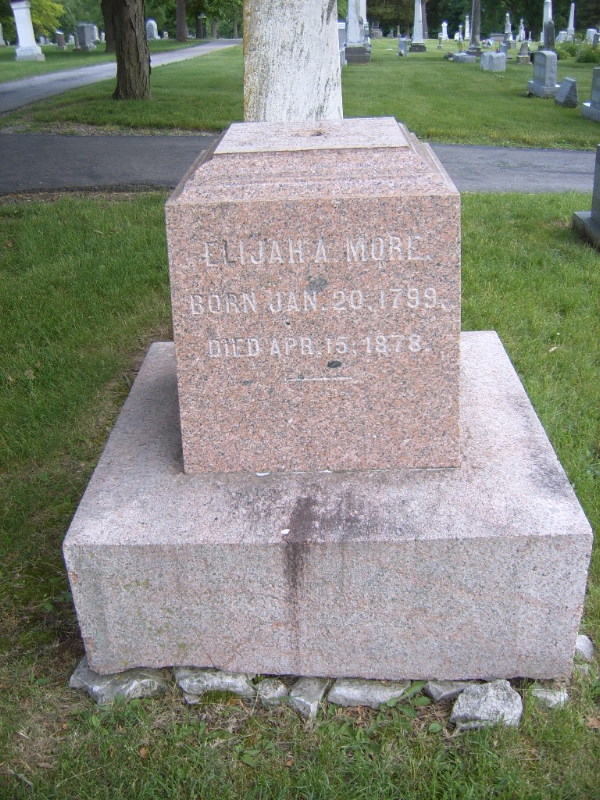
Mayor More Marker in MOOn January 20, 1799, Elijah A. More was born in Kentucky.  By the early 1830s, he was residing in Hempstead County and practicing law. Because of the court system being based in Little Rock, he spent a great deal of time in Pulaski County.

By January 1834, he had obviously established a permanent residence in Little Rock, because he was chosen as the third mayor.  He served from January 1834 until January 1835.  According to records, he apparently continued to alternate between residing near what is now Hope and living in Little Rock.  In 1839, his wife Caroline Owens More died and was buried in Little Rock. Though not originally buried at Mount Holly (it did not open until 1843), she is now buried there.

In 1840, More was the subject of a court case before the Arkansas Supreme Court resulting from actions he had taken as an executor of an estate and subsequently as Pulaski County Probate Judge.

By 1864, More resided in Missouri. There is a record of him swearing a loyalty oath to the Governor of Missouri in that year (presumably in response to actions associated with the Civil War).

He died on April 15, 1878 and is buried in Columbia Cemetery in Columbia, Missouri.

LR Look Back: Webb Hubbell, Little Rock 64th Mayor

Mayor HubbellOn January 18, 1948, future Little Rock Mayor Webster “Webb” Hubbell was born. After playing football in high school, he played for the University of Arkansas Razorbacks.  He also received his law degree from the U of A.

At the age of 30, already a successful attorney, Hubbell was appointed to the Little Rock City Board of Directors to fill a vacancy in September 1978.  In 1980, he was elected to a four year term on the City Board.

In June 1979, there was a vacancy in the office of Mayor of Little Rock.  Hubbell was selected by his fellow City Directors to serve as Mayor until December 1980.  In January 1981, he was selected to serve another term as Mayor.  In June 1981, he stepped down as Mayor but continued to serve on the City Board of Directors.

In 1984, Hubbell was appointed to serve as Chief Justice of the Arkansas Supreme Court to finish out the term of Richard B. Adkisson.  Following his service on the court, he returned to the practice of law at the Rose Law Firm.  He later served as the Associate Attorney General in the Justice Department during the Clinton administration.

Hubbell resigned from the Justice Department due to an investigation related to Whitewater.  Following conviction and serving time in prison, he has been an author and management consultant.  His novel, When Men Betray, was published by Beaufort Books in May 2014.  This coming May, his next novel Ginger Snaps will be released.

Little Rock Look Back: 1940 Movie Ball at Robinson Auditorium

Mayor J V Satterfield escorting actress Maureen O'Hara at the Movie Ball (photo from Arkansas Democrat)

Mayor J V Satterfield escorting actress Maureen O’Hara at the Movie Ball (photo from Arkansas Democrat)

As final preparations were being made for the opening of the Joseph Taylor Robinson Municipal Auditorium in early 1940, a glamorous evening took place in Robinson’s lower level convention hall on February 1.

In conjunction with a meeting of film executives and movie theatre owners sponsored by Robb and Rowley Theaters (which later became the United Artists theatre chain), several Hollywood actors were in Little Rock and headlined a Movie Ball. While in Little Rock, Maureen O’Hara, Phyllis Brooks, Arleen Whelan, Tim Holt and Gene Autry had also made a variety of public appearances.

Mr. Autrey had to miss the ball because he had to return to Hollywood early to attend to business matters. Actress Ilona Massey had also been scheduled to attend the events but was unable due to illness.

Autograph seekers crowd around the actors at the Movie Ball (photo from Arkansas Gazette)

Autograph seekers crowd around the actors at the Movie Ball (photo from Arkansas Gazette)

The quartet who did appear at the Movie Ball caused quite a scene. Upon their entrance, so many of the attendees crowded around for autographs that the evening’s grand march could not take place (a newspaper headline in the Democrat innocently used the word “orgy” to describe the crowd). After two attempts, Little Rock Mayor J. V. Satterfield (who was escorting Miss O’Hara) and the other members of the Little Rock host delegation led the Hollywood foursome to their reserved table. For quite a while that evening, the table was besieged by autograph seekers.

Though it is unknown as to whether he sought an autograph, photos from the evening showed a very satisfied Mayor Satterfield with Miss O’Hara on his arm. Satterfield family lore joked that Mrs. Satterfield was not a fan of Miss O’Hara’s films after that evening.

The Movie Ball showed Little Rock citizens the value of Robinson Auditorium even before it had been officially dedicated. The film industry meetings had taken place at the Albert Pike Hotel which did not feature a ballroom large enough to host the ball. Without the auditorium’s availability for the gala, organizers might not have chosen Little Rock for the meeting.

With the auditorium’s convention hall not attached to any hotel, it opened up the chance for Little Rock to host more events. This had been one of the key arguments for an auditorium since Mayor W. E. Lenon’s first proposal back in 1904. Having a glamorous event this early in the auditorium’s life validated that contention. After having endured the challenges to open the building, it was a nice lagniappe for the auditorium’s proponents who were present.

The actor Tim Holt would again be connected to Little Rock. In September 1951 he tried to obtain a divorce in Arkansas and stated that he had been a resident of the state for at least six weeks. He also had someone else testify to that fact. In October 1951 the divorce was granted. But later Mr. Holt was charged with perjury and fined $200 for falsely representing his length of residence in Arkansas. Judicial sanctions for his legal team, which included a State Senator, were eventually reviewed by the Arkansas Supreme Court.

Little Rock Look Back: Webb Hubbell, Little Rock’s 64th Mayor

https://i0.wp.com/www.webbhubbell.com/wp-content/uploads/2009/12/Webb_0951-240x155.jpgOn January 18, 1948, future Little Rock Mayor Webster “Webb” Hubbell was born. After playing football in high school, he played for the University of Arkansas Razorbacks.  He also received his law degree from the U of A.

At the age of 30, already a successful attorney, Hubbell was appointed to the Little Rock City Board of Directors to fill a vacancy in September 1978.  In 1980, he was elected to a four year term on the City Board.

In June 1979, there was a vacancy in the office of Mayor of Little Rock.  Hubbell was selected by his fellow City Directors to serve as Mayor until December 1980.  In January 1981, he was selected to serve another term as Mayor.  In June 1981, he stepped down as Mayor but continued to serve on the City Board of Directors.

In 1984, Hubbell was appointed to serve as Chief Justice of the Arkansas Supreme Court to finish out the term of Richard B. Adkisson.  Following his service on the court, he returned to the practice of law at the Rose Law Firm.  He later served as the Associate Attorney General in the Justice Department during the Clinton administration.

Hubbell resigned from the Justice Department due to an investigation of his billing practices at the Rose Law Firm, which stemmed from the Whitewater investigation.  Following conviction, he served time in prison.  Since his release he has been an author and management consultant.  His novel, When Men Betray, will be published by Beaufort Books in May 2014.