Little Rock Look Back: President Clinton performs with Arkansas Symphony

Former U.S. President Bill Clinton addresses the audience after reciting Martin Luther King's famous speech, 'I Have A Dream', to the music of Alexander L. Miller at Robinson Auditorium March 25, 2003 in Little Rock, Arkansas. Clinton was the honored guest for a performance by the Arkansas Symphony Orchestra to benefit the William Jefferson Clinton Presidential Foundation. (Photo by Karen E. Segrave/Getty Images)

Former U.S. President Bill Clinton addresses the audience after reciting Martin Luther King’s famous speech, ‘I Have A Dream’, to the music of Alexander L. Miller at Robinson Auditorium March 25, 2003 in Little Rock, Arkansas. Clinton was the honored guest for a performance by the Arkansas Symphony Orchestra to benefit the William Jefferson Clinton Presidential Foundation. (Photo by Karen E. Segrave/Getty Images)

On March 25, 2003, former President Bill Clinton took the stage of Robinson Center Music Hall to perform with the Arkansas Symphony Orchestra. Entitled “Let Freedom Ring – A Patriotic Celebration,” the evening was a joint fundraiser for the Symphony and the Clinton Foundation.

Before a packed house of over 1700, Clinton narrated Aaron Copland’s A Lincoln Portrait which weaves excerpts from Lincoln speeches with Copland’s own unique classical take on American heartland music.  Clinton also narrated Let Freedom Ring, a symphonic setting by Alexander Miller of Martin Luther King’s “I Have A Dream” speech.

The evening also consisted of Broadway veteran and Little Rock favorite Lawrence Hamilton singing “Wheels of a Dream” from the musical Ragtime.  On Broadway and on national tour, Hamilton had previously sung the song.  The Arkansas Symphony Orchestra also performed An American in Paris by George Gershwin and “Jupiter” from The Planets by Gustav Holst.  This final selection was a tribute to the seven astronauts who had died in the crash of the space shuttle Columbia on February 1, 2003.

David Itkin, who was then the musical director of the ASO, conducted the concert.


Black History Month Spotlight: Lencola Sullivan

Entertainer and journalist Lencola Sullivan broke many barriers. While she gained recognition as a pageant winner, she also made a name for herself on other arenas.

In 1980, she was crowned Miss Arkansas, becoming the first contestant in pageant history to win the talent award and the title.

In the Miss America pageant, she became the first African American to win a preliminary award and to place among the top five finalists.

Around the time she was competing in pageants, she was employed by KARK as a producer and eventually an on-air reporter.

She eventually moved to New York to focus on her career as a singer and public speaker.

Sullivan had studied piano for seven years and voice and organ for one year. As a vocalist, she performed with the Lionel Hampton Orchestra, with Stevie Wonder, with Kool and the Gang, and at both of President Bill Clinton’s inaugural balls, in 1993 and 1997.

She has also performed throughout The Netherlands, on Dutch National Television, and at Jazz Club 606 in London. Sullivan has also appeared on several television soap operas, in industrial films, and in many television commercials.

In 2002, Sullivan married Roel P. Verseveldt of The Hague. She and her husband are involved in international business activities. Sullivan is a frequent lecturer at Hanze University of Applied Sciences in The Netherlands.

She was inducted into the Arkansas Black Hall of Fame in 2006. For more information on Lencola Sullivan and the other Arkansas Black Hall of Fame inductees, visit the permanent exhibit at the Mosaic Templars Cultural Center, a division of the Department of Arkansas Heritage

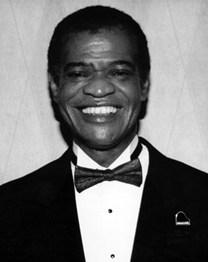
Black History Month Spotlight: William Grant Still

bhm StillLong known as the Dean of African American composers, Dr. William Grant Still was a legend in his own lifetime.

Dr. Still, who wrote more than 150 compositions ranging from operas to arrangements of folk themes, is best known as a pioneer. He was the first African-American in the United States to have a symphonic composition performed by a major orchestra. He was the first to conduct a major symphony orchestra in the US; the first to conduct a major symphony in the south; first to conduct a white radio orchestra in New York City; first to have an opera produced by a major company. Dr. Still was also the first African-American to have an opera televised over a national network

Dr. Still was born May 11, 1895 in Woodville, Mississippi to parents who were teachers and musicians. When Dr. Still was only a few months old, his father died and his mother took him to Little Rock. Inspired by RCA Red Seal operatic recordings, his musical education began with violin lessons.

After his studies at Wilberforce University and the Oberlin Conservatory of Music, he played in orchestras and orchestrated for various employers including the great W. C. Handy. For several years he arranged and conducted the “Deep River Hour” over CBS and WOR.

In the 1920’s, Still made his first appearances as a serious composer in New York. Several fellowships and commissions followed. In 1994, his “Festive Overture” captured the Jubilee prize of the Cincinnati Symphony orchestra. In 1953, he won a Freedoms Foundation Award for “To You, America!” which honored West Point’s Sesquicentennial Celebration. In 1961, he received honors for this orchestral work, “The Peaceful Land”. Dr. Still also received numerous honorary degrees from various colleges and universities, as well as various awards and a citation from Arkansas Governor Dale Bumpers in 1972.

In 1939, Dr. Still married journalist and concert pianist Verna Avery, who became his principal collaborator. They remained together until Dr. Still’s death in 1978.  In a proclamation marking the centennial of Dr. Still’s birth, President Bill Clinton praised the composer for creating “works of such beauty and passion that they pierced the artificial barriers of race, nationality and time.”

In 1995, Dr. Still was posthumously inducted into the Arkansas Black Hall of Fame.  For more on William Grant Still and other inductees into the Arkansas Black Hall of Fame, visit the permanent exhibit at the Mosaic Templars Cultural Center. That museum is an agency of the Department of Arkansas Heritage.

 

Black History Month Spotlight: Henry Shead

bhm shedHenry Wallace Shead, Sr., better known as “Shed” was born in Fordyce, Arkansas, on March 31, 1941.  He was raised in Little Rock, the son of a reverend, Henry Arthur Shead.  At the tender age of six, Henry was introduced to the keyboards by his mother, Willie LeBethel, who immediately recognized his natural talent. Henry’s mother saw to it that her son had piano lessons, while his father’s church provided the place for his early public performances.

At the start of his career, he performed regularly on a local American Bandstand-type TV show called Center Stage. He also became a fixture at the Little Rock Country Club. He made his mark playing in intimate settings as a solo artist, dazzling listeners with his absolute mastery of the piano, singing in that slightly raspy, yet smooth sounding baritone voice. Shead was awarded a scholarship to the University of Arkansas at Pine Bluff, and majored in music while entertaining around the area. Henry met his wife, Jeanette Mazique, while attending college in Pine Bluff. They married in January of 1964 and had four children.

He became a high school choral director and music teacher, all the while continuing to work in local nightspots like the Drummer‘s Club in Little Rock. In 1971, he moved to Los Angeles where he made his acting debut appearing with Henry Fonda, Richard Dreyfuss and Jane Alexander in William Saroyan’s The Time of Your Life. He wrote and arranged music for stage plays and television, sang the title song for a United Artist film, did studio work on a Johnny Mathis album, and recorded for the Liberty/United Artists and Cream labels.

Shed created national radio jingles and appeared on network television with Dinah Shore, Johnny Carson and Jerry Lewis. He has also performed at parties for the Rockefellers, Pearl Bailey, The Carpenters, President Lyndon Johnson, President Bill Clinton, Henry Mancini, Sergio Mendes, hotelier Peter Morton, Ed McMahon and Barbra Streisand.

In Las Vegas, the city where he lived since 1974, Shed entertained at most of the major hotels, with long engagements at the Aladdin, Stardust, Hacienda, MGM Grand, Caesar’s Palace and Sahara. In 1977, the Henry Shead Band with Denise Clemente was voted Las Vegas’ Best Lounge Act of the Year. His last long-term run was at AJ’s Steakhouse at the Hard Rock Hotel & Casino, retiring in 2007. In October 2006, he was inducted into the Arkansas Black Hall of Fame.

He died on October 5, 2012 in Las Vegas and is buried in Forest Lawn Cemetery in Hollywood CA.

For more on Henry Shead and other inductees into the Arkansas Black Hall of Fame, visit the permanent exhibit at the Mosaic Templars Cultural Center. That museum is an agency of the Department of Arkansas Heritage.


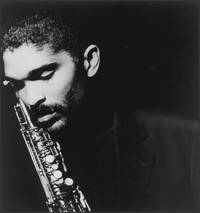
Black History Month Spotlight: Art Porter Jr.

bhm art jr.Just like his father and namesake, Art Porter Jr. was a talented musician on a variety of instruments and in a variety of musical genres.

Arthur Lee (Art) Porter Jr. was born in Little Rock on August 3, 1961. Porter began his music career under the tutelage of his father, legendary jazz musician, Arthur Porter, Sr. who surrounded him with everything musical. He performed proficiently on drums, saxophone and piano. He was classically trained but his performances ranged across jazz, rhythm and blues, funk, and ballads.

During high school, under the supervision of Sterling Ingram, private teacher and band director at Parkview High School, Art Jr. was selected to be a member of the Arkansas All-State Band for three consecutive years.  At age 16, he was awarded the “Most Talented Young Jazz Artist in America” by the National Association for Jazz Education.

During Porter’s youth, his playing while underage in venues where liquor was sold proved controversial. Bill Clinton, then attorney general, established a framework for the legislature that would allow minors to work in such venues with parental supervision. Act 321 known as The “Art Porter Bill” became Arkansas law.

Porter graduated from Northeastern University in Chicago, Illinois, in 1986 with a BA degree in music education and performance. While in college, he won two certificates for excellence in jazz at the Notre Dame University Festival of Music in South Bend, Indiana. He later earned graduate hours at Roosevelt University studying music education and performance, and at Virginia Commonwealth University where he studied under the tutelage of Ellis Marsalis, patriarch of the Marsalis jazz family. Jack McDuff, a renowned jazz organist, heard Porter’s performances and asked him to join his band. His first performance while on tour with McDuff was in a New Orleans jazz club.

Porter started the Art Porter Quartet in Chicago and developed a loyal following in the area. He continued to write his own music and in 1991 was offered a contract to record on the Verve label, a division of Polygram Classics and Jazz.

Art burst on the music scene with his debut album, Pocket City (1992), followed by Straight to the Point (1993). In 1994, his third album, Undercover, placed Porter solidly on the “wave” radio charts with R&B artists as well as “cool jazz” artists. During this same year, he performed at Carnegie Hall for the Polygram Anniversary Celebration. His final album, Lay Your Hands on Me (1996), contained the radio favorite “Lake Shore Drive.”

Many of his compositions were expressions of his spirituality, such as the song “Lay Your Hands on Me.” Porter performed at the inaugural ceremonies of President Bill Clinton in 1993. During the inaugural prayer service, in collaboration with his father, he received a standing ovation for his solo renditions of “Amazing Grace” and “My Tribute.”

Porter traveled the world with performances but no matter where his music would carry him, he always returned to his beloved hometown of Little Rock. He conducted workshops for music students at his alma maters, Dunbar Magnet Junior High School and Parkview Arts and Science Magnet School. He was a founder of the Art Porter Sr. Music Education, Inc. (now the Art Porter Music Education, Inc. in memory of Art Sr. and Art Jr.), a nonprofit organization that provides scholarships to musically talented Arkansas students who need financial assistance to pursue their dream of obtaining a musical degree.

Porter died on November 23, 1996, in a boating accident in Thailand. He had just completed a performance at the Thailand International Golden Jubilee Jazz Festival commemorating the fiftieth anniversary of King Bhumibol Adulyadej’s reign.  In 2013, he was posthumously inducted into the Arkansas Black Hall of Fame.  For more on Art Porter Jr. and other inductees into the Arkansas Black Hall of Fame, visit the permanent exhibit at the Mosaic Templars Cultural Center. That museum is an agency of the Department of Arkansas Heritage.

Black History Month Spotlight – Art Porter Sr.

bhm art srArthur Lee (Art) Porter Sr. was a pianist, composer, conductor, and music teacher. His musical interest spanned from jazz to classical and spirituals.

Born on February 8, 1934 in Little Rock, he began his music education at home. He played in church at age eight; played his first recital at twelve; and, by fourteen, hosted a half-hour classical music radio program on KLRA-AM. He earned a bachelor’s degree in music from Arkansas AM&N College (now UAPB) in May 1954. The next year, he married Thelma Pauline Minton. Following his marriage, he pursued graduate study a the University of Illinois, University of Texas and Henderson State University.

He began his teaching career at Mississippi Valley State University in 1954.  When he was drafted into the Army, his musical talents were responsible for him being assigned as a chaplain’s assistant in New York.  In the late 1950s he returned to Little Rock and taught at Horace Mann High School, Parkview High School and Philander Smith College.

He also started playing piano jazz in the evenings. This led to the creation of the Art Porter Trio, which became THE music group for events.  Many musicians who came to Arkansas to perform in Little Rock or Hot Springs would often stop by and join in with Porter as he played.  From 1971 to 1981 he hosted The Minor Key musical showcase on AETN.  His Porterhouse Cuts program was shown in 13 states.

Often encouraged to tour, he instead chose to stay based in Arkansas.  He did, from time time, perform at jazz or music festivals.   He also performed classical piano with the Arkansas Symphony Orchestra, founded the Art Porter Singers, and created a music group featuring his four oldest children.  Though Porter received many honors and awards, he found particular satisfaction in the “Art Porter Bill” enacted by the state legislature, which allowed minors to perform in clubs while under adult supervision. Porter’s children thus were able to perform with him throughout the state. Governor Bill Clinton, at the time a huge fan and friend of Porter, often joined Porter’s group on his saxophone.

In January 1993, Porter and his son Art Porter, Jr., performed at festivities in Washington DC for the Presidential Inauguration of his friend Bill Clinton.  In July 1993, he died of lung cancer.  He was eulogized at Bethal AME Church, where he had been organist for 35 years.  He is buried at Little Rock National Cemetery.  Today his legacy lives on in the Art Porter Music Education Fund as well as in the lives of the many musicians and fans he touched.

He was posthumously inducted into the Arkansas Black Hall of Fame in 1994.  For more on Art Porter Sr. and other inductees into the Arkansas Black Hall of Fame, visit the permanent exhibit at the Mosaic Templars Cultural Center. That museum is an agency of the Department of Arkansas Heritage.

Arkansas at the Grammys – A Little Rock, a little country, a little soul, etc.

One of Johnny Cash's Grammy Awards

One of Johnny Cash’s Grammy Awards

The 57th annual Grammy Awards are tonight.  There are several nominees with Arkansas connections.

The documentary Glen Campbell, I’ll Be Me spawned nominations in three different categories.  The Band Perry is nominated for Best Country Duo/Group Performance for their take on Campbell’s hit “Gentle on My Mind” from the film’s soundtrack.  Campbell himself is nominated for co-writing the song “I’m Not Gonna Miss You” in the Best Country Song category.  The song is also nominated in the Best Song Written for Visual Media category.

Former Arkansan Smokie Norful is nominated for two Grammy Awards tonight.  For his song “No Greater Love” he is nominated for Best Gospel Performance/Song. His album Forever Yours is nominated for Best Gospel Album.

John Waters, who will be headlining at the 2015 Arkansas Literary Festival, is nominated for Best Spoken Word Album for Carsick: John Waters Hitchhikes Across America.

Though not an Arkansan, Roseanne Cash comes from Arkansas stock and has been an active supporter of efforts to establish a museum in Dyess, Arkansas. She is nominated for three Grammy Awards: Best American Roots Performance (“A Feather’s Not a Bird”), Best American Roots Song (“A Feather’s Not a Bird”), and Best Americana Album (The River & The Thread).

The Grammy Hall of Fame contains several recordings with Arkansas connections.  The 1969 album The Band by The Band, which featured Levon Helm, was inducted in 1999.  Louis Jordan has several singles inducted: 1946’s “Ain’t Nobody Here but Us Chickens,” 1945’s “Caldonia Boogie,” 1946’s “Choo Choo Ch’Boogie,” and 1946’s “Let the Good Times Roll,” Charlie Rich’s 1973 single “Behind Closed Doors” was inducted as was Conway Twitty’s 1970 hit “Hello Darlin’.” Patsy Montana is included for her 1935 song “I Want to Be a Cowboy’s Sweetheart.”  Al Green is included for 1971’s “Let’s Stay Together” and 1974’s “Take Me to the River.”

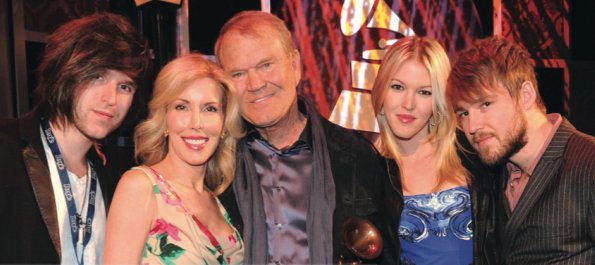
Glen Campbell and his family at the 2012 Grammy Awards

Glen Campbell and his family at the 2012 Grammy Awards

Glen Campbell has three recordings in the Grammy Hall of Fame: 1967’s “By the Time I Get to Phoenix,” 1967’s “Gentle on My Mind,” and 1968’s “Wichita Lineman.”  Johnny Cash has four entries: the singles “Folsom Prison Blues” from 1956, “I Walk the Line” from 1956, and “Ring of Fire” from 1963. In addition his album “Johnny Cash at San Quentin” from 1969 was inducted.

The 1949 musical cast album from South Pacific featuring a heroine from Little Rock was inducted. Another Broadway-themed inductee is “Lullaby of Broadway” featuring former Little Rock resident Dick Powell from 1935.

Here are some past Grammy winners from Arkansas:

  • Bill Clinton, 2004 Best Spoken Word Album – My Life
  • Bill Clinton and others, 2003 Best Spoken Word Album for Children – Peter and the Wolf
  • Hillary Clinton, 1996 Best Spoken Word Album – It Takes a Village
  • Evanescence, 2003 Best New Artist, Best Hard Rock Performance (“Bring Me to Life”)
  • Al Green has 11 Grammy Awards spanning from 1981 to 2008. In 2002 he was given a Grammy Lifetime Achievement Award.
  • Johnny Cash won 13 Grammy Awards spanning from 1967 to 2007. In 1999 he was given a Grammy Lifetime Achievement Award.
  • Glen Campbell received 5 Grammy Awards in 1967 and 1968. In 2012, he was presented a Lifetime Achievement Award. That moment is captured in the documentary Glen Campbell, I’ll Be Me.
  • As part of The Band, Levon Helm received a 2008 Lifetime Achievement Award. As an individual artist he received Grammy Awards in 2007, 2009 and 2011.
  • Conway Twitty received a 1971 Grammy for Country Duo or Group for “After The Fire Is Gone” duet with Loretta Lynn.
  • Charlie Rich won the 1973 Grammy for Male Country Vocal Performance for “Behind Closed Doors.”
  • Smokie Norful won the 2004 Grammy for Contemporary Soul Gospel Album for Nothing Without You.
  • Maya Angelou won Grammy Awards in the Spoken Word Album for 1993’s On the Pulse of Morning, 1995’s Phenomenal Woman and 2002’s A Song Flung Up to Heaven.