African Americans and Sports in Arkansas focus of Black History Commission of Arkansas program today (2/2)

Image may contain: one or more people and textThe Black History Commission of Arkansas presents “African Americans and Sports in Arkansas.”  The program runs from 9:45 am to 3 pm today at the Mosaic Templars Cultural Center.

Speakers: Evin Demirel, Jimmy Cunningham Jr., Dr. Wilbert Gaines, and Kenneth (Muskie) Harris. Lunch will be provided. Teachers can earn up to four professional development hours. Registration is required.

10 a.m.
Evin Demirel, author of “African-American Athletes in Arkansas: Muhammad Ali’s Tour, Black Razorbacks and Other Forgotten Stories”
• The legacy of African American sports in Jim Crow era with an emphasis on the now-defunct, all-black high school’s athletic association and stories from his book.

11 a.m.
Jimmy Cunningham, Jr., author of “African Americans of Pine Bluff and Jefferson County”
• Highlights and stories about three African American athletes from Jefferson County, including Boid “One Arm” Buie, Willie Roaf and Ivie Moore.

12:45 p.m.
Dr. Wilbert Gaines, former Arkansas State University professor
• Personal experiences and surmounting challenges and obstacles as a pioneer and trailblazer in sports, sports-related activities and academia.

1:45 p.m.
Kenneth “Muskie” Harris, community activist and former Razorback
• The history of the Razorbacks and integration of athletes, including facts about all 17 sports at the University of Arkansas and some of the first African Americans to receive sports scholarships.

For those unable to attend, footage from the programs will be on the Arkansas State Archives Facebook page in the coming days.

The Black History commission of Arkansas is an advisory board of the Arkansas State Archives, a division of the Department of Arkansas Heritage.

Arkansas State Archives, Black History Commission sponsoring MLK program

Image may contain: 1 person, text

“Looking Back, Moving Forward—Together”

The Arkansas State Archives and Black History Commission of Arkansas are joining with Bethel AME Church and the 12th District AME to sponsor an event in honor of Dr. Martin Luther King, Jr.

It will be today at 3pm at the Bethel AME Church.

At the program, speakers will remember his legacy through worship as well as with the keynote address by former Secretary of Transportation Rodney E. Slater. A Marianna native, he served on the staff of Governor Bill Clinton before having leadership roles during President Clinton’s administration.

Slater is an attorney at Washington, D.C., law firm Squire Patton Boggs. In 1993 Slater became the first  In 1997, he was appointed to be the Secretary of Transportation.

For more information, call 501-374-9948.

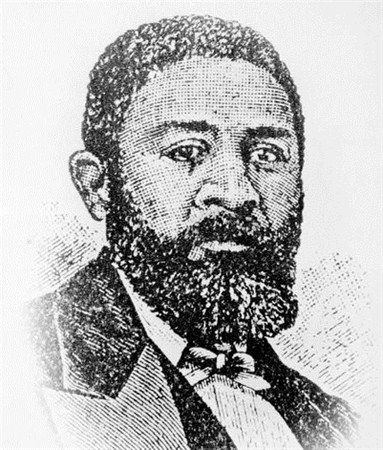
Arkansas’ African-American legislators during Reconstruction

On display at the Arkansas State Capitol is a temporary exhibit – Arkansas’s African American Legislators, 1868-1893.  It was created by the Black History Commission of Arkansas and the Arkansas History Commission. It honors the African Americans who made up a significant part of Arkansas’s legislature during the 1860s and early 1870s, and who continued to serve until 1893.

State Rep. William H. Grey, one of first two African Americans to serve in Arkansas legislature

On Tuesday, February 14, 2012, State Representative Fred Allen and Black History Commission chair, Carla Coleman, spoke at the official opening of the exhibit in the lower-level foyer at the Arkansas State Capitol. African Americans participated in Arkansas politics for the first time following the Civil War. After the end of that conflict, the state adopted a new constitution in 1868. Its provisions included the right to vote and hold public office for black males.

Between 1868 and 1893, eighty-five African Americans are known to have served in the Arkansas General Assembly. These legislators included lawyers, merchants, ministers, educators, farmers, and other professionals. The majority served in the House, with nine being chosen for the Senate. Election laws passed by the General Assembly in 1891 and new poll tax regulations in 1893 effectively ended the election of African Americans to the legislature. Blacks did not serve again in the General Assembly until 1973.
Photographs survive for forty-five of the African Americans who served in the Arkansas General Assembly during the nineteenth century and are featured in this exhibit. Forty-three of these are from the holdings of the Arkansas History Commission.