Women’s History Month – Judge Alice Lightle, first female Little Rock District Judge

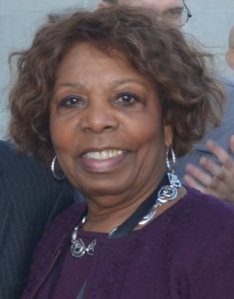
Judge Alice Lightle was first appointed by Governor Mike Beebe in June 2007 to fill out the remaining term in Little Rock District Court, Third Division (colloquially known as Environmental Court). She became the first woman to serve as a permanent District (formerly Municipal) Judge in Little Rock history.

In November 2008, she was elected to a four year term in the Little Rock District Court, First Division (informally called Criminal Court). This made her the first woman to be elected a Little Rock District Judge.  She was re-elected in 2012 and again in May 2016, when she was unopposed.  She started her third term in January 2017.

Judge Lightle comes from a family of attorneys and public servants.  Prior to serving as a judge, she was a former assistant state attorney general and commissioner on the state Workers Compensation Commission.

Women’s History Month – Joan Adcock, longest serving Little Rock city director

joan-adcockLongest serving Little Rock City Director: Joan Adcock

In November 2016, Director Adcock was elected to her seventh term on the Little Rock City Board of Directors.  She is the longest-serving City Director of either gender in that form of government in Little Rock history.  (Only two aldermen have served longer on a City of Little Rock legislative body.)

She was first elected to the City Board in 1992.  She has subsequently been elected in 1996, 2000, 2004, 2008 and 2012.  From January 1995 until December 1996, she served as Vice Mayor of Little Rock.

Director Adcock has been active in establishing neighborhood associations throughout the City. She is also active in Neighborhoods USA (NUSA) and has worked for Little Rock to host the national conference twice.  She has worked to establish the Landbank Authority and to create the Little Rock Animal Village.  Her latest creation is Working Together in the Community, which is focused on helping integrate the Hispanic population into Little Rock.

Little Rock Look Back: Little Rock becomes a City of the First Class

On March 9, 1875, the City of Little Rock became a City of the First Class in Arkansas. It was the first city in the state to receive this designation.

This was in conjunction with the adoption of the Arkansas Constitution of 1874 which created this status.  The Constitution defines them as: “All cities, which at the last federal census had, or now have, a population exceeding two thousand five hundred (2,500) inhabitants shall be deemed cities of the first class.”

March 9 is just one of several dates Little Rock could celebrate as a birthday.

  • January 6, 1866 – Little Rock government resumes operations following the Civil War
  • November 2, 1835 – Little Rock is incorporated as a City
  • November 7, 1831 – Little Rock is incorporated as a Town
  • October 27, 1825 – Little Rock given the right to elect a governing board of trustees
  • April 9, 1722 – Jean Batiste Benard de La Harpe sees Le Petite Roche

There could also be the dates in 1812 when William Lewis built the first home in Little Rock (a shack) or in 1820 when the first permanent settlement was established.  But neither of those have exact dates that are remembered.

The birthday that is used is the November 7, 1831.

Little Rock Look Back: Suit filed to integrate Little Rock facilities

Attorney Wiley Branton, who filed the law suit.

On March 8, 1962, 22 members of the Council on Community Affairs filed a lawsuit in U.S. District Court against the city Board of Directors for the desegregation of “public parks, recreational facilities, Joseph T. Robinson Auditorium and all other public facilities.”  The members included journalists, dentists, attorneys, school teachers and other members of Little Rock’s African American professional class.  Attorney Wiley Branton, Sr., filed the suit.

Though the City’s Auditorium Commission was mentioned in the suit, they were not served with papers. So when media contacted them, they made no comment.

Historian John A. Kirk has written, “Members of the City Board were willing to admit that the desegregation of public facilities was ‘a foregone conclusion’ if the case went to court, but they remained committed to fighting the lawsuit if only to buy time to devise other methods to avoid desegregation.”

The decision was rendered in February 1963 that the City must integrate its public facilities.

In 1951, the City’s library facilities had been integrated followed by the bus system in 1956. Both of these had been accomplished without incident.  Of course the same was not said for the integration of the public schools in 1957.

In 1961, there had been attempts to have Robinson Auditorium integrated after Duke Ellington threatened to cancel a concert rather than play to a segregated crowd.  The Auditorium Commission refused to change its policy, and Ellington did not play the concert.

Based on efforts of the Council of Community Affairs working with white business leaders, downtown lunch counters and businesses were integrated starting in January 1963.  The efforts of the Council of Community Affairs and the white business leaders are commemorated in the Arkansas Civil Rights Heritage Trail with medallions in front of the Little Rock Regional Chamber building.

Women’s History Month – Sharon Priest, first person to serve as LR Mayor and a Constitutional officer

glass-priestFirst woman to be both Little Rock Mayor and a Constitutional Officer: Sharon Priest

Sharon Priest served as Little Rock’s 70th Mayor from January 1991 until December 1992.  She was a member of the Little Rock City Board of Directors from January 1987 until December 1994.  She had previously been involved with the City Beautiful Commission prior to her service on the City Board.  She continued that involvement and was also a leader of the Arts and Humanities Promotion Commission, serving several terms as chair.

From January 1995 until January 2003, she was the 31st Secretary of State for Arkansas.  She was the first woman elected to the position. (Nancy Hall held it from 1961 to 1963 following the death of her husband, longtime Secretary of State C. G. “Crip” Hall.)

Following her service as Secretary of State, she directed the Downtown Little Rock Partnership from January 2003 until March 2015.

Women’s History Month – Lottie Shackelford, first woman to serve as Little Rock mayor

Lottie at Civil RightsFirst woman mayor of Little Rock:  Lottie Shackelford

Lottie Shackelford served as mayor of Little Rock from January 1987 until December 1988. She was Little Rock’s 68th mayor and the first woman to serve in that capacity.  She was first appointed to the Little Rock Board of Directors in September 1978 to fill an unexpired term.  She later was elected in her own right and served until December 1992.  She was the first African American woman to ever serve on a governing body for the City of Little Rock.

She later served two terms on the Little Rock Airport Commission.  She also served as Vice Chairman of the Democratic National Committee from 1989 until 2014. She is the longest serving vice chair of the party.  She has been a delegate to every Democratic National Convention since 1980.

In recognition of all of her achievements, she has been included in the Arkansas Civil Rights Heritage Trail, the Arkansas Black Hall of Fame, and the Arkansas Women’s Hall of Fame.

Women’s History Month – Lucy Dixon, first woman on Little Rock Board of Directors

Photo courtesy Little Rock School District

Photo courtesy Little Rock School District

First woman elected to the City of Little Rock Board of Directors:  Lucy Dixon.

Lucy Dixon was elected to the initial Little Rock Board of Directors in November 1957.  She previously had served for six years on the Little Rock School Board.

Mrs. Dixon is the only woman to have served on both the governing boards of the City and the school district.  Mrs. Dixon chose not to seek a second term and left the City Board on December 31, 1960.

Mrs. Dixon is the first woman to be elected to a City position without her husband having previously held that position.

Her father had a lumber business, in which she worked off and on throughout her lifetime. She served not only as an officer of the business, but had a desk at the office and participated in the daily business.  She was also very active in Methodist Woman functions in Little Rock and Arkansas.