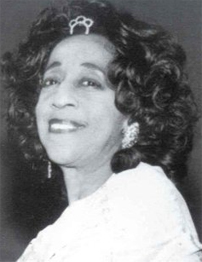
Black History Month Spotlight: Dr. Patricia McGraw

bhm mcgrawDr. Patricia Washington McGraw is an educator and author.  Now retired from the University of Central Arkansas where she was a professor of English and African/African American Studies, McGraw is recognized for her achievements as an educational/civic leader and social advocate.  She has received over 300 teaching excellence and community service awards on the local, state and national levels.

McGraw graduated from San Francisco State College in 1957 and received her master’s degree in special studies in American literature from the college in 1967. In 1982 she earned her Ph.D. in sociolinguistics and Black studies from Washington University in St. Louis. She graduated with honors from each institution.

Despite her status as a retired professor, McGraw remains an active force in her community and abroad. From 1983-1994 she owned and operated The McGraw Learning Institute: Abilities Unlimited, a private school for African-American children. She has served as a literary consultant to two youth groups and has been an African storyteller at various museums throughout Central Arkansas.  She has co-hosted televisions shows and is the creator of a one-woman show, A Profile of Four Black Women: Look Upon Them and Be Renewed, that has received rave reviews and has been performed over 400 times in Africa, the West Indies and Canada.

Dr. McGraw is a noted author having published several books and more than 500 articles and works of poetry. Her work as a humanitarian has taken her to Africa seven times, having visited 18 countries on the continent. In 1999, on Lake Kivu, between the East African countries of Rwanda and the Republic of the Congo, members of the Rwandese Parliament presented an island to her.

She was inducted into the Arkansas Black Hall of Fame in 2004.  For more on Dr. McGraw and other inductees into the Arkansas Black Hall of Fame, visit the permanent exhibit at the Mosaic Templars Cultural Center. That museum is an agency of the Department of Arkansas Heritage.

Magic Lantern Show tonight at the Old State House Museum

OSH logoExperience a Victorian Valentine Magic-Lantern Show tonight at the Old State House Museum at 7:00 p.m.

Travel back in time with the boisterous fun of America’s only Victorian magic-lantern show. An authentic 1890s visual extravaganza projected on a full-sized screen—the kind of show that led to the movies! Valentine stories, animated comedy, and songs—all dramatized on screen by a live showman and singer/pianist.

The audience participates in the fun, creating sound effects, and joining in chants and sing-alongs. ~~ For 22 years, The American Magic-Lantern Theater has delighted audiences from Lincoln Center to Singapore. “What a hoot!” says NEED. “You’ll be enthralled!” says The Family Adventure Guide to Connecticut. But National Public Radio says it best: “It’s an incredible experience . . . Don’t miss them. They’re a living national treasure!” For adults and children 6+.

The Old State House Museum is an agency of the Department of Arkansas Heritage.

A Look at Slaves in Arkansas’ Wilderness today at the Old State House Brown Bag lunchtime lecture series

oldstatehouseThe next installment in the Old State House’s Brown Bag Lecture series is today at noon.  It features Dr. Kelly Jones discussing “Opportunity on the Edge of the South: Slaves in the Wilds of Arkansas.”

While white settlers were successful in establishing a harsh regime of slavery in Arkansas, the abundance of “wild” spaces lent opportunity outside the master’s gaze. Kelly Jones leads a presentation that draws from WPA ex-slave interviews and plantation records to describe how enslaved people in Arkansas used the land around them to resist the demands of their bondage and keep up social ties.. Jones is currently a visiting lecturer at the University of Central Arkansas and has a Ph.D. in history from the University of Arkansas.

The Old State House Museum is an agency of the Department of Arkansas Heritage.

Black History Month Spotlight: Deborah Mathis

bhm deborahDeborah Mathis has deep Arkansas roots.  She grew up in Little Rock the daughter of Rev. Lloyd Myers, a Baptist minister, and Rachel A. Myers Jones, a teacher.

Her journalistic pursuits began as early as junior high school, when she became the first black editor of West Side Junior High’s school newspaper. In 1970 she became the first black and first female editor of Central High School’s Tiger student newspaper. From the early 70′s through the early 90′s, Mathis was busy establishing herself as a journalist and broadcaster. She served in various positions ” reporter, editor, columnist and anchor ” at statewide media outlets including the Arkansas Democrat, Arkansas Gazette, KARK-Channel 4, KTH V-Channel 11, and KATV-Channel 7 From Arkansas, Mathis career took her to briefly to Jackson, Mississippi before she landed in Washington, D.C., where she was a White House Correspondent for Gannett News Service from 1993-2000.

Since 1992, Mathis has been a syndicated columnist, appearing in more than 100 U.S. publications and periodicals. She is also a contributor to such outlets as USA Today and BlackAmericaWeb.com and a frequent commentator on political and public affairs talk shows such as PBS’s Frontline, CNNs Inside Politics NPR’s All Things Considered America’s Black Forum and Oprah, to name a few. She also field-produced, wrote and narrated two nationally aired documentaries: “Edukashun: The Cost of Failure” (1982) and “Return of the Little Rock Nine” (1987).

Mathis is the author of Yet A Stranger Why Black Americans Still Don’t Feel at Home, Sole Sisters: The Joy and Pains of Single Black Women and What God Can Do: How Faith Changes Lives for the Better.  She has also been an assistant professor at Northwestern University’s Medill School of Journalism (Washington office).  In 2003, she was inducted into the Arkansas Black Hall of Fame.

For more on Deborah Mathis and other inductees into the Arkansas Black Hall of Fame, visit the permanent exhibit at the Mosaic Templars Cultural Center. That museum is an agency of the Department of Arkansas Heritage.

Black History Month Spotlight – Henri Linton

bhm HenriHenri Linton is a nationally known painter and a well-respected art educator.   Born in Alabama in 1944, he began painting and visiting museums as a young man.  He paid for art supplies by painting signs and shining shoes. After entering a national art contest as a teenager, he won a four-year scholarship to the Columbus College of Art and Design in Ohio. Linton earned a Bachelor of Fine Arts from Boston University and a master’s degree in art from the University of Cincinnati Graduate School of Fine Arts.

In 1969, the chairman of Arkansas AM&N College (later UAPB) art department, John Howard, offered Linton a position on the faculty. With Howard as his mentor, Linton began a career teaching aspiring artists. When Howard retired as chairman in 1980, Linton took the position.

In 1996 and 2000, he was featured in solo shows at the Arkansas Arts Center.  His work is displayed throughout the state, including in public collections at  UAMS, the Winthrop Rockefeller Foundation and the Arkansas Arts Center. He has highlighted some of his works in a book he co-authored, The Art of Henri Linton: Sequences in Time and Space (2003).

Linton also developed UAPB’s University Museum and Cultural Center. Gathering historical photographs, papers, annuals, books, newspaper clippings, tokens, mementos, and a variety of other artifacts, Linton organized, designed, and helped construct all the displays at the museum, which houses Keepers of the Spirit: The L. A. Davis, Sr. Historical Collection, which documents the history of UAPB.

In 2001, Henri Linton was inducted into the Arkansas Black Hall of Fame.  For more on Henri Linton and other inductees into the Arkansas Black Hall of Fame, visit the permanent exhibit at the Mosaic Templars Cultural Center. That museum is an agency of the Department of Arkansas Heritage.

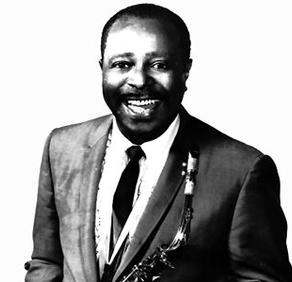
Black History Month Spotlight – Louis Jordan

bhm louis-jordanSince tonight is the 57th Grammy Awards presentation, today’s spotlight looks at a musician who has several entries in the Grammy Hall of Fame – Louis Jordan.

Louis Thomas Jordan was born on July 8, 1908 in Brinkley. The son of a musician, he learned to play the saxophone as a youth and majored in music later at Arkansas Baptist College and performed with Jimmy Pryor’s Imperial Serenaders in Little Rock. He also toured with the famed Rabbit Foot Minstrels, who were the backing musicians for a number of blues legends. In the mid-Thirties, Jordan, now an accomplished jazz saxophonist, moved to New York, working with such jazz greats as Louis Armstrong. He joined drummer Chick Webb’s swing band in 1936.

After honing up his singing skills, he left the band in 1938 to start up his own band. Called the Elks Rendez-Vous Band, after the name of the club where they were playing a long-term engagement, Jordan signed with the Decca label. The band’s name was changed to the Tympany Five in 1939 and between 1941 and 1949; they had a series of hit records that were distinct of the “jump style” rhythm and blues style of music. These included “Choo Choo Cha Boogie,” “Saturday Night Fish Fry,”  and “Let The Good Times Roll.”

Jordan’s hits continued into the early 1950s, by which time his popularity on the R&B scene was enormous. His musical influence was far more reaching, with future rock ‘n’ roll stars like Bill Haley and Chuck Berry, fashioning their sound after Jordan’s style, particularly his vocal approach, song structures and lyrics and treatment of the guitars and horns. When Jordan left Decca in 1954, his popularity began to diminish quickly.

He continued to record and tour throughout the 1950s and 1960s, but rock ‘n’ roll, the music he helped foster, was a major contributing factor in his downfall. Louis Jordan died from heart failure in Los Angeles on February 4, 1975. In the early 1990’s, a revue called Five Guys Named Moe, based on Jordan’s music, was performed on London’s West End and New York’s Broadway.

Louis Jordan was inducted into the Rock ‘n’ Roll Hall of Fame in 1987.  He was posthumously inducted into the Arkansas Entertainers Hall of Fame in 1998 and the Arkansas Black Hall of Fame in 2005. In 2008, the centennial year of his birth, he was featured on a postage stamp.

For more on Louis Jordan and other inductees into the Arkansas Black Hall of Fame, visit the permanent exhibit at the Mosaic Templars Cultural Center. That museum is an agency of the Department of Arkansas Heritage.
Black History Month Spotlight: Hazel Shanks Hynson

bhm hazelEducator and Musician Extraordinaire Hazel Shanks Hynson was a renowned educator and an extraordinary musician who through the years trained many accomplished musicians including the late jazz musician Art Porter.

Hynson earned a Bachelor of Arts degree in music, with a major in piano, from Atlanta University. She completed further study in piano, including advanced theory and harmony, with master musicians and instructors hailing from Oberlin College, the University of London and the Julliard School of Music, to cite a few When she moved to Little Rock, Hynson joined Mt. Zion Baptist Church where she served as its pianist for more than 25 years. Through her Hazel Shanks Hynson Music Studio, she presented her students in memorable piano recitals each year with as many as 20 baby grand pianos in use.

Recognized nationally for her outstanding musicianship, Hynson served as pianist for the Arkansas Baptist State Convention for 26 years and for the National Baptist Convention for 27 years. She also served a stint as pianist and choir director for Arkansas Baptist College which awarded Hynson an honorary doctorate in 1990 and named its multi-purpose building in her honor.

A charter and Golden Life member of the Little Rock Alumnae Chapter of Delta Sigma Theta Sorority, Inc., she was named Delta of the Year in 1992. She is also a charter member of the Little Rock chapter of The Links, Inc.

Known as a grand lady of grace and elegance, a superb teacher and pianist, arranger, composer, and musician’s musician, Hazel Shanks Hynson’s love of music has touched and shaped the lives of people across the globe.

In 2004, she was inducted into the Arkansas Black Hall of Fame.  For more on Hazel Shanks Hynson and other inductees into the Arkansas Black Hall of Fame, visit the permanent exhibit at the Mosaic Templars Cultural Center. That museum is an agency of the Department of Arkansas Heritage.