Little Rock Look Back: Mayor James A. Woodson

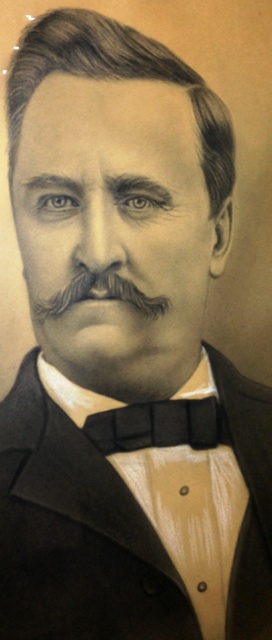
IMG_0298On July 14, 1848, future Little Rock Mayor James Alexander Woodson was born in North Carolina.  The son of two prominent eastern families, he and his parents moved to Pine Bluff in 1849.  His father died within two weeks of the families arrival in Arkansas.

With the outbreak of the Civil War, he enlisted as a drummer boy in the Ninth Arkansas infantry but was discharged because of his youth. He worked as a clerk at a general store in Pine Bluff. After the Civil War ended, he attended school in Virginia and Maryland before returning Pine Bluff. Upon his return he worked in the steamboat business and eventually started working in railroads. He was instrumental in putting together one of the forerunners of the Missouri Pacific Railroad and worked for them for 18 years.

Woodson moved to Little Rock in March 1881 and continued working for the railroad until 1891.  Working in the mercantile business allowed him more time to be engaged in civic affairs.  In 1895 he was elected mayor.   He handily defeated former mayor W. G. Whipple who was seeking to return to office.

During Mayor Woodson’s tenure, he oversaw renovations of Little Rock City Hall (which was located at the time on the north side of Markham between Main Street and Louisiana Street).  He also championed the construction of a city hospital and the first free bridge across the Arkansas River.  Mayor Woodson was reelected in April 1897 and April 1899.

In April 1890, he resigned to take over the Arkansas and Southwestern Railway.  After restoring it to sound financial footing, he later led the Arkansas Asphalt Company.  That company provided the first asphalt for paving Little Rock city streets.

Woodson served as a director of the Little Rock board of trade (forerunner to the Little Rock Regional Chamber of Commerce), director of the Mercantile Trust Company and president of the state board of trade (forerunner of the Arkansas State Chamber of Commerce).

Woodson married Virginia Lanier in 1868.  They had six children, five of whom lived to adulthood.  Mayor Woodson died on October 19, 1908 and is buried in Mt. Holly Cemetery.  His wife lived until 1937 and is buried next to him.  Also buried in Mt. Holly are their children James Alexander, Benjamin Morehead and Gertrude Woodson Hardeman; each of whom died before their mother.  Mrs. Hardeman’s husband and son are also buried in Mt. Holly.
April 9 Architeaser

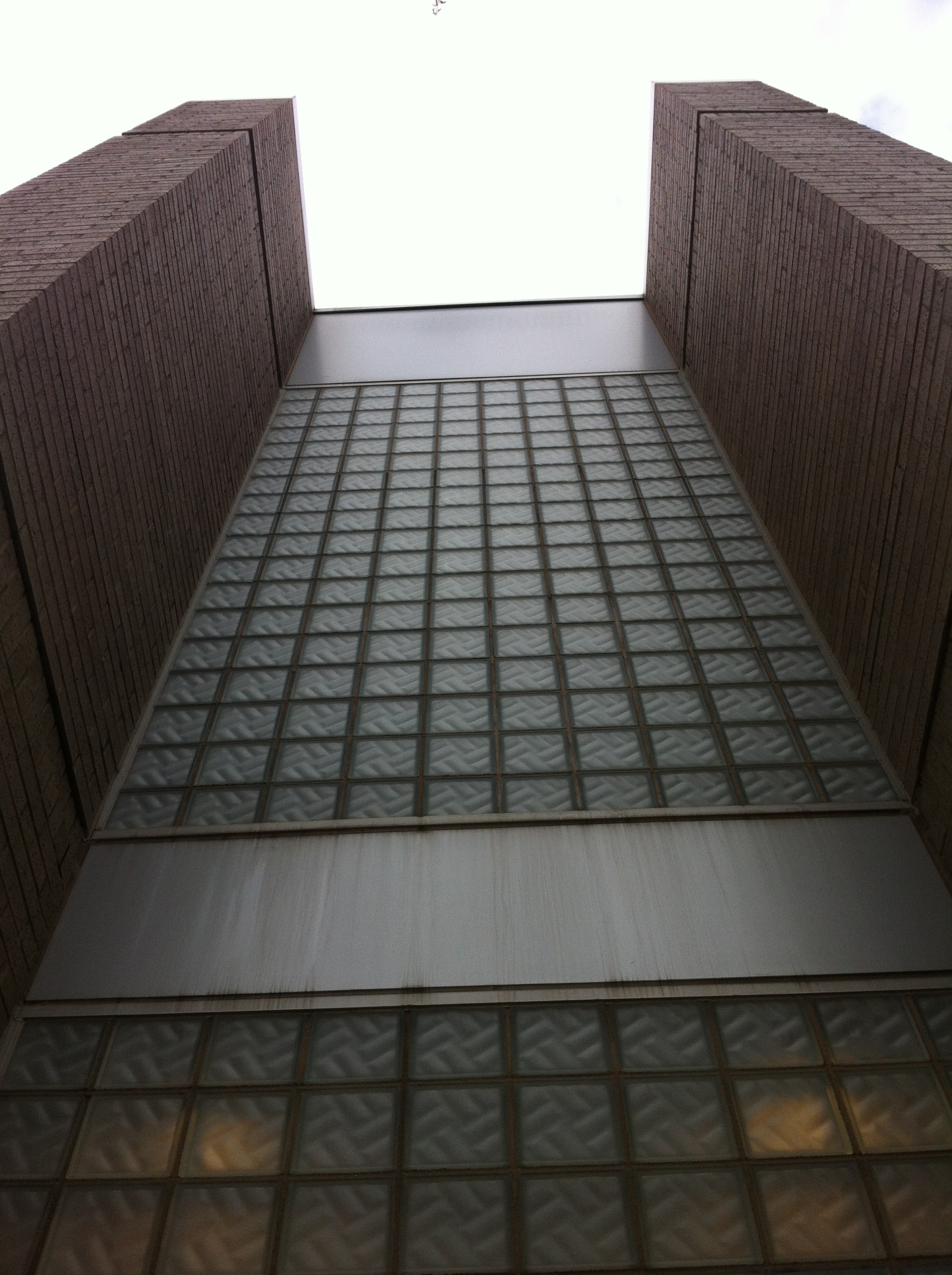
IMG_4812On the anniversary of La Harpe seeing the “Little Rock” for the first time, today’s Architeaser celebrates a building which is located near the Little Rock and looks to the past and the future.

The Little Rock Regional Chamber of Commerce headquarters, located on Markham between Scott Street and the 4 Corners intersection (Markham, LaHarpe, Cumberland, President Clinton).  Designed by the firm Polk Stanley and Yeary (now Polk Stanley Wilcox), the building won awards in 2001 and 2002 from chapters of the American Institute of Architects.

The design evokes both mid-century designs with the buff brick and glass blocks, but also incorporates many contemporary facets of architectural design both inside and outside.

Little Rock Look Back: Werner C. Knoop

Mayor KnoopTo Little Rock citizens under a certain age, the name Knoop means Knoop Park — a picturesque park tucked away in a pocket of Hillcrest.  There are, however, still many who remember Werner C. Knoop as a business and political leader who helped shape Little Rock as a modern city.

Knoop was born on this date in 1902.

In 1946, Knoop joined with Olen A. Cates and P. W. Baldwin to form Baldwin Construction Company in Little Rock.  Knoop had previously founded Capital Steel Company and established his business reputation there.  From 1945 through 1951, he served on the Little Rock School Board.

Following a series of political scandals, efforts were undertaken for Little Rock to shift from Mayor-Council to City Manager form of government.  Even before the desegregation of Little Rock Central put the city in the eyes of the world, an election for new leaders had been set for November 1957.  Knoop was on a “Good Government” slate and was one of the members elected.

At the first meeting of the new City Board, Werner C. Knoop was chosen by his fellow directors to serve as Little Rock Mayor.  Knoop served as Mayor until December 1962.  For the first several months in office, Little Rock had no City Manager so Knoop oversaw the transition of City staff as the forms of government changed.

Though City Hall generally stayed out of school district matters, that did not mean that the public viewed the two entities separately.  In September 1959, the Baldwin Construction offices were bombed as part of a series of terrorist activities protesting the desegregated reopening of all Little Rock high schools.

After two terms on the City Board, Knoop decided against seeking a third term.  He concluded his elected public service on December 31, 1962.  Following his time on the City Board, Knoop did not retire from Civic Affairs.  In 1970, he served as Chairman of the Little Rock Chamber of Commerce.   The previous year he served as President of the Arkansas Chapter of Associated General Contractors.

Mayor Knoop died in July 1983.  He is buried at Roselawn Memorial Park next to his wife Faith Yingling Knoop.

In the 1930s, Knoop moved into an Art Moderne house on Ozark Point in Hillcrest.  It was adjacent to Little Rock Waterworks property which was developed around the same time.  Eventually much of the land was deeded to the City for creation of a park.  In 1989, it was named in tribute to long-time neighbor Knoop in honor of his lifetime of service to Little Rock.

Little Rock Look Back: Mayor W. H. Walters

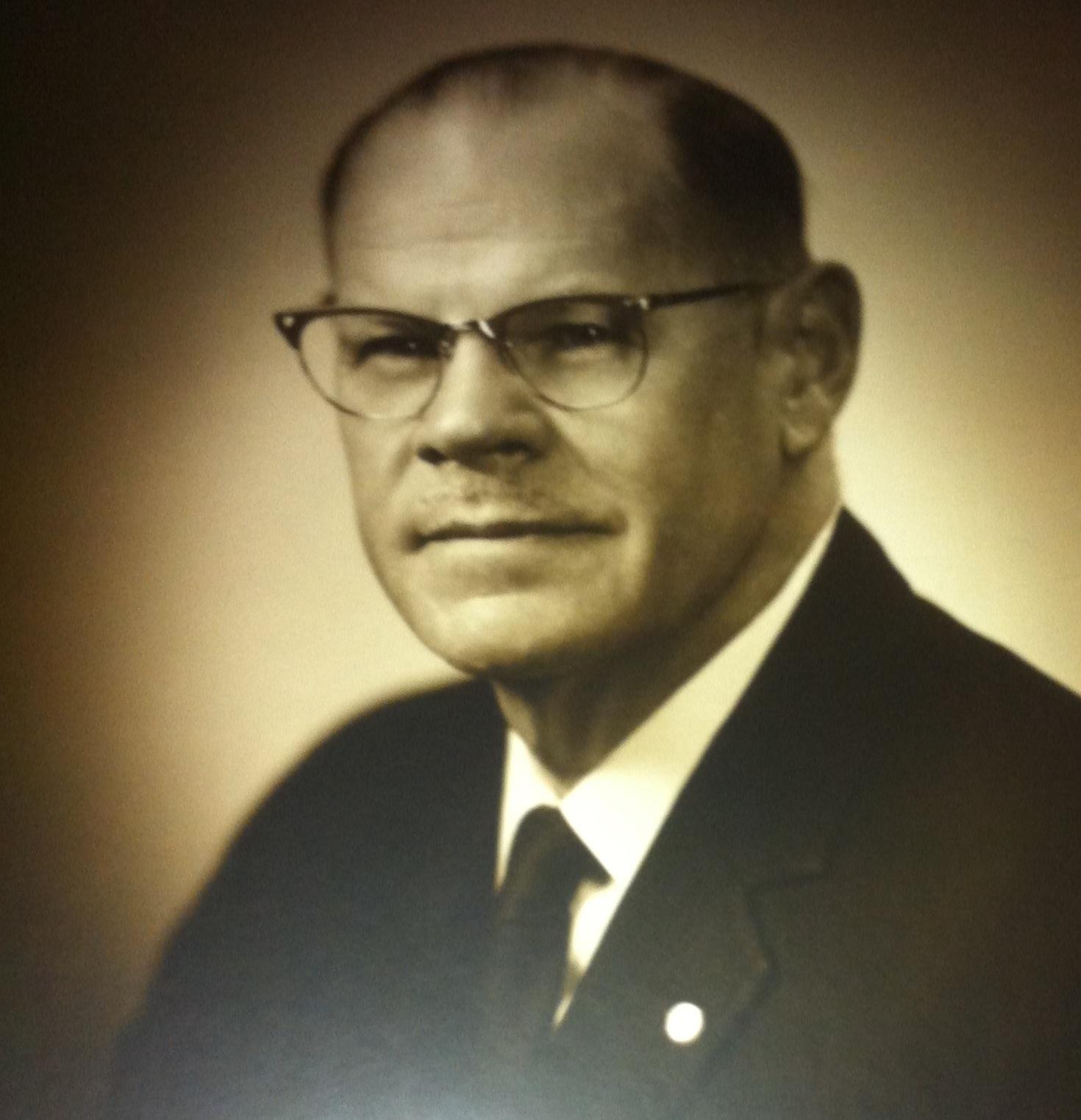
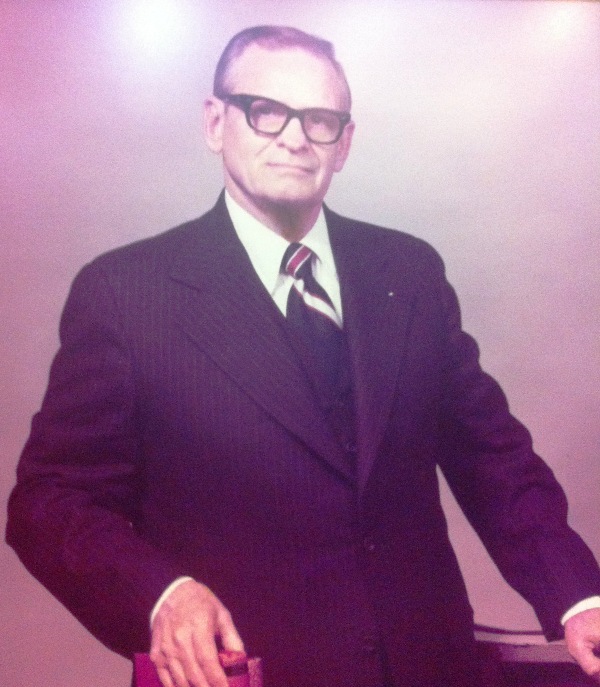
Mayor Walters’ official portrait

100 years ago today, future Little Rock Mayor William H. Walters was born in Clearfield, Pennsylvania.

He ran for the City Board of Directors in 1970 and was unopposed.  Walters took office on January 1, 1971 and served one term on the City Board.  He chose not to run for a second term and left office on December 31, 1974.

Mayor Walters’ signature on the first set of City Board minutes during his term.

In January 1973, he was selected by his colleagues to serve a two year term as Mayor of the City of Little Rock.

Throughout his life, Mayor Walters enjoyed traveling and visiting over 100 countries throughout the world. Mr. Walters had a keen interest in the circus and collected circus memorabilia from many countries.

He was employed by 3M Company. He was Superintendent and Acting Plant Manager beginning January 1, 1951 and 3M Plant Manager beginning February 1, 1972. He retired in 1977.

In addition to serving on the City Board, he had been active in the Little Rock Chamber of Commerce (he served as Chamber President in 1969), Kiwanis Club, Associated Industries of Arkansas and the YMCA among other activities.

Mayor Walters died on February 14, 2005.

Sculpture Vulture: Bryan Massey Sr.’s “The Jazz Player”

In recognition of the first annual Arkansas Sounds music festival taking place in Riverfront Park this weekend, today the Sculpture Vulture features Bryan Massey Sr.’s “The Jazz Player.”  It is located in the Vogelman-Schwarz Sculpture Garden.

The sculpture, cast in bronze, depicts a saxophone player jubilantly playing jazz.  It was donated to the Sculpture Garden by the Little Rock Regional Chamber of Commerce in recognition of the 5th anniversary of the Clinton Presidential Center and Park.  Massey was inspired to create this piece because of President Clinton’s sax playing.

Bryan Winfred Massey, Sr. is currently a Professor of Art/Sculptor at the University of Central Arkansas, Conway. He is primarily a stone carver working with a variation of stone from alabaster, soapstone, limestone, marble and granite. He also casts in iron, bronze, and aluminum as well as fabrication of steel sculptures. He was selected for the Governor’s Award for the Individual Artist of the Year, 2006.