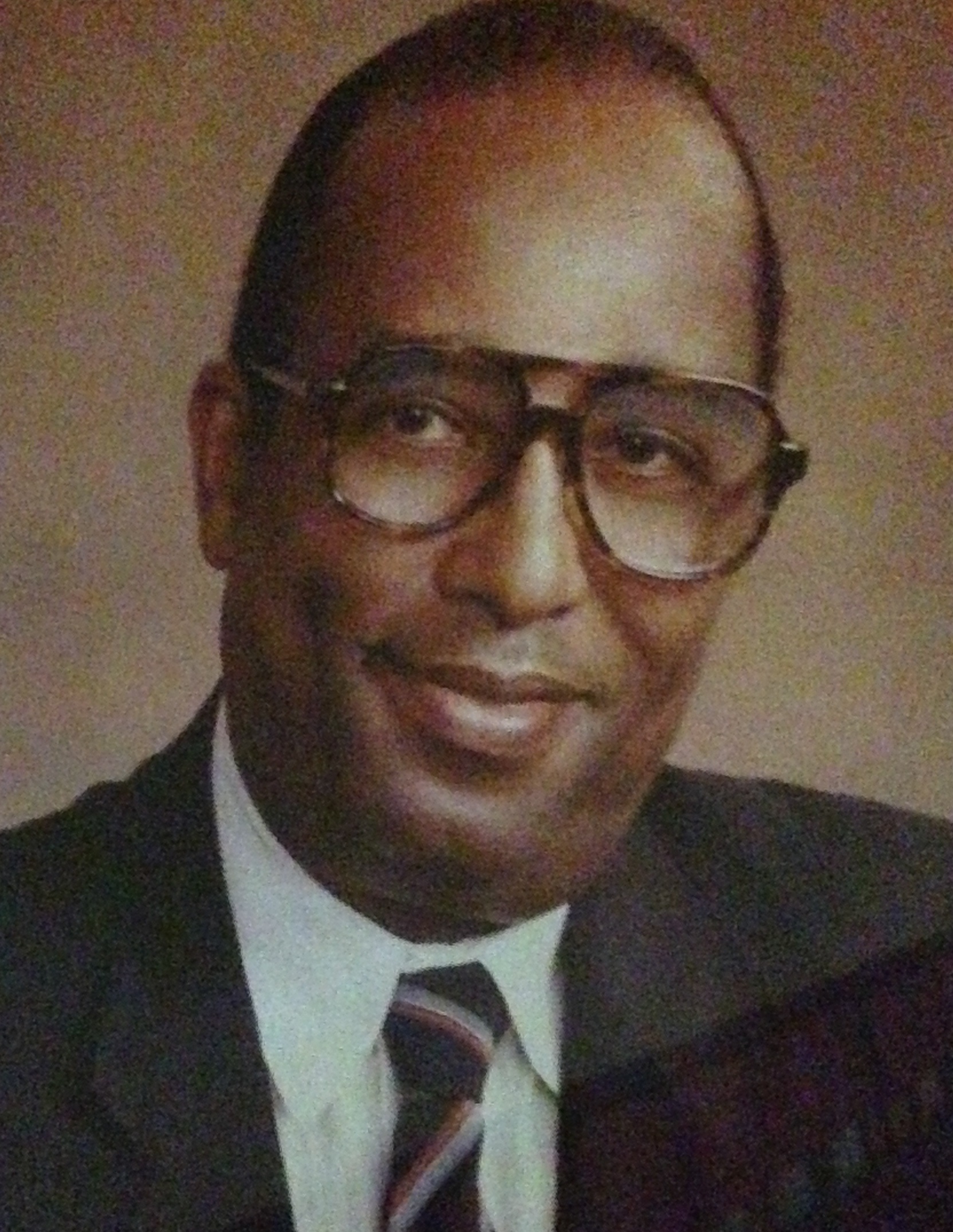
Little Rock Look Back: Gen. R. F. Catterson MD, Little Rock’s 30th Mayor

R_F_Catterson_BGen_ACWOn this date in 1835, future Little Rock Mayor Robert Francis Catterson was born in Indiana, the son of Irish immigrants.  He studied medicine in Ohio and established a medical practice in Indiana upon completion of his studies.

With the outbreak of the Civil War, he enlisted as a private in the Union Army.  Throughout the war, he was promoted and was eventually mustered out as a brigadier general in 1866.  During his service, he participated in the siege of Vicksburg, the Battle of Chattanooga, the Atlanta Campaign and Sherman’s March to the Sea.

Following his departure from the military, Catterson decided not to return to medical practice.  He moved to Arkansas and worked for a brief time in the cotton commodities field.  He later returned to military service commanding a militia fighting the Ku Klux Klan.  Catterson was appointed US Marshal and would also command the Brooks troops during the Brooks-Baxter War in Little Rock.

In November 1871, he was elected Mayor of Little Rock. His election ended a tumultuous two-year period where the Little Rock City Council tried unsuccessfully to remove Mayor A. K. Hartman.  Mayor Catterson served a relatively quiet two year term in office until November 1873.

Following the completion of his term, Mayor Catterson moved to Minnesota. He later moved to Texas where he died on March 30, 1914 at the age of 79.  He is buried in the San Antonio National Cemetery.

Little Rock Look Back: W. W. Stevenson, Little Rock’s 2nd Mayor

LR sealOn this date in 1797, future Little Rock Mayor William Wilson “W. W.” Stevenson was born in South Carolina.

In 1811, he came to Arkansas when his family settled in Batesville.  An ordained Presbyterian minister, he married Ruana Trimble in 1821 and had two children.  After she died, he married Maria Tongray Watkins in 1831 and had two more children.

In 1831, he ran for Mayor in the first election for the office but was defeated by Dr. Matthew Cunningham.  The next year he ran to succeed Cunningham and was elected.  After leaving the Mayor’s office on December 31, 1833, he continued public service.  He was State Commissioner for Public Buildings in 1839.

In 1849, he delivered the funeral oration at the ceremony for Hon. Ambrose H. Sevier.  Later that year, he was hired as a geologist for the Little Rock and California Association which was created to take advantage of the gold rush.  He and his two oldest sons moved to California and never returned to Arkansas. He died in 1888.

No photograph or painting of Mayor Stevenson is known to exist.

Little Rock Look Back: Mayor Charles Bussey

Mayor BusseyFuture Little Rock Mayor Charles Bussey was born on December 18 in 1918.  Throughout his life he was a trailblazer.  He was the first African American Sheriff’s Deputy in Pulaski County and expanded the Junior Deputy program into the African American community.

In 1968 he became the first African American elected to the Little Rock City Board of Directors. He was not the first African American to run for the City Board, but he was the first to win a race.  Mr. Bussey sought support not just from the African American community, but from all sectors of Little Rock.  He served from 1969-1977 and again from 1979 through 1991.  In 1981 he was selected by his fellow City Directors to serve as Little Rock’s Mayor, which made him the first African American Mayor of Little Rock.  He served as Vice Mayor of Little Rock for a total of 8.5 years which is the longest of anyone in the City’s history.

Throughout his lifetime Mayor Bussey championed youth outreach efforts.  He also was active in the Arkansas Municipal League, National League of Cities, West Little Rock Rotary Club, Elks, Shriners and many other organizations.

In 2006 he was posthumously inducted into the Arkansas Black Hall of Fame.  The previous year, 20th Street in Little Rock was renamed in his honor.

Little Rock Look Back: Mayor Gordon Neill Peay

On this date in 1819 future Little Rock Mayor Gordon Neill Peay was born.  The Peay family arrived in Arkansas from Kentucky in 1825.  They quickly became one of Little Rock’s leading families.  Mayor Peay’s father, Nicholas Peay served on the Little Rock Board of Trustees (which existed before the town was incorporated) and later served on the City Council and was acting mayor.
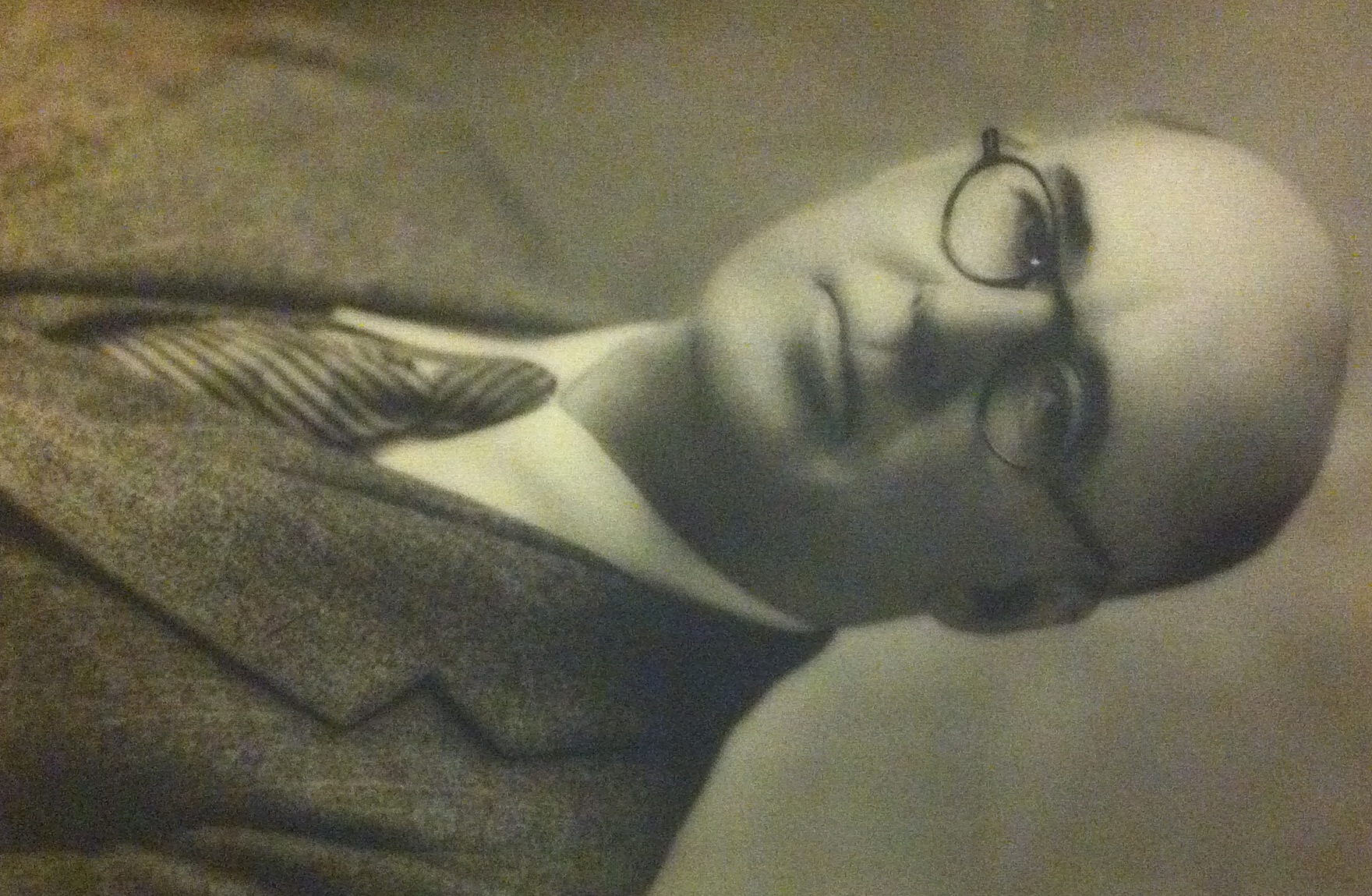
Godon N. Peay served as mayor of Little Rock from 1859 to 1860.  During the Civil War, Peay served as Captain and later Colonel of the Capital Guard.  He later received a pardon from the federal government.

The Peay family owned the Peay Hotel, Little Rock’s first hotel, and were also co-founders of what became Worthen Bank.  They were also a founding family of Christ Episcopal Church. Mayor Peay later served as Pulaski County Chancery Clerk.

He died on December 14, 1876 and is buried at Mt. Holly Cemetery along with many members of his family.  A nephew of his, Ashley Peay, served on the City Council in the 1920s.  Mayor Peay’s great-grandson Joseph Barber Hurst, Sr. served on the Little Rock City Board of Directors from 1967-1971. His great-great-granddaughter-in-law Stacy J. Hurst currently serves on the City Board of Directors.

Little Rock Look Back: Mayor Horace Knowlton

On this date in 1872, future Little Rock Mayor Horace A. Knowlton Jr. was born.

In April 1920, he was elected City Clerk of Little Rock.  He served in that position until April 1931.  That year, he was chosen as the Democratic nominee for Mayor, denying incumbent Mayor Pat L. Robinson a second term.  The primary race against Mayor Robinson was close.  When the results were first announced, it looked as if Mayor Robinson had prevailed.  But after challenging ballots, Mr. Knowlton was declared the winner.  Since Little Rock was primarily a Democratic Party city, unsurprisingly Mr. Knowlton was elected Mayor in April 1931 and served two terms as Mayor.

He oversaw the start of some of President Roosevelt’s New Deal programs in Arkansas during his tenure.  In 1934, he negotiated the purchase of Gillam Park for the City which established the first public park in Little Rock for African Americans.  This was a very forward-thinking action at the time.  One of his final acts as Mayor was to participate in the groundbreaking for the Museum of Fine Arts building in City Park (now a portion of the Arkansas Arts Center building in MacArthur Park).

Following his departure from public office, Mayor Knowlton and his wife (who had been an elementary school teacher) eventually moved to Florida and resided in the Tampa Bay area.  His son and grandson (Horace III and Horace IV) have both been lawyers in the Tampa Bay area.  Mayor Knowlton died on February 14, 1965 and is buried in the Oak Grove cemetery in Conway.

Little Rock Look Back: Mayor W H Walters

On November 6, 1912, future Little Rock Mayor William H. Walters was born in Clearfield, Pennsylvania.

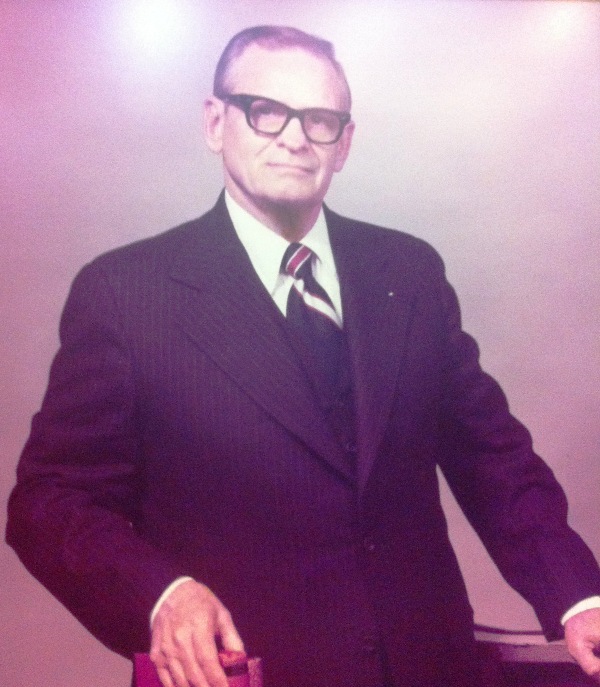
He ran for the City Board of Directors in 1970 and was unopposed.  Walters took office on January 1, 1971 and served one term on the City Board.  He chose not to run for a second term and left office on December 31, 1974.

In January 1973, he was selected by his colleagues to serve a two year term as Mayor of the City of Little Rock.

Throughout his life, Mayor Walters enjoyed traveling and visiting over 100 countries throughout the world. Mr. Walters had a keen interest in the circus and collected circus memorabilia from many countries.

He was employed by 3M Company. He was Superintendent and Acting Plant Manager beginning January 1, 1951 and 3M Plant Manager beginning February 1, 1972. He retired in 1977.

In addition to serving on the City Board, he had been active in the Little Rock Chamber of Commerce (he served as Chamber President in 1969), Kiwanis Club, Associated Industries of Arkansas and the YMCA among other activities.

Mayor Walters died on February 14, 2005 at the age of 94.

Little Rock Look Back: Early Organization of Little Rock

20131027-093707.jpg

Little Rock was designated as the capitol of Arkansas in 1821. But by 1825 the settlement know as Little Rock was little more than a loosely defined group of structures. One hundred and eighty-eight years ago today, on October 27, 1825, Territorial Governor George Izard signed legislation which started establishing a framework for Little Rock to function as a city.

It established that Little Rock citizens could elect a board of trustees to decide matters. Those trustees would choose one of their own to be a presiding officer. Though Little Rock would not be officially incorporated until 1831, this was the first step towards incorporation. The first trustees, elected for 1826, were Robert Crittenden, Joseph Henderson, Nicholas Peay, Bernard Smith and Isaac Watkins. Smith was chosen to be the presiding officer.

Crittenden had been largely responsible for the relocation of the capitol to Little Rock, where he owned a lot of land. He was a major political force in Arkansas politics during the territorial days. Watkins was a nephew of a signer of the Declaration of Independence. He had established the first tavern in Little Rock in 1821 and later he first mill in 1826. He was murdered in 1827 and the perpetrator was never captured.

Peay bought the tavern from Watkins in 1826 and continued in the tavern and hotel business the rest of his life. He later served on the Little Rock City Council and was acting mayor. His son Gordon Neil Peay served as Mayor of Little Rock. The Peay family also cofounded Worthen Bank and Christ Episcopal Church. Nicholas Peay’s great-great grandson Joseph B. Hurst, Sr. served on the Little Rock City Board from 1967 to 1970. Mr. Hurst’s daughter-in-law, Stacy, is currently on the City Board.