Black History Month Spotlight: Lencola Sullivan

Entertainer and journalist Lencola Sullivan broke many barriers. While she gained recognition as a pageant winner, she also made a name for herself on other arenas.

In 1980, she was crowned Miss Arkansas, becoming the first contestant in pageant history to win the talent award and the title.

In the Miss America pageant, she became the first African American to win a preliminary award and to place among the top five finalists.

Around the time she was competing in pageants, she was employed by KARK as a producer and eventually an on-air reporter.

She eventually moved to New York to focus on her career as a singer and public speaker.

Sullivan had studied piano for seven years and voice and organ for one year. As a vocalist, she performed with the Lionel Hampton Orchestra, with Stevie Wonder, with Kool and the Gang, and at both of President Bill Clinton’s inaugural balls, in 1993 and 1997.

She has also performed throughout The Netherlands, on Dutch National Television, and at Jazz Club 606 in London. Sullivan has also appeared on several television soap operas, in industrial films, and in many television commercials.

In 2002, Sullivan married Roel P. Verseveldt of The Hague. She and her husband are involved in international business activities. Sullivan is a frequent lecturer at Hanze University of Applied Sciences in The Netherlands.

She was inducted into the Arkansas Black Hall of Fame in 2006. For more information on Lencola Sullivan and the other Arkansas Black Hall of Fame inductees, visit the permanent exhibit at the Mosaic Templars Cultural Center, a division of the Department of Arkansas Heritage

Black History Month Spotlight: John Stubblefield

IMG_5435Tenor saxophonist John Stubblefield ranks among the most powerful and innovative soloists of the last decades of the 20th century.

Born February 4, 1945, in Little Rock, Stubblefield first studied the piano, but moved to saxophone as a teen.
At the age of 17, Stubblefield joined local R&B combo York Wilburn & the Thrillers, with whom he made his recording debut. He then spent a year on the road with legendary soul artist, Solomon Burke before studying music at AM&N College (now UAPB) while leading his own modern jazz quintet.

After graduation, Stubblefield settled in Chicago in 1967, soon signing on with the pioneering avant-garde jazz collective the Association for the Advancement of Creative Musicians (AACM); he studied under Muhal Richard Abrams and appeared on Joseph Jarmans’s landmark 1968 set As If It Were the Seasons.

Stubblefield remained with the AACM until 1970, when he relocated to New York City and joined its East Coast counterpart, the Collective Black Artists. He played with Mary Lou Williams, Tito Puente, and the Thad Jones/Mel Lewis Orchestra. Upon joining Mingus in 1972, Stubblefield added alto saxophone, oboe, flute, and bass clarinet to his arsenal.

During the mid-1970s, Stubblefield also served as an instructor with the famed Jazzmobile program. He cut his first disc as a leader, Midnight Sun, in 1976. Subsequent efforts for the Enja and Soul Note labels include 1984’s Confessin’, 1987’s Countin’ on the Blues, and 1990’s Sophisticatedfunk.

In the 1990s Stubblefield served as the Mingus Big Band’s lead tenor and occasional conductor. Diagnosed with cancer in the spring of 2004, Stubblefield remained the Mingus Big Band’s guiding force, conducting much of its I Am Three album from his wheelchair. He died July 4, 2005.

In 2007, he was posthumously inducted into the Arkansas Black Hall of Fame. To learn more about John Stubblefield and other inductees, visit the permanent exhibit at the Mosaic Templars Cultural Center. That museum is an agency of the Department of Arkansas Heritage.

Black History Month Spotlight: William Grant Still

bhm StillLong known as the Dean of African American composers, Dr. William Grant Still was a legend in his own lifetime.

Dr. Still, who wrote more than 150 compositions ranging from operas to arrangements of folk themes, is best known as a pioneer. He was the first African-American in the United States to have a symphonic composition performed by a major orchestra. He was the first to conduct a major symphony orchestra in the US; the first to conduct a major symphony in the south; first to conduct a white radio orchestra in New York City; first to have an opera produced by a major company. Dr. Still was also the first African-American to have an opera televised over a national network

Dr. Still was born May 11, 1895 in Woodville, Mississippi to parents who were teachers and musicians. When Dr. Still was only a few months old, his father died and his mother took him to Little Rock. Inspired by RCA Red Seal operatic recordings, his musical education began with violin lessons.

After his studies at Wilberforce University and the Oberlin Conservatory of Music, he played in orchestras and orchestrated for various employers including the great W. C. Handy. For several years he arranged and conducted the “Deep River Hour” over CBS and WOR.

In the 1920’s, Still made his first appearances as a serious composer in New York. Several fellowships and commissions followed. In 1994, his “Festive Overture” captured the Jubilee prize of the Cincinnati Symphony orchestra. In 1953, he won a Freedoms Foundation Award for “To You, America!” which honored West Point’s Sesquicentennial Celebration. In 1961, he received honors for this orchestral work, “The Peaceful Land”. Dr. Still also received numerous honorary degrees from various colleges and universities, as well as various awards and a citation from Arkansas Governor Dale Bumpers in 1972.

In 1939, Dr. Still married journalist and concert pianist Verna Avery, who became his principal collaborator. They remained together until Dr. Still’s death in 1978.  In a proclamation marking the centennial of Dr. Still’s birth, President Bill Clinton praised the composer for creating “works of such beauty and passion that they pierced the artificial barriers of race, nationality and time.”

In 1995, Dr. Still was posthumously inducted into the Arkansas Black Hall of Fame.  For more on William Grant Still and other inductees into the Arkansas Black Hall of Fame, visit the permanent exhibit at the Mosaic Templars Cultural Center. That museum is an agency of the Department of Arkansas Heritage.


Black History Month Spotlight: Phyllis Yvonne Stickney

mtcc nps stickneyPhyllis Yvonne Stickney is a world-class artist, producer, director, author, motivational speaker, clothing designer, community activist, businesswoman and surrogate mother to many.

Born in Little Rock, Stickney was raised in the various US cities to which her father, a YMCA executive, was transferred. However, she settled in Harlem, where her theater work began at the Frank Silvers Workshop, and the New Heritage Theater, under the late playwright/director Robert Furman.

Her theatrical performances were before sell-out crowds in the 1998 National Black Arts Festival, where she also served as performing arts curator and starred in Nathan Ross Freeman’s The Contract. She  made her national television debut as single mother Cora Lee in the ABC miniseries The Women of Brewster Place, which also starred Oprah Winfrey and Cicely Tyson. Her subsequent television credits include sitcoms New Attitude, The Cosby Show and A Different World, PBS ‘ Great Performances production of The Colored MuseumMs Stickney has also appeared on the silver screen in such notable movies as New Jack City Jungle Fever, Talkin’ Dirty, Malcolm X, The Inkwell; What’s Love Got To Do With It, Die Hard With A Vengeance and How Stella got Her Grove Back.

Ms Stickney’s Conscious Comedy Concerts have been featured in a number of venues across the country, including Harlem’s Apollo Theater, Concert show titles include, Live and in Chocolate, All That and Brains Too, and An Evening, With An Endangered Species. Her written work appears in an anthology of nine black comedy plays, edited by Pamela Faith Jackson. She also created The Crystal Pyramid, a chorepoem for children.

In addition, she served as the first solo female host for Essence’s 1997 Music Festival and was a speaker for the 1998 African American Women on the Tour.In 1983 she won the Audelco Award for her performance in Furman’s adaptation of Moliere’s Tartuffe, and later won a second Audelco for her original on-woman show, Big Mama an Nem

Though she has had success worldwide, she often returns to Little Rock to share her talents. She also played Lena in Lorraine Hansberry’s award-winning play A Raisin in the Sun at the Arkansas Repertory Theatre. The play was produced in January 2011 and received great reviews and exceeded box office expectations. Earlier this month, she headlined an event at the Mosaic Templars Cultural Center highlighting the works of Nikki Giovanni, Maya Angelou, Ruby Dee and Beah Richards.

In 1998, she was inducted into the Arkansas Black Hall of Fame.  For more on Phyllis Yvonne Stickney and other inductees into the Arkansas Black Hall of Fame, visit the permanent exhibit at the Mosaic Templars Cultural Center. That museum is an agency of the Department of Arkansas Heritage.

Black History Month Spotlight: O.C. Smith

bhm o cThe life of O. C. Smith, according to one biography, ‘has had the flow and tempo of a hit song that finds its audience and never lets go.” His million-seller song “Little Green Apples” won a Grammy nomination.

Smith also is known for the hits “Hickory Holler’s Tramp” and “Daddy’s Little Man,” and is remembered for singing the themes from the motion pictures “The Learning Tree”and “Shaft’s Big Score.” Songs such as “Help Me Make It Through the Night,” “For the Good Times,” “That’s Life,” “Don’t Misunderstand,” “Dreams Come True” and “What “Cha Gonna Do” are all contributions to the music world from Smith.

Smith’s story begins in the small community of Mansfield, LA. At age 10, his parents, both teachers, relocated to Little Rock. After his parents divorced, Smith and his mother moved to Los Angeles.

Smith later returned to Louisiana to attended Southern University at Baton Rouge, majoring in psychology. He served the Air Force and Special Services as an entertainer on military bases all over the world.

After his stint with Uncle Sam, Smith settled in New York and began his singing career, working in clubs in the winter and at the legendary “Borsch Belt” hotels in the Catskill Mountains in the summer. He eventually signed on with Count Basie and toured with him for three years. He left Basie for a solo career that got a boost with the hit “Little Green Apples.”

At the height of his music career, Smith began studying Religious Science and subsequently became a minister. In 1985, he founded the City of Angels Church of Religious Science, where he practiced for 16 years. One of his last recordings, “Save The Last Dance For Me” reached the number one position on the Rhythm n’ Beach Top 40 chart.

He died on November 23, 2001.  In 1996, Smith was inducted into the Arkansas Black Hall of Fame.  For more on O.C. Smith and other inductees into the Arkansas Black Hall of Fame, visit the permanent exhibit at the Mosaic Templars Cultural Center. That museum is an agency of the Department of Arkansas Heritage.

Black History Month Spotlight: Henry Shead

bhm shedHenry Wallace Shead, Sr., better known as “Shed” was born in Fordyce, Arkansas, on March 31, 1941.  He was raised in Little Rock, the son of a reverend, Henry Arthur Shead.  At the tender age of six, Henry was introduced to the keyboards by his mother, Willie LeBethel, who immediately recognized his natural talent. Henry’s mother saw to it that her son had piano lessons, while his father’s church provided the place for his early public performances.

At the start of his career, he performed regularly on a local American Bandstand-type TV show called Center Stage. He also became a fixture at the Little Rock Country Club. He made his mark playing in intimate settings as a solo artist, dazzling listeners with his absolute mastery of the piano, singing in that slightly raspy, yet smooth sounding baritone voice. Shead was awarded a scholarship to the University of Arkansas at Pine Bluff, and majored in music while entertaining around the area. Henry met his wife, Jeanette Mazique, while attending college in Pine Bluff. They married in January of 1964 and had four children.

He became a high school choral director and music teacher, all the while continuing to work in local nightspots like the Drummer‘s Club in Little Rock. In 1971, he moved to Los Angeles where he made his acting debut appearing with Henry Fonda, Richard Dreyfuss and Jane Alexander in William Saroyan’s The Time of Your Life. He wrote and arranged music for stage plays and television, sang the title song for a United Artist film, did studio work on a Johnny Mathis album, and recorded for the Liberty/United Artists and Cream labels.

Shed created national radio jingles and appeared on network television with Dinah Shore, Johnny Carson and Jerry Lewis. He has also performed at parties for the Rockefellers, Pearl Bailey, The Carpenters, President Lyndon Johnson, President Bill Clinton, Henry Mancini, Sergio Mendes, hotelier Peter Morton, Ed McMahon and Barbra Streisand.

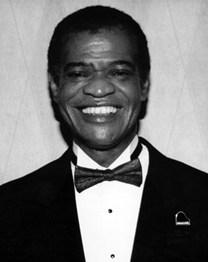
In Las Vegas, the city where he lived since 1974, Shed entertained at most of the major hotels, with long engagements at the Aladdin, Stardust, Hacienda, MGM Grand, Caesar’s Palace and Sahara. In 1977, the Henry Shead Band with Denise Clemente was voted Las Vegas’ Best Lounge Act of the Year. His last long-term run was at AJ’s Steakhouse at the Hard Rock Hotel & Casino, retiring in 2007. In October 2006, he was inducted into the Arkansas Black Hall of Fame.

He died on October 5, 2012 in Las Vegas and is buried in Forest Lawn Cemetery in Hollywood CA.

For more on Henry Shead and other inductees into the Arkansas Black Hall of Fame, visit the permanent exhibit at the Mosaic Templars Cultural Center. That museum is an agency of the Department of Arkansas Heritage.


Black History Month Spotlight: Pharoah Sanders

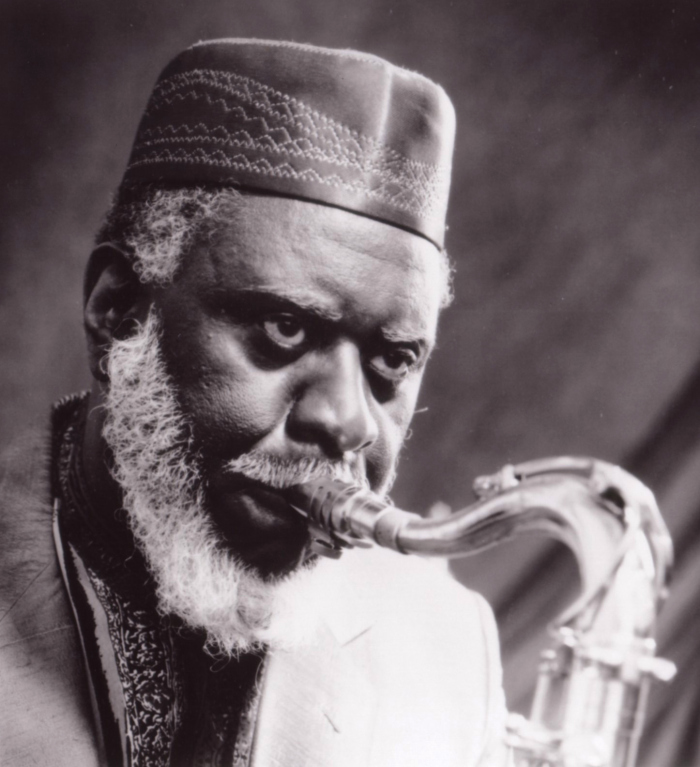
bhm pharoahPharoah Sanders (his given name, Ferrell Sanders) was born into a musical family. Sanders’ early favorites included Harold Land, James Moody, Sonny Rollins, Charlie Parker, and John Coltrane. Known in the San Francisco Bay Area as “Little Rock,” Sanders soon began playing bebop, rhythm & blues, and free jazz with many of the region’s finest musicians, including fellow saxophonists Dewey Redman and Sonny Simmons, as well as pianist Ed Kelly and drummer Smiley Winters. In 1961, Sanders moved to New York, where he struggled. Unable to make a living with his music, Sanders took to pawning his horn, working non-musical jobs, and sometimes sleeping on the subway. During this period he played with a number of free jazz luminaries, including Sun Ra, Don Cherry, and Billy Higgins.

In 1964, Coltrane asked Sanders to sit in with his band. The following year, Sanders was playing regularly with the Coltrane group. Coltrane’s ensembles with Sanders were some of the most controversial in the history of jazz. Their music represents a near total desertion of traditional jazz concepts, like swing and functional harmony, in favor of a teeming, irregularly structured, organic mixture of sound for sound’s sake. Strength was a necessity in that band, and as Coltrane realized, Sanders had it in abundance.

Sanders made his first record as a leader in 1964. After John Coltrane’s death in 1967, Sanders worked briefly with his widow, Alice Coltrane. From the late ’60s, he worked primarily as a leader of his own ensembles.

In the decades after his first recordings with Coltrane, Sanders developed into a more well-rounded artist, capable of playing convincingly in a variety of contexts, from free to mainstream. Some of his best work is his most accessible. As a mature artist, Sanders discovered a hard-edged lyricism that has served him well.

In 2004, he was inducted into the Arkansas Black Hall of Fame.  That night, he headlined a concert in Little Rock as a fundraiser for the Hall of Fame.  For more on Pharoah Sanders and other inductees into the Arkansas Black Hall of Fame, visit the permanent exhibit at the Mosaic Templars Cultural Center. That museum is an agency of the Department of Arkansas Heritage.