
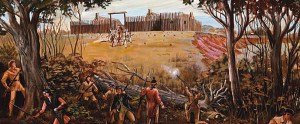
 Because Arkansas was part of the Louisiana Territory, and under the Spanish flag, one does not think about there being any Revolutionary War battles being fought on Arkansas soil.
But on April 17, 1783, the British and Spanish skirmished at Arkansas Post. Sometimes known as Colbert’s Raid, this was part of a four year campaign of intermittent efforts by the British to stop the Spaniards from funneling money and supplies to the colonists via the Mississippi River.
James Colbert, a former British Army captain, led a loose group of British mercenaries as well as anti-Spanish members of the Chickasaw tribe on a series of raids in Louisiana and the lower Mississippi area. He targeted Fort Carlos at Arkansas Post because of its proximity to the Arkansas and Mississippi Rivers.
The Fort had 33 Spanish soldiers and four members of the Quapaw tribe. Colbert had over 80 men with him. After an initial attack on the Post, several residents made it to the Fort which was then attacked. Expecting surrender (and indeed there had been a brief truce), instead a Spanish sortie of 14 faced the 82. Shouting Quapaw war cries and firing their muskets, under the cover of darkness, this sortie surprised and confused the Colbert party. Convinced that a large collection of Quapaw was attacking them, they scattered and retreated.
Today, the National Park Service at Arkansas Post offers information on this battle, one of the last of the Revolutionary War (and a full 18 months after Cornwallis surrendered to Washington at Yorktown).
 On June 12, 1929, Anne Frank was born in Frankfurt, Germany. Through her diary, she has inspired generations with her courage as her family was in hiding from the Nazis. During the two years she and her family were in seclusion, she looked out and saw a white horse chestnut tree from her window.
 Anne’s tree would outlive her by more than 50 years before being weakened by disease and succumbing to a windstorm in 2010. But today, thanks to dozens of saplings propagated in the months before its death, Anne’s tree lives on in cities and towns around the world.
 On April 9, 1722, French explorer Jean-Baptiste Bénard de La Harpe rounded the bend of the Arkansas River and saw La Petite Roche and Le Rocher Français. He had entered the mouth of the Arkansas River on February 27 after traveling up the Mississippi River from New Orleans.
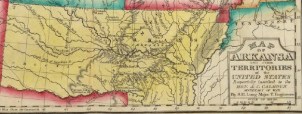 On March 2, 1819, the Arkansas Territory was authorized by an act of Congress, to take effect on July 4, 1819.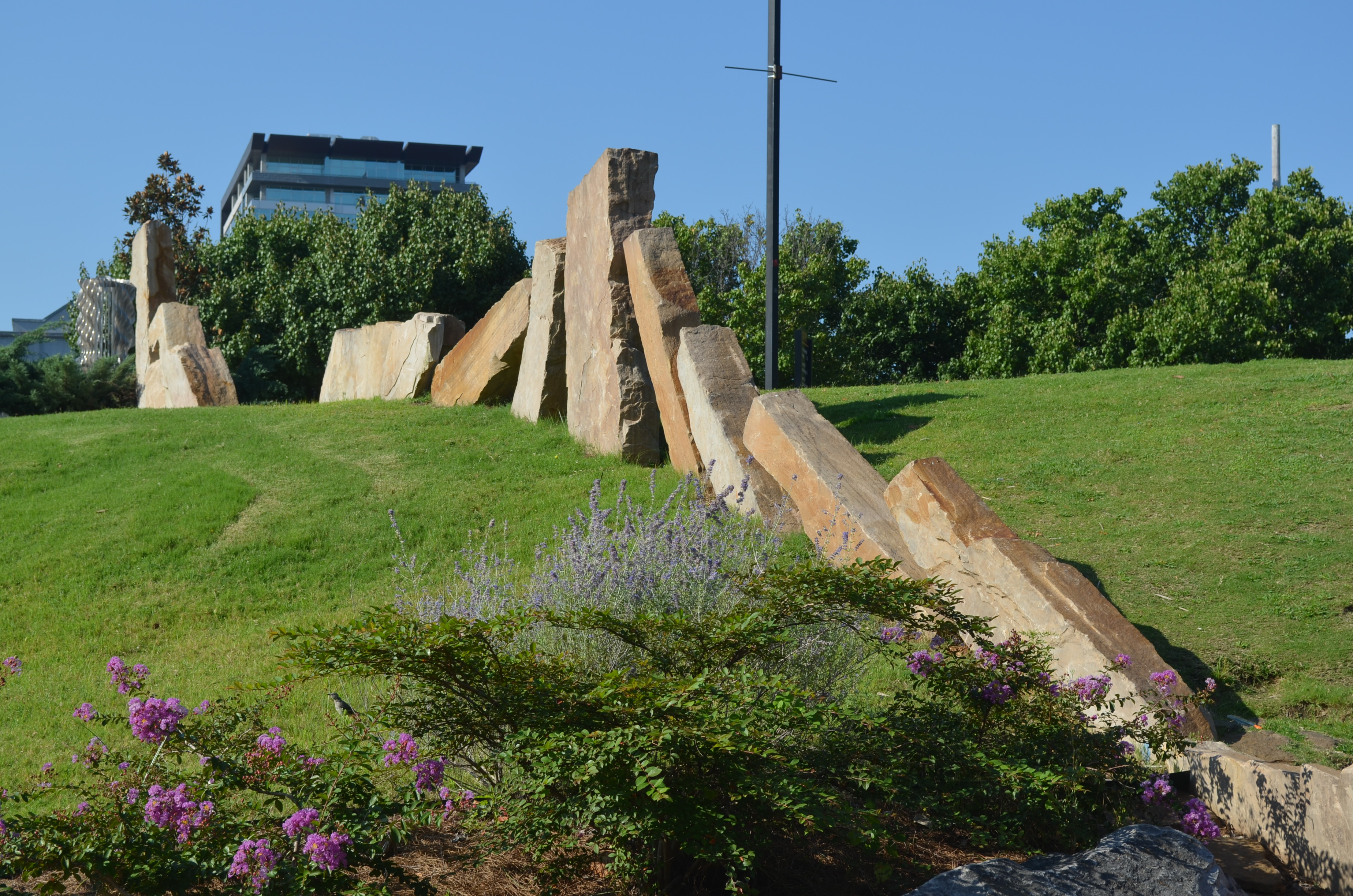

 Little Rock Culture Vulture