

Women’s History Month – Phyllis D. Brandon

While today, Phyllis D. Brandon is best known for being the first and longtime editor of the Arkansas Democrat-Gazette‘s High Profile section, she actually holds two historic firsts in Arkansas history.

In 1956, she became the first woman to report news on an Arkansas TV station when she appeared on KTHV.  Later, she was the first woman chosen to serve on the Pulaski County Election Commission.


A journalist since her junior high school days in Little Rock, Brandon has also been a witness to history.  As a recent graduate of the University of Arkansas, Brandon returned to her alma mater, Little Rock Central High, to cover the events in early September 1957 for the Arkansas Democrat.  Eleven years later, she was in Chicago for the contentious and violent 1968 Democratic National Convention as a delegate.

From 1957 until 1986, she alternated between careers in journalism and the business world, as well as being a stay-at-home mother.  Upon becoming founding editor of High Profile, she came into her own combining her nose for news and her life-long connections within the Little Rock community.  As a writer and photographer, she created art in her own right. A look through High Profile provides a rich historical snapshot of the changes in Little Rock and Arkansas in the latter part of the 20th Century and start of the 21st Century.
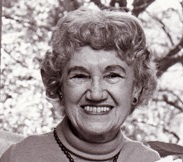
Women’s History Month – Faith Yingling Knoop

Faith Yingling Knoop was the first Little Rock First Lady during the City Manager era.  Her husband, Werner Knoop, served as Mayor from November 1957 until December 1962.

She was a nationally known author of children’s books.  She also wrote short stories, THE Arkansas History Book which was used for decades in the state, and more than 250 articles.  Viewing her writing as a hobby instead of a career, she nonetheless was a dedicated author who spent hours researching her books. Many of her books were biographies.  One of her most notable one was 1950’s Zebulon Pike, which was reviewed in The New Yorker magazine.

At the time a school teacher, she wrote Arkansas: Yesterday and Today in 1935 after not finding an adequate Arkansas history textbook.

Women’s History Month – Gretchen Hall

At the 2017 Downtown Little Rock Partnership annual meeting, Gretchen Hall became the first woman to receive solely receive the Top of the Rock Award.

A hardhat and reflective vest were part of Gretchen‘s work wardrobe almost every day for the past 30 months.  As the President and CEO of the Little Rock Convention and Visitor’s Bureau, she actively oversaw the deconstruction and reconstruction of Robinson Center Performance Hall. Taking a New Deal era assembly hall and making it into a state-of-the-art performance facility was not an easy task. Gretchen and her team have worked with the architects, engineers, designers and consultants to make it happen.

Gretchen joined LRCVB in 2001 and worked her way up through the organization.  In May 2011, she was named to her current position.  Since that time, the LRCVB has undertaken numerous efforts to enhance Little Rock including a new amphitheatre in Riverfront Park, enhanced programming at the River Market, and increased financial support of cultural organizations.  She has worked to improve not only the meeting space available for conventions, but also to enhance the dining and lodging scenes in Little Rock.  In addition, she helped lead the effort to see the additional penny of the hotel tax be dedicated to support the Arkansas Arts Center and MacArthur Museum of Arkansas Military History.

Women’s History Month – Ruth May Wassell

On August 27, 1944, Ruth May Wassell shattered a bottle on the hull of a new ship and christened it the U.S.S. Little Rock.  Mrs. Wassell, whose husband was Little Rock alderman Sam Wassell, had been designated as the official sponsor for the City of Little Rock by Mayor Charles Moyer.
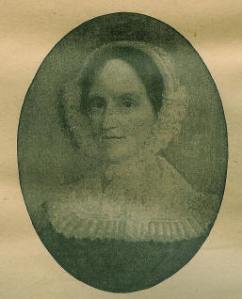
Ruth May Wassell was more than the wife of a local political leader.  She graduated from Henderson-Brown College and received a law degree from the University of Arkansas.  In 1932, she was admitted to the Arkansas Bar and later was admitted to practice before the Arkansas Supreme Court, one of the first women to receive this designation.

Mrs. Wassell was active in business, serving as president of the Arkansas Lumber Company  and owner of a citrus farm in Texas.  She was also active in civic affairs through involvement with the Arkansas Democratic Women, Boys Club and Second Presbyterian Church.  From 1947 until 1951 she was First Lady of Little Rock when Sam Wassell was elected as Mayor.

Following the December 1954 death of Mayor Wassell, she subsequently married E. W. “Bud” Gibb.  She died in 1964.

Women’s History Month: Eliza Cunningham, first First Lady of Little Rock

Eliza Wilson Bertrand Cunningham was the First Lady of Little Rock.  She literally was the first lady and the founding mother.

She became the first permanent female resident when she joined her husband Matthew Cunningham in Little Rock.  She gave birth to Chester Ashley Cunningham, the first baby born in Little Rock.

When her husband, became the first Mayor of Little Rock, she was the first First Lady of Little Rock. They hosted the first Little Rock Council meeting at their house on what is now the block downtown bounded by Third, Main, Fourth and Louisiana Streets.

Her son Charles P. Bertrand, from her first husband, later served as Mayor of Little Rock, making her the only woman to be married to a Mayor and be mother of a Mayor.

Women’s History Month – Judge Alice Lightle, first female Little Rock District Judge

Judge Alice Lightle was first appointed by Governor Mike Beebe in June 2007 to fill out the remaining term in Little Rock District Court, Third Division (colloquially known as Environmental Court). She became the first woman to serve as a permanent District (formerly Municipal) Judge in Little Rock history.

In November 2008, she was elected to a four year term in the Little Rock District Court, First Division (informally called Criminal Court). This made her the first woman to be elected a Little Rock District Judge.  She was re-elected in 2012 and again in May 2016, when she was unopposed.  She started her third term in January 2017.

Judge Lightle comes from a family of attorneys and public servants.  Prior to serving as a judge, she was a former assistant state attorney general and commissioner on the state Workers Compensation Commission.

Women’s History Month – Adolphine Fletcher Terry

Photos from the collection of the Butler Center

Adolphine Fletcher Terry did not rely on her pedigree for her identity.  She made her own impact on Little Rock, on Arkansas, and on the US.  For over 40 years, she served on the Little Rock Public Library Board.  Not only is she the longest serving female on Library Board history, she is likely the longest serving female on any City of Little Rock board or commission.

The daughter of a Little Rock Mayor, daughter-in-law of a congressman, wife of a congressman, she was raised in Little Rock and spent most of her life here.

She is perhaps best known today for establishing the Women’s Emergency Committee in 1958 and for her subsequent deeding of the family house to the City for use by the Arkansas Arts Center.  But her entire life was based on civic engagement.  She was instrumental in establishing the first juvenile court system in Arkansas and helped form the first school improvement association in the state. She was long an advocate for libraries, serving 40 years on the Little Rock public library board.  Through her leadership, the library opened its doors to African Americans in the early 1950s. Today a branch of the Central Arkansas Library System (the successor the Little Rock public library) is named after her.  Another branch is named after her Pulitzer Prize winning brother.

After her husband’s death in 1963, she continued to remain active in civic affairs. In the 1960’s, she and her sister deeded the Pike-Fletcher-Terry House to the City of Little Rock for use by the Arkansas Arts Center upon both their deaths.  Following Adolphine Fletcher Terry’s death in 1976, Mary turned over the title to the City.