
Women’s History Month – Myra Jones, the first woman to serve both on LR City Board and in Arkansas General Assembly

myraFirst woman to serve on Little Rock City Board and in Arkansas General Assembly:  Myra Jones

Myra Jones was elected to the Little Rock City Board in 1976. She served eight years on the Board, including four years as Vice Mayor of Little Rock.  She was the first female to serve as Vice Mayor of Little Rock.  In a nod to changing times, she was the first woman to be referred to in the City minutes by her own first and last name instead of being Mrs. followed by her husband’s name.

From 1985 to 1998, she served seven terms in the Arkansas House of Representatives and was the first woman to chair a standing committee:  the City, County and Local Government Committee.

Following her retirement from the legislature, she continued in business. She served on the board of Noram Energy (formerly ArkLa) for seventeen years becoming one of the first women from Arkansas to serve on a Fortune 500 Board. She later served as a local affairs lobbyist for the real estate industry. She once again became a fixture at Little Rock City Hall until her death in 2012.

A graduate of Oberlin College, she was a lifelong musician and would return in the summer to her native South Dakota to play clarinet with the Belle Fourche Cowboy Band. She had first joined the band as a high school senior.  Once it was reconstituted in 1980, the band (complete with white chaps, white hats, and red shirts) would play for the Black Hills Rodeo in Belle Fourche, march in the Fourth of July parade, and perform concerts in the area.

Women’s History Month – Phyllis D. Brandon

While today, Phyllis D. Brandon is best known for being the first and longtime editor of the Arkansas Democrat-Gazette‘s High Profile section, she actually holds two historic firsts in Arkansas history.
In 1956, she became the first woman to report news on an Arkansas TV station when she appeared on KTHV.  Later, she was the first woman chosen to serve on the Pulaski County Election Commission.


A journalist since her junior high school days in Little Rock, Brandon has also been a witness to history.  As a recent graduate of the University of Arkansas, Brandon returned to her alma mater, Little Rock Central High, to cover the events in early September 1957 for the Arkansas Democrat.  Eleven years later, she was in Chicago for the contentious and violent 1968 Democratic National Convention as a delegate.

From 1957 until 1986, she alternated between careers in journalism and the business world, as well as being a stay-at-home mother.  Upon becoming founding editor of High Profile, she came into her own combining her nose for news and her life-long connections within the Little Rock community.  As a writer and photographer, she created art in her own right. A look through High Profile provides a rich historical snapshot of the changes in Little Rock and Arkansas in the latter part of the 20th Century and start of the 21st Century.

Women’s History Month – Faith Yingling Knoop

Faith Yingling Knoop was the first Little Rock First Lady during the City Manager era.  Her husband, Werner Knoop, served as Mayor from November 1957 until December 1962.
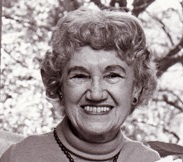
She was a nationally known author of children’s books.  She also wrote short stories, THE Arkansas History Book which was used for decades in the state, and more than 250 articles.  Viewing her writing as a hobby instead of a career, she nonetheless was a dedicated author who spent hours researching her books. Many of her books were biographies.  One of her most notable one was 1950’s Zebulon Pike, which was reviewed in The New Yorker magazine.

At the time a school teacher, she wrote Arkansas: Yesterday and Today in 1935 after not finding an adequate Arkansas history textbook.

Little Rock Look Back: War Memorial Stadium formally approved

On March 18, 1947, Governor Ben T. Laney signed the bill into law which authorized the construction of War Memorial Stadium.

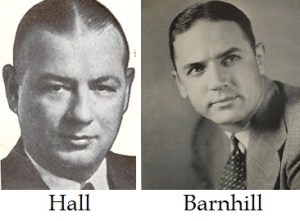
The plans for the stadium were the brainchild of Arkansas Secretary of State C.G. “Crip” Hall and University of Arkansas Athletic Director John Barnhill.

Apparently the Southwest Conference was threatening to kick Arkansas out because of an inadequate football facility. Since the University did not have the funds to build a new one on its campus, Barnhill and Hall decided that the state should build one. Many other states were building War Memorial facilities of a variety of natures. The duo decided that the new football facility could be a War Memorial Stadium to pay tribute to the men who died in the recently concluded World War II.  While the stadium was touted as being of use to all colleges in the state and a variety of other types of activities, it was very much designed to be a home for the Arkansas Razorbacks.

Getting the stadium through the Arkansas General Assembly was not easy.  The bill to create the stadium commission sailed through both houses. But even some who voted for it said they would oppose any funding bills.  When time came to vote for the funding, the bill fell far short of the three-quarters vote that was needed in the House for an appropriation bill.

WWII veterans were on both sides of the issue.  Some felt it was an appropriate way to honor those who died.  Others felt it was a gimmick to get the stadium approved.  Some of the opponents felt that a new state hospital for UAMS would be the more appropriate way to honor those who died during the war.  The debates were often heated and personal.

Overnight a new bill was created. It would pay for the stadium through the issuing of bonds. In addition to the state issuing bonds, any city which wished to bid for it would have to put up money for it as well as provide land.  This new bill would require only 51 votes to pass the House.  It was able to pass that threshold.  The Senate made a few amendments (mostly dealing with the composition of the stadium commission and the amount of dollars that the host city had to pledge).  Finally the House agreed to the Senate amendments and it went to Governor Laney.

The next hurdle for the stadium was choosing a location. That process would occupy stadium proponents throughout the spring and summer of 1947.


Women’s History Month – Gretchen Hall

At the 2017 Downtown Little Rock Partnership annual meeting, Gretchen Hall became the first woman to receive solely receive the Top of the Rock Award.

A hardhat and reflective vest were part of Gretchen‘s work wardrobe almost every day for the past 30 months.  As the President and CEO of the Little Rock Convention and Visitor’s Bureau, she actively oversaw the deconstruction and reconstruction of Robinson Center Performance Hall. Taking a New Deal era assembly hall and making it into a state-of-the-art performance facility was not an easy task. Gretchen and her team have worked with the architects, engineers, designers and consultants to make it happen.

Gretchen joined LRCVB in 2001 and worked her way up through the organization.  In May 2011, she was named to her current position.  Since that time, the LRCVB has undertaken numerous efforts to enhance Little Rock including a new amphitheatre in Riverfront Park, enhanced programming at the River Market, and increased financial support of cultural organizations.  She has worked to improve not only the meeting space available for conventions, but also to enhance the dining and lodging scenes in Little Rock.  In addition, she helped lead the effort to see the additional penny of the hotel tax be dedicated to support the Arkansas Arts Center and MacArthur Museum of Arkansas Military History.

Little Rock Look Back: St. Pat’s Day with Mayor Pat L. Robinson

On this date in 1900, future Little Rock Mayor Pat L. Robinson was born.  While it cannot be verified that he was indeed named after St. Patrick, it would be fairly reasonable to assume there might be a connection.

Robinson was a rising star of Little Rock Democratic politics.  In April 1929, just weeks after his 29th birthday, he was elected Mayor.  He had twice been elected as City Attorney (1926 and 1928) and was one of the youngest to serve in that position.

During Mayor Robinson’s tenure, he announced plans to construct a new airport.  That project led to the creation of what is now the Bill and Hillary Clinton National Airport.  Mayor Robinson was also involved in helping Philander Smith College secure the property where it is now located.  In addition, during his tenure, what is now the Museum of Discovery was folded into the City of Little Rock.  Shortly after taking office, he championed several projects for approval by Little Rock voters. The projects he supported were approved; the ones he did not support did not pass.

Single at the time he was in office and generally considered good looking, Mayor Robinson was sometimes referred to as the “Jimmy Walker of the Southwest.” Walker was the handsome and charming Mayor of New York City at the time.

Mayor Robinson ran afoul of some of the Democratic party leaders. While the extent of the discord is not exactly known, it IS known that shortly after taking office he confronted the City Council over a special election.  Mayor Robinson sat silently while the City Council voted to approve a special election with a variety of options for voters. Only after the Council approved it did he disclose he only supported three of the initiatives.  In a bit of political brinkmanship, the Council subsequently voted to cancel the election. The Mayor vetoed their vote.  The aldermen chose not to attempt an override (though they had the votes based on disclosures made to the public and the press).  It appears that the relationship between the Mayor and the City Council never recovered.

IMG_4532During this era in Little Rock, it was customary for an incumbent mayor to be given a second term. But City Clerk Horace Knowlton challenged Robinson in the primary.  It was a bitter campaign with Robinson linking Knowlton to disreputable denizens and Knowlton charging Robinson with “an orgy of spending.”  Robinson initially came out 17 votes ahead. But after a review and a lawsuit, it was found that Knowlton ended up with 10 more votes and became the nominee.  At the time, being the Democratic nominee was tantamount to election.

After he left office, Robinson practiced law for a few years in Little Rock and then left the city.  Records do not indicate where he went but he no longer appeared in the City of Little Rock directory by the early 1940s.  In the 1940 census he is listed as divorced and a lodger living with a couple.

Women’s History Month – Ruth May Wassell

On August 27, 1944, Ruth May Wassell shattered a bottle on the hull of a new ship and christened it the U.S.S. Little Rock.  Mrs. Wassell, whose husband was Little Rock alderman Sam Wassell, had been designated as the official sponsor for the City of Little Rock by Mayor Charles Moyer.

Ruth May Wassell was more than the wife of a local political leader.  She graduated from Henderson-Brown College and received a law degree from the University of Arkansas.  In 1932, she was admitted to the Arkansas Bar and later was admitted to practice before the Arkansas Supreme Court, one of the first women to receive this designation.

Mrs. Wassell was active in business, serving as president of the Arkansas Lumber Company  and owner of a citrus farm in Texas.  She was also active in civic affairs through involvement with the Arkansas Democratic Women, Boys Club and Second Presbyterian Church.  From 1947 until 1951 she was First Lady of Little Rock when Sam Wassell was elected as Mayor.

Following the December 1954 death of Mayor Wassell, she subsequently married E. W. “Bud” Gibb.  She died in 1964.