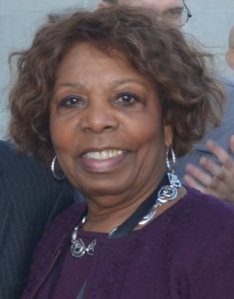
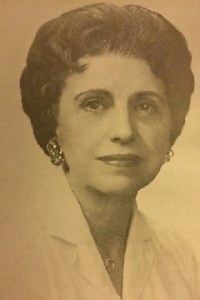
Women’s History Month – Sharon Priest, first person to serve as LR Mayor and a Constitutional officer

glass-priestFirst woman to be both Little Rock Mayor and a Constitutional Officer: Sharon Priest

Sharon Priest served as Little Rock’s 70th Mayor from January 1991 until December 1992.  She was a member of the Little Rock City Board of Directors from January 1987 until December 1994.  She had previously been involved with the City Beautiful Commission prior to her service on the City Board.  She continued that involvement and was also a leader of the Arts and Humanities Promotion Commission, serving several terms as chair.

From January 1995 until January 2003, she was the 31st Secretary of State for Arkansas.  She was the first woman elected to the position. (Nancy Hall held it from 1961 to 1963 following the death of her husband, longtime Secretary of State C. G. “Crip” Hall.)

Following her service as Secretary of State, she directed the Downtown Little Rock Partnership from January 2003 until March 2015.

Women’s History Month – Lottie Shackelford, first woman to serve as Little Rock mayor

Lottie at Civil RightsFirst woman mayor of Little Rock:  Lottie Shackelford

Lottie Shackelford served as mayor of Little Rock from January 1987 until December 1988. She was Little Rock’s 68th mayor and the first woman to serve in that capacity.  She was first appointed to the Little Rock Board of Directors in September 1978 to fill an unexpired term.  She later was elected in her own right and served until December 1992.  She was the first African American woman to ever serve on a governing body for the City of Little Rock.

She later served two terms on the Little Rock Airport Commission.  She also served as Vice Chairman of the Democratic National Committee from 1989 until 2014. She is the longest serving vice chair of the party.  She has been a delegate to every Democratic National Convention since 1980.

In recognition of all of her achievements, she has been included in the Arkansas Civil Rights Heritage Trail, the Arkansas Black Hall of Fame, and the Arkansas Women’s Hall of Fame.

Women’s History Month – Irma Hunter Brown, African American woman elected to Arkansas General Assembly

glass-brownFirst African American woman to be elected to the Arkansas General Assembly: Irma Hunter Brown

Mrs. Brown served in the House of Representatives from January 1981 until January 2003.  She was the first African American woman to be elected to the Arkansas General Assembly in either house.

In 2003, she was sworn in as a State Senator, becoming the first African American woman in that body, as well.  In recognition of these achievements and her service in the Arkansas General Assembly from 1981 until 2009.

In 2015, she was included in the Arkansas Civil Rights Heritage Trail.  Other honors include recipient of the Distinguished Citizen award, Philander Smith College, Little Rock, 1981; fellow, Institute Politics, 1975.

Women’s History Month – Nancy Hall, first woman elected to an Arkansas Constitutional Office

glass-hallNancy Pearl Johnson Hall was married to longtime Arkansas Secretary of State C. G. “Crip” Hall.  Following his death, Mrs. Hall was appointed to succeed him as Secretary of State.  With this appointment, she became the first woman to serve as a Constitutional Officer in Arkansas.  As an appointee to that office, she could not run for it in the following election.

Instead, in 1962, she was elected to be the 33rd Treasurer of the State of Arkansas.  She held that position from January 1963 until January 1981.  Her campaign slogan during each election was “I’ll Take Care of Your Money.” She somewhat reluctantly decided to forego another term and did not run for office in 1980.

When she left office in January 1981, she finished a career working for the state which had started in 1925.   She died on January 1, 1991 and was buried next to her husband.


Women’s History Month – Lucy Dixon, first woman on Little Rock Board of Directors

Photo courtesy Little Rock School District

Photo courtesy Little Rock School District

First woman elected to the City of Little Rock Board of Directors:  Lucy Dixon.

Lucy Dixon was elected to the initial Little Rock Board of Directors in November 1957.  She previously had served for six years on the Little Rock School Board.

Mrs. Dixon is the only woman to have served on both the governing boards of the City and the school district.  Mrs. Dixon chose not to seek a second term and left the City Board on December 31, 1960.

Mrs. Dixon is the first woman to be elected to a City position without her husband having previously held that position.

Her father had a lumber business, in which she worked off and on throughout her lifetime. She served not only as an officer of the business, but had a desk at the office and participated in the daily business.  She was also very active in Methodist Woman functions in Little Rock and Arkansas.

Little Rock Look Back: Senator William Marmaduke Kavanaugh

CLR KavanaughOn March 3, 1866, William Marmaduke Kavanaugh was born in Alabama. He later moved with his family to Kentucky before coming to Little Rock as a newspaper reporter.

Kavanaugh served as editor and manager of the Arkansas Gazette before entering politics.  From 1896 until 1900, he served as Pulaski County Sheriff, which at the time also included the duties of tax collector.  From 1900 until 1904, he was County Judge of Pulaski County.  In that capacity he helped wrangle several cities, railroads and trolley lines to create a compromise which lead to the completion of the Third Street Viaduct which connected Little Rock with Pulaski Heights. It is still in use today.

After leaving his post as County Judge, he had a varied career in banking and business interests.

When Senator Jeff Davis died in early January 1913, he left the last few weeks of his term incomplete as well as the new term he was set to start in March 1913.  There was much interest in who would fill the remainder of Davis’ current term, because that person might be the frontrunner to also fill out the new term.  (This was at the time that the U.S. Senators were still selected by state legislatures.) Defeated Governor George Donaghey appointed J. N. Heiskell to fill out the term. But once the Arkansas General Assembly convened in mid-January, they overrode Donaghey’s appointment and replaced Heiskell with Kavanaugh.

Kavanaugh served in the Senate from January 29, 1913 until March 3, 1913.  He was succeeded by Joseph T. Robinson who had only recently taken office as Governor.  Speculation was that Kavanaugh would not want the full six year term, so that he was acceptable choice to all of the politicians jockeying for the full appointment.  From 1912 until 1915, he was an Arkansas member of the Democratic National Committee.

Another interest of Kavanaugh’s was baseball.  He served as president of the Southern Association minor league starting in 1903.  The baseball field in Little Rock situated at West End Park was named Kavanaugh Field in his honor.  It stood until the 1930s when it was replaced by what is now known as Quigley Stadium.  (In 1927, Little Rock High School had opened on the land which had been West End Park.)

Kavanaugh died on February 2, 1915 at the age of 48.  He is buried in Oakland Cemetery.

Prospect Road was renamed Kavanaugh Boulevard in his memory.

Women’s History Month – Carolyn Conner, first woman on LR City Council

glass-connerCarolyn Conner was elected to the Little Rock City Council in April 1931. She was initially elected to fill out the remaining year of her husband’s term on the Little Rock City Council. She received 551 votes, or 61.6% besting two male candidates.

She was not the first woman to run for City Council.  In 1924, Mrs. George M. Waller challenged Charles M. Connor (no relation to Carolyn Conner).

In 1932, Carolyn Conner was reelected and would continue to serve on the council until April 1942, winning a total of six elections.  Mrs. Conner was the first woman to be elected to any City of Little Rock office.  She was also the first to chair a council committee, leading the Civic Affairs Committee from 1933 to 1935. On October 16, 1933, she was chosen as Acting Mayor becoming the first woman to lead the City of Little Rock and preside at a council meeting.

In December 1939, she also became the first female alderman to be arrested for contempt of court along with eleven of her male colleagues.  The judge did not send her to jail, though he did the male aldermen.  At the end of the day their sentences were suspended.

In April 1941, Mildred Craig joined Mrs. Conner on the Council after being elected to finish out her husband’s term.  Their service marked the first time there were two women on the City Council.