
JFK in LR and other parts of ARK

JFK LROn October 3, 1963, President John F. Kennedy delivered remarks at the Arkansas State Fairgrounds.  Only a few weeks later, he would be felled by an assassins bullet in Texas.

In the speech, the President praised Arkansas’ congressional delegation including Senators John McClellan and J. William Fulbright and Congressmen Took Gathings, Bill Trimble, Wilbur Mills and Oren Harris.  Each of these men held senior leadership positions in key committees.  The main focus of the speech was to discuss President Kennedy’s vision for a new economy in the South.

The President was actually in the state to speak at the dedication of the Greers Ferry Dam. He agreed to make that appearance as a part of a negotiation with Congressman Mills as they were deadlocked over changes to the tax code.  He had previously visited Little Rock in 1957 when he came to the state to address the Arkansas Bar Association meeting in Hot Springs.

President Kennedy continued the string of 20th Century Presidents to visit Little Rock.  Presidents Theodore Roosevelt, William Howard Taft, Franklin Roosevelt and Harry Truman had all visited while in office.  Woodrow Wilson, Herbert Hoover and Dwight Eisenhower all visited prior to attaining the presidency.
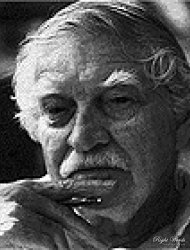
Central to Creativity – Dee Brown

Dee BrownDorris Alexander (Dee) Brown was born in 1908 in Louisiana.  After spending time in Stephens, Arkansas, his family relocated to Little Rock.

He lived more than half his life in Arkansas and, beginning as a teenager, wrote continuously for publication.  An admiration for a Native American baseball player in Arkansas helped influence Brown’s attitude toward Native Americans.  After graduating from high school in 1927, Brown got a job as a printer for the Harrison Daily Times in Boone County.

In 1928, Brown went to Arkansas State Teachers College (ASTC), now the University of Central Arkansas, graduating in 1931 with a Bachelor of Arts and Education degree with a major in history. Brown met his future wife, Sally Stroud of when they were both students there.

In the 1930s, Brown worked in Washington DC for the U.S. Department of Agriculture library. While there, he earned a Bachelor of Library Science degree in 1935 from George Washington University. During World War II, he served in the Army.

His first book was 1942’s Wave High the Banner, which was based on stories Brown had heard his grandmother tell.  In the 1950s, Brown received his Master of Library Science degree at the University of Illinois in Urbana-Champaign.  He worked there as a librarian until 1972 and wrote several books during that time.


In the late 1960s, Brown began writing his groundbreaking book, Bury My Heart at Wounded Knee.  After his return to Little Rock, Brown spent 27 years as a writer.  Brown died on December 12, 2002, at the age of ninety-four at his home in Little Rock. A branch library in

Central to Creativity – Charlotte Moorman

tvbra2For 2017’s Arts and Humanities Month, the blog will focus on cultural personalities who are connected with Little Rock Central High School.
Up first – the Topless Cellist, a 1951 graduate.  Charlotte Moorman

Born in Little Rock, at the age of ten she began to study cello.  After graduating from Little Rock high school in 1951, she attended Centenary College.  She undertook subsequent studies at the University of Texas and Julliard.

After spending time with the American Symphony Orchestra, she participated in the experimental art scene including with her friend Yoko Ono.

In 1963 Moorman founded the Annual Avant Garde Festival of New York, which presented the experimental music of the Fluxus group and Happenings alongside performance, kinetic art, and video art. Despite the event’s title the festival was not held annually. There were fifteen festivals from 1963 to 1980.

On February 9, 1967 Moorman achieved widespread notoriety for her performance of Paik’s Opera Sextronique at the Film-Makers Cinematheque in New York City. For this performance, Moorman was to perform movements on the cello in various states of nudity. For the second movement, she played International Lullaby by Max Matthews while wearing a black skirt, but while being topless, and was arrested mid-performance by three plainclothes police officers For her court trial, Moorman and Paik restaged and filmed the first two movements of Opera Sextronique with the filmmaker Jud Yalkut.

In the late 1970s she was diagnosed with breast cancer. She underwent a mastectomy and further treatment, to continue performing through the 1980s in spite of pain and deteriorating health. She died of cancer in New York City on November 8, 1991, aged 57.


Little Rock Look Back: US Supreme Court announces Cooper v. Aaron decision

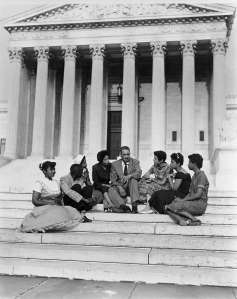
Thurgood Marshall, of the NAACP, sits on the steps of the Supreme Court Building after he filed an appeal in the integration case of Little Rock’s Central High School. The students are, from left: Melba Pattillo, Jefferson Thomas, Gloria Ray, escort Daisy Bates, Marshall, Carlotta Walls, Minnijean Brown, and Elizabeth Eckford. (AP Photo, file)

On September 29, 1958, the U.S. Supreme Court issued its decision in Cooper v. Aaron. That decision held that Little Rock public officials were required to implement a desegregation plan in compliance with the Brown v. Board decision.

The Court found that “the federal judiciary is supreme in the exposition of the law of the Constitution” and all state officials must adhere to the Court’s decisions and follow the rules laid down in those decisions in similar future cases.

The genesis for the Cooper v. Aaron court case was the Little Rock School Board seeking a delay in further implementation of the plan to integrate schools.

After the events of 1957-1958, the School Board was reluctant to have another year of integration, even if it were severely limited. The school board caved to this political pressure, filing a request for a two-and-a-half-year delay in implementing desegregation. The district court granted the request, but the court of appeals reversed. Chief Justice Earl Warren called a Special Term of the Supreme Court into session to consider the case. The stage was set for Cooper v. Aaron.

In their decision, the Warren Court made it clear that resistance to Brown would not be tolerated. The Court went on to state that “the federal judiciary is supreme in the exposition of the Constitution” and “the interpretation of the Fourteenth Amendment enunciated by this Court in the Brown case is the supreme law of the land.”

Little Rock Look Back: Pulaski Heights City Council first meeting

On September 28, 1905, the first meeting of the Pulaski Heights City Council took place.  The newly elected Mayor was J. H. Joslyn, the Recorder was F. D. Leaming, and new Alderman present were E. E. Moss, Maxwell Coffin and C. C. Thompson.  Pulaski Heights had been incorporated on August 1, 1905.  At that time its population was estimated at between 300 and 400.

The first ordinance, which was offered by E. E. Moss, was to set a tax rate and give the City the ability to levy taxes.  Next was a motion to establish a committee to establish rules and procedures for the council. The final business before the Council was to allow the Recorder to order stationary, a seal and a record book (that record book is now in the vault at Little Rock City Hall).

The next meeting would be October 28.  At that meeting, two other Aldermen are mentioned in the minutes (Fauble and Paul) but were absent from that meeting as well.  Mr. C. M. Fauble was present at the third meeting.  Mr. R. O. Paul did not appear until the fifth meeting (December 13, 1905).

Interestingly the Recorder had a vote in the Council meetings (which was not a practice in the City of Little Rock at the time).

The Council did not have a permanent meeting place until the third meeting.  At that point in time, they used space in the offices of Dr. Hockersmith.  They later met in a building which is now part of the Pulaski Heights Baptist Church campus.

Pulaski Heights was a separate City until January 1916.  On January 4, 1916, Little Rock voters approved the annexation of Pulaski Heights by a ten-to-one margin, and the suburb became the city’s ninth ward. This established a couple of precedents for the City of Little Rock which are in effect to this day.  The first is that Little Rock would not be a central city surrounded by a variety of small incorporated towns (in the manner that St. Louis and other cities are).  It was this thought process which has led the City to continue to annex properties.

In addition, this move to annex Pulaski Heights was the first time that the City grew toward the west.  Previous growth had been to the south.  By emphasizing western expansion, this has allowed Little Rock to continue to grow.

Little Rock Look Back: LR Voters ratify closing of high schools

fedgovark

Signs placed outside of Little Rock’s high schools erroneously cited the federal government as the source of school closures.

On September 27, 1958, voters in Little Rock approved the continuation of the closure of the city’s high schools.

Using legislation passed by the General Assembly in a hastily called special session in summer of 1958, Governor Orval Faubus had ordered the closure of Little Rock’s four public high schools in order to keep them from being desegregated.  But that state law only allowed the closure of Central, Hall, Horace Mann and Technical high schools on a temporary basis. In order for them to be closed permanently, the city’s voters must approve it by a vote.

The election date was to be set by Governor Faubus.  Originally scheduled for Tuesday, October 7, the date was moved to September 27.  Speculation for the new date selection centered on:

  • Faubus wanted it to be prior to the October 1 poll tax deadline so that only people who had paid their poll tax for the prior year were eligible
  • The election was on a Saturday.  Though Tuesday was the most common day of the week for elections, in the late 1950s Saturdays were used on elections as well.  The school board elections, for instance, were on Saturdays in some years.
  • On September 27, 1958, the Arkansas Razorbacks had a home football game in Fayetteville.

These were all designed to stifle voter turnout. In addition, the state law required a majority of eligible voters to approve reopening the schools.  The law also spelled out the confusing wording of the ballot question.  As historian Sondra Gordy points out in her book FINDING THE LOST YEAR, the ballot question was about only being for or against integration of the schools – it did not say anything about closure or opening of schools.

While the newly formed Women’s Emergency Committee did try to educate voters about the issue and encourage a vote to reopen the schools, this nascent group was less than a fortnight old by the Saturday election day.  In addition, the Governor campaigned for the remaining closure of the schools including in television appearances.

On that Saturday, Little Rock voters voted 19,470 to keep schools segregated to 7,561 to integrate them.

It would be a long road ahead to reopen the schools.  It would take two more elections before the City’s four public high schools would reopen.

Little Rock Look Back: Gloria Ray Karlmark

Gloria Ray Karlmark is the youngest daughter of H. C. Ray, son of a former slave, and founder of the Arkansas Agricultural Extension Service for Negroes, and Julia M. Ray, a Sociologist and a graduate of Tuskegee Institute and Philander Smith College. Mrs. Karlmark’s father was Laboratory Assistant to George Washington Carver, and received his degree in Horticulture under Booker T. Washington at Tuskegee Institute.  Mrs. Karlmark’s mother was fired when she refused to withdraw her from Little Rock Central High School in 1957-1958.  When Central High School remained closed, on an order from Governor Faubus the following year, Mrs. Karlmark moved to Kansas City, Missouri, where she graduated in 1960 from the newly integrated Kansas City Central High School.

Mrs. Karlmark went on to graduate from Illinois Institute of Technology (IIT), Chicago, after which she joined the IIT Research Institute as Assistant Mathematician on the APT IV Project (robotics, numerical control, and online technical documentation).  This included work at Boeing in Seattle, McDonnell-Douglas in Santa Monica, and NASA Automation center in St. Louis.

In 1969, she and her husband took a sabbatical year following the trail of the Maya Indians from Mexico through Central America by car.  Soon after, they immigrated to Sweden.  In the years that followed, the Karlmark family was blessed with a son and a daughter.

Recruited to join IBM’s Nordic Laboratory, Mrs. Karlmark completed the Svenska Patent och Registreringsverket “Patent Examiner” Program in 1975, and joined IBM’s International Patent Operations as European Patent Attorney.

In 1976, she co-founded Computers in Industry, and international journal of practice and experience of computer applications in industry affiliated with UNESCO and the International Federation of Information Processing-IFIP.  She served some 15 years as Editor-in-Chief.

In the years leading up to her retirement in 1994, Mrs. Karlmark also worked for Philips International in management as a specialist in Belgium, the Netherlands, France, Germany, Spain, and Scotland.  She and her family currently reside in Europe.