
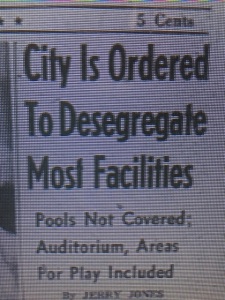
 Following the March 1962 lawsuit by twenty-two (22) African Americans seeking the integration of public facilities in Little Rock, Federal Judge J. Smith Henley issued a order on February 15, 1963. Judge Henley ordered the end to segregation in City parks, playgrounds, golf courses, tennis facilities, community centers, and Robinson Auditorium.
Regarding the auditorium, the order allowed for single event, short-term leasing of wholly private meetings for membership and immediate friends of members. But it did stress that there could be no racial discrimination in the selection of or terms of leases.
The judge’s order did not cover “other facilities not identified in the record.” Which meant, the order did not apply to swimming pools. At the time, War Memorial pool was operated for whites and Gillam Park pool was operated for African Americans. The judge wrote that he saw no reason to extend it to facilities not mentioned, but did not rule out the ability for future lawsuits. In asking for a summary judgement in January 1963, the defendants had listed many types of facilities but not swimming pools.
Judge Henley’s decision did not mean that a municipality was required to integrate. It just could not enforce segregation. As with many other court decisions at the time, it was narrow in scope.
The end result was that Little Rock facilities were now integrated. Except for the swimming pools. Those would have their own story. It would take the 1964 Civil Rights act and more legal actions for that to happen.
 It is possible that journalist extraordinaire Roy Reed appears in archival footage of the Oscar winning documentary “Nine from Little Rock” (Documentary, Short-1964) and Oscar nominated Eyes on the Prize: Bridge to Freedom 1965 (Documentary, Feature-1988). First for the Arkansas Gazette and then for The New York Times, Reed was an eyewitness to history being made. What is not in doubt is that he is a character in the Oscar winning film Selma. In that movie, he was played by actor John Lavelle.
 Today marks the sixth time since Little Rock was permanently settled in 1820 that Ash Wednesday and Valentine’s Day fall on the same day. The previous years are 1866, 1877, 1923, 1934, and 1945.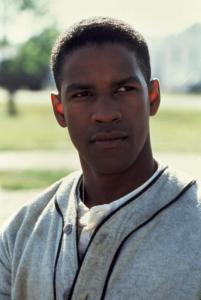
 In the post-Civil War era, Mardi Gras was a major event in Little Rock. By the 1870s, newspapers would have stories for several days about preparations for parties and parades which would be followed by coverage summarizing the events.
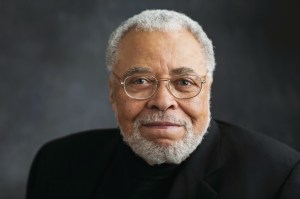 Actor James Earl Jones has made several appearances in Central Arkansas over the years. He has appeared at Robinson Center with the Arkansas Symphony Orchestra. On February 12, 1999, he narrated Aaron Copland’s “Lincoln Portrait” and Alexander Miller’s “Let Freedom Ring” with the Symphony in a concert at Robinson Center. (It was the 190th birthday for Lincoln.)
 Little Rock Culture Vulture