Little Rock Look Back: Gov. Baxter returns after end of Brooks-Baxter War

On the morning of May 19, 1874, Joseph Brooks cleaned out his belongings from the gubernatorial office in the 1842 Arkansas State Capitol (now the Old State House) and disappeared to points unknown.

The beginning of the end of his stint claiming to be Arkansas Governor came on May 15 when President US Grant accepted the recommendation of his Attorney General that found Elisha Baxter was the duly elected Governor of Arkansas.

Following Brooks’s departure, the grounds and building were in shambles.  A Gazette reporter noted that barricades had been built on the lawn of the building.  The front and back doors remained, but their facings had been removed to make it easier to roll big weapons and equipment in and out of the building.

Inside, furniture was in disarray and broken.  The bookcases in the state library had been turned on their sides to serve as tables.  The reporter described the smell as composed of “a mixed perfume of sour bacon and human beings.”

In preparation for the return of Gov. Baxter, crews were busy trying to restore order in the building. The Senate Chambers were nearly put back in order that day, but the House Chambers needed more attention.

As another illustration of the disarray in state government between April 15 and May 19, the state treasurer, Henry Page, told the newspaper that he had not cut a single check at the request of the Brooks administration.  He stated that he had not denied the request, he just delayed responding to it.

Finally that day, Governor Baxter arrived at the head of a ceremonial parade of carriages.  Among those who accompanied the governor was Arkansas Gazette founder William Woodruff.  In the next carriage, future US Senator and Attorney General Augustus Garland sat with reporters from the New York Times and Arkansas Gazette.

Upon arriving at the Capitol grounds, Baxter delivered a speech.  101 guns were fired in salute to him.  The cannon on the capitol grounds (nicknamed Old Lady Baxter) was shot off several times.  A retinue of Little Rock’s ladies pulled the lanyard to detonate the cannon.

As part of President Grant’s order to end the Brooks-Baxter War, the ground was laid for a new Arkansas Constitution, the end of Reconstruction, and the re-enfranchisement of Democratic voters.  In short order, the 1874 constitution, under which Arkansas still operates, was adopted.  Many of the Republicans and African American office holders soon found themselves out of power. And African Americans were completely disenfranchised.

It would be 92 years before Arkansas would again elect a Republican to be Governor.  The adoption of the new constitution took the term of governor and other constitutional officers from four years to two years.  In 1874, he retired to Batesville and lived there until his death in 1899.  Brooks remained in Little Rock until his death in 1877.

Remembering when Royal Wedding speaker Episcopal Presiding Bishop Michael Curry spoke in Little Rock

Today, the sermon for the Royal Wedding was delivered by the Most Reverend Michael Bruce Curry,  the 27th Presiding Bishop and Primate of The Episcopal Church.
In December 2016, he delivered remarks twice in Little Rock.

On Sunday, December 11, 2016, he delivered the homily at Christ Episcopal Church. The next day, he spoke in the Great Hall of the Clinton Presidential Center as part of  the Clinton School Speaker Series.  His remarks can be viewed here.

Presiding Bishop Curry has a national preaching and teaching ministry, having been featured on The Protestant Hour and as a frequent speaker at conferences around the country.  He has authored numerous publications including columns for the Huffington Post and the Baltimore Times. His most recent book, Songs My Grandma Sang, was published in June 2015; Crazy Christians: A Call to Follow Jesus was his first book, in August 2013.

Little Rock Look Back: Brooks Robinson

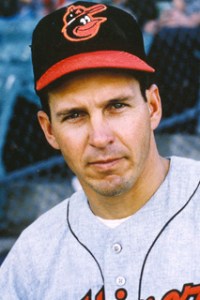
On May 18, 1937, Brooks Calbert Robinson, Jr. was born in Little Rock.  His father worked for Colonial Bakery and later the Little Rock Fire Department.  His mother worked for Sears and later state government.

As a boy, Brooks was a paper boy for the ARKANSAS GAZETTE and sold concessions at Lamar Porter Field.  He also played baseball there in youth leagues.

After graduating from Little Rock Central High School in 1955, he was drafted by the Baltimore Orioles.  He would spend his entire Major League Baseball career with the Orioles.   His primary position was Third Base for the team but also was a powerful batter.

When he retired at the end of the 1977 season, Robinson had amassed many honors including 2 World Series Championships, 1 World Series MVP, 1 American League MVP, 16 Golden Glove Awards, 18 times in the All-Star game.  At the end of his final season, his number 5 was retired by the Orioles.  In 1983, his first year of eligibility, he was selected to the Major League Baseball Hall of Fame.

He spent his career and since retirement engaged in a number of charitable endeavors. Robinson was beloved by teammates and fans, as well as respected by opponents and the media.  There is no telling how many babies in Baltimore were named Brooks or Robinson during and after his 23 season career.

Robinson has also leant his name and time to efforts to restore Lamar Porter Field here in Little Rock.


Little Rock Look Back: Arkansas Arts Center concludes opening festivities with Beaux Arts Ball

Starting at 9:00 p.m. on May 18, 1963, the Beaux Arts Ball capped off the opening weekend festivities for the Arkansas Arts Center.

Chaired by Jeane Hamilton and Jean Gordon (both of whom are still going strong 55 years later!), the Beaux Arts Ball featured the music of Henry King and his Orchestra as well as a performance by jazz legend Dave Brubeck and his Quartet.  King played on the dance floor while Brubeck gave concerts in the theatre at 9:00 p.m., 10:15 p.m., and 11:30 p.m.

Special guests for this black tie event included  Oscar winner Joan Fontaine, cartoonist Charles Addams (creator of The Addams Family), and James Rorimer of the Metropolitan Museum of Art.

The event concluded at 1:00 a.m. as exhausted and exhilarated guests made their way home.

Scenes from Elizabeth Eckford bench groundbreaking

On May 17, 2018, Elizabeth Eckford joined with representatives of the National Park Service, Little Rock School District, Bullock Temple CME, and many other organizations to break the ground for a commemorative bench.

This bench is a reproduction of the one on which Ms. Eckford sat so famously on the morning of September 4, 1957.

The bench will be built over the summer and installed in September 2018.

Here are some scenes from the ceremony.

Elizabeth Eckford visits with Central High School Principal Nancy Rousseau.

David Kilton of the National Park Service speaks at the ceremony.

Attendees spilled out of the tent and lined the street for the event.

Ms. Eckford speaks to the crowd.

Ms. Eckford is joined by Central High students in breaking ground.


Little Rock Look Back: Dedication of the Arkansas Arts Center on May 18, 1963

AAC Logo in 1963

On Saturday, May 18, 1963, amidst fanfare and fans of the arts, the Arkansas Arts Center officially opened its doors.  (This was thirty-five years and three days after the Fine Arts Club had opened the first permanent art gallery in Arkansas in the Pulaski County Courthouse).

The 11:00 am dedication ceremonies on took place in the Arts Center Theatre and featured U.S. Senator J. William Fulbright (who was in the midst of championing what would soon be known as the John F. Kennedy Center for the Performing Arts), Congressman Wilbur Mills, Governor Orval Faubus, Little Rock Mayor Byron Morse, Winthrop Rockefeller and Jeanette Rockefeller.

The dedication ceremony was chaired by Jane McGehee, now known as Jane McGehee Wilson.  Earlier this month she was honored at the Arkansas Arts Center with an outstanding patron award in recognition of her work supporting the Arkansas Arts Center for close to six decades.   More information on her work for the AAC can be found here.

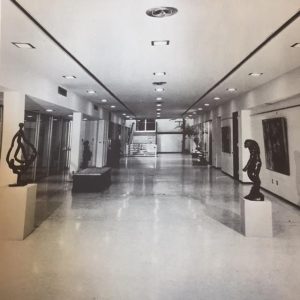
The Arts Center lower level in 1963

Among the exhibits at the Arkansas Arts Center for the grand opening was a special exhibit from the Metropolitan Museum of Art in New York entitled Five Centuries of European Painting.  In Little Rock for six months, this exhibit featured works by El Greco, Titian, Claude Monet, Odilon Redon, Pierre Renoir, Paul Signac, Edgar Degas, and Paul Gauguin among many others and spanned from the fifteenth century Early Renaissance era to the nineteenth century.

Prior to the opening, a profile on the Arts Center in The Christian Science Monitor touted the building as one of the first regional arts centers in the country to be completed. Benefiting from national ties of the Rockefeller family, the events in May 1963, set a high standard for the institution, and for other regional art museums.

Little Rock Look Back: Media preview, Gordon MacRae concert prior to Arkansas Arts Center Opening

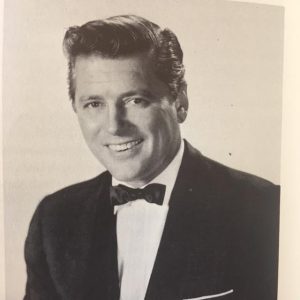
Photo of singer Gordon MacRae from the 1963 Arkansas Arts Center dedication booklet

On Friday, May 17, 1963, Little Rock’s media were treated to a preview of the new Arkansas Arts Center.  It was set to open to the public the next day.  The media were invited to attend between 6:30pm and 10:00pm.

One of the highlights was the chance to view the exhibit:  Five Centuries of European Painting.  The works were from the collection of the Metropolitan Museum of Arts.  The exhibition featured works by Titian, El Greco, van Dyck, Murillo, Gainsborough, Monet, Courbet, Renoir, Degas, Pissarro, and Gauguin.  Another artist featured was Paul Signac.  Today the Arts Center has one of the largest collections or works by Signac due to the generosity of collector James T. Dyke.

At 8pm that evening, there was a concert appearance by film and recording star Gordon MacRae.  This took place in the Arts Center’s theatre for Arts Center patrons. (Or at least the 389 who could get tickets to it.)  At 10pm, the press were treated to an encore performance by Mr. MacRae.

After it concluded around 11pm, it was time for the staff and volunteers to wind down for the evening and get ready for two major events on May 18, 1963.