April 25 Architeaser

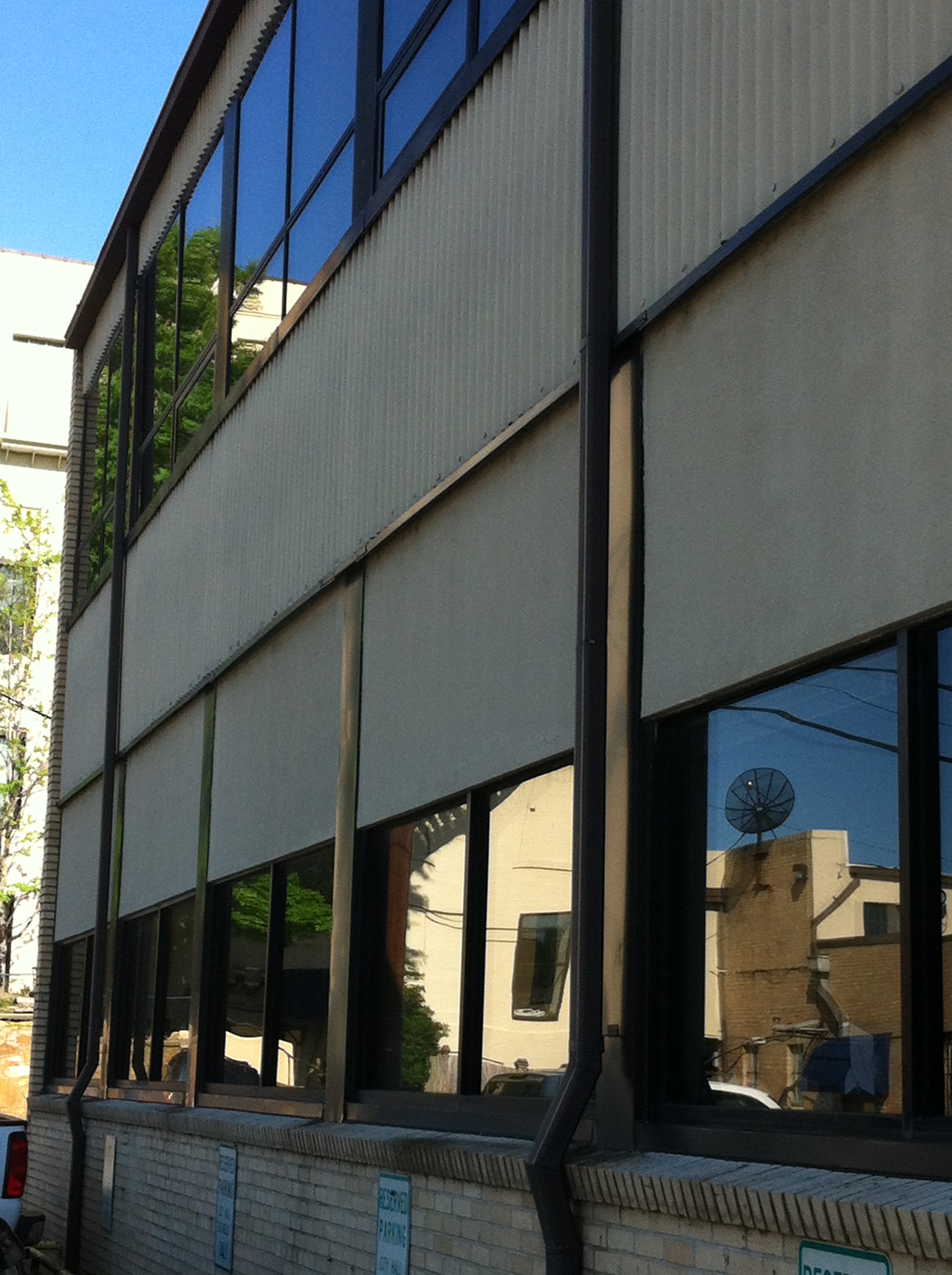
IMG_4948In 1953, forty years after the original Central Fire Station opened, a new addition was constructed on the north side.  It was designed by K. E. N. Cole Jr. during the administration of Little Rock Mayor Pratt Remmel and Fire Chief Gann Nalley.  This structure was used for additional offices and storage.

It is fairly representative of mid-century government architecture.  With a flat roof and clean lines, it uses buff brick (which more closely matches the 1936 garage and 1938 jail than the 1913 fire station). The building features corrugated metal used as a decorative accent.  It does not appear there was any attempt to try to seamlessly blend in with the original building.

As part of the mid 1980s renovation, new windows were installed in this structure, but the original window style remains.  Today the building houses various City offices.

April 24 Architeaser

IMG_4942In 1938 a new jail building was constructed north of the original City Hall building.  It was constructed by the WPA in a simplified Art Deco style.  It is connected to the Garage building.  The buff brick was accented by come granit flourishes and a frieze.  When the jail was closed, the building was used for storage.  From 1960 to 2007 it was used for storage of old files and some equipment.  Also during that time period some windows and doors were bricked in as well as other exterior and interior modifications were made.

Some of the exterior bars and interior jail doors still exist.  The exterior bars are visible today.  In 2007, the storage was relocated to an off-site location.  A portion of the old jail has been retrofitted as a fitness area for City employees.  In addition, the Parks and Recreation Department continues to use part of the facility for equipment storage and maintenance offices.


April 23 Architeaser

IMG_4944In 1936 a City Garage was constructed behind City Hall (on the north side of the property).  Previously there had been a non-City factory on this site.

It was built in a very utilitarian style with a brick facade on the east and west faces and a curved Quonset roof atop brick walls on the north and south faces.  Over the years the building has been modified repeatedly (as is evidenced by the various shades of buff bricks visible not only in this picture but also throughout the actual building).

At one time offices were put in part of the building but they have been removed.  Today it is used to store City vehicles.


April 22 Architeaser

IMG_4937Last week’s Architeasers focused on the 1908 Little Rock City Hall.  This week’s will look at the five other buildings which have are connected to City Hall.  The first opened in 1913 and the most recent structure opened in 1986.

Today’s feature looks at some of the detail on the frieze above the former Central Fire Station.  The building was constructed in 1912 and opened in 1913.  When the Fire Department moved out in the 1970s (and moved to their current site at 7th and Chester), it was used for storage and a few City offices.

This building was designed in the Beaux Arts Classicism style by Charles Thompson (designer of City Hall) and his associate Tom Harding (who would later design several other Little Rock fire stations).

Following the mid-1980s renovations, it was retrofitted to house more City offices and is now known as the City Hall West Wing (the name predated the TV show by a dozen years). The cornice work and wrought-iron on the front facade reflect the original use of the building as a fire station.

April 19 Architeaser

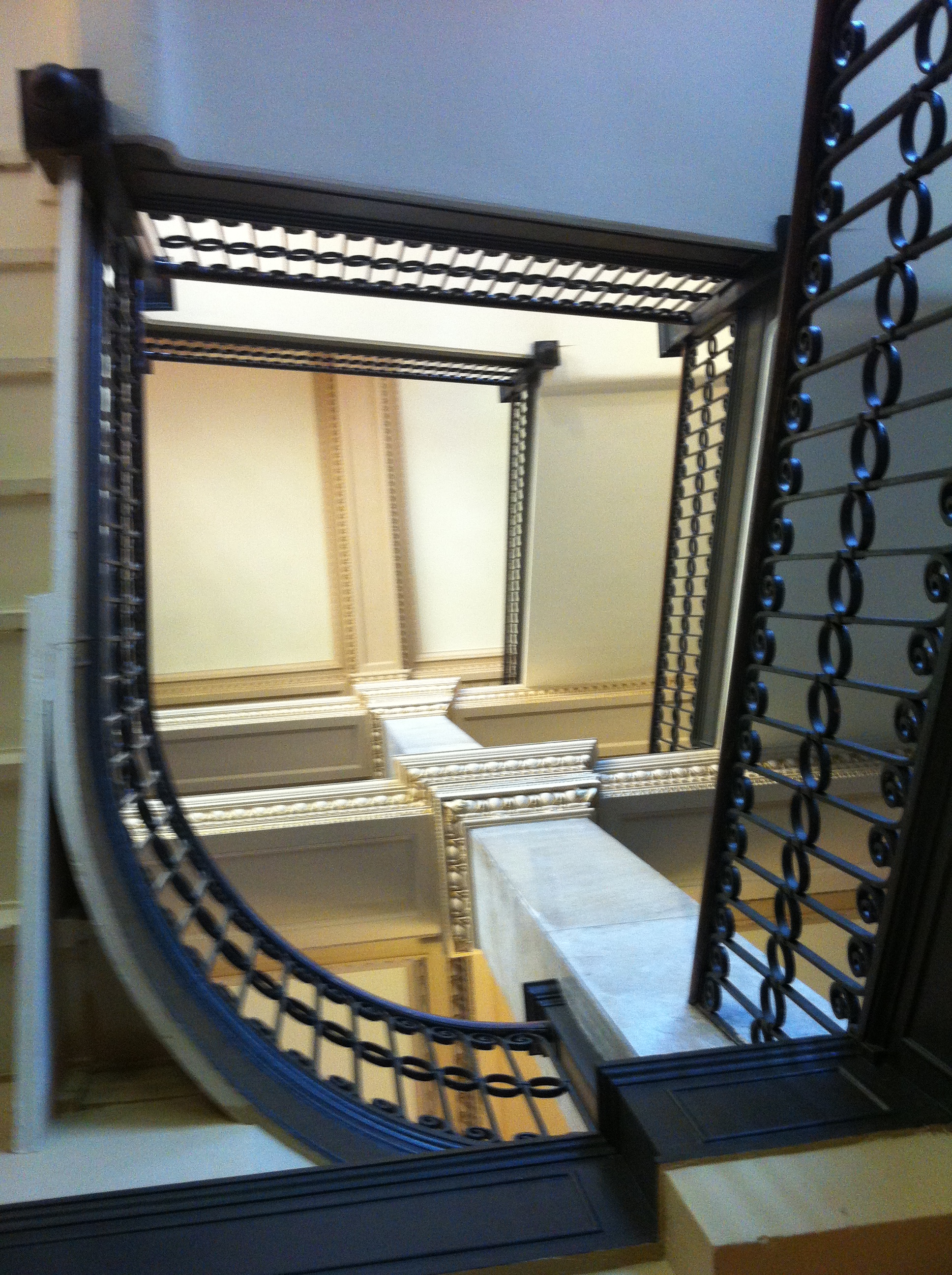
IMG_4907The City Hall 105 week of the Architeaser wraps up with this unique perspective of City Hall.  Though there are offices on four levels of City Hall, there is only one spot where one can see all four levels.  The western edge of the central staircase affords the only view from the basement to the third floor.  The central staircase is symmetrical from the first floor up to the third floor. But from the first floor to the basement, there is only one flight of stairs going down (on the west side).

Today’s Architeaser goes from the basement up to the third floor of Charles Thompson’s edifice.  When the building opened, the basement was used but most of the third floor was unfinished.  The ceramic tile pattern on the third floor is different from the other floors.  The eastern stairwell went to the third floor balcony which overlooked the City Council chambers.

Over time a few offices started migrating up there.  In 1929, when the Museum of Antiquities and Natural History (now Museum of Discovery) was “given” to the City and moved into City Hall, the museum had to finish out its own space.  It was not until New Deal programs needed local offices and took up residence on the third floor that all of City Hall was occupied.  At that point the building was over 25 years old.

The balcony in the City Council chambers was removed in the 1960s when additional office space was needed.  At that point in time, the high ceiling in the chambers was lowered and more offices were installed on what had been the balcony level.

Unfortunately photos of the old Council chambers do not seem to exist.

April 18 Architeaser

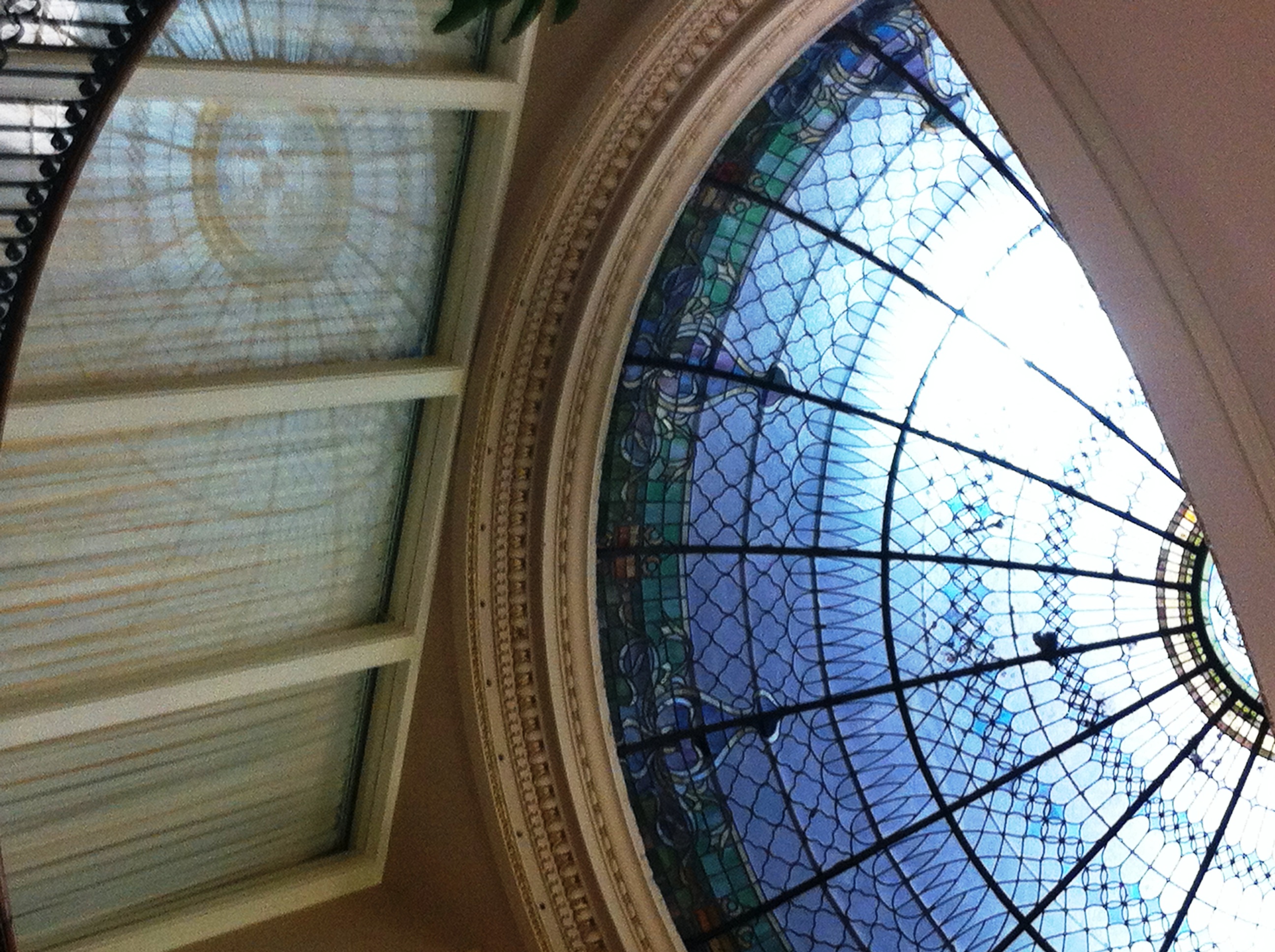
IMG_4577There have been many building modifications at Little Rock City Hall over the past 105 years.  One thing has not changed: the Tiffany stained glass window in the rotunda.

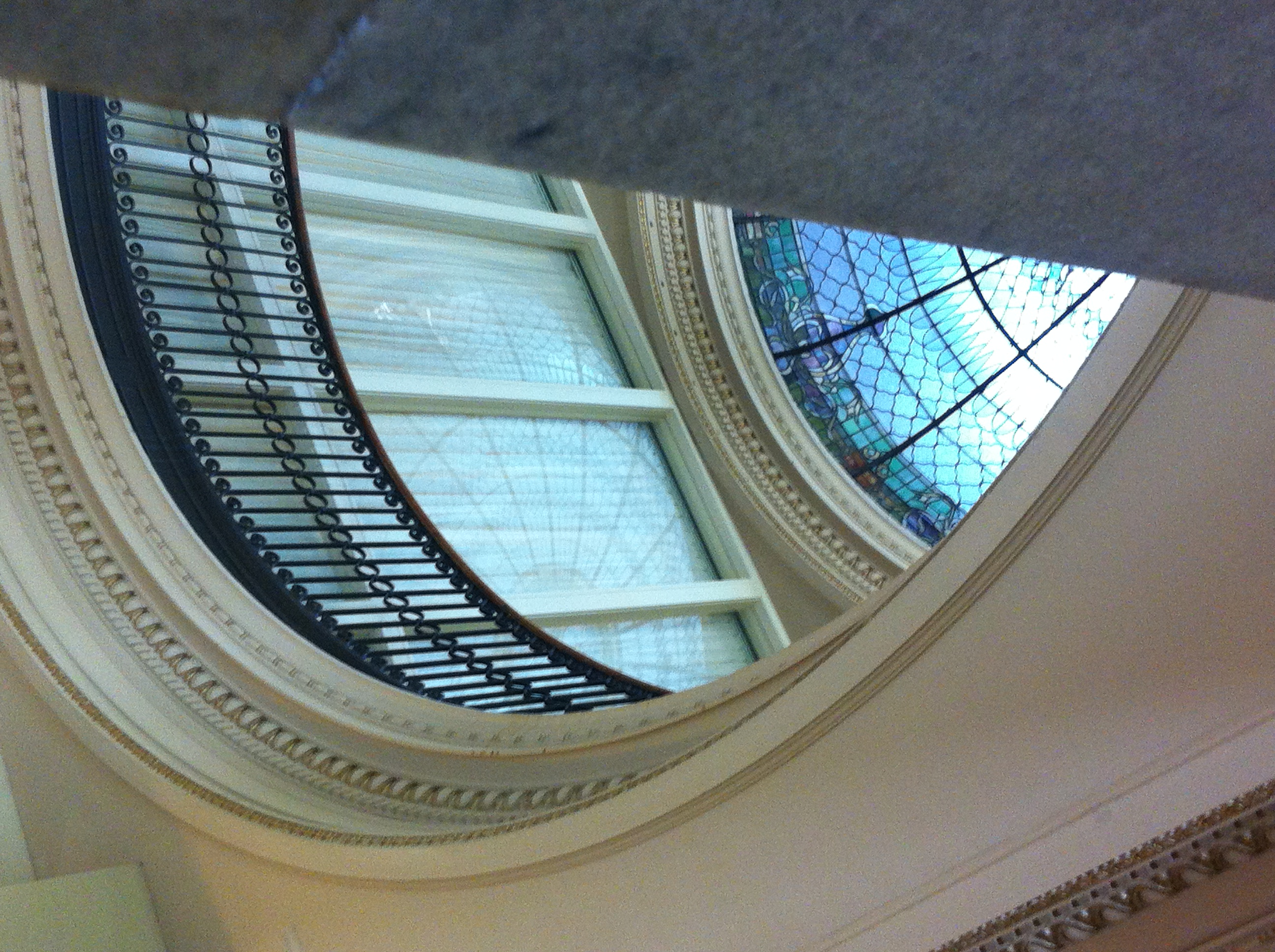
Though City Hall once had a dome, the stained glass window has always looked down on the rotunda from the third floor ceiling.  Here are some views of the stained glass in the rotunda.

There was a second, smaller stained glass skylight in the stairwell adjacent to the City Board chamber.  In the 1960s, it was removed.  Records do not indicate what happened to it.

IMG_4897 IMG_4899

April 17 Architeaser

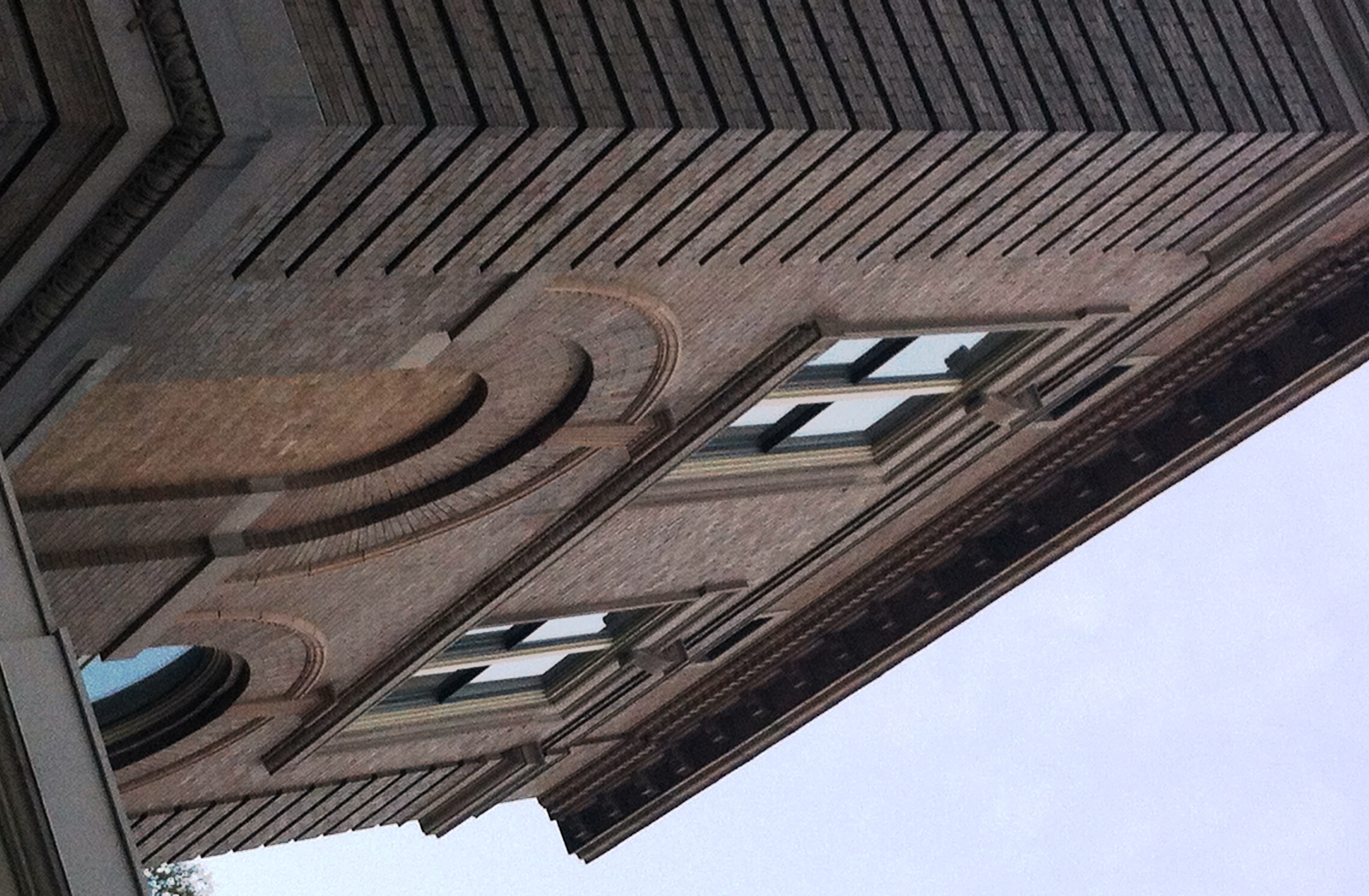
IMG_4825In the early 1960s, the windows at City Hall were bricked in.  The rational at the time dealt with energy efficiency and the installation of air conditioning in the building.  At the same time, there were other renovations undertaken.  Some of these were undertaken because of growth at City Hall, others were due to the 1957 change to the City Manager form of government (which created some new positions and eliminated others).  The City Clerk’s office was moved and the vault was relocated.

In conjunction with the mid-1980s restoration of the building, all but a few of the windows were finally unbricked.  Most of the remaining bricked-in windows were left intact because of mechanical equipment now located behind them.  Three other windows remained enclosed.  Two were in the City Board Chambers (which had to remain enclosed to enable for clearer broadcasting of meetings) and the third was in the City Clerk’s office (because of the “new” 1960s location of the Clerk’s vault).

Today’s Architeaser shows the  bricked-in window on the second floor western elevation in the City Clerk’s office.  Next to it is the top half of the exposed window.