Black History Month – Art Porter, Jr. and Robinson Center

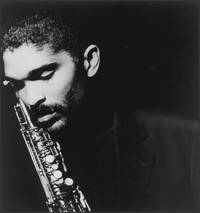
bhm art jr.Like his father, Art Porter Jr. is recognized with a space named in his memory in the new Robinson Center.

Arthur Lee (Art) Porter Jr. was born in Little Rock on August 3, 1961. Porter began his music career under the tutelage of his father, legendary jazz musician, Arthur Porter, Sr. who surrounded him with everything musical. He performed proficiently on drums, saxophone and piano. He was classically trained but his performances ranged across jazz, rhythm and blues, funk, and ballads.

During high school, under the supervision of Sterling Ingram, private teacher and band director at Parkview High School, Art Jr. was selected to be a member of the Arkansas All-State Band for three consecutive years.  At age 16, he was awarded the “Most Talented Young Jazz Artist in America” by the National Association for Jazz Education.

During Porter’s youth, his playing while underage in venues where liquor was sold proved controversial. Bill Clinton, then attorney general, established a framework for the legislature that would allow minors to work in such venues with parental supervision. Act 321 known as The “Art Porter Bill” became Arkansas law.

Porter graduated from Northeastern University in Chicago, Illinois, in 1986 with a BA degree in music education and performance.

Art burst on the music scene with his debut album, Pocket City (1992), followed by Straight to the Point (1993). In 1994, his third album, Undercover, placed Porter solidly on the “wave” radio charts with R&B artists as well as “cool jazz” artists. During this same year, he performed at Carnegie Hall for the Polygram Anniversary Celebration. His final album, Lay Your Hands on Me (1996), contained the radio favorite “Lake Shore Drive.”

Porter traveled the world with performances but no matter where his music would carry him, he always returned to his beloved hometown of Little Rock. He conducted workshops for music students at his alma maters, Dunbar Magnet Junior High School and Parkview Arts and Science Magnet School. Porter died on November 23, 1996, in a boating accident in Thailand. He had just completed a performance at the Thailand International Golden Jubilee Jazz Festival commemorating the fiftieth anniversary of King Bhumibol Adulyadej’s reign.  In 2013, he was posthumously inducted into the Arkansas Black Hall of Fame.
Black History Month – Art Porter Sr. and Robinson Center

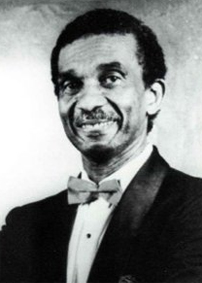
bhm art srArthur Lee (Art) Porter Sr. was a pianist, composer, conductor, and music teacher. His musical interest spanned from jazz to classical and spirituals.  One of the new event spaces in the Robinson Conference Center is named in his memory.

Born on February 8, 1934 in Little Rock, he began his music education at home. He played in church at age eight; played his first recital at twelve; and, by fourteen, hosted a half-hour classical music radio program on KLRA-AM. He earned a bachelor’s degree in music from Arkansas AM&N College (now UAPB) in May 1954. The next year, he married Thelma Pauline Minton. Following his marriage, he pursued graduate study at the University of Illinois, University of Texas and Henderson State University.

He began his teaching career at Mississippi Valley State University in 1954.  When he was drafted into the Army, his musical talents were responsible for him being assigned as a chaplain’s assistant in New York.  In the late 1950s he returned to Little Rock and taught at Horace Mann High School, Parkview High School and Philander Smith College.

He also started playing piano jazz in the evenings. This led to the creation of the Art Porter Trio, which became THE music group for events.  Many musicians who came to Arkansas to perform in Little Rock or Hot Springs would often stop by and join in with Porter as he played.  From 1971 to 1981 he hosted The Minor Key musical showcase on AETN.  His Porterhouse Cuts program was shown in 13 states.

Often encouraged to tour, he instead chose to stay based in Arkansas.  He did, from time time, perform at jazz or music festivals.   He also performed classical piano with the Arkansas Symphony Orchestra, founded the Art Porter Singers, and created a music group featuring his four oldest children.  Though Porter received many honors and awards, he found particular satisfaction in the “Art Porter Bill” enacted by the state legislature, which allowed minors to perform in clubs while under adult supervision. Porter’s children thus were able to perform with him throughout the state. Governor Bill Clinton, at the time a huge fan and friend of Porter, often joined Porter’s group on his saxophone.

In January 1993, Porter and his son Art Porter, Jr., performed at festivities in Washington DC for the Presidential Inauguration of his friend Bill Clinton.  In July 1993, he died of lung cancer.  Today his legacy lives on in the Art Porter Music Education Fund as well as in the lives of the many musicians and fans he touched.  He was posthumously inducted into the Arkansas Black Hall of Fame in 1994.

Black History Month – Lawrence Hamilton and Robinson Center

LawrenceHamiltonAnother notable former Little Rock performing artist who is memorialized at Robinson Center is Lawrence Hamilton.

The son of the Dr. Oscar and Mae Dell Hamilton, he was born in the small southwest Arkansas town of Foreman With an interest in music stemming from childhood, Hamilton earned a music scholarship to attend Henderson State University in Arkadelphia where he studied piano and voice He graduated in 1976 with a bachelor’s degree in music education.

From Arkansas, Hamilton traveled to Florida to work as a performer at Walt Disney World in Orlando, Florida where he would meet talent manager, Tommy Molinaro. This fateful meeting would prove to be a life-changing encounter, as Molinaro would invite Hamilton to come to New York to audition for the famed actor/director Geoffrey Holder. This marked the beginning of Hamilton’s bold and creative career in the performing arts, leading to performances on Broadway and on tours in Sophisticated Ladies, The Wiz,Uptown – Its Hot, Porgy and Bess, Big River, Play On!, and Jelly’s Last Jam among others. Perhaps his crowning achievement was starring in Ragtime.

Hamilton has been a member of the Southern Ballet Theater, Brooklyn Dance Theater, Ballet Tap USA, and the Arkansas Opera Theater He has performed in concert with the legendary Lena Horne at the White House for President and Mrs. Ronald Reagan, and at the Vatican for Pope John Paul II. Hamilton’s career also led to a stint as musical director for the renowned opera legend Jessye Norman, as well as vocal coach/arranger for the pop group New Kids on the Block

Upon his return to Arkansas, Hamilton served for several years as director of choral music at Philander Smith College. He also appeared in several plays at the Arkansas Repertory Theatre and made numerous appearances on the stage of Robinson Center with the Arkansas Symphony and other groups.  In addition, he performed at countless concerts, benefits and galas throughout Arkansas.  In 2003, he was inducted into the Arkansas Black Hall of Fame.  In 2008, he was appointed to the Little Rock Mayor’s Task Force on Tourism.

Hamilton died in New York in April 2014 due to complications from surgery.  Just weeks prior to the surgery, he had appeared in August Wilson’s The Piano Lesson in Cape Fear, North Carolina.  He had also starred in that play at Arkansas Rep a few years earlier.

Black History Month – Jesse Belvin and Robinson Center

jesse-belvin-2The name Jesse Belvin is largely forgotten. As a songwriter in the 1950’s he wrote “Earth Angel.” He also had an R&B hit with “Goodnight My Love.”  If he is recalled for anything today, it is tragically for being part of the mythical “27” club of musicians who died at the age 27.

On February 5, 1960, he appeared in a concert at Robinson Auditorium for what was billed as the “First Rock & Roll Concert of 1960.”  The headliner for the concert was Jackie Wilson.  The next morning, Belvin died at age 27 in a car accident outside of Hope on his way to his next concert in Texas.  Also killed in the wreck were Belvin’s wife, the man driving the car, and a couple in another car which Belvin’s car struck.

Many urban legends have sprung up about the concert at Robinson. Some, no doubt, fueled by Little Rock’s racially divided then-recent past in September 1957.  Most of these purport that the concert in which he appeared was the first integrated concert in Little Rock. Most rumors also state that Belvin had received threats leading up to the concert, that a riot took place at the concert or at least was stopped several times by disruptions caused by white agitators, that Belvin and others were run out of town, and that the accident was caused by damage inflicted to his tires before leaving Little Rock.  There are several variations of these purported facts.

While it is true Belvin performed at Robinson Auditorium the night before he died, it was not before a racially mixed audience.  It was not until August 1961 that the first concert took place in Robinson that did not have segregated seating, and that was a one-time only event.  It would not be standard practice at Robinson Auditorium until the 1965 passage of the Civil Rights Act.

While the Arkansas Gazette and Arkansas Democrat at the time did not shy away from covering racial issues (each with their own slant), neither paper mentions anything about the discord at the concert.  They do discuss Belvin’s subsequent accident near Hope.  It was apparently caused when the driver of the car containing Belvin and his wife fell asleep at the wheel. (If the tires had been damaged in Little Rock, there is no way the car would have made it to Hope.)

In this day of the internet where it is easy for myths to fester into fact, it is hard to dispel rumors.  What is true is that a life was tragically cut short, and that Jesse Belvin’s last concert was on the stage of Robinson Auditorium.

Black History Month – Jackie Wilson and Robinson Center

jackie-wilson-9533886-1-402On February 5, 1960, Jackie Wilson headlined a concert at Robinson Auditorium.  With a four-octave range and boundless energy, he was nicknamed “Mr. Excitement.”

Wilson was born in Michigan and grew up alternating between time in church choir and street gangs.  After dropping out of high school, he boxed some before starting to sing professionally.  After singing in groups such as the Dominoes, he embarked on a solo career in the late 1950s.  By the time he played Robinson Auditorium, his song “Lonely Teardrops” had sold over one million copies and been number one on the R&B charts.

It was around this time that Wilson struck up a friendship with Elvis Presley. They were each impressed with the other’s musical ability and stage presence.  Reportedly Elvis referred to himself as “the white Jackie Wilson.”

Throughout his career his hit songs included “Night,” “You Better Know It,” “Doggin’ Around,” and “(Your Love Keeps Lifting Me) Higher and Higher.”

Wilson had a heart attack and collapsed on stage in New Jersey during a concert in September 1975. He slipped into a coma. After a brief recovery in 1976, he slipped back into a semi-comatose state. He remained in that condition until his death from pneumonia in 1984.

Black History Month – Louis Armstrong and Robinson Center

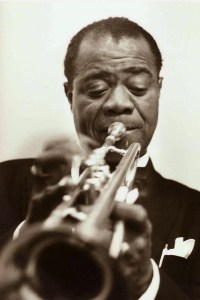
louis-armstrong3Louis Armstrong played Robinson Auditorium several times during his career.  He also played other venues in Little Rock.

As the Civil Rights movement started taking hold in the mid-1950s, many African American entertainers were vocal in their support.  Armstrong stayed silent.  Until, that is, September 17, 1957.  That night, in Grand Forks, North Dakota, he blasted President Dwight Eisenhower for his lack of action to make Governor Orval Faubus obey the law.  This was in an interview conducted by a 21 year old University of North Dakota journalism student named Larry Lubenow.

Journalist David Margolick wrote about the incident in The New York Times in September 2007 in conjunction with the 50th anniversary of the integration of Little Rock Central High School.  He recounted how the story, written for the Grand Forks Herald, was picked up all over the country.  The entire Margolick piece can be read here.  Margolick tells that when Armstrong was given the chance to back off the comments, he asserted that he meant all of it.

On September 24, 1957, the night that the 101st Airborne was being mobilized to come into Little Rock, Armstrong sent Eisenhower a telegram again criticizing him for lack of action.  He used colorful language which sarcastically spoofed the “Uncle Tom” moniker which some of his critics had bestowed when they felt he was not doing enough for Civil Rights.  The Eisenhower Presidential Library has a copy of that telegram.  The incident between Satchmo and Ike was the basis for two different plays: Terry Teachout’s Satchmo at the Waldorf and Ishmael Reed’s The C Above C Above High C.

Armstrong would again play a part in Little Rock’s Civil Rights history.  In September 1966, he played the first major concert in Robinson Auditorium that was before a fully integrated audience.  Since the early 1960s, there had been a few sporadic concerts which had been before integrated audiences. But the policy of the Auditorium Commission remained that the building was to be segregated.  Following the approval of the 1964 Civil Rights Act, public facilities had to be integrated. Louis Armstrong played before a full house at Robinson Auditorium that night.  With Orval Faubus still Arkansas’ governor, Armstrong was not too interested in staying in Little Rock very long. He left town quickly after the concert was concluded.

Black History Month – Danny Glover and Robinson Center

danny-glover-new-headshot-2010On Saturday, February 3, 2001, actor Danny Glover narrated Aaron Copland’s “Lincoln Portrait” with the Arkansas Symphony Orchestra at Robinson Center.

The Culture Vulture had the privilege of spending part of the day with Mr. Glover while he was here in Little Rock. (At Mr. Glover’s request for good Soul Food, they went to Kitchen Express. When the parking lot was still full at 2:45 on a Saturday afternoon, Mr. Glover remarked “That’s a good sign.”  He enjoyed the food so much, he apparently went back the next day before leaving town.) They also discussed college and NBA basketball and went by the UA Little Rock campus where then-Lakers star Derek Fisher had played his college ball.

While Danny Glover may well be best-known for his role in the Lethal Weapon movies, his distinguished acting career has taken him to Broadway and Off-Broadway, motion picture screens and TV.  He is also well-known for his political and social activism. He is not afraid to speak his mind, and to make donations to causes in which he is a believer.

As he concludes his fourth decade of acting, Glover shows no signs of slowing down – nor does he appear to be softening his stance on social issues.