
Peanuts character Franklin is focus of Clinton Center program today at noon

Today at noon at the Clinton Presidential Center Great Hall, Harriet Glickman and Ken Kelly will share the story of a schoolteacher who changed the course of Peanuts history.

During this special presentation, “The Story of Franklin: Just Another Kid in Peanuts,” the duo will describe their roles in the creation of Franklin, the first African American character in the Peanuts comic strips. The event will be held in conjunction with the two temporary exhibits, “Pigskin Peanuts” and “Heartbreak in Peanuts.”

In the wake of the assassination of Rev. Martin Luther King, Jr., Ms. Glickman, a Los Angeles school teacher, began a vibrant correspondence with Peanuts creator, Charles Schulz, as a result of her outreach to nationally syndicated cartoonists regarding the lack of diversity in popular comic strips.

She shared the response she received from Mr. Schulz with Ken Kelly, a longtime friend and father with young children, who then wrote a letter of support to Schulz from the perspective of an African American parent.


“The Partisan Divide: Congress in Crisis” with Reps. Martin Frost & Tom Davis today at the Clinton School at noon


Today at noon at the Clinton School, former Congressmen Martin Frost and Tom Davis will discuss their book The Partisan Divide: Congress on Crisis.

While the authors, Martin Frost and Tom Davis, share many common viewpoints, they come from opposite sides of the political spectrum. 

Tom Davis served in Congress from 1994 to 2008 representing Virginia’s 11th district. During that time, he chaired the National Republican Congressional Committee for two cycles (2000 and 2002), and was chairman of the House Committee on Government Reform and Oversight before retiring, as he likes to say, “undefeated and unindicted” in 2008. 

Martin Frost represented the Dallas–Ft. Worth area of North Texas in Congress for 26 years, serving four years as chairman of the Democratic Congressional Campaign Committee and four years as chair of the House Democratic Caucus. 

According to Frost and Davis, Congress is incapable of reforming itself without a good kick in the seat from the American public. They dissect the causes of legislative gridlock and offer a common sense, bipartisan plan for making our Congress function again. 

The preface by Pulitzer Prize finalist David Eisenhower, grandson of President Dwight D. Eisenhower, sets the stage for this powerful behind-the-scenes narrative that uncovers the road to the present political gridlock and then offers thought-provoking insights and possibilities for the way out.

Legacies & Lunch Looks at “The Way It ‘Wuz’ Back Then”    

Lonoke County native Aretha Dodson attended segregated public schools and worked for the same school district during and after integration. She details these experiences in her memoir, That’s the Way It “Wuz” Back Then, which she will discuss at Legacies & Lunch, the Butler Center’s monthly lecture series, on Wednesday, March 4, noon-1 p.m., in the Main Library’s Darragh Center, 100 Rock Street. Books will be available for purchase, and Dodson will sign copies after her talk.
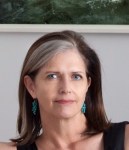
Dodson is a school improvement educational consultant who worked nearly forty years for the Lonoke public schools. That’s the Way It “Wuz” Back Then uses Dodson’s experiences, interviews she conducted, and clippings from the Lonoke Democrat to depict “the hardship and suffering of black families during the early twentieth century, segregated schools in the South, and the unrest experienced in the South during the desegregation of schools.”

Legacies & Lunch is free, open to the public, and sponsored in part by the Arkansas Humanities Council. Attendees are invited to bring a sack lunch; drinks and dessert are provided. For more information, call 501-918-3033.

Debra Berke discusses “Out of the Ordinary” design this evening 

As the founding partner of the architecture and design firm that bears her name, Deborah Berke oversees a staff of fifty, a skilled team that deals with a diverse portfolio of projects ranging from campus master plans, cultural and arts facilities, university buildings, hotels – Bentonville’s 21c Hotel among them – and custom residences. All projects, large and small, share the Berke imprimatur: a “knowing simplicity”.

An award winning design professional, Berke has been an adjunct professor of Architectural Design at Yale University since 1987. Additionally, she has taught at a number of campuses across the country. In 2005, the Rhode Island School of Design, where she earned a BFA in 1975, awarded her an Honorary Doctor of Fine Arts degree.

Registered as an architect in a dozen states including Arkansas, Berke will talk about creating buildings that are “inevitable though not predictable”. She will describe the relationship between a designer’s vision, life patterns and place.

Berke’s lecture, which is free and open to the public, is made possible through the collaborative effort of Crystal Bridges Museum of American Art and the Architecture and Design Network. For additional information, contact ardenetwork@icloud.com.

Supporters of the Architecture and Design Network include the Arkansas Arts Center, the University of Arkansas Fay Jones School of Architecture, the Central Arkansas section of the Arkansas Chapter of the American Institute of Architects and friends in the community.

March 3, 2015 – 6:00 pm, preceded by a reception at 5:30 p.m. Arkansas Arts Center Lecture Hall

“Privacy in the Age of Big Data” at Clinton School at noon today

Today at noon at the Clinton School, Theresa Payton will discuss issues surrounding privacy in today’s data-mining world. 

Payton was the White House Chief Information Officer from May 2006 until September 2008. 

She was the first woman to hold that position and her team served President George W. Bush and over 3,000 members of the executive office. 

Payton is the founder and CEO of Fortalice, a team of cybercrime fighters protecting against internet predators. 

“Privacy in the Age of Big Data” highlights the many positive outcomes of digital surveillance and data collection while also outlining those forms of data collection to which we may not consent, and of which we are likely unaware.

Noted African American Scholar to speak tonight at Clinton Library


The Clinton Foundation in conjunction with the City of Little Rock and the Arkansas Black Hall of Fame presents a Black History  Month program this evening.  This year’s featured speaker is Dr. Robert L. Williams II. 

Dr. Williams is a Professor Emeritus of Psychology and African and Afro-American Studies at the Washington University in St. Louis and a prominent figure in the history of African-American Psychology. 

He is well known as the stalwart critic of racial and cultural biases in IQ testing, for coining the word “Ebonics” in 1973. He has published more than 60 professional articles and several books. 

He was a founding member of the Association of Black Psychologists. Dr. Williams was a 2011 inductee into the Arkansas Black Hall of Fame. 

The program will begin at 6pm at the Clinton Center in the Great Hall. A reception will follow. 

Integration of Little Rock’s Junior Highs topic of panel today

Seven students who desegregated Little Rock’s junior high schools will discuss their experiences for the first time from 9 a.m. to noon Saturday, Feb. 21, at the Little Rock Central High School National Historic Site.

Laverne before and after

Dr. LaVerne Bell-Tolliver, first African American to attend Forest Heights Middle School in 1961 and currently an assistant professor in the UALR School of Social Work.

During the event, titled ”Phase II: The Desegregation of Little Rock Public Schools,” the former students will discuss their roles in the desegregation process in the early 1960s.  Between 1961 and 1962, 25 black students enrolled at junior high schools throughout Little Rock that had previously been closed to them.

Dr. LaVerne Bell-Tolliver, Judge Kathleen Bell, Henry Rodgers, Wilbunette Walls Randolph, Glenda Wilson, Dr. Kenneth Jones, and Judge Joyce Williams Warren will participate in the panel discussion to share their stories.  For many of them, this will be the first time they will discuss their experiences publicly.

The panel will be moderated by Rhonda Stewart, local history and genealogy expert at The Butler Center for Arkansas Studies.  Dr. John A. Kirk, George W. Donaghey Distinguished Professor of History and chair of the UALR Department of History, will provide an overview of the history of school desegregation in the area including the landmark Brown vs Board of Education decision and 1958, a so-called “lost year” when all schools in the district were closed in order to block integration.

In addition to the presentations and discussions, copies of historic documents and artifacts from the era will be on display for public viewing.

The program in sponsored in part by the Little Rock Central High School National Historic Site Visitors’ Center, the Central Arkansas Chapter of the National Association of Black Social Workers, and a grant from the Arkansas Humanities Council’s African American Heritage Fund.