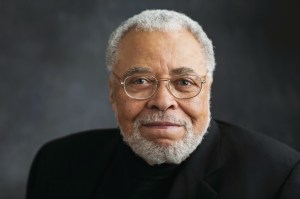
Rock the Oscars: James Earl Jones

Actor James Earl Jones has made several appearances in Central Arkansas over the years.  He has appeared at Robinson Center with the Arkansas Symphony Orchestra.  On February 12, 1999, he narrated Aaron Copland’s “Lincoln Portrait” and Alexander Miller’s “Let Freedom Ring” with the Symphony in a concert at Robinson Center.  (It was the 190th birthday for Lincoln.)
Born in Mississippi, he spent most of his childhood in Michigan.  After service in the Army during the Korean War, he moved to New York to study theatre.  In the late 1950s he started alternating between Broadway (where he often played a servant) and Off Broadway (where he played leading roles).  His first film appearance was in Dr. Strangelove….  From the 1960s onward he has alternated between stage, film and TV.  In the 1980s, he added voice work to his repertoire.

In 1969 and in 1987, he won Tony Awards for Actor in a Play (The Great White Hope and Fences, respectively).  His other Tony nominations have been for revivals of On Golden Pond and The Best Man.  He was nominated for an Oscar in 1970 for reprising The Great White Hope on film.  He received two Emmy Awards in 1991 – the only actor to ever win two in the same year.

In 2008, he won the Screen Actors Guild Lifetime Achievement Award, and in 2011 he was given an Honorary Oscar.  In 2002, he was a Kennedy Center Honors recipient.

He is probably best loved for his work as the voice of Darth Vader in many of the Star Wars films as well as his voicework in The Lion King.

2018 Grants announced by National Endowment for the Arts; includes 4 Little Rock groups

Four Little Rock organizations were announced today as recipients of grants from the National Endowment for the Arts.  They are: Arkansas Repertory Theatre, Arkansas Symphony Orchestra, Chamber Music Society of Little Rock, and the Oxford American magazine.

Each year, more than 4,500 communities large and small throughout the United States benefit from National Endowment for the Arts (NEA) grants to nonprofits. For the NEA’s first of two major grant announcements of fiscal year 2018, more than $25 million in grants across all artistic disciplines will be awarded to nonprofit organizations in all 50 states, the District of Columbia, and Puerto Rico. These grants are for specific projects and range from performances and exhibitions, to healing arts and arts education programs, to festivals and artist residencies.

“It is energizing to see the impact that the arts are making throughout the United States. These NEA-supported projects are good examples of how the arts build stronger and more vibrant communities, improve well-being, prepare our children to succeed, and increase the quality of our lives,” said NEA Chairman Jane Chu. “At the National Endowment for the Arts, we believe that all people should have access to the joy, opportunities, and connections the arts bring.”


Arkansas Repertory Theatre Company
$10,000 Little Rock, AR
Art Works — Theater
To support a production of “The Call” by Tanya Barfield.


Arkansas Symphony Orchestra Society, Inc.
$12,500 Little Rock, AR
Art Works — Music
To support the Canvas Festival, which will combine visual arts and the performance of live symphonic music.


Chamber Music Society of Little Rock
$10,000 Little Rock, AR
Challenge America
To support a series of chamber music performances and related educational programming.


Oxford American Literary Project

$25,000 Little Rock, AR
Art Works — Literature
To support the publication and promotion of “The Oxford American” magazine.

Rock the Oscars: Loretta Lynn

Loretta Lynn and Sissy Spacek during 53rd Annual Academy Awards’ Governor’s Ball at Beverly Hilton Hotel in Beverly Hills, California, United States. (Photo by Ron Galella/WireImage)

The spate of 1980s musical biopics can be traced to the success of 1980’s Coal Miner’s Daughter.  Nominated for seven Oscars, it captured a Best Actress statuette for Sissy Spacek, who played the title character.

Loretta Lynn, has never been nominated for an Oscar (yet) but wrote the book and lived the life on which the film was based.  (Arkansan Levon Helm was robbed of a nomination for playing Lynn’s father in the film.)

Over her career, Lynn has made numerous appearances in Little Rock, gradually moving up the billing until she was the star attraction.  Among her most recent appearances were a 2007 concert at Robinson Center (with three generations of Lynns and Webbs–the latter being her maiden name), and a 1997 concert at Wildwood Park.

While musical biopics were quite popular in the 1930s through 1950s, by the 1960s and 1970s, they had fallen out of favor.  But the success of Coal Miner’s Daughter led to numerous (countless?) on the big screen and TV.  Spacek ably captured Lynn’s grit, warmth, and talent in a well-deserved Oscar turn.

Rock the Oscars: Marvin Hamlisch

marvin-hamlisch376x283.ashxComposer-conductor-arranger-pianist Marvin Hamlisch was a multi-hyphenate.  He also was an early EGOT winner (back when it was more difficult to accomplish this feat because there were fewer categories in all four awards).
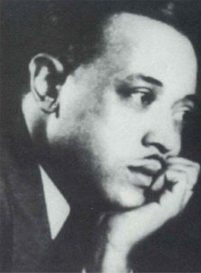
Hamlisch visited Little Rock numerous times throughout his careers.  In 1996, he performed at Wildwood Park during the first season of the Lucy Lockett Cabe Festival Theatre.  He soloed with the Arkansas Symphony Orchestra in January 2000 performing many of his works for film and a few for stage.

In 2006, he returned to the ASO to perform with Robert Klein and Lucie Arnaz and the latter duo recreated their roles from the Hamlisch-Neil Simon-Carole Bayer Sager musical They’re Playing Our Song.  His final visit to Little Rock was in 2011. He was performing in Conway but shopped in Little Rock for clothes when his luggage stayed in Chicago.

Over his career, Hamlisch was nominated for twelve Oscars.  He won three at the 1974 ceremony. They were Best Song for “The Way We Were” from the film of the same name (shared with Alan and Marilyn Bergman), Best Score for The Way We Were and Best Adaptation Score for The Sting.  The latter heavily featured music by former Little Rock resident Scott Joplin.


Rock the Oscars: William Grant Still

Long known as the Dean of African American composers, Dr. William Grant Still was a legend in his own lifetime.  As a prolific composer and arranger, his work was featured in numerous movies in the 1930s and 1940s including Oscar winning films The Awful Truth and Lost Horizon.
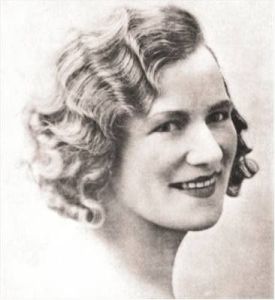
Dr. Still, who wrote more than 150 compositions ranging from operas to arrangements of folk themes, is best known as a pioneer. He was the first African-American in the United States to have a symphonic composition performed by a major orchestra. He was the first to conduct a major symphony orchestra in the US; the first to conduct a major symphony in the south; first to conduct a white radio orchestra in New York City; first to have an opera produced by a major company. Dr. Still was also the first African-American to have an opera televised over a national network

Dr. Still was born May 11, 1895 in Woodville, Mississippi to parents who were teachers and musicians. When Dr. Still was only a few months old, his father died and his mother took him to Little Rock. Inspired by RCA Red Seal operatic recordings, his musical education began with violin lessons.  He graduated from Gibbs High School in Little Rock.

After his studies at Wilberforce University and the Oberlin Conservatory of Music, he played in orchestras and orchestrated for various employers including the great W. C. Handy. For several years he arranged and conducted the “Deep River Hour” over CBS and WOR.  He also played in the orchestra for the 1921 musical Shuffle Along, which was the first Broadway musical to feature an all African-American cast and writing team.

In the 1920’s, Still made his first appearances as a serious composer in New York. Several fellowships and commissions followed. In 1994, his “Festive Overture” captured the Jubilee prize of the Cincinnati Symphony orchestra. In 1953, he won a Freedoms Foundation Award for “To You, America!” which honored West Point’s Sesquicentennial Celebration. In 1961, he received honors for this orchestral work, “The Peaceful Land”. Dr. Still also received numerous honorary degrees from various colleges and universities, as well as various awards and a citation from Arkansas Governor Dale Bumpers in 1972.

In 1939, Dr. Still married journalist and concert pianist Verna Avery, who became his principal collaborator. They remained together until Dr. Still’s death in 1978.  In a proclamation marking the centennial of Dr. Still’s birth, President Bill Clinton praised the composer for creating “works of such beauty and passion that they pierced the artificial barriers of race, nationality and time.”

In 1995, Dr. Still was posthumously inducted into the Arkansas Black Hall of Fame.  In 2016, the ballroom at Robinson Center was named in his honor.

Rock the Oscars: Marjorie Lawrence

Opera star Marjorie Lawrence, CBE, was born in Australia, but spent the last two decades of her life in Arkansas.   Her triumph over polio to return to the opera stage was the subject of the Oscar winning film Interrupted Melody.

First singing in her native country, she rose to star in the opera halls of Europe before conquering the Metropolitan Opera.  Lawrence had contracted polio as an adult while on a trip to Mexico.  She eventually returned to the stage, usually singing while seated or reclining.  She also had an extensive recital career.  She performed at the White House at the invitation of Franklin Roosevelt and later Lyndon Johnson. During World War II, she performed at Buckingham Palace.  When Queen Elizabeth II made her a Commander of the British Empire in 1977, the Queen fondly remembered that wartime concert.

In 1949, she wrote her autobiography Interrupted Melody. The next year, Hollywood was interested in making it into a film.  Lawrence only wanted to agree to that if she herself did the singing.  In 1955, MGM released the film starring Eleanor Parker as Lawrence and Glenn Ford as her husband. Lawrence did not provide the singing voice; Eileen Farrell did.  Lawrence was openly critical of the film, though some suspected it was because she did not get to sing for it.  By the time of the filming, her vocal range was not what it had been, which is apparently what led MGM to make the decision not to use her.

Despite Lawrence’s disdain for the film, the film was financially successful.  It was nominated for three Oscars: Original Screenplay (though it was actually based on a book), Eleanor Parker as Best Actress, and Costume Design for Color motion pictures.  Sonya Levien and William Ludwig won the statuette for their screenplay.

Lawrence and her husband bought a ranch near Hot Springs in 1952.  She spent most of her life there afterward though she was a vocal coach at Southern Illinois University and Tulane. She also welcomed international students to her home for coaching.  In 1975, she started working with students from the University of Arkansas at Little Rock.  She was also an early member of the Arkansas Arts Council.

Lawrence died in January 1979 and is buried in Hot Springs.

Little Rock Look Back: LR Votes FOR a Municipal Auditorium

On January 26, 1937, Little Rock voters went to the polls to vote on three different municipal bond issues.  One of them was the construction of a municipal auditorium.

The bonds for the auditorium would be $468,000 in general obligation bonds which would be paid off between 1940 and 1971. This was toward a total cost of $760,000 for the entire project.

The official campaign for the auditorium was sponsored by the Little Rock Forward Committee which was led by W. H. Williams. In campaign advertisements it showed the value of conventions in New York City which was estimated at $100 per convention attendee. Little Rock organizers were estimating a $10 a day expenditure by visitors, which the committee stressed was very conservative. The campaign committee emphasized the importance of acting at that time due to the federal government money involved.

Various committees and organizations endorsed the auditorium project including the Little Rock Chamber of Commerce, Little Rock Federation of Women’s Clubs, and the Young Business Men’s Association.

The thrust of the campaign focused on the economic benefit to Little Rock as well as the fact that the auditorium would be for all citizens. This message was picked up in editorials by both the Democrat and Gazette. In editorials on January 23 and 25, the Democratopined that the benefits of the auditorium would be distributed among all classes of the citizenry. The next day, both papers ran editorials which touted the economic boon an auditorium would bring through conventions and meetings.

The Democrat’s approach broke down the current value of conventions to Little Rock with, what it termed, the city’s “existing inadequate” facilities. The paper emphasized a conservative estimate of what the added value to Little Rock’s economy would be with the new auditorium.

In expressing support for the auditorium the Gazette stressed the values for local, statewide and national groups. “An auditorium would provide a more convenient and better adapted community center for all kinds of local gathering,” and continued that it would make Little Rock “the logical meeting place for state conventions of every sort.” In discussing the value of state, regional and national meetings the paper stressed that the outside money spent by convention attendees has an impact beyond stores, hotels and restaurants.

Both papers also echoed the importance of the federal government financing to make this possible. The Democrat noted that the Public Works Administration grant and federal low cost loan made this an ideal time.

On January 26, 1937, Little Rock voters approved the auditorium bond by a vote of 1,518 to 519. It passed in each of the city’s 23 precincts. Little Rock Mayor R. E. Overman expressed his pleasure at the outcome of the vote and extended his thanks to the voters.

After the election, a Gazette editorial commented on the low turnout for the special election by commenting that the weather had been nice and there were no other barriers to voting. The editorial writer opined that those not voting in the election must not have been opposed to the endeavor.