
Women Making History: Charlotte Stephens

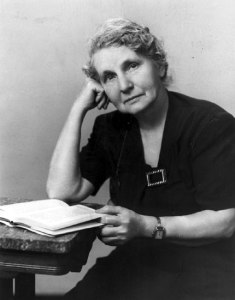
Charlotte Andrews Stephens was the first African American teacher in the Little Rock School District.  Between 1910 and 1912, when an elementary school for African Americans was named after her, she became the first woman to have a public building in Little Rock named after her.  For nearly fifty years, Stephens Elementary (which is now in its third building) would be the only LRSD building named after a woman.

Born into slavery, Charlotte Stephens was educated first by her father who ran a private school in what is now Wesley Chapel UMC.  At the age of 15, she started teaching at the Union School to finish out the term of a white teacher who had become ill.  She taught for 70 years, retiring at age 85 in 1939.

From 1870 to 1873, she attended college at Oberlin College, though not always every semester. (It is possible she was the first African American woman from Arkansas to attend college, but that cannot be verified.)  During her career with the LRSD, she taught students in all grades. She was twice principal of Capitol Hill School, and later headed the high school Latin Department.  At the time of her retirement, she was librarian of Dunbar High School.

The land on which Stephens Elementary now sits was once owned by Charlotte Stephens.  She donated the land and attended the 1950 dedication of the second Stephens Elementary.  That building was torn down in 1994 to make way for the current Stephens Elementary.  Some of her grandchildren attended the dedication of the new and current Stephens Elementary.

Abolishing Private Prisons is focus of noon Clinton School program today

John_R_Dacey.jpgToday (March 25) at the Clinton School, John Dacey will discuss his work to abolish private prisons.  The program begins at noon at the Clinton School in Sturgis Hall.

In 2015, Executive Director John Dacey started a nonprofit with a name as straightforward as its goal: Abolish Private Prisons. In 2018, Dacey left his private law firm to focus on his nonprofit work full time.

Abolish Private Prisons believes that in turning over incarceration to the marketplace, government has abdicated a responsibility that belongs to government alone and creates huge financial incentives that sustain our societal addiction to mass incarceration. Taking away an individual’s liberty should never have any relationship to corporate profits.

Professor andré douglas pond cummings, UA Little Rock William H. Bowen School of Law Professor and President of the Board of Abolish Private Prisons, will join Dacey for the program. He states: “It is not just a constitutional issue for us. It is a moral imperative.”

Dacey says, “It’s about what kind of a country we are, and what kind of a country are we going to be? Are we really going to put these perverse incentives into our criminal justice system? This is treating people as human inventory. It’s a violation of human dignity.”

All Clinton School Speaker Series events are free and open to the public. Reserve your seats by emailing publicprograms@clintonschool.uasys.edu or by calling (501) 683-5239.

Women Making History – The Mount Holly Cemetery Association

Instead of featuring one woman, today’s entry focuses on scores of women. The Mount Holly Cemetery Association has been protecting, preserving, and promoting Mount Holly Cemetery for over 100 years. The organization was empowered with these roles by the Little Rock City Council at a time when women still did not have the right to vote.

The Mount Holly Cemetery is a treasure trove of history, architecture and horticulture on the edge of downtown Little Rock.  It was established in 1843 when Chester Ashley and Roswell Beebe donated the land to the city of Little Rock. Feeling the town fathers were not giving the cemetery the attention it deserved, a group of Little Rock businessmen formed a cemetery commission on March 20, 1877. Charter members of the commission were J. H. Haney, Fay Hempstead, James Austin Henry, Philo O. Hooper, and Frederick Kramer. However the private group of men did no better in maintaining the cemetery.

In 1914, a contingent of the town’s women became critical of the cemetery’s unkempt appearance and took over the reins from the men. Following adoption of City Ordinance No. 2199 in June 1915, the ladies’ Mount Holly Cemetery Association was incorporated on July 20, 1915. (It should be noted this action by the women came at a time when women did not have the right to vote.)

The Mount Holly Cemetery Association grew out of a meeting which took place on June 9, 1914 at the home of Mrs. A. H. Scott. Thirty-six women gathered for the purpose of improving the cemetery.

An executive committee was formed, and the women started working on improvements to the cemetery. Though first viewed by some men as an auxiliary to the Cemetery Commission, it quickly became apparent that the women were in no mood to take a back seat in matters pertaining to Mount Holly.

The first executive board (from June 1914 to July 1915) included Mrs. A. H. Scott, Mrs. B. S. Johnson, Mrs. George Thornburgh, Mrs. Moorhead Wright, Mrs. H. M. Bennett, Mrs. George Worthen, Mrs. W. E. Green, Mrs. George Stratman, Miss Louise Gibson and Miss Clara Hotze.

The July 1915 incorporators were Mrs. Scott as well as Julia E. Bennett, Eva C. Shields, Rosa M. Miller, Ruby P. Ratcliffe and Marguerite R. English. Mrs. Bennett, known affectionately as “Scrap” would serve as the first president, and Miss Miller was the first secretary.

Over the years the Association has undertaken countless projects large (construction of a mausoleum) and small (signs on the lanes) to improve Mount Holly Cemetery for its residents and for visitors.

In 1993, the Association published a history of the first 150 years of the cemetery.  More recently, they launched the annual RIP (Rest in Perpetuity) picnic held the last Sunday in April on the grounds.  They have also published a cookbook–Recipes in Perpetuity.

Today, the Mount Holly Cemetery Association is still going strong!

#5WomenArtists – Marjorie Williams-Smith

Through their social media campaign #5WomenArtists, the National Museum of Women in the Arts (NMWA) asks, “Can you name five women artists?

In response to that, this month five artists with Little Rock connections will be highlighted throughout March.  Up next is Marjorie Williams-Smith. 

Marjorie Williams-Smith has worked with silverpoint for over 30 years. Silverpoint is an especially challenging medium, but that is part of the allure. The effect of light on the silver lines creates a shimmering quality that is quite different from any other drawing medium.

She draws with a metal stylus on a prepared surface.  Hatched and cross-hatched lines create values and textures.  The white of the page provides the contrast. Since erasing is not possible with silverpoint, every line has to be premeditated.

Silverpoint is the perfect medium for the subject matter of Marjorie’s work: nature. She uses these natural forms as symbols for the spiritual energy that exists within us all.

Two of her works were included in the recent exhibition: ON THEIR OWN TERMS which was on display at the University of Arkansas at Little Rock. Earlier this month, she received the Individual Artist Award at the 2019 Governor’s Arts Awards presented by Governor Asa Hutchinson and the Arkansas Arts Council.

The 2019-2020 Arkansas Symphony Orchestra MasterWorks season is announced

The Arkansas Symphony Orchestra (ASO) announced its 2019-2020 Masterworks which includes guest conductors and a concert conducted by Geoffrey Robson, ASO’s Associate Conductor who has been named Interim Artistic Director.
The Stella Boyle Smith Masterworks Series opens Sep. 28-29, 2019, with a concert presented in partnership with ACANSA Arts Festival of the South. Luminary conductor JoAnn Falletta is the first featured guest conductor, and American trio Time for Three is featured in work written for them by former ASO Conductor in Residence Jennifer Higdon. The program also features Ravel’s La Valse and Rimsky-Korsakov’s Scheherazade.

ASO’s casual concert and street party, Beethoven and Blue Jeans, returns Nov. 9-10 and features works by two Arkansas composers: William Grant Still’s Festive Overture and Florence Price’s Piano Concerto in One Movement. Karen Walwyn, a specialist in the piano works of Price, is the featured soloist, and Andrew Grams will conduct the concert.

The Masterworks series ends May 2-3, 2020, featuring music from Fanny Mendelssohn and Schubert along with the return of prestigious cellist, Zuill Bailey, performing Dvorak’s Cello Concerto.

The 2019-2020 season coincides with the 100th anniversary of the passage of the 19th Amendment, guaranteeing and protecting women’s constitutional right to vote. ASO is celebrating by featuring two outstanding women conductors, JoAnn Falletta and Carolyn Kuan, two women soloists, pianist Karen Walwyn and violinist Simone Porter, and by performing works from four women composers: Pulitzer Prize-winner and former ASO Composer in Residence, Jennifer Higdon, an active and popular composer today, Little Rock’s own Florence Price, Lili Boulanger, and Fanny Mendelssohn.

The full Masterworks series includes:

  • JoAnn Falletta and Time for Three, Sep. 28 & 29, 219, with music from Higdon, Ravel, and Rimsky-Korsakov’s Scheherazade.
  • Beethoven & Blue Jeans, Nov. 9 & 10, 2019, ASO’s annual casual concert, featuring works from Arkansas composers Florence Price and William Grant Still and guest conductor Andrew Grams.
  • Copland’s Rodeo, Jan. 25-26, 2020, with guest conductor Carolyn Kuan, and music from Ginastera and Bartok;
  • Sibelius & Debussy, Feb. 29 – Mar. 1, 2020, conducted by Geoffrey Robson, and featuring a multimedia work: In Seven Days: A Concerto for Piano and Moving Image, with pianist Andrius Zlabys.
  • Symphonie Fantastique, Apr. 18-19, 2020, with guest conductor Eric Jacobsen, and violinist Simone Porter performing the Saint-Saens Violin Concerto No. 3 in addition to the titular orchestral showpiece by Berlioz.
  • Zuill Bailey Plays Dvorak, May 2 & 3, 2020, with guest conductor Vladimir Kulenovic.

The concerts will be at Robinson Center Performance Hall.

Women Making History: Bernie Babcock

Julia Burnelle “Bernie” Smade Babcock was an author and museum founder.  When her husband died, leaving her with five children, she starting writing for money. She published several temperance novels and later wrote for the Arkansas Democrat.  She also published a magazine, wrote plays which were performed in New York, and authored a poetry anthology.

She later became recognized as an expert on Abraham Lincoln and wrote several books about him, as well as other historical figures.  For her writing skills, she became the first Arkansas woman to be included in Who’s Who in America.

In 1927, after professional curmudgeon H. L. Mencken wrote derisively of Arkansas, she decided to start a museum. The Museum of Natural History and Antiquities was first located in a Main Street storefront.  In 1929, she “gave the City of Little Rock a Christmas present” by giving the museum to the city.  It was relocated to the unfinished third floor of City Hall, with her as its employee. After being closed during part of the Great Depression, she relocated the museum to the Arsenal Building and reopened it as the Museum of Natural History.  She was involved in the efforts to rename City Park in honor of Douglas MacArthur (who had been born there) and welcomed him when he came to Little Rock in 1952.

Following her retirement in 1953, she moved to Petit Jean Mountain where she wrote and painted.

After more name changes and a relocation, her museum is now known as the Museum of Discovery and is an anchor in the River Market district.

Little Rock Look Back: MacArthur Returns

MacArthur and Mayor Remmel

General MacArthur and Mayor Remmel

On Sunday, March 23, 1952, General Douglas MacArthur made his only post-infancy visit to Little Rock. He had previously been scheduled to visit Mississippi, and Little Rock Mayor Pratt Remmel had persuaded him to add a visit to Little Rock to the agenda. The fact that Little Rock now had a Republican mayor had apparently piqued the General’s interest.

General MacArthur, accompanied by his wife and son as well as several journalists and members of his military retinue, arrived at Little Rock Airport at 10:40 am. He was met by a delegation of civic leaders including Mayor Remmel. Alderman James Griffey made welcoming remarks on behalf of the city. Then the General and Mayor boarded an open car and led a motorcade from the airport to downtown.

The motorcade’s destination was Christ Episcopal Church at Capitol and Scott streets. It was at this church that MacArthur had been baptized as an infant. The delegation was greeted by the Episcopal Bishop R. Bland Mitchell, Rector J. Hodge Alves, and Rector Emeritus W. P. Witsell. (While he had been Rector, Dr. Witsell had garnered national attention by issuing an Easter blessing to Gen. MacArthur as he had been evacuating the Philippines at the height of World War II.) In order to gain admittance to the church that morning, church members and guests had to have tickets.

Following the worship service, the General and his party went to three events in the park named in his honor. The first was a tour of the Museum of Natural History (now the Museum of Discovery and located in the River Market; the current tenant of the building is the MacArthur Museum of Arkansas Military History), which was located in the building in which the General had been born. After the tour, he spoke at a dedication of a small rose garden adjacent to the museum. It was sponsored by the Little Rock City Beautiful Commission and the Garden Clubs of Greater Little Rock.

Though every stop of the General’s visit had featured crowds, the largest was at the third location in MacArthur Park. A crowd of several thousand greeted the General as he spoke from the Foster Bandshell in the park’s southwest corner. Chamber of Commerce president Richard C. Butler (brother-in-law of Mayor Remmel) was the master of ceremonies. Following an invocation by Methodist Bishop Paul Martin, the only other speaker was the General. In his remarks he spoke of his Southern heritage and of his appreciation for the support of the citizens of Little Rock over the years.

Several gifts were bestowed upon the MacArthurs at the ceremony. The City of Little Rock presented Mrs. MacArthur with an engraved silver serving tray.

Following the events in MacArthur Park, the family retired for a brief respite to the Hotel Marion. They then attended a luncheon buffet in their honor at the home of Howard and Elsie Stebbins on Edgehill Road. The General and Mrs. MacArthur circulated through the house greeting guests and then eschewed a special table in favor of balancing their plates on their laps and sitting in wingback chairs. Meanwhile Arthur MacArthur stayed upstairs and discussed stamp collecting and other hobbies with the Stebbins’ two teenage sons.

Following the luncheon, the MacArthur party went back to the airport and by 4:00pm, the plane was in the air.

Though this visit was coming at the end of a whirlwind of activities, by all accounts, the General and Mrs. MacArthur were very gracious and accommodating. The General was being mentioned as a potential GOP candidate for President, but purposefully steered clear of any political comments in his remarks. He and Mrs. MacArthur dutifully posed for photos not only for the media but also for amateur photographers. At lunch, the General even asked a Gazette photographer to take a photo of him with his Little Rock Police motorcycle escorts so that they could have a souvenir of the visit.