Remember the Fallen on Memorial Day at Mount Holly Cemetery

Today is Memorial Day – a time to pay tribute to the men and women in uniform who died in service to their country.

As a way to give this recognition, today would be a good day to visit a cemetery. One of Little Rock’s most storied cemeteries is Mount Holly Cemetery. There are numerous persons buried there who died while in service to their country.

One of them is 2Lt Carrick W. Heiskell, son of Arkansas Gazette editor J. N. Heiskell.  2Lt Heiskell died while flying for the Air Transport Command in the Himalayas during World War II.  He was posthumously the recipient of the Distinguished Unit Emblem, Purple Heart, and the Air Medal.

Founded in 1843, Mount Holly has been called “The Westminster Abbey of Arkansas.” Thousands of visitors come each year. Those interested in history come to see the resting places of the territorial citizens of the state, including governors, senators, generals, black artisans, and even a Cherokee princess. For others the cemetery is an open air museum of artistic eras: Classical, Victorian, Art Deco, Modern––expressed in gravestone styles from simple to elaborate. Some come to read the epitaphs that range from heartbreaking to humorous to mysterious.

Though a City of Little Rock facility, the cemetery is maintained by the Mount Holly Cemetery Association, a non-profit organization with a volunteer Board of Directors. The cemetery is located at 1200 South Broadway in Little Rock. Gates are open from 8 a.m. until 5 p.m. in the summer and from 8 a.m. until 4 p.m. in the winter.

Little Rock Look Back: Final Graduation of Dunbar High School

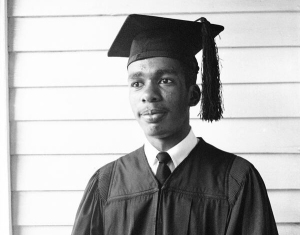
On May 27, 1955, on the stage of Robinson Auditorium, the Dunbar High School senior class graduated. This academic year marked not only the 25th anniversary of Dunbar’s opening, but it was the last year that the school building would offer junior high through junior college classes.

In the fall of 1955, the new Horace Mann High School would open. Dunbar would continue to be open, but only as a junior high.  (Though no reason was given, the junior college component ended in May 1955.)

The new Mann High School was constructed, in part, as a way to delay any integration plans for the Little Rock School District.  With a new second all-white high school in the works for Little Rock, it was thought that a new African American school would placate the African-American community by not only giving them a new building, but relieving the overcrowding at Dunbar.

But on May 27, 1955, and the days leading up to it, the focus was on celebrating the final graduation class and the 25th anniversary of Dunbar High School.  On May 25, teachers who had taught for 25 years at the school, and original teachers who retired from the school were honored.

The school’s original principal, Dr. John H. Lewis, was the commencement speaker.  The current principal, Dr. L. W. Christophe presided over the awarding of the diplomas and announcements of scholarships.  Among the higher education institutions to which they received scholarships were the University of Michigan, Wiley College, Tennessee State, Arkansas AM&N, Talladega College, and Philander Smith College.

While the Arkansas Gazette and Arkansas Democrat  both DID run stories on the graduation, it was hardly equal to the coverage they gave Central High School.  In fact, on the day after Dunbar’s graduation, the Democrat ran a photo of two Central graduates huddled under an umbrella in the rain – three days after the ceremony took place.

In 1971, Mann ceased its status as a high school as well.  Today, both Mann and Dunbar serve as middle schools within the Little Rock School District.

Frampton Comes Alive Tonight in return to Little Rock

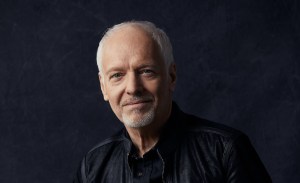
Tonight, Peter Frampton takes the stage in Little Rock as part of RiverFest.  It marks at least his fifth visit to the city.

In 1979, still riding the crest of the “Frampton Comes Alive” popularity, he played at Barton Coliseum on June 24.

He has appeared in Riverfront Park in May 1992, June 1998 (opening for Lynyrd Skynyrd), and at the 2013 edition of Riverfest.  Yesterday was the fifth anniversary of that appearance.

Over the years he has also played concert venues in Northwest Arkansas and Hot Springs.

Little Rock Look Back: Ernest Green graduation from LR Central High

Last week, the Class of 2018 graduated from Little Rock Central High School.  Perhaps the most famous graduation ceremony in the long-storied history of Little Rock Central High took place on May 27, 1958.  It was on that date that Ernest Green became the first African American to graduate from the formerly all-white school.

Among those in the audience to witness this historic event was an up and coming minister named Dr. Martin Luther King, Jr.  A friend of L. C. and Daisy Bates, he attended the 1958 Central High School graduation to witness Green receiving a diploma. Each senior only received eight tickets to the ceremony at Quigley Stadium.   Dr. King was in the state to address the Arkansas AM&N (now UAPB) graduation.  Because he was going to be nearby, Dr. King wanted to witness the history.  Green did not know that Dr. King was in the stands until after the conclusion of the ceremony.  Later that evening, Dr. King gave Green a graduation present of $15.

Ernest Green, Dr. King and Daisy Bates share a relaxed moment — which was probably rare for the three in 1958

Because of fears about the event becoming a media circus, the Little Rock School District limited the press on the field to one Democrat and one Gazette photographer. Other press were limited to the press box normally filled with sportswriters covering the gridiron exploits of the champion Tigers.  There were photos taken of Green prior to the ceremony as well as during the ceremony.

During the graduation rehearsal, there had been concerns that some students or other people might try to disrupt the practice.  But it went off without a hitch.  Likewise, the ceremony itself went smoothly.  Local press reported that some members of the class briefly chatted with Green during the ceremony.  That the event took place without incident was a relief on many levels to City leaders.  Also in the class of 1958 were a son of Little Rock Mayor Woodrow Mann and a daughter of LRSD Superintendent Virgil Blossom.

Little Rock Look Back: The Aftermath of the Recall

The day after the recall election, there was still uncertainty.  The results were not uncertain – even the two boxes from Woodruff Elementary which were not counted until the the day after did not change the outcome.

The uncertainty stemmed from the process.  The School Board recall law which had been hastily passed by the Arkansas General Assembly (to be used as a tool against integration), had many glaring omissions. Written by Attorney General (and avowed segregationist) Bruce Bennett, it did not indicate when recalled members lost their seats – was it after election results were announced? After they were certified? Or after the new members were appointed?

In addition, the Election Commission was prepared to certify the results, but did not know to whom they were issuing the certification.  Because it was a citizen-initiated recall for a school district race, none of the pre-existing rules applied.  And again, the Bennett bill did not spell it out.

The Pulaski County Board of Education had to wait for the results to be certified before they could appoint the three new members.  Each of these new members would stand for re-election in December at the next School Board election.

In the interim, the School Board had a scheduled meeting set for two days after the election.  But with its membership uncertain and no pressing matters, the three retained members (Everett Tucker, Russell Matson and Ted Lamb) were considering postponing the meeting.

In the coming days, the Election Commission would meet and certify the results.  They ended up sending them to the County Judge.  One of the three members appointed to fill the vacancies was ineligible (he did not live in the district).  But by the end of June, the Little Rock School Board was back to six members.

A court ruling over the summer which struck down the law allowing the closure of schools, cleared the way for Little Rock high schools to reopen as integrated in the fall.  There would be much more legal wrangling in the weeks, months and years to come.  The rate at which the Little Rock public schools were integrated was much more focused on the word “deliberate” than on “speed.”

But on May 26, 1958, those matters were for another day.  The supporters of the fired 44 teachers and the three school board members who defended them were left to savor their victory.

A look at the voting by the City’s five wards shows that while individual precinct totals varied, Messrs. Lamb, Matson and Tucker all fared well in Wards 1 and 5 as well as in Cammack Village and Absentee voting.  Ben Rowland and Bob Laster fared well in Wards 2, 3, and 4 as well as the unincorporated area around Wilson Elementary.  Ed McKinley was supported in Wards 3 & 4 as well as the Wilson Elementary environs.

Here is a breakdown of the voting locations in each Ward to give a sense of the geographic location:

Ward 1 – 16th & Park, 14th & Pulaski, 15th & State, 28th & Wolfe, 23rd & Arch

Ward 2 – 316 E. 8th, 12th & Commerce, 424 E. 21st, 1101 E Roosevelt, 6th & Fletcher

Ward 3 – County Courthouse, 1116 W Markham, 11th & Ringo, 9th & Battery, Deaf School, 7th & Johnson, Cantrell Rd in Riverdale

Ward 4 – 4710 W 12th, 3515 W 12th, 24th & Garland, 22nd & Peyton, Broadmoor Methodist

Ward 5 – Markham & Elm, Kavanaugh & Beech, Cantrell & Pierce, Kavanaugh & Harrison, Kavanaugh & McKinley, 7524 Cantrell, H & Hayes

Little Rock Look Back: Opening of La Harpe Boulevard

Knoop, Parkin and Remmel in this DEMOCRAT staff photo

Not all events in Little Rock on May 25, 1959, were school-related.

On that day, Harry W. Parkin, a member of the Arkansas Highway Commission was joined by Little Rock Mayor Werner Knoop and Pratt Remmel, a former mayor of the city,  in a brief ceremony.

With Mayors Knoop and Remmel standing by, Mr. Parkin snipped the ribbon to officially mark the opening of LaHarpe Boulevard in Little Rock.  Owner of Parkin Printing Company in LR, he had been appointed  to the Highway Commission in 1957.

Mr. Knoop was the current mayor of the City, having been chosen by his colleagues on the initial City Board in November 1957. He was re-selected in January 1959 to a second stint as mayor.  Mr. Remmel had been mayor in 1952 when Little Rock voters approved bonds to pay for their portion of the $3million project.

In February 1957, the street was named in honor of the explorer Jean-Baptiste Benard de La Harpe, who had first claimed the area for the French.

Little Rock Look Back: 1959 Recall Election Day

The triumphant trio who were retained by Little Rock voters.

May 25, 1959, was not only the Recall Election Day, it was the last day of school for the Little Rock School District’s elementary and junior high students.  The results of that day’s vote would determine whether the ninth grade students would be in class come fall, or joining their older friends and neighbors in sitting out a school year.

While expectations that a new record of turnout would be set were off, over 25,000 of the 42,000 registered voters DID cast ballots in the May 25, 1959, Recall Election.

As the precinct results started coming in, some unexpected trends developed.  Some of the boxes in the more affluent, western neighborhoods which had been expected to be strongly in favor of keeping Everett Tucker, Russell Matson and Ted Lamb were not providing the anticipated overwhelming numbers.  Likewise, some of the more working class neighborhoods which had been projected to be strongly in favor of keeping Ed McKinley, Ben Rowland and Bob Laster were more receptive to keeping Tucker, Matson and Lamb.

As the night rolled onward, only Everett Tucker looked like a sure thing to be retained on the School Board.  At one point in the evening it appeared that the other five members would be recalled.  By the time they were down to four boxes still uncounted, the three CROSS-backed candidates were guaranteed to be recalled, but the status of Lamb and Matson was still undetermined.  Finally, with only two boxes remaining, there was a sufficient cushion to guarantee Matson and Lamb would continue as board members.

Two boxes from the Woodruff school were uncounted at the end of Monday. They had 611 votes between the two of them, which was not enough to change any outcomes.  They were being kept under lock and key to ensure there was no tampering with them.

Once it became apparent that Tucker, Lamb and Matson were retained, the STOP watch party erupted.  Six young men hoisted the triumphant three on their shoulders and paraded them through the crowd.  Dr. Drew Agar enthusiastically announced to the crowd, “Mission completely accomplished.”

At around 11:00 p.m. William S. Mitchell addressed the crowd.  “This is a great awakening of our home town…I have never seen such a wonderful demonstration of community spirit.”  He later went on to thank the thousands of people who volunteered in the effort.

At the CROSS headquarters, Ed McKinley and Rev. M. L. Moser were sequestered in a room poring over results.  When it appeared that 5 of the 6 might be recalled, McKinley issued what turned out to be a premature statement.

Back at the STOP party, the celebration continued.  While people knew that much work was still ahead, the men and women in attendance were enjoying a rare moment of joy after nearly two years of strife.