Sculpture Vulture: Harriet Tubman

With news that Harriet Tubman will replace Andrew Jackson on the $20, it is a good chance to revisit Little Rock’s Harriet Tubman sculpture.
In preparation for the opening of the Clinton Library in 2004, a series of sculptures were placed which linked a walkway between the River Market and the Clinton Presidential Park.

One of these sculptures is entitled Harriet Tubman.  Since she was from the era of President Lincoln, it seems fitting to feature this sculpture on this, Lincoln’s birthday.

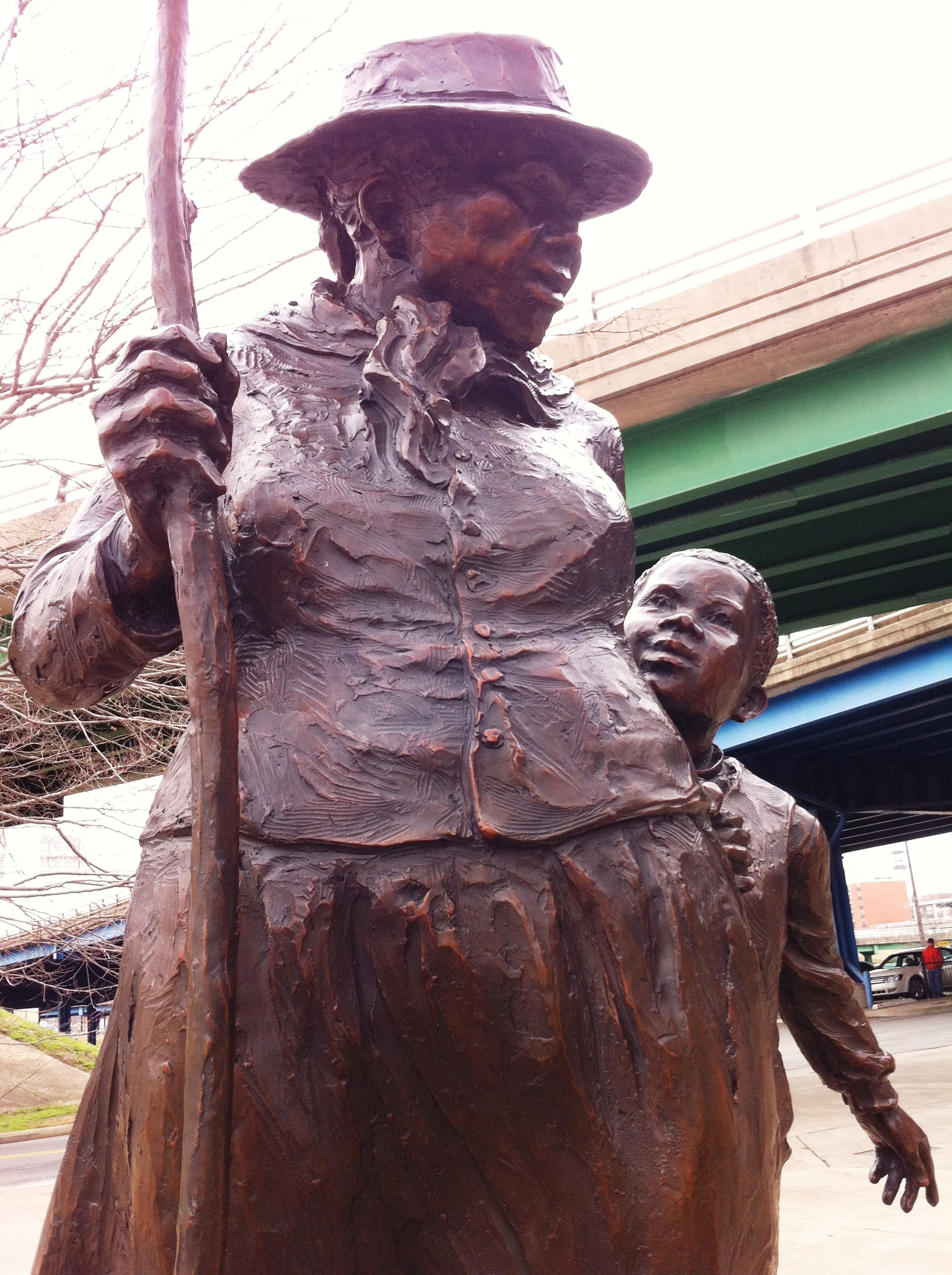
The bronze sculpture, by Jane DeDecker, depicts Miss Tubman grasping the hand of a young boy and leading him on a walk.  DeDecker captures both compassion and a steely determination in the features of Miss Tubman’s face.  The folds of their clothes indicate that they are on a journey.

Whether their walk is a part of the Underground Railroad or simply a walk along the path in post-war times is immaterial. Miss Tubman understood that there is always some form of oppression one must struggle against.
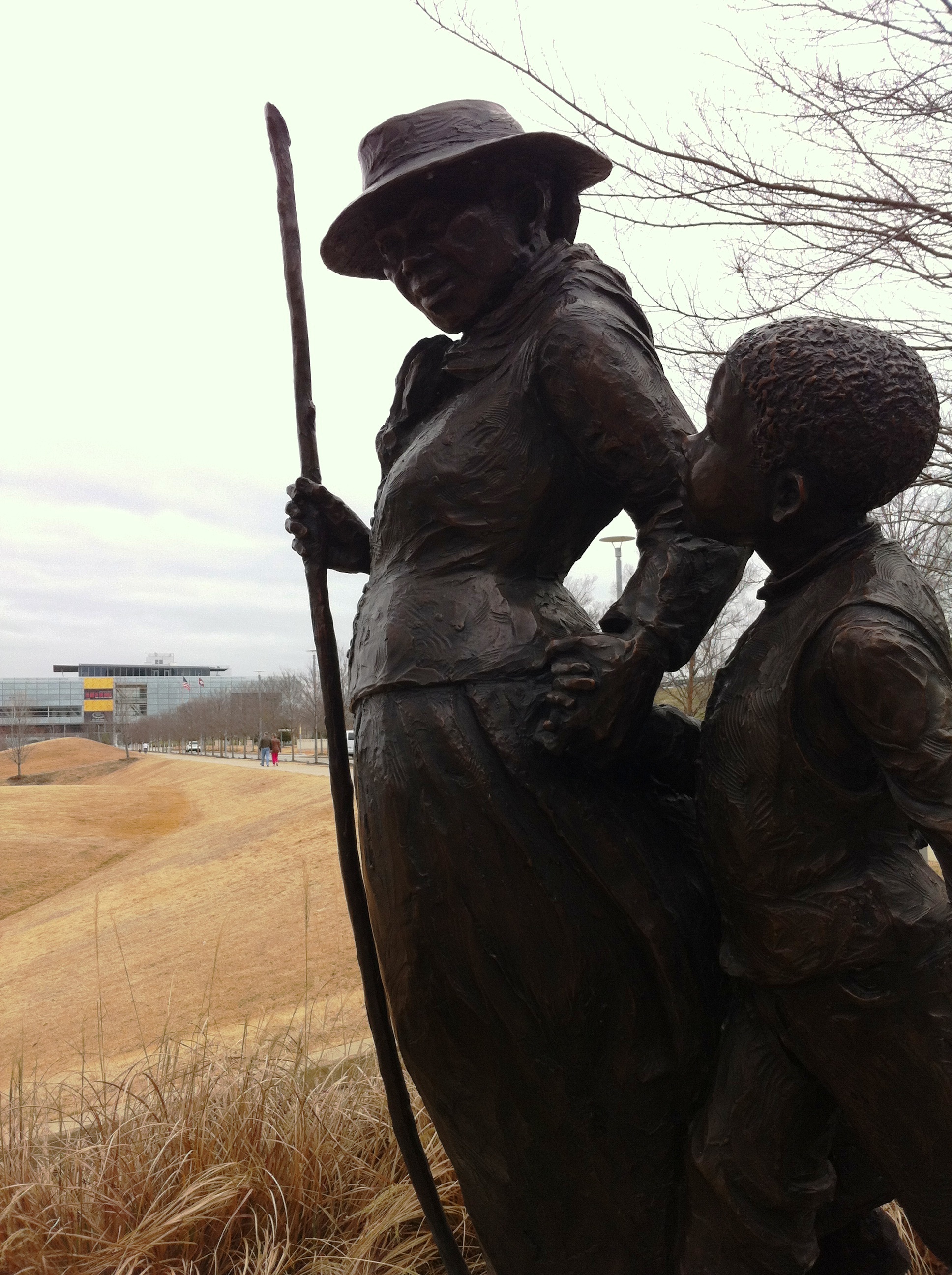
Etched into the base of the statue (and repeated on plaque on the pedestal) is a quote attributed to Miss Tubman.  “Children, if you are tired, keep going; if you’re hungry, keep going; if you’re scared, keep going. If you want a taste of freedom, keep going.”

The statue was originally located in Riverfront Park near the site of the current Game and Fish Nature Center.  It was relocated during the construction of that facility and now anchors the entrance to Clinton Presidential Park.  Harriet Tubman was a gift of Haskell and Peggy Dickinson to the City of Little Rock.

A Lincoln Viaduct Portrait

Photo courtesy of the Arkansas Historic Preservation Program

Photo courtesy of the Arkansas Historic Preservation Program

Since today is Abraham Lincoln’s birthday, it is a good day to pay tribute to the Lincoln Avenue Viaduct.  This arched bridge is traversed by thousands of cars each day, with most having no idea the name of the structure.  The Lincoln Avenue Viaduct is the arched bridge connecting LaHarpe with Cantrell Road which (literally) bridges downtown with the west along Highway 10.

The Lincoln Avenue Viaduct is a reinforced concrete rainbow arch bridge. It was opened at 2:05 p.m. on Friday, December 28, 1928, and, despite later alterations, it remains particularly well-preserved. The Missouri Pacific Railroad Company, considered the most important railroad company in the state, constructed the bridge amid a series of improvements in Little Rock made necessary by the damage wrought by the infamous spring floods of 1927.

Though the bride was constructed by the railroad, the City had to give authorization to do so, this was accomplished by the passing of Ordinance 4,335, at the May 28, 1928, City Council meeting.

Lincoln Avenue was one of several names for stretches of Highway 10 in Little Rock. By the 1960s, the areas west of the Lincoln Avenue viaduct were all renamed Cantrell in honor of the man who had developed much of the area west of the Heights. The longest stretch of the road already carried that name. There had been an effort to rename Highway 10 (including sections named Lincoln, Q, and Cantrell) in Little Rock for Senator Joseph Taylor Robinson in 1930. He declined the offer because he did not want to diminish the contributions of Mr. Cantrell.  Over time the entire stretch bore the name Cantrell.

The stretches east of the viaduct which involved a couple of names were renamed La Harpe Boulevard in honor of the French explorer who first saw the Little Rock.

Though the street has been renamed, the bridge still carries the name of the 16th President of the United States.

Little Rock Look Back – Abraham Lincoln

Abraham_Lincoln_November_1863On February 12, 1809, Abraham Lincoln was born in Kentucky.

Lincoln never visited Arkansas. In the 1860 election, he barely registered on the Arkansas election map. Arkansas counties went strongly for Southern Democratic candidate John Breckinridge.  John Bell, the Constitutional Union/Whig candidate ran strongly in Pulaski County and a scattering of other counties.  Neither Lincoln nor Northern Democratic candidate Stephen Douglas carried a county in Arkansas.  In 1864, though Arkansas was officially under control of the Union forces, the state had not been readmitted. Therefore no Arkansans voted for Lincoln that year.

As President, Lincoln did correspond with several Arkansans.  It is said that the polite written exchanges he had with former Mayors C. P. Bertrand and Gordon Peay were helpful in maintaining a fairly peaceful occupation of Little Rock by federal forces.

In the listing of Presidential Streets of Little Rock, Lincoln is omitted.  On first blush, this might seem to be intentional to skip the name of the President who oversaw the “occupation.”  However, if that were the case, then surely Johnson would have been left out as well since he was President during the final years of the federal military occupation.  In fact, there once was a Lincoln Street. A portion of what is now Cantrell/Highway 10 was named for Lincoln. It predated the other Presidential streets.  At the time the other streets were laid out, Lincoln was skipped because a street already bore the name.

Over time, Highway 10 had been given multiple names for various sections: Lincoln, Q, and Cantrell. In the 1930s, these names were consolidated into Cantrell which was the longest section. The name Lincoln was dropped. There were very few addresses on Lincoln, most of it was railroad property.  The viaduct connecting Highway 10 with LaHarpe still bears the name of Lincoln Avenue.

In 2008, Sam Waterston appeared at the Clinton School of Public Service to kick off the Abraham Lincoln Sesquicentennial celebration activities. The official launch was supposed to be elsewhere but was cancelled due to inclement weather. So it happened in Little Rock as Waterston appeared in a program reading letters and writings from throughout Lincoln’s lifetime.  In 1994, Waterstson had received a Tony Award nomination for starring in the Lincoln Center revival of Abe Lincoln in Illinois.

Little Rock Look Back: Mayor C. P. Bertrand

Bertra1On November 23, 1808, future Mayor Charles P. Bertrand was born in New York.  He was the son of Pierre and Eliza Wilson Bertrand; his father died in 1809 in an uprising in Haiti and his mother eventually remarried.  With her new husband, Dr. Matthew Cunningham, she and the family moved to Little Rock in 1820.

After apprenticing with family friend William Woodruff at the Arkansas Gazette, Bertrand opened the Arkansas Advocate newspaper.  He later studied law under Robert Crittenden and entered the legal profession.

In 1835-1836, he served as State Treasurer for the Arkansas Territory, and in 1836 as secretary for the first constitutional convention. He was a member of the Arkansas House of Representatives from 1840-1841 and 1844-1849.

Bertrand followed in his stepfather’s footsteps and became Mayor of Little Rock.  (Dr. Cunningham had been the first Little Rock Mayor in 1831.)  He was in office from January 1855 through January 1857, serving two one-year terms.  He later served on the City Council and filled in as acting mayor. (Another influence on his upbringing was studying under future Mayor Jesse Brown who taught at the first school in Little Rock.)

Bertrand, as acting mayor, was involved in the negotiations of the surrender of Little Rock to federal troops in 1863.  He also later corresponded with President Lincoln on behalf of Little Rock citizens.

Though a staunch Confederate, his good will toward the Union soldiers and federal officials is credited with helping to save Little Rock from the destruction which befell many other Southern cities.  He is also credited with delaying the start of the Civil War.  Prior to the attack on Fort Sumner, members of the Arkansas Militia were planning to attack the Federal Arsenal at Little Rock during the absence of Governor Rector.  This would have been viewed as an act of war.  Bertrand was able to dissuade them from the attack.  Had he been unsuccessful, the Civil War would have likely started in Arkansas instead of South Carolina.

He had put his considerable fortune into Confederate money during the war. At the Civil War’s conclusion, the family was financially ruined. Though they had vast land holdings, those would be sold off in parcels to pay for taxes.

Bertrand died August 27, 1865, shortly after the conclusion of the Civil War.  He, like his mother, step-father, and several other relatives, is buried in Mt. Holly Cemetery.

Red, White & Music – Wind Symphony Flag Day Concert

The Little Rock Wind Symphony’s annual Flag Day concert will take place this evening in MacArthur Park at 7pm.  Sponsored, in part by the MacArthur Museum of Arkansas Military History, the concert is the LRWS’s annual salute to the red, white, and blue.  Picnics are encouraged. There will also be free ice cream and free American flags to wave throughout the concert.

The musicians of the Little Rock Wind Symphony will perform the following selections:

arr. John Higgins: Back in the Good Old Days
Adam Gorb: Away Day
Aaron Copland : A Lincoln Portrait
      Brent Walker, narrator
John Philip Sousa: Washington Post
Edwin Eugene Bagley: National Emblem
Edwin Franko Goldman: The Chimes of Liberty
John Philip Sousa: Fairest of the Fair
Henry Fillmore: Americans We
Edwin Franko Goldman: On the Mall
Bob Lowden: Armed Forces Salute
Samuel Ward / Carmen Dragon: America the Beautiful
John Philip Sousa: The Stars and Stripes Forever

In case of rain, the concert will be played tomorrow evening.

Heritage Month – Lincoln Viaduct

ahpp_nom_lincolnaveviaduct_largeToday kicks off the start of the Memorial Day weekend.  Since Memorial Day grew out of the Civil War-based Decoration Day, today’s property is named for a Civil War leader: Abraham Lincoln. The Lincoln Avenue Viaduct is traversed by thousands of cars each day, with most having no idea the name of the structure.  The Lincoln Avenue Viaduct is the arched bridge connecting LaHarpe with Cantrell Road which (literally) bridges downtown with the west along Highway 10.

The Lincoln Avenue Viaduct is a reinforced concrete rainbow arch bridge. It was opened at 2:05 p.m. on Friday, December 28, 1928, and, despite later alterations, it remains particularly well-preserved. The Missouri Pacific Railroad Company, considered the most important railroad company in the state, constructed the bridge amid a series of improvements in Little Rock made necessary by the damage wrought by the infamous spring floods of 1927.

Though the bride was constructed by the railroad, the City had to give authorization to do so, this was accomplished by the passing of Ordinance 4,335, at the May 28, 1928, City Council meeting.

Lincoln Avenue was one of several names for stretches of Highway 10 in Little Rock. By the 1960s, the areas west of the Lincoln Avenue viaduct were all renamed Cantrell in honor of the man who had developed much of the area west of the Heights. The longest stretch of the road already carried that name. There had been an effort to rename Highway 10 (including sections named Lincoln, Q, and Cantrell) in Little Rock for Senator Joseph Taylor Robinson in 1930. He declined the offer because he did not want to diminish the contributions of Mr. Cantrell.  Over time the entire stretch bore the name Cantrell.

The stretches east of the viaduct which involved a couple of names were renamed La Harpe Boulevard in honor of the French explorer who first saw the Little Rock.

Though the street has been renamed, the bridge still carries the name of the 16th President of the United States.

The Lincoln Avenue Viaduct was added to the National Register of Historic Places on April 9, 1990.

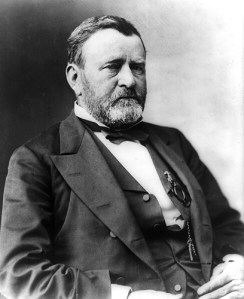
Little Rock Look Back: Ulysses S. Grant

US_Grant_f

On April 27, 1822, future US President Ulysses S. Grant was born.  His birth name of Hiram Ulysses Grant. There are various stories as to the reason for the change, but was is not in dispute is that as an adult his name was Ulysses Simpson Grant.  Simpson was his mother’s maiden name.

After leadership in the Mexican-American War, Grant retired from the Army. He rejoined after the Civil War broke out.  After success in Kentucky, Tennessee and the Siege of Vicksburg, President Lincoln promoted Grant to Commanding General of the US.  After the war ended, he led the Army’s efforts during Reconstruction.

Elected president in 1868 and reelected in 1872, Grant stabilized the nation during the turbulent Reconstruction period.  As President, he continued Reconstruction efforts as well as oversaw efforts to reduce frontier violence (though the Great Sioux War did take place during his presidency).  He restored relations with Great Britain and avoided war with Spain, but was unsuccessful in annexing the Dominican Republic. While he staved off immediate problems from the Panic of 1873, the country still fell into a five year economic depression.

Out of the White House for four years, he sought a return in 1880. He was not successful in obtaining the GOP nomination.  Likely in an effort to build support for his Presidential quest, he embarked on a nationwide tour.  On April 15, 1880, he spoke in Little Rock. It was his first visit to Arkansas either as a soldier or a politician.  He spoke at Concordia Hall (now part of the CALS campus) and stayed at the Capital Hotel during this visit. Though he had not visited previously, Grant did become the first Republican Presidential candidate to win Arkansas’ electoral votes in 1868; he repeated this feat in 1872. It would be 100 years later, with Nixon’s second term, that Arkansas would cast her electoral votes for the GOP nominee.

General Grant died on July 23, 1885.  Grant Street in Little Rock is named for him.