
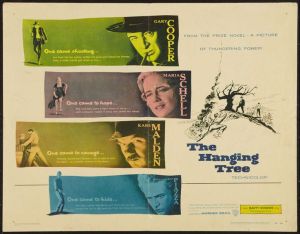
 On February 11, 1959, THE HANGING TREE was released. This film was the first Hollywood movie in with Little Rock native Ben Piazza appeared. For the film, Piazza received a coveted “and introducing Ben Piazza” credit.
The movie starred Oscar winners Gary Cooper and Karl Malden, along with Maria Schell. Future Oscar winner George C. Scott, was fifth billed for his scenery chewing role of a religious zealot.
The title song, “The Hanging Tree,” written by Jerry Livingston and Mack David, was sung by Marty Robbins in the film. It was nominated for the Oscar for Best Song.
Filming began in June 1958 in Washington state. Shooting took place from June through August 1958 mainly near Yakima, Washington. The film was directed by Delmer Daves, who was probably best known as screenwriter of Love Affair and director of 3:10 to Yuma. In conjunction with filming The Hanging Tree, Piazza appeared in a TV special on western movies. Most of the others appearing in the special were well-established Hollywood western personalities including Little Rock natives Bronco Billy Anderson and Gail Davis.
The Hanging Tree had a budget of $1.35 million ($11.5 million today—about half of the typical modest film budget). A good portion of this expense was the construction of a mining town. Once production began, Daves became ill and had to be hospitalized for ulcers. Co-star Karl Malden was approached to complete the film. He had recently finished his first directing assignment. He had reservations, but agreed to direct because of support of Cooper. (There are discrepancies as to the length of time Daves was out of commission.)
Ben received positive notices. One reviewer referred to him as being a “laconic, doe-eyed rebel.” Another said he was a “handsome and mean-looking boy…with curls like a golden poodle.” Several reviewers referenced James Dean when discussing Piazza in a positive light.
The film was released to respectful notices in February 1959. It earned around $2.2 million, which meant it turned a profit.
 Probably the largest gathering of Oscar winners and Oscar nominees in Little Rock’s history took place in November 2004.
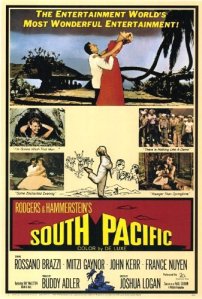 Written for the stage by Oscar winners Richard Rodgers and Oscar Hammerstein II, along with Oscar nominee Joshua Logan, in 1958 South Pacific was the fourth Rodgers and Hammerstein stage musical to make it to the Silver Screen. With the female leading character, Nellie Forbush, hailing from Little Rock, there are references to Arkansas and its capital city throughout the film.
 It is Oscar month, so it is fitting to highlight at Arkansas’ own Academy Award winning actress, Mary Steenburgen on her birthday. She was born on February 8, 1953, in Newport, Arkansas. After moving to North Little Rock as a schoolgirl, she had her first starring role as Emily in the 1971 Northeast High School production of Our Town, which was the new school’s first play.
 On February 7, 2012, Academy Award-winning actor Geena Davis spoke in Little Rock. She was hosted by the University of Arkansas Clinton School for Public Service and the William J. Clinton Foundation.
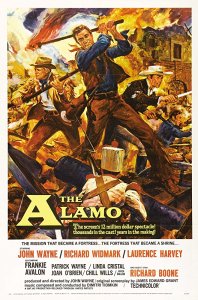 One of the early settlers in Little Rock was a man from Tennessee named Davy Crockett. He did not stay in Little Rock very long. He and several others ventured to the Republic of Texas. His final days are depicted (with more liberties than the original Texans had under Mexican control), in the film The Alamo.
 On April 5, 1965, the Academy Award for Best Documentary, Short Subject went to the film “Nine from Little Rock.”
 Little Rock Culture Vulture