
Black History Month Spotlight – Henri Linton

bhm HenriHenri Linton is a nationally known painter and a well-respected art educator.   Born in Alabama in 1944, he began painting and visiting museums as a young man.  He paid for art supplies by painting signs and shining shoes. After entering a national art contest as a teenager, he won a four-year scholarship to the Columbus College of Art and Design in Ohio. Linton earned a Bachelor of Fine Arts from Boston University and a master’s degree in art from the University of Cincinnati Graduate School of Fine Arts.

In 1969, the chairman of Arkansas AM&N College (later UAPB) art department, John Howard, offered Linton a position on the faculty. With Howard as his mentor, Linton began a career teaching aspiring artists. When Howard retired as chairman in 1980, Linton took the position.

In 1996 and 2000, he was featured in solo shows at the Arkansas Arts Center.  His work is displayed throughout the state, including in public collections at  UAMS, the Winthrop Rockefeller Foundation and the Arkansas Arts Center. He has highlighted some of his works in a book he co-authored, The Art of Henri Linton: Sequences in Time and Space (2003).

Linton also developed UAPB’s University Museum and Cultural Center. Gathering historical photographs, papers, annuals, books, newspaper clippings, tokens, mementos, and a variety of other artifacts, Linton organized, designed, and helped construct all the displays at the museum, which houses Keepers of the Spirit: The L. A. Davis, Sr. Historical Collection, which documents the history of UAPB.

In 2001, Henri Linton was inducted into the Arkansas Black Hall of Fame.  For more on Henri Linton and other inductees into the Arkansas Black Hall of Fame, visit the permanent exhibit at the Mosaic Templars Cultural Center. That museum is an agency of the Department of Arkansas Heritage.
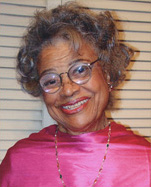
Black History Month Spotlight: Gertrude Hadley Jeannette

bhm gertrudePlaywright, producer, director, and actress of the stage and screen, Gertrude Hadley Jeannette, was born in Urbana, on November 28, 1914, to Willis Lawrence Hadley and Salley Gertrude Crawford Hadley. She attended Dunbar High School in Little Rock. Just before her high school graduation, Jeannette decided that she wanted to get married instead of attending Fisk University, as she had previously planned.  She and Joe Jeannette II, a prizefighter and the president of the Harlem Dusters, a motorcycle club, eloped to New York City in 1934.

In New York City, Jeannette learned to drive; in 1935 she became the first woman to get a license to drive a motorcycle. In 1942, because of the shortage of male taxicab drivers caused by the war, Jeannette became the first woman to drive a cab in New York City. During this time, Jeannette decided to further her education; she took bookkeeping classes in the basement of Abyssinian Baptist Church, and speech classes at the American Negro Theatre in order to remedy her speech impediments.

In 1950, she appeared on television in James Weldon Johnson’s Gods Trombone on CBS’s General Electric Hour; she had replaced Pearl Bailey, who was originally cast in that role. As a result, Jeannette continued to work both in the theatre and in film and television. Some of Jeannette’s film credits included ShaftBlack Girl, and Cotton Comes To Harlem.  Her Broadway credits include Lost in the Stars, The Long Dream, Nobody Loves an Albatross, The Amen Corner, Vieux Carre and a revival of The Skin of Our Teeth.  Off Broadway she starred in To Be Young, Gifted and Black.

In 1979, Jeannette founded the H.A.D.L.E.Y. Players (Harlem Artists Development League Especially for You) in the Harlem neighborhood of New York City. The mission of the H.A.D.L.E.Y. Players was to give artists a chance to develop their talents and skills in the theatre, and to enrich the cultural life in Harlem. Jeannette went on to direct, produce, and write her own plays, as well as the works of other playwrights.

Jeannette was presented with several awards for her work and accomplishments. In 1991, Jeannette was honored as a living legend at the National Black Theatre Festival in Winston-Salem, North Carolina, and in 1998, she was honored with the Lionel Hampton Legacy Award. Jeannette was inducted into the Arkansas Black Hall of Fame in 1999, and in 2002, she received the prestigious Paul Robeson Award from the Actor’s Equity Association. Jeanette, though retired, remained active and celebrated member of the New York theater scene well into her nineties.

For more on Gertrude Hadley Jeannette and other inductees into the Arkansas Black Hall of Fame, visit the permanent exhibit at the Mosaic Templars Cultural Center. That museum is an agency of the Department of Arkansas Heritage.
Black History Month Spotlight – Louis Jordan

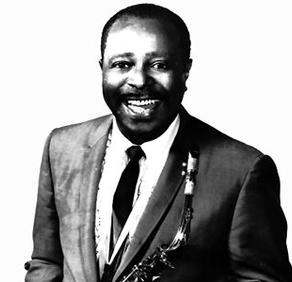
bhm louis-jordanSince tonight is the 57th Grammy Awards presentation, today’s spotlight looks at a musician who has several entries in the Grammy Hall of Fame – Louis Jordan.

Louis Thomas Jordan was born on July 8, 1908 in Brinkley. The son of a musician, he learned to play the saxophone as a youth and majored in music later at Arkansas Baptist College and performed with Jimmy Pryor’s Imperial Serenaders in Little Rock. He also toured with the famed Rabbit Foot Minstrels, who were the backing musicians for a number of blues legends. In the mid-Thirties, Jordan, now an accomplished jazz saxophonist, moved to New York, working with such jazz greats as Louis Armstrong. He joined drummer Chick Webb’s swing band in 1936.

After honing up his singing skills, he left the band in 1938 to start up his own band. Called the Elks Rendez-Vous Band, after the name of the club where they were playing a long-term engagement, Jordan signed with the Decca label. The band’s name was changed to the Tympany Five in 1939 and between 1941 and 1949; they had a series of hit records that were distinct of the “jump style” rhythm and blues style of music. These included “Choo Choo Cha Boogie,” “Saturday Night Fish Fry,”  and “Let The Good Times Roll.”

Jordan’s hits continued into the early 1950s, by which time his popularity on the R&B scene was enormous. His musical influence was far more reaching, with future rock ‘n’ roll stars like Bill Haley and Chuck Berry, fashioning their sound after Jordan’s style, particularly his vocal approach, song structures and lyrics and treatment of the guitars and horns. When Jordan left Decca in 1954, his popularity began to diminish quickly.

He continued to record and tour throughout the 1950s and 1960s, but rock ‘n’ roll, the music he helped foster, was a major contributing factor in his downfall. Louis Jordan died from heart failure in Los Angeles on February 4, 1975. In the early 1990’s, a revue called Five Guys Named Moe, based on Jordan’s music, was performed on London’s West End and New York’s Broadway.

Louis Jordan was inducted into the Rock ‘n’ Roll Hall of Fame in 1987.  He was posthumously inducted into the Arkansas Entertainers Hall of Fame in 1998 and the Arkansas Black Hall of Fame in 2005. In 2008, the centennial year of his birth, he was featured on a postage stamp.

For more on Louis Jordan and other inductees into the Arkansas Black Hall of Fame, visit the permanent exhibit at the Mosaic Templars Cultural Center. That museum is an agency of the Department of Arkansas Heritage.

Black History Month Spotlight: Hazel Shanks Hynson

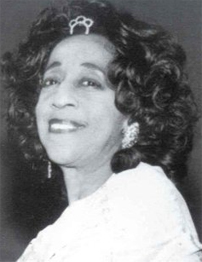
bhm hazelEducator and Musician Extraordinaire Hazel Shanks Hynson was a renowned educator and an extraordinary musician who through the years trained many accomplished musicians including the late jazz musician Art Porter.

Hynson earned a Bachelor of Arts degree in music, with a major in piano, from Atlanta University. She completed further study in piano, including advanced theory and harmony, with master musicians and instructors hailing from Oberlin College, the University of London and the Julliard School of Music, to cite a few When she moved to Little Rock, Hynson joined Mt. Zion Baptist Church where she served as its pianist for more than 25 years. Through her Hazel Shanks Hynson Music Studio, she presented her students in memorable piano recitals each year with as many as 20 baby grand pianos in use.

Recognized nationally for her outstanding musicianship, Hynson served as pianist for the Arkansas Baptist State Convention for 26 years and for the National Baptist Convention for 27 years. She also served a stint as pianist and choir director for Arkansas Baptist College which awarded Hynson an honorary doctorate in 1990 and named its multi-purpose building in her honor.

A charter and Golden Life member of the Little Rock Alumnae Chapter of Delta Sigma Theta Sorority, Inc., she was named Delta of the Year in 1992. She is also a charter member of the Little Rock chapter of The Links, Inc.

Known as a grand lady of grace and elegance, a superb teacher and pianist, arranger, composer, and musician’s musician, Hazel Shanks Hynson’s love of music has touched and shaped the lives of people across the globe.

In 2004, she was inducted into the Arkansas Black Hall of Fame.  For more on Hazel Shanks Hynson and other inductees into the Arkansas Black Hall of Fame, visit the permanent exhibit at the Mosaic Templars Cultural Center. That museum is an agency of the Department of Arkansas Heritage.

 

Black History Month Spotlight – Lawrence Hamilton

LawrenceHamiltonLawrence Hamilton, the son of the Dr. Oscar and Mae Dell Hamilton, was born in the small southwest Arkansas town of Foreman With an interest in music stemming from childhood, Hamilton earned a music scholarship to attend Henderson State University in Arkadelphia where he studied piano and voice He graduated in 1976 with a bachelor’s degree in music education.

From Arkansas, Hamilton traveled to Florida to work as a performer at Walt Disney World in Orlando, Florida where he would meet talent manager, Tommy Molinaro. This fateful meeting would prove to be a life-changing encounter, as Molinaro would invite Hamilton to come to New York to audition for the famed actor/director Geoffrey Holder. This marked the beginning of Hamilton’s bold and creative career in the performing arts, leading to performances on Broadway and on tours in Sophisticated Ladies, The Wiz, Uptown – Its Hot, Porgy and Bess, Big River, Play On!, and Jelly’s Last Jam among others. Perhaps his crowning achievement was starring in Ragtime.

Hamilton has been a member of the Southern Ballet Theater, Brooklyn Dance Theater, Ballet Tap USA, and the Arkansas Opera Theater He has performed in concert with the legendary Lena Horne at the White House for President and Mrs. Ronald Reagan, and at the Vatican for Pope John Paul II. Hamilton’s career also led to a stint as musical director for the renowned opera legend Jessye Norman, as well as vocal coach/arranger for the pop group New Kids on the Block

Upon his return to Arkansas, Hamilton served for several years as director of choral music at Philander Smith College. He also appeared in several plays at the Arkansas Repertory Theatre.  In addition, he performed at countless concerts, benefits and galas throughout Arkansas.  In 2003, he was inducted into the Arkansas Black Hall of Fame.  In 2008, he was appointed to the Little Rock Mayor’s Task Force on Tourism.

Hamilton died in New York in April 2014 due to complications from surgery.  Just weeks prior to the surgery, he had appeared in August Wilson’s The Piano Lesson in Cape Fear, North Carolina.  He had also starred in that play at Arkansas Rep a few years earlier.

For more on Lawrence Hamilton and other inductees into the Arkansas Black Hall of Fame, visit the permanent exhibit at the Mosaic Templars Cultural Center. That museum is an agency of the Department of Arkansas Heritage.


Black History Month Spotlight – E. Lynn Harris

bhm lynnE. Lynn Harris was born in Flint, Michigan and raised, along with three sisters, in Little Rock. A graduate of Hall High School, he attended the University of Arkansas at Fayetteville where he was the school’s first black yearbook editor, the first black male Razorbacks cheerleader, and the president of his fraternity. He graduated with honors with a degree in journalism.

Harris sold computers for IBM, Hewlett-Packard, and AT&T for 13 years while living in Dallas, Washington, D.C. and Atlanta. He finally quit his sales job to write his first novel, Invisible Life, and, failing to find a publisher, he published it himself in 1991 and sold it mostly at black-owned bookstores, beauty salons, and book clubs before he was “discovered” by Anchor Books. Anchor published Invisible Life as a trade paperback in 1994, and thus his career as an author was “officially” launched.

Invisible Life was followed by Just As I Am (1994), And This Too Shall Pass (1996), If This World Were Mine (1997), and Abide With Me (1999), all published by Doubleday. All of Harris’s books were bestsellers. Harris’s sixth novel, Not A Day Goes By (July 2000) debuted at #2 on the New York Times bestseller list and was a #1 Publishers Weekly bestseller for two consecutive weeks. His seventh novel, Any Way the Wind Blows (July 2001), also debuted at #2 on the New York Times bestseller list. His other books included What Becomes Of The Brokenhearted – A Memoir (2003); I Say a Little Prayer (2006); Just Too Good To Be True (2008); Basketball Jones (2009); Mama Dearest (2009) (posthumously released) and In My Father’s House (2010) (posthumously released).

In 1999, the University of Arkansas honored Harris with a Citation of Distinguished Alumni for outstanding professional achievement, and in October 2000, he was inducted into the Arkansas Black Hall of Fame.  He died in July 2009 while in California for meetings. An autopsy determined it was due to heart disease.

For more on E. Lynn Harris and other inductees into the Arkansas Black Hall of Fame, visit the permanent exhibit at the Mosaic Templars Cultural Center. That museum is an agency of the Department of Arkansas Heritage.


Black History Month Spotlight – Dr. Erma Glasco Davis

Photo by Staton Breidenthal for the Arkansas Democrat-Gazette

Photo by Staton Breidenthal for the Arkansas Democrat-Gazette

Erma Lee Glasco Davis was born in Keo, Arkansas and was reared in south central Little Rock, also known as the South End.  She is a product of the Little Rock Public School System, graduating from Dunbar High School in May, 1945.  She received her Bachelor of Science degree from AM&N College (now the University of Arkansas at Pine Bluff).  A year or so after the Central High desegregation crisis of 1957, she and her husband moved to Detroit, Michigan and the Doctor of Philosophy degree from the University of Michigan at Ann Arbor.

Most of Dr. Davis’ professional career was spent in Detroit, Michigan  as a teacher, counselor and administrator.  She retired from an administrative position in the Detroit Public Schools’ Management Academy.  She also taught as an adjunct professor at Marygrove  College in Detroit.  While in Detroit, Dr. Davis has had a wealth of community involvement, serving in leadership positions on boards and committees and in organizations ranging from the NAACP to Alpha Kappa Alpha sorority.  In 1979, she co-chaired the Mayor’s Education Task Force for Detroit’s International Year of the Child event.  In 1987, she won the Spirit of Detroit Award, the city’s highest community-service award.

Dr. Davis is a past national president of the National Dunbar Alumni Association, and is co-author of a book about the school, Paul Laurence Dunbar High School of Little Rock.  She has been instrumental in marrying the goals of the association with those of the Mosaic Templars Cultural Center, the state-funded museum which showcases the history and achievements of black Arkansans.  A fruit of that marriage is the museum’s Dunbar exhibits on the museum’s first floor.  She is passionate about educating people on Dunbar’s role in the state’s history.

In 1990, Dr. Davis moved back to Arkansas form Michigan.  After her return, she quickly busied herself with community work, sitting on the boards of the Central High Museum and the Arkansas Humanities Council; taking two turns as chairman of the board of the Historic Arkansas Museum Foundation; she also chaired the gala for the opening of the Mosaic Templars Cultural Center.  In addition, Dr. Davis worked nearly four years as a founding volunteer for the Clinton Presidential Central.  In 2005, she was appointed by then-Governor Mike Huckabee to the State Review Committee for Historic Preservation, and reappointed by Governor Mike Beebe in 2007.  In 2009, she was inducted into the Arkansas Black Hall of Fame.

For more on Dr. Davis and other inductees into the Arkansas Black Hall of Fame, visit the permanent exhibit at the Mosaic Templars Cultural Center. That museum is an agency of the Department of Arkansas Heritage.