Women’s History Month – Sue Cowan Williams

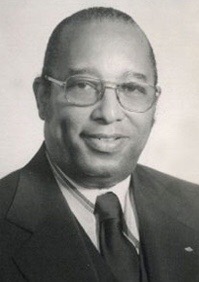
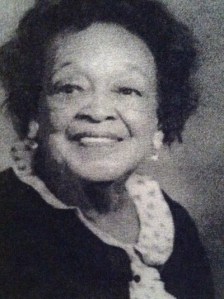
Sue Cowan Williams was an educator who fought for fair treatment.

After being educated in Alabama and Illinois, she returned to Arkansas, and began her teaching career in 1935 at Dunbar High School in Little Rock.  In 1942, Williams became the plaintiff in a lawsuit aimed at equalizing the salaries of black and white teachers in the Little Rock School District. The NAACP’s Legal Defense Fund, including its director-counsel Thurgood Marshall, assisted in the case. The trial ended after a week with a verdict against Williams, and her teaching contract was not renewed for the 1942-43 school year. Other black educators left the school as a result of their involvement in the lawsuit.

In 1945, Williams successfully appealed the verdict to the Eighth Circuit Court of Appeal in St. Louis, which ordered equal pay for black and white teachers in Little Rock. Dr. Christophe, the new principal of Dunbar High School, demanded Williams’s reinstatement in the fall of the same year, but it was not granted until 1952. In the intervening years, she taught classes at what is now UAPB and Arkansas Baptist College as well as at the Ordnance Plant in Jacksonville.  Upon returning to the LRSD, Williams taught at Dunbar until 1974, when she retired. She died in 1994.

The Central Arkansas Library Branch located in the Dunbar neighborhood was named for her when it opened in 1997.  She is honored with inclusion in the Arkansas Civil Rights Heritage Trail.

Women’s History Month – Dr. Joycelyn Elders

Being the second female and first African American female to serve as Surgeon General, was just another milestone in the career of Dr. Joycelyn Elders.
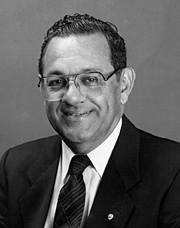
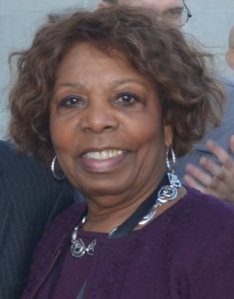
In 1960, she graduated from the University of Arkansas for Medical Sciences. Though not the first African American female to do so, she was very much in a minority for both her race and her gender.  In 1967, she would return to UAMS as a faculty member.

After two decades of service as a physician and educator, Governor Bill Clinton appointed her to lead the Arkansas Department of Health in 1987.  She was the first African American woman to lead that department.  She led that department until 1992.  At that point in time, President Bill Clinton tapped her to be Surgeon General.

Upon leaving the post of Surgeon General, she returned to UAMS as a professor. She is now a professor emeritus.  Dr. Elders is also in demand as a lecturer and panelist.

She has been inducted into the Arkansas Black Hall of Fame, Arkansas Women’s Hall of Fame, and the Arkansas Civil Rights Heritage Trail.

Little Rock Look Back: Suit filed to integrate Little Rock facilities

Attorney Wiley Branton, who filed the law suit.

On March 8, 1962, 22 members of the Council on Community Affairs filed a lawsuit in U.S. District Court against the city Board of Directors for the desegregation of “public parks, recreational facilities, Joseph T. Robinson Auditorium and all other public facilities.”  The members included journalists, dentists, attorneys, school teachers and other members of Little Rock’s African American professional class.  Attorney Wiley Branton, Sr., filed the suit.

Though the City’s Auditorium Commission was mentioned in the suit, they were not served with papers. So when media contacted them, they made no comment.

Historian John A. Kirk has written, “Members of the City Board were willing to admit that the desegregation of public facilities was ‘a foregone conclusion’ if the case went to court, but they remained committed to fighting the lawsuit if only to buy time to devise other methods to avoid desegregation.”

The decision was rendered in February 1963 that the City must integrate its public facilities.

In 1951, the City’s library facilities had been integrated followed by the bus system in 1956. Both of these had been accomplished without incident.  Of course the same was not said for the integration of the public schools in 1957.

In 1961, there had been attempts to have Robinson Auditorium integrated after Duke Ellington threatened to cancel a concert rather than play to a segregated crowd.  The Auditorium Commission refused to change its policy, and Ellington did not play the concert.

Based on efforts of the Council of Community Affairs working with white business leaders, downtown lunch counters and businesses were integrated starting in January 1963.  The efforts of the Council of Community Affairs and the white business leaders are commemorated in the Arkansas Civil Rights Heritage Trail with medallions in front of the Little Rock Regional Chamber building.

Women’s History Month – Lottie Shackelford, first woman to serve as Little Rock mayor

Lottie at Civil RightsFirst woman mayor of Little Rock:  Lottie Shackelford

Lottie Shackelford served as mayor of Little Rock from January 1987 until December 1988. She was Little Rock’s 68th mayor and the first woman to serve in that capacity.  She was first appointed to the Little Rock Board of Directors in September 1978 to fill an unexpired term.  She later was elected in her own right and served until December 1992.  She was the first African American woman to ever serve on a governing body for the City of Little Rock.

She later served two terms on the Little Rock Airport Commission.  She also served as Vice Chairman of the Democratic National Committee from 1989 until 2014. She is the longest serving vice chair of the party.  She has been a delegate to every Democratic National Convention since 1980.

In recognition of all of her achievements, she has been included in the Arkansas Civil Rights Heritage Trail, the Arkansas Black Hall of Fame, and the Arkansas Women’s Hall of Fame.

Women’s History Month – Irma Hunter Brown, African American woman elected to Arkansas General Assembly

glass-brownFirst African American woman to be elected to the Arkansas General Assembly: Irma Hunter Brown

Mrs. Brown served in the House of Representatives from January 1981 until January 2003.  She was the first African American woman to be elected to the Arkansas General Assembly in either house.

In 2003, she was sworn in as a State Senator, becoming the first African American woman in that body, as well.  In recognition of these achievements and her service in the Arkansas General Assembly from 1981 until 2009.

In 2015, she was included in the Arkansas Civil Rights Heritage Trail.  Other honors include recipient of the Distinguished Citizen award, Philander Smith College, Little Rock, 1981; fellow, Institute Politics, 1975.

Little Rock Look Back: Charles Bussey

Future Little Rock Mayor Charles Bussey was born on December 18 in 1918. 

Throughout his life he was a trailblazer. He was the first African American Sheriff’s Deputy in Pulaski County and expanded the Junior Deputy program into the African American community.

In 1968 he became the first African American elected to the Little Rock City Board of Directors. He was not the first African American to run for the City Board, but he was the first to win a race. Mr. Bussey sought support not just from the African American community, but from all sectors of Little Rock.

Apparently, while campaigning in 1968, he deliberately went into the Arkansas headquarters of segregationist presidential candidate George Wallace to see about leaving campaign literature. A hulking man with a broad smile, he shocked the young receptionist. He was undoubtedly the first (and probably last) African American to enter that campaign headquarters.

He served from 1969-1977 and again from 1979 through 1991. In 1981 he was selected by his fellow City Directors to serve as Little Rock’s Mayor, which made him the first African American Mayor of Little Rock. He served as Vice Mayor of Little Rock for a total of 8.5 years which is the longest of anyone in the City’s history.

Throughout his lifetime Mayor Bussey championed youth outreach efforts. He also was active in the Arkansas Municipal League, National League of Cities, West Little Rock Rotary Club, Elks, Shriners and many other organizations.

In 2006 he was posthumously inducted into the Arkansas Black Hall of Fame. The previous year, 20th Street in Little Rock was renamed in his honor. In 2015 he was included in the Arkansas Civil Rights Heritage Trail.

Little Rock Look Back: Lottie Shackelford

Lottie at Civil RightsWhile this headline may say “Little Rock Look Back,” Lottie Shackelford is still very much focused on the present and the future!

On April 30, 1941, future Little Rock Mayor Lottie Shackelford was born. Throughout her career in public service she has been a trailblazer.

Active in community activities and politics, she ran for the City Board in 1974 and lost.  But she was appointed to the Little Rock City Board in September 1978 to fill a vacancy.  This made her the first African American woman to serve on he City Board, and indeed on any governing board for the City (during Reconstruction, there were at least three African Americans on the City Council, but they were all men.) She was subsequently elected to a full-term on the City Board in 1980 winning 55% of the vote over three male candidates.

She was subsequently re-elected in 1984 (unopposed) and in 1988 (with 60% of the vote).

In January 1987, Shackelford became the first female mayor of Little Rock when she was chosen by her colleagues on the City Board to serve in that position. She was Mayor until December 1988.

From 1982 until 1992, she served as Executive Director of the Arkansas Regional Minority Purchasing Council.  She left that position to serve as Deputy Campaign Manager of Clinton for President.  She subsequently served on the Clinton/Gore transition team. She later served on the Overseas Private Investment Corporation from 1993 to 2003. She was the first African American to be in that position.

A graduate of Philander Smith College, she has also studied at the Arkansas Institute of Politics at Hendrix College and the Kennedy School of Government at Harvard University.

Mayor Shackelford has also served on numerous boards including the Little Rock Airport Commission, Philander Smith College, Chapman Funds (Maryland) and Medicis Pharmaceutical Corporation (Arizona).  She has been the longest serving Vice-Chair of the Democratic National Committee.

Mayor Shackelford was in the first class of inductees for the Arkansas Black Hall of Fame.  In 2015, she was inducted into the Arkansas Civil Rights Heritage Trail.