Heritage Month – Beal-Burrow Building

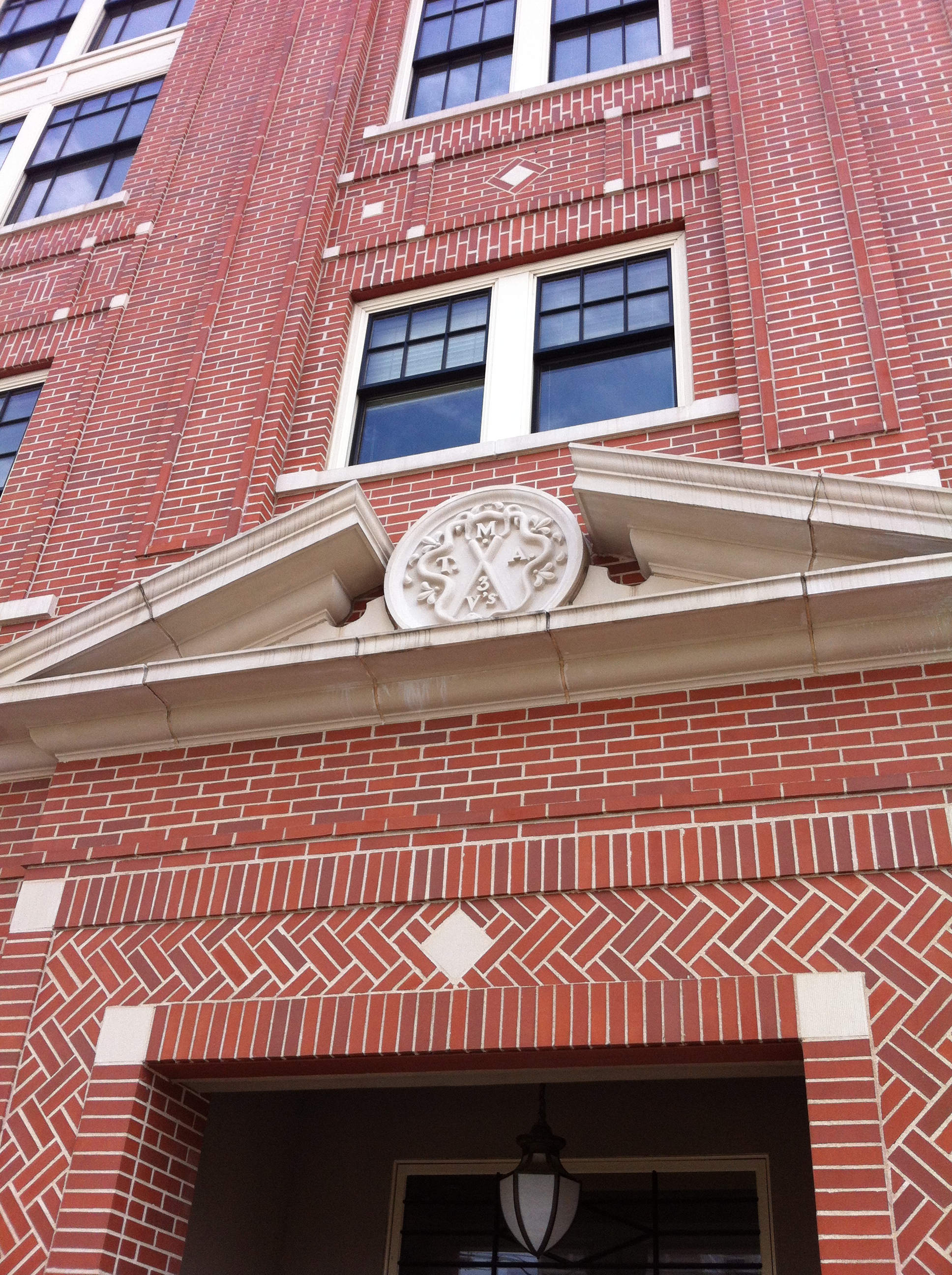
Beal BurrowConstructed in 1920, the Beal-Burrow Dry Goods Company Building is believed to have been designed by the architectural firm of Charles Thompson and Thomas Harding (only mechanical drawings are present in the Thompson Archives).

The original owner and user, the Beal-Burrow Company, was founded in 1913 as a wholesale operation and quickly gained prominence on a regional level.  The location of their office and warehouse facilities near the intersection of Main and Markham Streets served to anchor the northern edge of Little Rock’s commercial district.  By 1926, the firm had begun to manufacture work clothes and several floors of this building were devoted to that industry.

In 1955, the Archer Drug Company purchased the building from Berry Dry Goods Company, another wholesale establishment that had earlier bought out the Beal-Burrow partnership.

It is presently part of the Block 2 Development which consists of commercial space on the first floor and loft apartments on upper floors. The Little Rock Tech Park is operating out of space on the first floor of this building.

It was listed on the National Register of Historic Places on June 26, 1995.
Heritage Month – Baer House

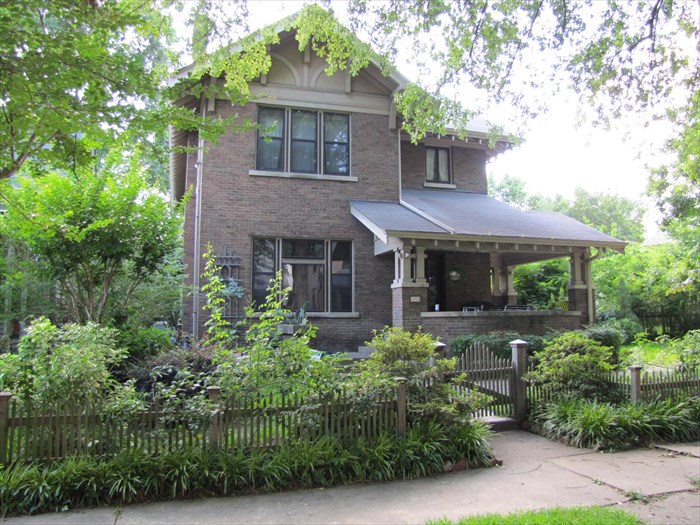
Baer HouseLocated at 1010 Rock Street, the Baer House was designed by the Charles Thompson firm in 1915.

Located in the MacArthur Park Historic District, the house displays a Craftsman Style influence in the abundant use of bracketing and the unusual paired squat box columns resting on brick piers which support the porch, The house has taken an additional historic significance within the district due to the discovery of the original drawings. The Baer House is also an important component of the streetscape and is significant in its representation of the firm’s much used Craftsman design.

It was added to the National Register of Historic Places on June 10, 1975.

Heritage Month – Augustus Garland House

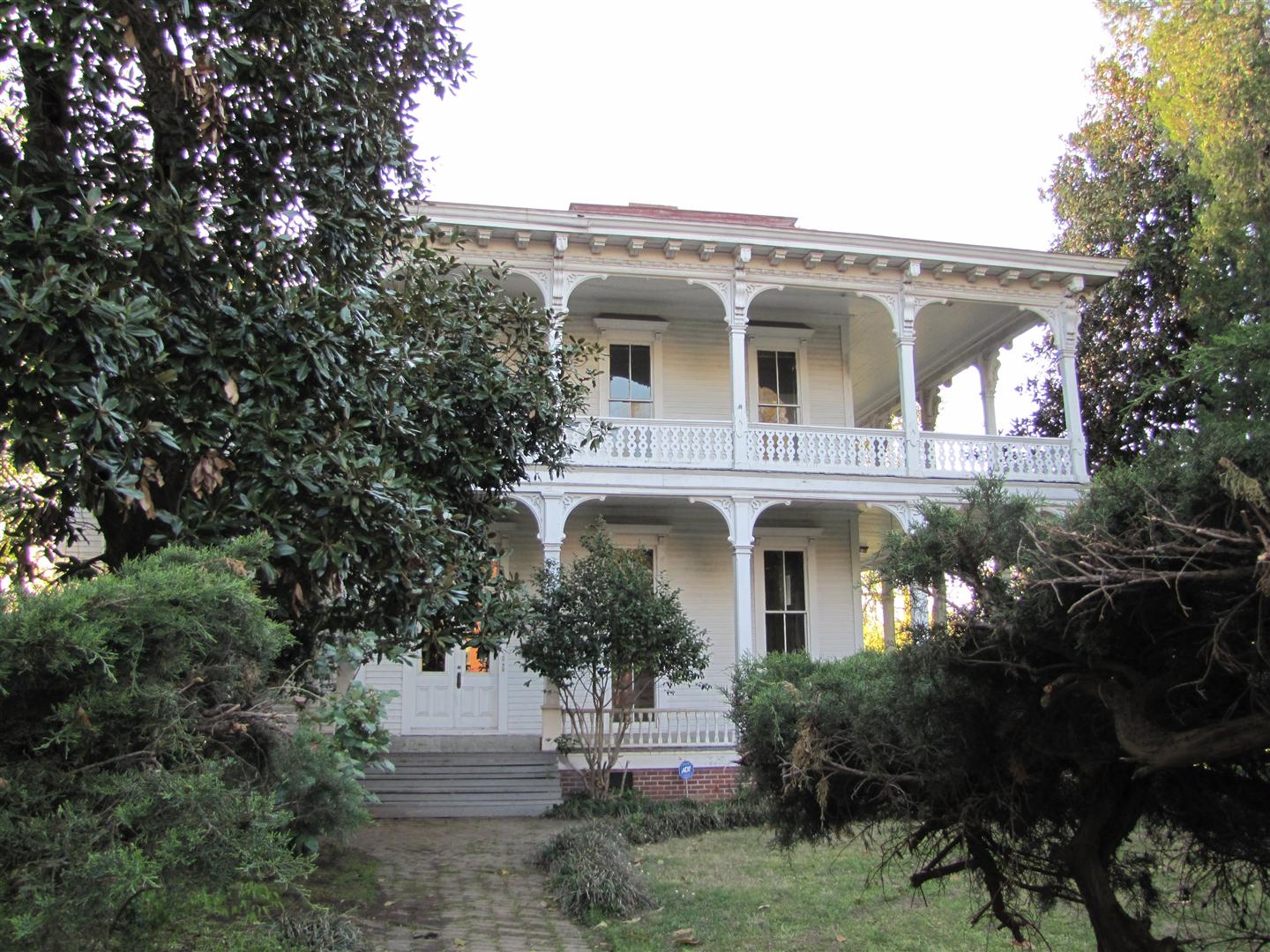
Augustus Garland HouseThe Augustus Garland House, also known as the Garland-Mitchell House, is located at 1404 Scott Street.

Built in 1873, the house has undergone few alterations during the last century. It appears much the same today as when Governor Augustus H. Garland and his family lived there in the 1870’s.  The dominant feature of the house is the two story ell-shaped gallery.

Even though the Garland-Mitchell House has been divided into three separate apartments, the interior still retains its architectural integrity. The wide central hallway which once bisected the entire first floor of the house now terminates at a wall under the stairs which was added in the 1940’s.

Because of the prominent two story porches which are reminiscent of nineteenth century riverboats, the Garland-Mitchell House is locally referred to as “steamboat Gothic” architecture; however, it also has elements of the Italianate Victorian style.

Not only is the building architecturally significant, but as the residence of Augustus Garland, it has other significance.  Augustus Hill Garland was an Arkansas lawyer and politician. He was a senator in both the United States and the Confederate States, served as 11th Governor of Arkansas and as Attorney General under President Cleveland. He was the first Arkansan to serve in the President’s cabinet (and would remain the only one until the Clinton administration). Later, the house served as the residence of Charles Brough while he served as Governor of Arkansas.

It was added to the National Register of Historic Places on June 10, 1975.


Heritage Month – Leiper-Scott House

Leiper ScottMay is Heritage Month in Arkansas.  This month, the Culture Vulture will feature properties on the National Register of Historic Places which are located in Little Rock.  First is the Leiper-Scott House.

The Leiper-Scott House is a one-story structure located at 312 South Pulaski, two blocks east of the State Capitol.

It was built on a lot which slopes abruptly to the rear. Therefore its basement on the rear or west elevation is exposed. The building has a cottage-style plan, combining hip and gable roof form, an asymmetrical front facade, and one floor of usable living space. It is an adaptation of a plan that was popular between 1880 and World War I for modest, low-cost housing.

The Leiper-Scott House is transitional in style, with both Queen Anne and Colonial Revival characteristics. The massing of the building, the steep pitches of the roof and the use of slate infilll in the south elevation pediment are characteristics of the Queen Anne style. Colonial Revival elements include tracery windows, round Roman arches, hipped dormer, Tuscan columns and gable returns.

It was added to the National Register of Historic Places 35 years ago today on May 1, 1980.


Preserve Our Past Art and Essay Invitational for students in grades 5-8 announced

ahpp logoStudents in grades five through eight throughout Arkansas are invited to participate in the 23rd annual “Preserve Our Past” art and essay invitational sponsored by the Arkansas Historic Preservation Program, an agency of the Department of Arkansas Heritage, AHPP Director Frances McSwain announced earlier this month.

Students can enter an artwork or essay based on a historic Arkansas property that is at least 50 years old, focusing on how those places reflect Arkansas history or why it is important to preserve the state’s historic sites. All entries must be postmarked by April 1, 2014.

First-, second- and third-place winners in each category will receive a trophy and winners in the art division will have their artwork framed, while those awarded honorable mention will receive ribbons. All students who enter will receive a certificate. Winning entries will be displayed at the Mosaic Templars Cultural Center in Little Rock throughout May, which is Arkansas Heritage Month.

For more information or an entry form, write AHPP Art and Essay Invitational, AHPP, 1500 Tower Building, 323 Center Street, Little Rock, AR 72201, call (501) 324-9786, send an e-mail inquiry to shelle@arkansasheritage.org, or download the form at http://www.arkansaspreservation.com/preservation-services/youth-education/Pop.aspx. Please include your name and mailing address on any phone or e-mail messages.

The Arkansas Historic Preservation Program is the Department of Arkansas Heritage agency responsible for identifying, evaluating, registering and preserving cultural resources. Other agencies are the Arkansas Arts Council, the Delta Cultural Center in Helena, the Mosaic Templars Cultural Center, the Old State House Museum, the Arkansas Natural Heritage Commission and the Historic Arkansas Museum.

QQA Preservation Conversation: Tour of Woodruff House

woodruff houseThe latest Quapaw Quarter Association Preservation Conversation is this evening.  Instead of being at Curran Hall, this one is a tour of the William Woodruff House, located at 1017 East 8th Street. The program will begin at 5pm this evening.  This tour is one of the QQA’s activities for Arkansas Heritage Month.

The William E. Woodruff House was built in 1852-3 and placed on the National Register of Historic Places in 1989. In 2007, the Historic Preservation Alliance of Arkansas place the Woodruff House on its Most Endangered List.

Woodruff was the founder of the Arkansas Gazette. The two and one-half story house sits on three lots just two blocks east of I-30, near the MacArthur Park Historic District and the rapidly developing River Market District. Originally built in the Greek Revival Style, the house has many Colonial Revival elements, dating from an early 20th century remodeling. The footprints of outbuildings are still evident on the property, and the original cistern is located nearby.

The Quapaw Quarter Association’s mission is to promote the preservation of Little Rock’s architectural heritage through advocacy, marketing and education.

Incorporated in 1968, the QQA grew out of an effort to identify and protect significant historic structures in Little Rock during the urban renewal projects of the early 1960s. Throughout its existence, the QQA has been a driving force behind historic preservation in Greater Little Rock.


May 16 Architeaser: Mosaic Templars Cultural Center

IMG_5421As part of Arkansas Heritage Month, today’s Architeaser focuses on the cornice over the entrance to the Mosaic Templars Cultural Center.

The Mosaic Templars Cultural Center began as a dream by community leaders who had grown up attending events at the Mosaic Templars of American National Grand Temple. This had been a centerpiece of African American life not just for Little Rock but for the mid-south.

In 1992, the building was slated for demolition so that a fast-food restaurant could be built on the lot. In late 1993, the City of Little Rock purchased the building for $110,000  to save it from demolition as organizers were raising funds for the restoration.  In 2001, the City transferred ownership to the State of Arkansas for the establishment of the Mosaic Templars Cultural Center.

Originally, the Center planned to restore the 1913 Mosaic Templars of America National Grand Temple, but the original building was destroyed by fire in March 2005. The new 35,000 square feet interior is a state-of-the-art museum complex with exhibits, classroom, staff offices, and an Auditorium that seats 400 people. The façade of the new structure is a facsimile of the 1913 building complete with the Annex building façade, which burned in 1984.

The cornice which is featured today is a copy of the original cornice.  The original cornice, as well as the cornerstone, are some of the few things which survived the 2005 fire.  The original cornice is on display.

A museum of the Department of Arkansas Heritage, the Mosaic Templars Cultural Center is dedicated to collecting, preserving, interpreting, and celebrating African American history, culture and community in Arkansas from 1870 to the present, and informs and educates the public about black achievements – especially in business, politics and the arts.

Through special events, education programs, ongoing research and exhibits such as the Arkansas Black Hall of Fame, the museum celebrates Arkansas’s African American heritage. Tours of the museum provide a detailed look at the history of African Americans in Little Rock and Arkansas.