
 Sixty years ago today the Little Rock Nine entered Central High School and stayed. On one hand, this brought to the end a nearly month long standoff between segregationists and those who wanted to obey the U.S. Supreme Court’s Brown v. Board decision.
In the bigger picture, the struggle did not end that day. Throughout the remainder of the school year, the Little Rock Nine were subjected to threats, isolation and hostility. Outside of the school, while the crowds may had dispersed after September 25, the raw feelings did not subside.
This was evidenced by the fact that the following year the high schools were closed to avoid having them integrated.
But September 25, 1957, was an historic day in the United States. Under guard of members of the 101st Airborne Division of the Army, the Little Rock Nine were escorted into Central High School. This action by President Dwight Eisenhower was the result of the intrusive efforts of Governor Orval Faubus who had used the Arkansas National Guard to keep the nine students out.
The City of Little Rock was largely a bystander in this issue. The form of government was changing from Mayor-Council to City Manager in November 1957. Therefore Mayor Woodrow Mann and the entire City Council were lame ducks. Mann, whose son was a senior at Central, tried to focus on keeping the peace in Little Rock. Most (if not all) of his Council members sided with the Governor.
Congressman Brooks Hays, a Little Rock resident, had tried to broker an agreement between the President and the Governor but was unsuccessful. Following that, Mayor Mann was in discussions with the White House about the ability of the Little Rock Police Department to maintain order. Finally, in the interest of public safety, the President federalized the National Guard and removed them. This paved the way for the Army to come in.
Though the school year was not easy, the nine youths who became known worldwide as the Little Rock Nine were finally in school. They were Minnijean Brown, Elizabeth Eckford, Ernest Green, Thelma Mothershed, Melba Pattillo, Gloria Ray, Terrence Roberts, Jefferson Thomas and Carlotta Walls.
In 1997, President Bill Clinton, Governor Mike Huckabee and Mayor Jim Dailey, famously held open the doors of Central High for the Little Rock Nine on the 40th anniversary. Ten years later, Clinton, Huckabee and Dailey returned joined by Governor Mike Beebe and Mayor Mark Stodola to host the 50th anniversary events.
Today, President Clinton was once again at Central. This time he was joined by Governor Asa Hutchinson and Mayor Stodola. Two people who have played parts in organizing all three of these commemorations are City Manager Bruce T. Moore and Central High Principal Nancy Rousseau. Others, such as Skip Rutherford and Annie Abrams have participated in all three commemorations.
In light of its role in history, the school is a National Historic Site, while still functioning as a high school.
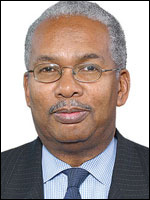 Ernest G. Green is the Managing Director of Public Finance for Lehman Brothers in Washington, D.C. Featured in the 2006 list of Black Enterprise Magazine’s “75 Most Powerful Blacks on Wall Street”, Mr. Green has served as senior investment banker on transactions for such key clients as the City of New York, State of New York, City of Chicago, Port of Oakland, City of Atlanta, State of Connecticut, Detroit Wayne County Airport, Denver Airport, and the Washington Metropolitan Airport Authority.
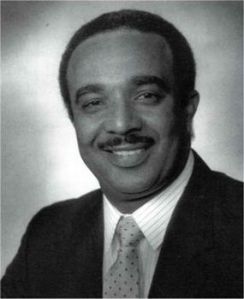 On July 19, 1945, future Little Rock City Manager Mahlon A. Martin was born in Little Rock.
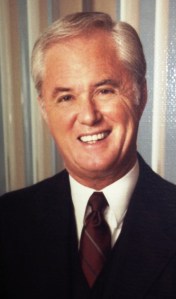 Future Little Rock Mayor James Weldon “Buddy” Benafield was born on July 5, 1927 in Coy, Arkansas. As a child he spent part of his time chopping cotton. He graduated from England High School and then served in the U.S. Navy. Following his stint in the military, he enrolled in Arkansas State Teachers College (now the University of Central Arkansas).
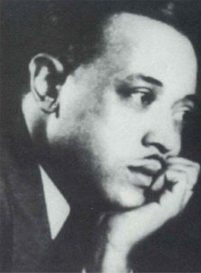 Long known as the Dean of African American composers, Dr. William Grant Still was a legend in his own lifetime.
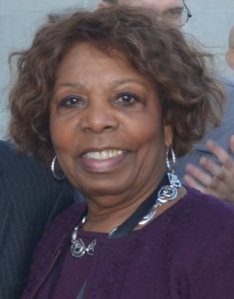 While this headline may say “Little Rock Look Back,” Lottie Shackelford is still very much focused on the present and the future!
 On April 13, 1743, Thomas Jefferson was born in Virginia. Along with Benjamin Franklin, he was one of the first American multi-hyphenate Renaissance men. Author, musician, inventor, diplomat, epicurean, architect, educator, and President. Certainly his writing of the Declaration of Independence was of paramount importance to the US, even if he had never served as President.
 Little Rock Culture Vulture