
Women Making History – Adolphine Fletcher Terry

Photos from the collection of the Butler Center

Adolphine Fletcher Terry was born on November 3, 1882 to former Little Rock Mayor John Gould Fletcher and his wife Adolphine Krause Fletcher.

Raised in Little Rock, in 1889 she moved into the Albert Pike House on East 7th Street, when her aunt transferred the title to her father. That house would be her primary residence the rest of her life.  Her sister Mary Fletcher Drennan never lived in Arkansas as an adult after marriage. Her brother John Gould Fletcher spent much of his adulthood in Europe before returning to Little Rock and establishing his own house, Johnswood.

At age 15, Adolphine attended Vassar. She later credited that experience as broadening her views on many issues.  After graduating at age 19, she returned to Little Rock.  Her parents both died prior to her 1910 wedding to David D. Terry, which took place at what was then known as the Pike-Fletcher House (and today is known as the Pike-Fletcher-Terry House).

She is perhaps best known today for establishing the Women’s Emergency Committee in 1958 and for her subsequent deeding of the family house to the City for use by the Arkansas Arts Center.  But her entire life was based on civic engagement.

She was instrumental in establishing the first juvenile court system in Arkansas and helped form the first school improvement association in the state. She was long an advocate for libraries, serving 40 years on the Little Rock public library board.  Through her leadership, the library opened its doors to African Americans in the early 1950s. Today a branch of the Central Arkansas Library System (the successor the Little Rock public library) is named after her.  Another branch is named after her Pulitzer Prize winning brother.

Adolphine formed the Little Rock chapter of the American Association of University Women, the Pulaski County tuberculosis association and the Community Chest.

In 1958, when the Little Rock public high schools were closed instead of allowing them to be desegregated again, she called Harry Ashmore the editor of the Gazette and exclaimed, “the men have failed us…it’s time to call out the women.”  With this, she formed the Women’s Emergency Committee to Open Our Schools. This group played a major role in getting the four high schools open the following year.

From 1933 to 1942, David Terry served in the U.S. Congress. During that time, Adolphine alternated her time between Washington DC and Little Rock. But she spent much time in Little Rock raising her five children.

After her husband’s death in 1963, she continued to remain active in civic affairs. In the 1960’s, she and her sister deeded the Pike-Fletcher-Terry House to the City of Little Rock for use by the Arkansas Arts Center upon both their deaths.  Following Adolphine Fletcher Terry’s death in 1976, Mary turned over the title to the City.

Adolphine Fletcher Terry is buried in Mount Holly Cemetery alongside her husband. Three of her children are also buried in that plot.  Her parents and brother are buried in a nearby plot.

Her granddaughters and their families carry on Adolphine Fletcher Terry’s commitment to making Little Rock better.

Little Rock Look Back: Little Rock becomes a First Class City

On March 9, 1875, the City of Little Rock became a City of the First Class in Arkansas. It was the first city in the state to receive this designation.

This was in conjunction with the adoption of the Arkansas Constitution of 1874 which created this status.  The Constitution defines them as: “All cities, which at the last federal census had, or now have, a population exceeding two thousand five hundred (2,500) inhabitants shall be deemed cities of the first class.”

March 9 is just one of several dates Little Rock could celebrate as a birthday.

  • January 6, 1866 – Little Rock government resumes operations following the Civil War
  • November 2, 1835 – Little Rock is incorporated as a City
  • November 7, 1831 – Little Rock is incorporated as a Town
  • October 27, 1825 – Little Rock given the right to elect a governing board of trustees
  • June 1, 1821 – Little Rock officially becomes capital of Arkansas
  • April 9, 1722 – Jean Batiste Benard de La Harpe sees Le Petite Roche

There could also be the dates in 1812 when William Lewis built the first home in Little Rock (a shack) or in February 1820 when the first permanent settlement was established.  But neither of those have exact dates that are remembered.

Women Making History: Myra Jones

The late, great Myra Jones was born on March 8. So today we highlight her.
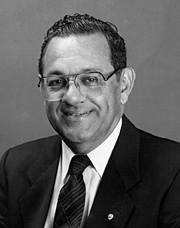
Myra Jones was elected to the Little Rock City Board in 1976. She served eight years on the Board, including four years as Vice Mayor of Little Rock.  She was the first female to serve as Vice Mayor of Little Rock.  In a nod to changing times, she was the first woman to be referred to in the City minutes by her own first and last name instead of being Mrs. followed by her husband’s name.

From 1985 to 1998, she served seven terms in the Arkansas House of Representatives and was the first woman to chair a standing committee:  the City, County and Local Government Committee.

Following her retirement from the legislature, she continued in business. She served on the board of Noram Energy (formerly ArkLa) for seventeen years becoming one of the first women from Arkansas to serve on a Fortune 500 Board. She later served as a local affairs lobbyist for the real estate industry. She once again became a fixture at Little Rock City Hall until her death in 2012.

A graduate of Oberlin College, she was a lifelong musician and would return in the summer to her native South Dakota to play clarinet with the Belle Fourche Cowboy Band. She had first joined the band as a high school senior.  Once it was reconstituted in 1980, the band (complete with white chaps, white hats, and red shirts) would play for the Black Hills Rodeo in Belle Fourche, march in the Fourth of July parade, and perform concerts in the area.

Little Rock Look Back: Suit filed calling to integrate LR public facilities

Attorney Wiley Branton, who filed the law suit

Attorney Wiley Branton, who filed the law suit

On March 8, 1962, 22 members of the Council on Community Affairs filed a lawsuit in U.S. District Court against the city Board of Directors for the desegregation of “public parks, recreational facilities, Joseph T. Robinson Auditorium and all other public facilities.”  The members included journalists, dentists, attorneys, school teachers and other members of Little Rock’s African American professional class.  Attorney Wiley Branton, Sr., filed the suit.

Though the City’s Auditorium Commission was mentioned in the suit, they were not served with papers. So when media contacted them, they made no comment.

Historian John A. Kirk has written, “Members of the City Board were willing to admit that the desegregation of public facilities was ‘a foregone conclusion’ if the case went to court, but they remained committed to fighting the lawsuit if only to buy time to devise other methods to avoid desegregation.”

The decision was rendered in February 1963 that the City must integrate its public facilities.

In 1951, the City’s library facilities had been integrated followed by the bus system in 1956. Both of these had been accomplished without incident.  Of course the same was not said for the integration of the public schools in 1957.

In 1961, there had been attempts to have Robinson Auditorium integrated after Duke Ellington threatened to cancel a concert rather than play to a segregated crowd.  The Auditorium Commission refused to change its policy, and Ellington did not play the concert.

Based on efforts of the Council of Community Affairs working with white business leaders, downtown lunch counters and businesses were integrated starting in January 1963.  The efforts of the Council of Community Affairs and the white business leaders are commemorated in the Arkansas Civil Rights Heritage Trail with medallions in front of the Little Rock Regional Chamber building.

Women Making History – Lottie Shackelford

Lottie Shackelford served as mayor of Little Rock from January 1987 until December 1988. She was Little Rock’s 68th mayor and the first woman to serve in that capacity.

She was first appointed to the Little Rock Board of Directors in September 1978 to fill an unexpired term.  She later was elected in her own right and served until December 1992.  She was the first African American woman to ever serve on a governing body for the City of Little Rock.

She later served two terms on the Little Rock Airport Commission.  She also served as Vice Chairman of the Democratic National Committee from 1989 until 2014. She is the longest serving vice chair of the party.  She has been a delegate to every Democratic National Convention since 1980.

In recognition of all of her achievements, she has been included in the Arkansas Civil Rights Heritage Trail, the Arkansas Black Hall of Fame, and the Arkansas Women’s Hall of Fame.

Women Making History: Sharon Priest

Sharon Priest served as Little Rock’s 70th Mayor from January 1991 until December 1992.  She was a member of the Little Rock City Board of Directors from January 1987 until December 1994.  She had previously been involved with the City Beautiful Commission prior to her service on the City Board.  She continued that involvement and was also a leader of the Arts and Humanities Promotion Commission, serving several terms as chair.

From January 1995 until January 2003, she was the 31st Secretary of State for Arkansas.  She was the first woman elected to the position. (Nancy Hall held it from 1961 to 1963 following the death of her husband, longtime Secretary of State C. G. “Crip” Hall.)

Following her service as Secretary of State, she directed the Downtown Little Rock Partnership from January 2003 until March 2015.

Women Making History – City Director Lucy Dixon

Lucy Dixon was elected to the initial Little Rock Board of Directors in November 1957.  She previously had served for six years on the Little Rock School Board.

Mrs. Dixon is the only woman to have served on both the governing boards of the City and the school district.  Mrs. Dixon chose not to seek a second term and left the City Board on December 31, 1960.

Mrs. Dixon is the first woman to be elected to a City position without her husband having previously held that position.

Her father had a lumber business, in which she worked off and on throughout her lifetime. She served not only as an officer of the business, but had a desk at the office and participated in the daily business.  She was also very active in Methodist Woman functions in Little Rock and Arkansas.