

Razorback Stadium as it would have looked when it was Bailey Stadium
What is now known as Donald W. Reynolds Razorback Stadium first opened in September 24, 1938 as University Stadium. A few days later it was renamed to Bailey Stadium in honor of Arkansas’ then current governor, Carl Bailey. He had just been renominated to a second two year term and was expected to easily glide to a victory in November over a nominal GOP opponent, which he did.
Two years later, Homer Adkins, a former Little Rock alderman who had been aligned with Bailey foe Joe T. Robinson, challenged Bailey as the latter sought a third term. Bailey and Adkins had long been opponents, but had never faced off personally. In the August 1940 primary, Adkins bested Bailey.
The animosity between Bailey and Adkins apparently stemmed from the time that Bailey, as prosecuting attorney, filed charges against a friend of Sen. Robinson. Though the friend was eventually pardoned, Robinson and his political circle did not forgive Bailey. The fact that Bailey backed Brooks Hays, who opposed Robinson, did not help matters. By the mid 1930s, Arkansas Democrats were clustered around either Bailey or Adkins.
Adkins had served on the Little Rock City Council from April 1930 until April 1934. He previously had been Sheriff of Pulaski County. At the suggestion of Sen. Robinson, President Roosevelt had appointed Adkins as collector of internal revenue. Given all of the federal programs that took place in Arkansas throughout the 1930s, Adkins was well positioned to strengthen his political network. He stepped down from the job when he challenged Bailey in 1940.
Obviously, by 1941 the new governor was none too pleased that the football stadium of the state’s flagship university bore the name of his vanquished foe. By the time the 1941 football season came around, the stadium was known as Razorback Stadium. It held that name from 1941 until the September 8, 2001, rechristening with its current name.
And what of Adkins and Bailey? The two longtime foes united to back Sid McMath in his gubernatorial efforts. But the reconciliation was only for political purposes. However, both lie buried in Roselawn Cemetery in Little Rock.
 Little Rock’s 70th mayor, Sharon Priest, celebrates her birthday on September 12.
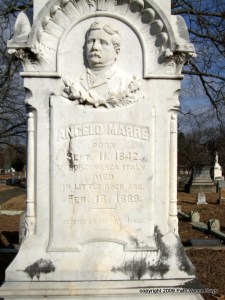 On September 11, 1842, future Little Rock Alderman Angelo Marre was born in Borzonaca, Italy. He immigrated to Tennessee with his parents in 1854.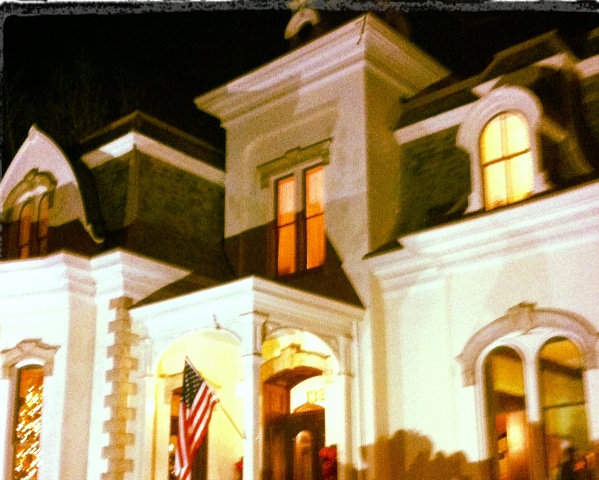
 The Civil War came to an end for Little Rock 155 years ago today (September 10) as Federal troops took control of the city. Unlike some other Southern capitols, there was no long siege or bloody battle.
 Future Senator Joseph Taylor Robinson was born in Lonoke in August 26, 1872. In 1894 Robinson was elected to the Arkansas General Assembly for one term. From 1903 until 1913, he served in the US House of Representatives as a Congressman from Arkansas’ then-Sixth District.
 As has been noted in a previous
  Little Rock Culture Vulture