On Memorial Day pay tribute to Veterans who paid the ultimate price at Mount Holly or other cemeteries

MountHolly Memorial DayToday is Memorial Day – a time to pay tribute to the men and women in uniform who died in service to their country.

As a way to give this recognition, today would be a good day to visit a cemetery. One of Little Rock’s most storied cemeteries is Mount Holly Cemetery. There are veterans from all wars: Revolutionary, War of 1812, Mexican, Civil War, Spanish-American, World War I and II, Korean, Vietnam and Desert Storm.

Founded in 1843, Mount Holly has been called “The Westminster Abbey of Arkansas.” Thousands of visitors come each year. Those interested in history come to see the resting places of the territorial citizens of the state, including governors, senators, generals, black artisans, and even a Cherokee princess. For others the cemetery is an open air museum of artistic eras: Classical, Victorian, Art Deco, Modern––expressed in gravestone styles from simple to elaborate. Some come to read the epitaphs that range from heartbreaking to humorous to mysterious.

Though a City of Little Rock facility, the cemetery is maintained by the Mount Holly Cemetery Association, a non-profit organization with a volunteer Board of Directors. The cemetery is located at 1200 South Broadway in Little Rock. Gates are open from 8 a.m. until 5 p.m. in the summer and from 8 a.m. until 4 p.m. in the winter.

Interred within the rock walls of Mount Holly are 11 state governors, 15 state Supreme Court justices, four Confederate generals, seven United States senators and 22 Little Rock mayors, two Pulitzer Prize recipients, as well as doctors, attorneys, prominent families and military heroes.  Proving that death is the great equalizer (and the J. N. Heiskell lived a very long time) longtime Gazette owner and publisher J. N. Heiskell is buried near two different nemeses: Senator, Governor and demagogue Jeff Davis; and segregationist Congressman Dr. Dale Alford.

Heritage Month – Lincoln Viaduct

ahpp_nom_lincolnaveviaduct_largeToday kicks off the start of the Memorial Day weekend.  Since Memorial Day grew out of the Civil War-based Decoration Day, today’s property is named for a Civil War leader: Abraham Lincoln. The Lincoln Avenue Viaduct is traversed by thousands of cars each day, with most having no idea the name of the structure.  The Lincoln Avenue Viaduct is the arched bridge connecting LaHarpe with Cantrell Road which (literally) bridges downtown with the west along Highway 10.

The Lincoln Avenue Viaduct is a reinforced concrete rainbow arch bridge. It was opened at 2:05 p.m. on Friday, December 28, 1928, and, despite later alterations, it remains particularly well-preserved. The Missouri Pacific Railroad Company, considered the most important railroad company in the state, constructed the bridge amid a series of improvements in Little Rock made necessary by the damage wrought by the infamous spring floods of 1927.

Though the bride was constructed by the railroad, the City had to give authorization to do so, this was accomplished by the passing of Ordinance 4,335, at the May 28, 1928, City Council meeting.

Lincoln Avenue was one of several names for stretches of Highway 10 in Little Rock. By the 1960s, the areas west of the Lincoln Avenue viaduct were all renamed Cantrell in honor of the man who had developed much of the area west of the Heights. The longest stretch of the road already carried that name. There had been an effort to rename Highway 10 (including sections named Lincoln, Q, and Cantrell) in Little Rock for Senator Joseph Taylor Robinson in 1930. He declined the offer because he did not want to diminish the contributions of Mr. Cantrell.  Over time the entire stretch bore the name Cantrell.

The stretches east of the viaduct which involved a couple of names were renamed La Harpe Boulevard in honor of the French explorer who first saw the Little Rock.

Though the street has been renamed, the bridge still carries the name of the 16th President of the United States.

The Lincoln Avenue Viaduct was added to the National Register of Historic Places on April 9, 1990.

Little Rock Look Back: Mayor Thomas D. Merrick

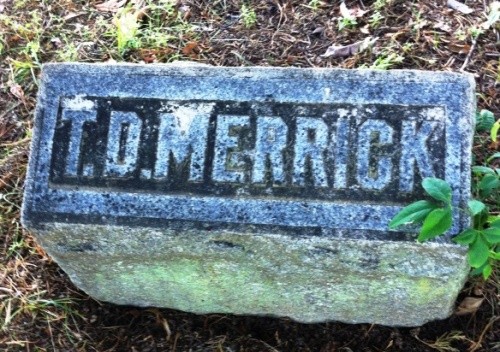
IMG_5546Thomas D. Merrick was born on 23 May, 1814, in Hampden County, Massachusetts. He later moved to Indianapolis IN and Louisville KY before ending up in Little Rock.

On January 17, 1841, he married Anna M. Adams of Kentucky at Christ Episcopal Church in Little Rock. They had seven children: George, Annie, Ellie, Mollie, Lillian, Dwight, and Thomas. Thomas died at age ten.

Merrick became a prominent member of the Little Rock business community, as a merchant and cotton broker. He was involved in Freemasonry, holding the position of Grand Secretary of the Grand Lodge of Arkansas in 1845.

In 1855 Merrick entered into a business partnership with future LR Mayor John Wassell. Merrick was also involved in city politics, serving on the city council and also as mayor from January 1854 to January 1855.

He saw active service during the Civil War. On February 6, 1861, Merrick delivered an ultimatum to Captain James Totten of the United States Arsenal at Little Rock, demanding the surrender of the federal troops.  This was more than two months before Fort Sumter was attached,.

Merrick also raised a regiment of Confederate Arkansas Militia, holding the rank of Colonel of Infantry at Camp Conway, near Springfield, Arkansas.  Following the Battle of Shiloh (April 1862), Merrick resigned his commission and returned to Little Rock.

Merrick died in his home in Little Rock on March 18, 1866.  He is buried in Mount Holly Cemetery.

Heritage Month – La Petite Roche

IMG_4805Today’s Heritage Month “property” is the oldest in Little Rock.  It is, in fact, THE Little Rock.

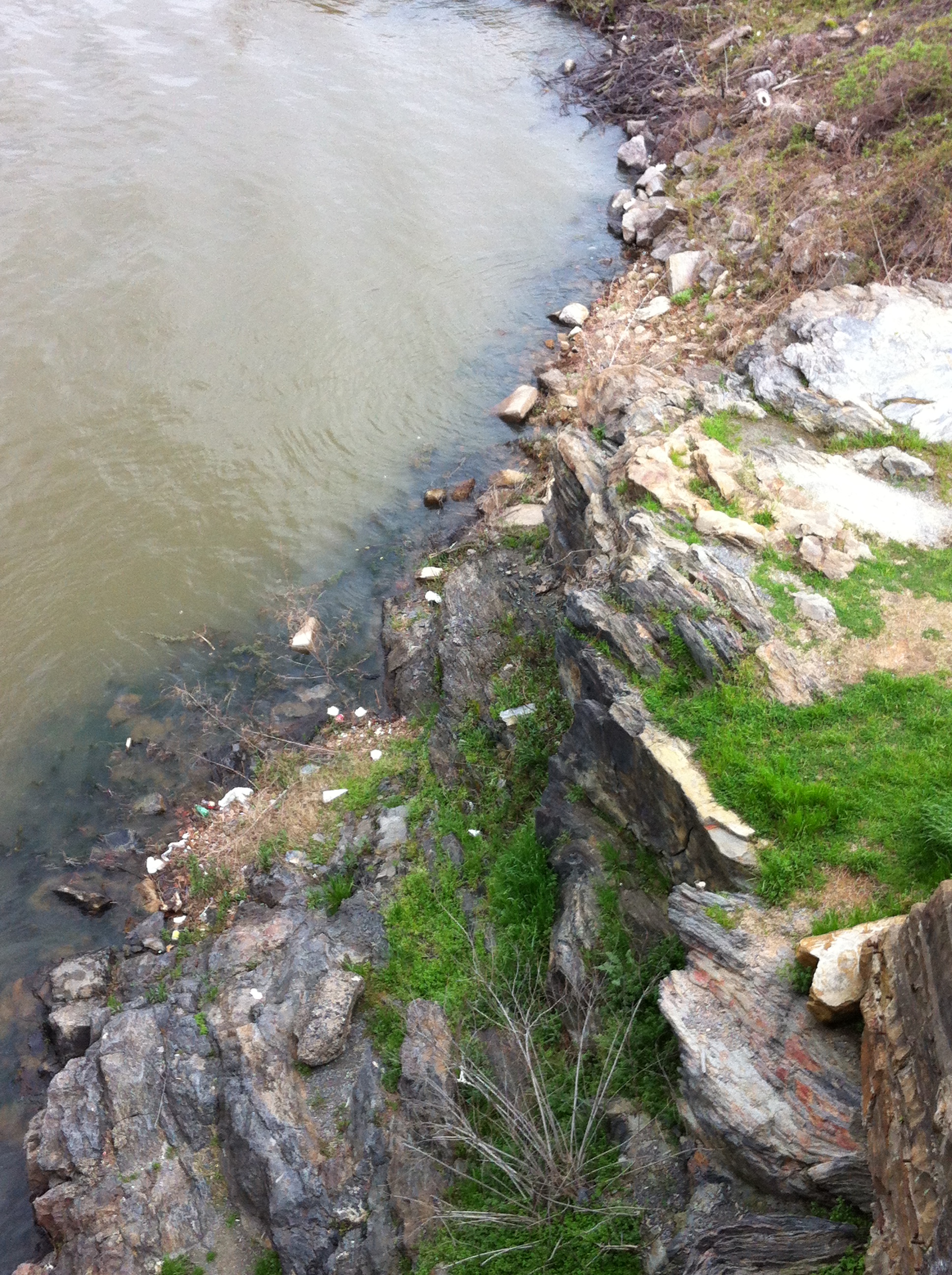
On April 9, 1722, French explorer Jean-Baptiste Bénard de La Harpe rounded the bend of the Arkansas River and saw La Petite Roche and Le Rocher Français.

Though La Harpe and his expedition are the first Europeans documented to have seen La Petite Roche, the outcropping of rocks was well-known to the Quapaw Indians in the area.  The outcropping jutted out in the Arkansas River and created a natural harbor which provided a perfect place for boats to land.

The rock outcropping is the first one visible along the banks of the Arkansas River.  It marks the place where the Mississippi Delta meets the Ouachita Mountains.  Geologists now believe that the Little Rock is not the same type of rock as the Ouachita Mountains and more closely matches the composition and age of mountains in the western US.

In 1813, William Lewis became the first European settler to live near La Petite Roche but only stayed a few months.  Speculators and trappers continued to visit the area throughout the 1810s. During that time, the outcropping became known informally as the Little Rock.

La Petite Roche had become a well-known crossing when the Arkansas Territory was established in 1819. The permanent settlement of ‘The Rock’ began in the spring of 1820, and the first building has been described as a cabin, or shanty, and was built on the bank of the river near the ‘Rock.’ In March 1820, a Post Office was established at the ‘Rock’ with the name “Little Rock.”

Over the years, La Petite Roche was altered.  In 1872, Congress authorized the building of a railroad bridge. A pier for the bridge was built at the location of the La Petite Roche which caused the removal of several tons of rock.  The bridge was never built.  When the Junction Bridge was built in 1899, even more rock was removed in the process of erecting part of the bridge on top of the rock.  It was not viewed as being disrespectful of the City’s namesake at the time.  Indeed, it was viewed as a testament to the sturdiness of the rock.

In 2010, La Petite Roche plaza opened in Riverfront Park.  It celebrates the history of La Petite Roche and explores its importance to various aspects of Little Rock’s history and geography.

The Little Rock was added to the National Register of Historic Places in October 1970.

Little Rock Look Back: Dan T. Sprick

SprickFuture Little Rock Mayor Dan T. Sprick was born on May 19, 1902.  He served three terms on the Little Rock City Council (from 1935 to 1941).  In 1945, he was elected Mayor of Little Rock and served one term. During his tenure on the City Council, he was the sole vote against locating Robinson Auditorium at Markham and Broadway.  He had favored another location.

He was not alone, however, in being held in contempt of court and spending part of the day in jail.  On Monday, December 4, a dozen of Little Rock’s aldermen (which included Sprick) reported to the county jail to serve sentences for contempt of court. The previous Monday, the twelve council members had voted against an ordinance which had been ordered by the judge in an improvement district matter. The other aldermen had either voted in the affirmative or had been absent. Because the twelve had refused to change their votes since that meeting, the judge ordered them jailed.

Mrs. C. C. Conner, the only female, was not jailed but was fined $50. The eleven men were held at the jail, though not in cells. In order to get out of jail, the judge gave the aldermen the chance to change their votes. The mayor asked the judge to let them leave the jail to attend the meeting at City Hall, which was nearby. He requested that the city be allowed to maintain “what little dignity remained” by not having the meeting at the jail. The judge relented, and the aldermen were escorted by deputies to the council chambers. After the aldermen changed their votes, the judge suspended the remainder of their sentences.

His tenure as Mayor was relatively quiet. He took office the same month that World War II ended. While in office, the Sprick administration was marked by growth in the city budget and in city positions. As a part of that growth, there were many more new purchases taking place which had prompted extra scrutiny of the City’s purchasing procedures. A thorough investigation toward the end of his tenure found no malfeasance or misfeasance, it did note that the city needed to do a better job of anticipating cash flow. Much of the City’s focus during the Sprick tenure was on growth and keeping up infrastructure needs.

Sprick later served for ten years in the Arkansas State Senate (from 1961 to 1970).  During his tenure in the Senate, Sprick was closely aligned with Gov. Orval Faubus.  When the Little Rock high schools had been closed a year to ensure segregation, Sprick had served on the board of a private school set up by some of the leaders of the segregation movement.

His time in the Senate was also marked by controversy.  He was one of three Senators to opposed Muhammad Ali’s speaking at the University of Arkansas at Fayetteville.  After an Arkansas Gazette editorial lambasted him, Sprick sued the paper for libel. The Gazette settled with him out of court because his health was poor.

Sprick died in January 1972.

Happy Birthday Mayor Stodola

colr_mayor_mark_stodolaToday, May 18, is the birthday of current Little Rock Mayor Mark Stodola.

Mark Stodola was elected as Mayor for the City of Little Rock, beginning his term in January 2007 and re-elected in 2010 and 2014.  Mayor Stodola has been key in promoting the revitalization of Little Rock’s Main Street, resulting in the City having been awarded a “Greening of America’s Capitals Grant” from the Environmental Protection Agency and an “Our Town Grant” from the National Endowment for the Arts for the creation of an Arts District in the heart of the downtown core.  The UA’s Community Design Center, which includes faculty and staff members from the school, won a 2014 Honor Award from the American Institute of Architects for its work on the Creative Corridor, on which it collaborated with Marlon Blackwell Architect of Fayetteville.

Prior to becoming Mayor, he served as a senior partner in the Little Rock Law Firm Catlett & Stodola, PLC.  While at that firm, he served as General Counsel to the Little Rock Airport Commission.   Having previously served the City of Little Rock as its City Attorney for six (6) years, he was elected as Prosecuting Attorney for the 6th District in 1990 and was re-elected again in 1992 and 1994.   Mayor Stodola is Past President of the Arkansas Prosecuting Attorneys Association and the Arkansas City Attorneys Association, as well as Past Chair of the Municipal Operations Section of the International Municipal Lawyers Association.  In addition, he is a member of various State, regional and national legal and professional associations.

Mayor Stodola is a graduate of Leadership Greater Little Rock, and served as Chair of Class 16 for that program. In addition, he is a member of the Heights Neighborhood Association and serves as Co-Chair of the Downtown Partnership’s Main Street Task Force.  Mayor Stodola has served on the Board of the Arkansas Repertory Theatre (for which he was the attorney who incorporated the Rep) and is Past-President of the Quapaw Quarter Association and the Historic Preservation Alliance of Arkansas.  He has worked with the Big Brothers/Big Sisters Program and is currently a member of the Rotary Club of Little Rock.

Mayor Stodola graduated from the University of Iowa with a double major in Political Science and Journalism, and received his law degree from the University of Arkansas School of Law in Fayetteville.  Mayor Stodola is married to Jo Ellen and has three (3) children:  a daughter, Allison; and twin sons, Robert and John Mark.

Heritage Month – Curran Hall

Curran HallCurran Hall, sometimes known as the Walters-Curran-Bell House, stands at 615 East Capitol Avenue and is one of the few remaining antebellum properties in Little Rock.  It was built in 1842 and was listed on the National Register of Historic Places on January 1, 1976.

Curran Hall was constructed in the Greek Revival style. The original one-story structure of the house was made with walls three bricks thick, cypress interior and exterior, and solid wood trimming and was settled on a raised foundation. The original interior floor plan was a four-room, central-hall type, although it was later added to by various owners. Each of the four rooms contains its original fireplace and classically designed mantel. The original interior of the house remains relatively undisturbed; however, the two rear additions have been fully transformed. In 1848, a children’s playhouse was constructed at the back of the house. The existing playhouse was reconstructed in the 1960s with materials from various historic houses in Little Rock.

Over the years, Curran Hall has been owned by several important Arkansas families. It changed hands fairly frequently from 1842 until the 1881.  At that point in time, Mary Eliza Bell, the daughter of Gazette founder William E. Woodruff moved in.  Her descendants stayed in the house until 1993.  In 1996, the structure was sold to the City of Little Rock.  The City’s Advertising & Promotion Commission and a private foundation raised money to restore the building.  After six years and $1.4 million, the house was formally opened to the public as the Little Rock Visitor Information Center on May 18, 2002.

In March 2007, the Quapaw Quarter Association took over the management of Curran Hall as the City’s official visitor information center.  The building is open daily for visitors to tour as well as learn about activities throughout the City.

Today, (Sunday, May 10), Curran Hall is one of the featured properties on the 51st Annual Quapaw Quarter Association Spring Tour of Homes.