Mother’s Day Little Rock Look Back: Eliza Bertrand Cunningham, Founding Mother of Little Rock

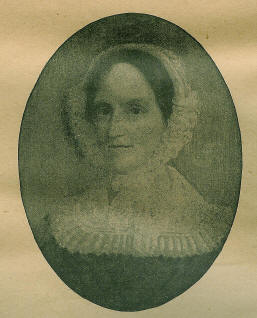
Eliza CunninghamEliza Wilson Bertrand Cunningham was the First Lady of Little Rock.  She literally was the first lady and the founding mother.

She became the first permanent female resident when she joined her husband Matthew Cunningham in Little Rock.  She gave birth to Chester Ashley Cunningham, the first baby born in Little Rock, as well as several other children with Cunningham.  When he became the first Mayor of Little Rock, she was the first First Lady of Little Rock. They hosted the first Little Rock Council meeting at their house on what is now the block downtown bounded by Third, Main, Fourth and Louisiana Streets.  Her son Charles P. Bertrand, from her first husband, later served as Mayor of Little Rock, making her the only woman to be married to a Mayor and be mother of a Mayor.

Born in Scotland in December 1788, she emigrated with her parents to the United States as a young girl.  In 1804 or 1805, she married a French businessman, Pierre Bertrand in New York City.  She lived in New York City, while he traveled to his various business ventures.  He never returned from a trip to his coffee plantation in Santo Domingo and was presumed to have died in 1808 or 1809.  She and Bertrand had three children, Charles Pierre, Arabella and Jane. (Jane may have died in childhood, because records and lore only indicated Charles and Arabella coming to Little Rock with their mother.)

Eliza married Dr. Matthew Cunningham in New York City.  He later moved to Saint Louis and settled in Little Rock in early 1820.  Eliza and her two children came to Little Rock in September 1820.  In 1822, she gave birth to Chester Ashley Cunningham, the first documented baby born in Little Rock.  (There are unsubstantiated reports that at least one slave child may have been born prior to Chester.)  She and Matthew also had Robert, Henrietta, Sarah and Matilda.  The latter married Peter Hanger, after whom the Hanger Hill neighborhood is named.

Dr. Cunningham died in June 1851.  Eliza died in September 1856. They and Chester (who died in December 1856) are buried in the Hanger family plot at Mount Holly Cemetery.

Heritage Month – Corydon Wassell House

Corydon WassellThe Corydon Wassell House is a one-and-one-half story wood framed Victorian cottage.. The 1882 house is located at 2005 South Scott Street, outside both the Governor’s Mansion and MacArthur Park Historic Districts. There are quite a few Victorian cottages in the vicinity, but it was added to the National Register of Historic Places on June 2, 2000, in recognition of it being the birthplace and residence of Dr. Corydon Wassell.

Born in Little Rock on July 4, 1884, Corydon McAlmont Wassell (called “Cory”) was born to Albert and Leona Wassell. A grandson of Little Rock Mayor John Wassell, he graduated from what is now UAMS in 1909. In 1911, he married Mary Irene Yarnell, with whom he would have four children.  In 1914, the couple volunteered to be Episcopal missionaries in China.  He served there until 1927. Following Mary’s death and his remarriage, he and new wife Madeline Edith Day Wassell returned to Arkansas in 1927.

Dr. Wassell resumed his medical practice. Given his experience with malaria in China, he proved to be an asset fighting malaria among Civilian Conservation Corps members in Arkansas. He was subsequently called to active duty in the Navy in 1936 and stationed in Key West.

After the outbreak of World War II, he was stationed in Indonesia. In early 1942, he refused to abandon his patients after the Japanese started invading Indonesia. Instead, he was able to evacuate a dozen severly wounded men over 150 miles to get to a ship. It took ten days for the ship to get to Australia, during which time it was attacked numerous times.  His official Navy Cross citation notes that he disregarded personal safety while caring for others.

He became an instant international hero. During the early days of the war, his heroism was one of the few bright spots. James Hilton wrote a biography of him; President Roosevelt praised him in a fireside chat; Cecil B. DeMille filmed a movie with Gary Cooper playing him.

Dr. Wassell’s first cousin, Sam Wassell, was serving on the Little Rock City Council at the time. He would later serve as Little Rock Mayor.

After retiring from the navy with the rank of rear admiral, Dr. Wassell worked for a time without pay at a charity hospital in Hawaii. He eventually returned to Key West, Florida. Later, he returned to Arkansas to be near family. He died on May 12, 1958, in Little Rock at the age of seventy-four. He is buried at Arlington National Cemetery.

Little Rock Look Back: Rabbi Ira Sanders

SandersIraE_fOn May 6, 1894, Ira Eugene Sanders was born in Missouri.  After receiving an undergraduate degree and rabbinate degree in Cincinnati, he was ordained a rabbi in 1919.  He served congregations in Pennyslvania and New York before coming to Little Rock in September 1926.

Shortly after arriving to lead the B’nai Israel congregation, Rabbi Sanders became active in the Little Rock community.  Among his projects were the Little Rock Community Fund, Little Rock School of Social Work (which he founded), Central Council of Social Agencies, and University of Arkansas Extension Department. During the Great Depression, he helped organize the Pulaski County Public Welfare Commission.  Other areas of involvement over his career included the Arkansas Human Betterment League, Urban League of Greater Little Rock and Arkansas Lighthouse for the Blind.  On November 3, 1930, Rabbi Sanders debated Clarence Darrow about the existence of God in front of a packed house at Little Rock High School.

For his many involvements, he received an honorary Doctor of Humanities degree in 1951 from the University of Arkansas.  Three years later he received an honorary Doctor of Divinity degree from Hebrew Union College’s Jewish Institute of Religion.

A lifelong supporter of a Jewish state, he participated in nineteen bond drives for the state of Israel.  In August 1963, he retired as the leader of B’nai Israel after over 35 years. He would remain as Rabbi Emeritus until his deal in 1985.

In January 1978, Rabbi Sanders tendered his resignation from the Central Arkansas Library board of directors.  The City Board of Directors passed resolution 5873 which noted that he had served for 51 years on the Library Board. He was first appointed in 1926.  He served during 19 different Mayoral administrations from Charles Moyer’s first term through Donald Mehlburger’s.

On April 8, 1985, Rabbi Ira Eugene Sanders died of natural causes.  He is buried in the City’s Oakland Jewish Cemetery.  The Central Arkansas Library System honors his memory with an annual distinguished lecture series.

Heritage Month – Boyle Park

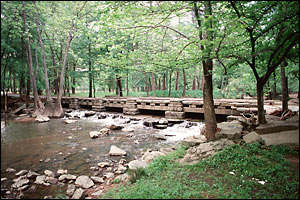
Boyle ParkLocated near the intersection of the western and southwestern neighborhoods of the city of Little Rock, Boyle Park is an approximately 250-acre tract of largely-unimproved woodland donated to the city by Dr. John F. Boyle in 1929. The warranty deed authorizing the transfer of title to the land explicitly stipulated that the park be used for “recreational purposes” only and that should this property ever cease to be used as such the title would revert back to the family and its heirs. At the time of its donation it was only the third public park in the city of Little Rock (the others being MacArthur Park and Allsopp Park).

The park remained largely unimproved until the mid-1930s, when the Civilian Conservation Corps boys arrived (though there seems to be some uncertainty about exactly when the actual construction work began, two different contemporaneous sources reveal that as of the spring of 1935 work had not yet begun, but that by the spring of 1937 work was complete and the unit involved in finishing the work within the park — the 3777th company, originally from West Fork, where they were supposed to be involved in the ongoing construction at Devil’s Den State Park — were wondering where they would be shipped next).

The CCC boys camped at Fair Park (approximately one mile to the northeast) and worked on such improvements to Boyle Park as walls, signage, rest room facilities and a concession building in addition to the resources that survive. Boyle Park forms an historic district that is significant by virtue of its associations with the men that built it, the enrollees of the Civilian Conservation Corps Company 3777, and by virtue of their being outstanding and remarkably intact examples of the Rustic architectural style.

Boyle Park was added to the National Register of Historic Places on September 22, 1995.

Little Rock Look Back: Mayor Lottie Shackelford

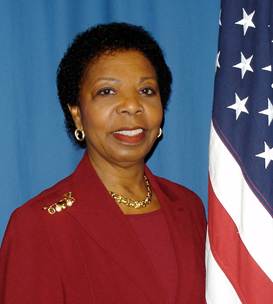
Mayor Lottie_ShackelfordOn April 30, 1941, future Little Rock Mayor Lottie Shackelford was born. Throughout her career in public service she has been a trailblazer.

Active in community activities and politics, she ran for the City Board in 1974 and lost.  But she was appointed to the Little Rock City Board in September 1978 to fill a vacancy.  This made her the first African American woman to serve on he City Board, and indeed on any governing board for the City (during Reconstruction, there were at least three African Americans on the City Council, but they were all men.) She was subsequently elected to a full-term on the City Board in 1980 winning 55% of the vote over three male candidates.

She was subsequently re-elected in 1984 (unopposed) and in 1988 (with 60% of the vote).

In January 1987, Shackelford became the first female mayor of Little Rock when she was chosen by her colleagues on the City Board to serve in that position. She was Mayor until December 1988.

From 1982 until 1992, she served as Executive Director of the Arkansas Regional Minority Purchasing Council.  She left that position to serve as Deputy Campaign Manager of Clinton for President.  She subsequently served on the Clinton/Gore transition team. She later served on the Overseas Private Investment Corporation from 1993 to 2003. She was the first African American to be in that position.

A graduate of Philander Smith College, she has also studied at the Arkansas Institute of Politics at Hendrix College and the Kennedy School of Government at Harvard University.

Mayor Shackelford has also served on numerous boards including the Little Rock Airport Commission, Philander Smith College, Chapman Funds (Maryland) and Medicis Pharmaceutical Corporation (Arizona).  She has been the longest serving Vice-Chair of the Democratic National Committee.

Mayor Shackelford was in the first class of inductees for the Arkansas Black Hall of Fame.

Little Rock Look Back: Major Nicholas Peay

LR sealOn April 28, 1784, in Virginia, future Little Rock Alderman (and acting Mayor) Major Nicholas Peay was born the eleventh of at least thirteen children.  (His gravestone lists a May date for his birth, but other records indicate April 28, 1784.) A veteran of the War of 1812 and the Indian Wars, he later moved to Kentucky (where he met and married his wife, Juliet Neill, in 1814) before settling in Arkansas on September 18, 1825.  At the time, they were the ninth family to set up residence in Little Rock.

After arriving in Little Rock, he bought the Little Rock Tavern. This started a fifty year tradition of his family owning taverns and hotels in Little Rock. In 1828, he was appointed Assistant Postmaster of Little Rock.  From 1825 to 1831, Little Rock residents were allowed to elect five Trustees prior to the formal incorporation. Major Peay was one of those who served on the Board of Trustees.

He later served on the Little Rock City Council, and in 1839 served for seven months as Acting Mayor due to the prolonged absence of Mayor Jesse Brown.  In 1841, his friend Gen. Zachary Taylor, paid a visit to Little Rock and stayed with him on the General’s way to Fort Smith.

Nicholas and Juliet Peay had at least eleven children, though only five appeared to have lived until adulthood. One of those, Gordon Neill Peay, served as Little Rock’s 23rd Mayor from 1859 to 1861. Other descendants of Nicholas Peay who followed him into public service include his grandson Ashley Peay, who was an Alderman in the 1920s (son of John Coleman Peay) and great-great-grandson Joseph B. Hurst (a great-grandson of Mayor Peay), who was a City Director from 1967 to 1970. In addition, Hurst’s daughter-in-law, Stacy Hurst served three terms on the City Board from 2003 to 2014; she is now Director of the Department of Arkansas Heritage.

Major Peay’s egg-nog recipe has been passed down for generations. It is the inspiration for the Historic Arkansas Museum yearly Nog-Off.  This past year, museum director Bill Worthen and his daughter were the sixth and seventh generation of the family to make Peay’s egg-nog. The Worthens are descended from Mayor Peay’s son who was also named Gordon Neill Peay.

Major Nicholas Peay is buried with his wife and many other family members in Mount Holly Cemetery.

Little Rock Look Back: Mayor Sam Wassell

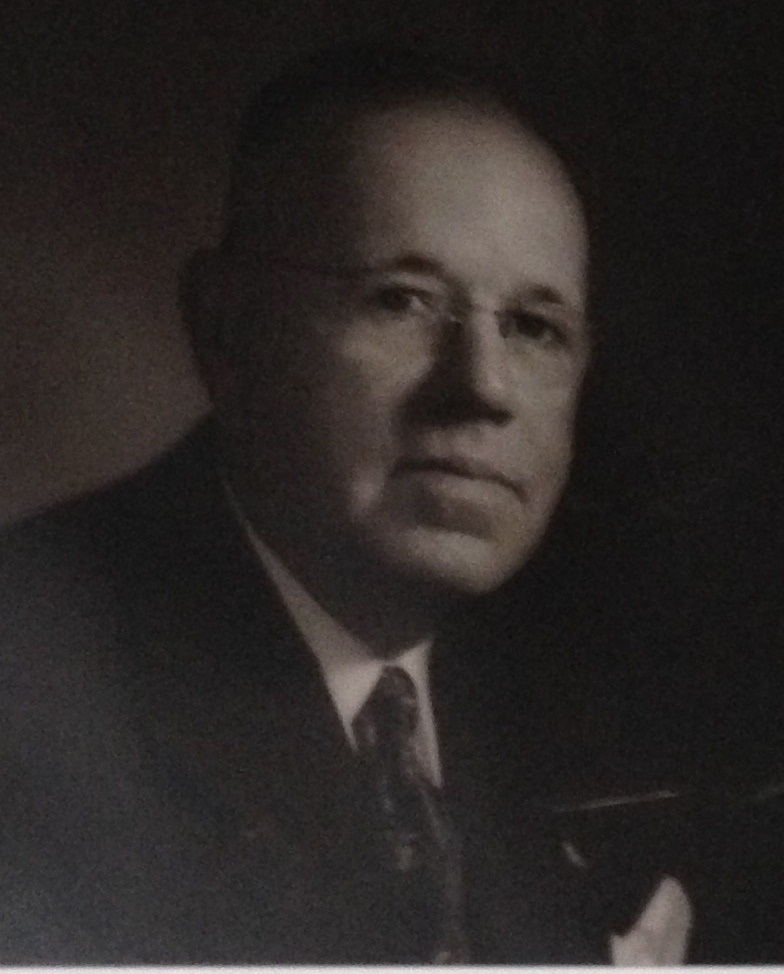
S WassellOn this date in 1883, future Little Rock Mayor Sam M. Wassell was born.  His grandfather John W. Wassell had been appointed Mayor of Little Rock in 1868.  He is the only Little Rock Mayor to be a grandson of another Little Rock Mayor.

Sam Wassell served on the Little Rock City Council from 1928 through 1934 and again from 1940 through 1946.  He is one of the few 20th Century Little Rock Mayors who previously served on the City Council.

Wassell was an attorney.  He practiced law privately and also served as an Assistant US Attorney.  In 1930, he ran unsuccessfully for the Democratic nomination for the US Congress representing the 5th Congressional District, which at the time included Little Rock.

Wassell ran for Mayor in 1947 and was unopposed in the general election.  He was unopposed in his bid for re-election in 1949.  During his second term, President Harry S. Truman visited Little Rock.  In 1951, he sought a third term as Mayor.  No Little Rock Mayor had sought a third consecutive term since 1923.  Though he received the Democratic nomination, the Republican party nominated Pratt Remmel who defeated Wassell by a 2 to 1 margin.

With a new USS Little Rock under construction, it is interesting to note that Mrs. Sam Wassell christened the previous USS Little Rock in 1944.  At the time, she was a City Councilor’s wife.

Mayor Wassell died on December 23, 1954 and is buried at Roselawn Cemetery in Little Rock.