Little Rock Look Back: Roswell Beebe, LR’s 16th Mayor

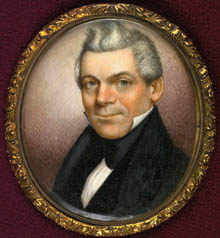
Mayor BeebeOn December 22, 1795, future Little Rock Mayor Roswell Beebe was born in Hinsdale, New York.  His family were wealthy English immigrants.  At seventeen, Beebe went to New Orleans and fought with Andrew Jackson in the 1815 Battle of New Orleans.  He stayed in the Crescent City for the next two decades building successful lumber and brick businesses.

Due to health concerns, he moved north to a drier climate in 1834.  After first stopping in Fulton, Arkansas, he settled in Little Rock in 1835 at the age of forty.  He stayed at the home of Chester Ashley and married Ashley’s sister-in-law, Clarissa Elliott.  He and Clarissa had two children, Roswell and Cora.

For nearly 30 years, Little Rock had a complicated history of deeds, titles and land ownership.  In 1839, Beebe went to Washington DC and received the original patent from President Martin Van Buren.  He then set about clearing up the land and title issues, as well as drawing up a plan for the city and laying off blocks and streets.  Beebe deeded the streets and alleys to the City for a dollar.  He also donated the land on Markham Street for a new State Capitol building (now home of the Old State House Museum).  Along with his brother-in-law Chester Ashley, he donated the land for the establishment of Mount Holly Cemetery.

In 1848, Beebe was elected to the Little Rock City Council.  The following year, he was elected Mayor.  He served as Mayor of Little Rock from April 1849 to February 1850.

While his primary business focus in the 1840s had been real estate, in the 1850s he focused on railroads.  Beebe was named president of the Cairo and Fulton Railroad Company in 1853.

While on a visit to New York, Beebe died on September 27, 1856.  His body was returned to Little Rock, and Roswell Beebe was buried at Mount Holly Cemetery.  The town of Beebe, Arkansas, is named in his honor.

Little Rock Look Back: Dr. John J. McAlmont, LR’s 25th Mayor and a founder of UAMS

McAlmontJohnJ_fFuture Little Rock Mayor John Josephus McAlmont was born on this date in 1821 in New York state. (Various reports give his birth date as December 22 — but the family reports December 19 as the date.)

After studying medicine in Pennsylvania and Ohio, he arrived in Little Rock in March 1850 with his family.  After practicing medicine in nearby Benton, he returned to Little Rock in 1852.  In addition to being a physician, he was a pharmacist.

During the Civil War, he relocated his family out of Little Rock (to a spot where the present day community of McAlmont bears his name).  Following the war, he moved them back to the City.  In 1866 he was elected Mayor of Little Rock, the first elected Mayor since local government resumed following the Civil War.

In October 1879, he and seven other physicians founded the Arkansas Industrial University Medical Department in Little Rock. This institution has grown into the University of Arkansas for Medical Sciences.  He served on the faculty of the medical school for several years.

Dr. McAlmont died in September 1896.  He is buried at Mount Holly Cemetery.  In addition to the McAlmont community bearing his name, there is a McAlmont street in downtown Little Rock which was named in his memory.

Little Rock Look Back: Charles Bussey, LR’s 65th Mayor

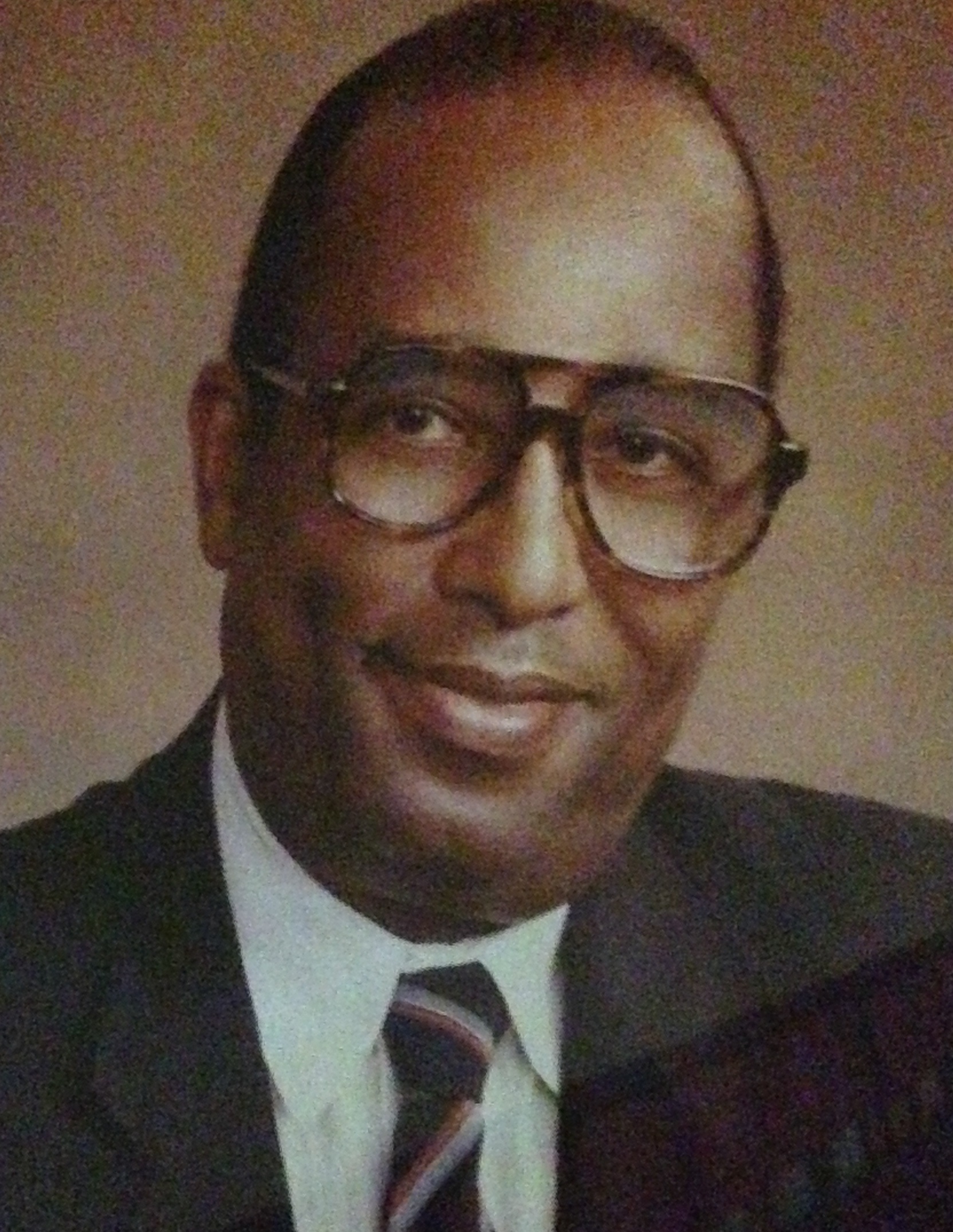
Mayor BusseyFuture Little Rock Mayor Charles Bussey was born on December 18 in 1918.  Throughout his life he was a trailblazer.  He was the first African American Sheriff’s Deputy in Pulaski County and expanded the Junior Deputy program into the African American community.

In 1968 he became the first African American elected to the Little Rock City Board of Directors. He was not the first African American to run for the City Board, but he was the first to win a race.  Mr. Bussey sought support not just from the African American community, but from all sectors of Little Rock.  Apparently, while campaigning in 1968, he deliberately went into the Arkansas headquarters of segregationist presidential candidate George Wallace to see about leaving campaign literature.  A hulking man with a broad smile, he shocked the young receptionist. He was undoubtedly the first (and probably last) African American to enter that campaign headquarters.

He served from 1969-1977 and again from 1979 through 1991.  In 1981 he was selected by his fellow City Directors to serve as Little Rock’s Mayor, which made him the first African American Mayor of Little Rock.  He served as Vice Mayor of Little Rock for a total of 8.5 years which is the longest of anyone in the City’s history.

Throughout his lifetime Mayor Bussey championed youth outreach efforts.  He also was active in the Arkansas Municipal League, National League of Cities, West Little Rock Rotary Club, Elks, Shriners and many other organizations.

In 2006 he was posthumously inducted into the Arkansas Black Hall of Fame.  The previous year, 20th Street in Little Rock was renamed in his honor.

Little Rock Look Back: Gordon N. Peay, LR’s 23rd Mayor

On this date in 1819 future Little Rock Mayor Gordon Neill Peay was born.  The Peay family arrived in Arkansas from Kentucky in 1825.  They quickly became one of Little Rock’s leading families.  Mayor Peay’s father, Nicholas Peay served on the Little Rock Board of Trustees (which existed before the town was incorporated) and later served on the City Council and was acting mayor.
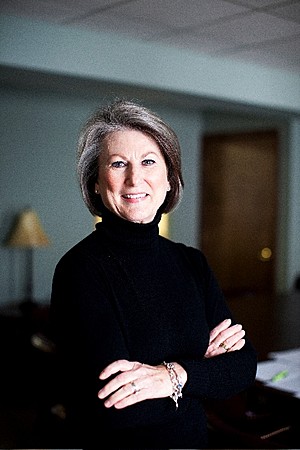
Godon N. Peay served as mayor of Little Rock from 1859 to 1860.  During the Civil War, Peay served as Captain and later Colonel of the Capital Guard.  He later received a pardon from the federal government.

The Peay family owned the Peay Hotel, Little Rock’s first hotel, and were also co-founders of what became Worthen Bank.  They were also a founding family of Christ Episcopal Church. Mayor Peay later served as Pulaski County Chancery Clerk.

He died on December 14, 1876, and is buried at Mount Holly Cemetery along with many members of his family.  A nephew of his, Ashley Peay, served on the City Council in the 1920s.  Mayor Peay’s great-grandson Joseph Barber Hurst, Sr. served on the Little Rock City Board of Directors from 1967-1971. His great-great-granddaughter-in-law Stacy J. Hurst concludes twelve years of service on the City Board of Directors later this month.

LR History, Cultural advocate Sharon Priest to retire from Downtown LR Partnership

Photo courtesy of the Downtown Little Rock Partnership

Photo courtesy of the Downtown Little Rock Partnership

The Downtown Little Rock Partnership announced today that Sharon Priest, the Partnership’s executive director will retire at the end of January.  Priest has been a longtime advocate for and supporter of Little Rock’s cultural life since the 1980s.

“For more than a decade, Sharon has served as our executive director and under her leadership, the Downtown Little Rock Partnership has helped facilitate tremendous growth for downtown.   Her guidance and expertise has been instrumental in the Partnership’s success and set the bar high for the next director,” said Susie Smith, president of the Downtown Little Rock Partnership board of directors. “On behalf of the board, we wish to thank Sharon for all her hard work and we appreciate her dedication to the growth of downtown Little Rock.”

In January 2003, Priest was selected to serve as executive director of the Downtown Little Rock Partnership (DLRP).  Priest reorganized the DLRP during that first year including rewriting the employee handbook, establishing policies and procedures and facilitating the Partnership’s office move to Capitol and Main. After commissioning a planning study and retreat, Priest placed economic development at the center of the DLRP’s efforts.

Under her leadership, the Downtown Little Rock Partnership has spearheaded the charge for revitalization of Main Street in collaboration with its stakeholders and the City of Little Rock, focusing on the redevelopment of existing structures, streetscape and safety.  In 2011, under Priest’s leadership, the Partnership successfully held the first ever Food Truck Festival on Main Street, a festival that has grown to become a major, destination event for downtown.

On behalf of the DLRP, Priest has facilitated the MacArthur Park Group, a grassroots organization of interested public and private stakeholders in MacArthur Park, through the award-winning MacArthur Park master plan process. She has organized successful clean-up efforts for the park and served as race director for the annual MacArthur Park 5K, a fundraiser for the master plan. Recently, the group raised the money for the first dog park in downtown Little Rock, MacArthur Unleashed Dog Park.

”Throughout my years in public service, one of the accomplishments I am most proud of is the many improvements to MacArthur Park.  I have enjoyed watching this beautiful area of our city become transformed into a vibrant place for all residents to enjoy,” said Sharon Priest.  “Thank you to everyone who helps make the Downtown Little Rock Partnership such a viable organization. Without our many members, city and county leadership and our amazing staff, none of this would be possible and I will miss all of you greatly.”

During her tenure with the Partnership, Priest earned significant recognition for her leadership.  In 2010 she received the prestigious Merit Award from the American Institute of Architects (AIA) Arkansas Chapter for her contributions to the architectural profession. Priest was the 2012 recipient of the Sandra Wilson Cherry Award for excellence in public service. She has also received the VISTA award from Little Rock Parks and Recreation for her work with MacArthur Park.

The board of directors will begin the search for a new executive director immediately.

Little Rock Look Back: Charles P. Bertrand, LR’s 21st Mayor

Bertra1Two hundred and six years ago today, on November 23, 1808, future Mayor Charles P. Bertrand was born in New York.  He was the son of Pierre and Eliza Wilson Bertrand; his father died in 1809 in an uprising in Haiti and his mother eventually remarried.  With her new husband, Dr. Matthew Cunningham, she and the family moved to Little Rock in 1820.

After apprenticing with family friend William Woodruff at the Arkansas Gazette, Bertrand opened the Arkansas Advocate newspaper.  He later studied law under Robert Crittenden and entered the legal profession.

In 1835-1836, he served as State Treasurer for the Arkansas Territory, and in 1836 as secretary for the first constitutional convention. He was a member of the Arkansas House of Representatives from 1840-1841 and 1844-1849.

Bertrand followed in his stepfather’s footsteps and became Mayor of Little Rock.  (Dr. Cunningham had been the first Little Rock Mayor in 1831.)  He was in office from January 1855 through January 1857, serving two one-year terms.  He later served on the City Council and filled in as acting mayor. (Another influence on his upbringing was studying under future Mayor Jesse Brown who taught at the first school in Little Rock.)

Bertrand, as acting mayor, was involved in the negotiations of the surrender of Little Rock to federal troops in 1863.  He also later corresponded with President Lincoln on behalf of Little Rock citizens.  Though a staunch Confederate, his good will toward the Union soldiers and federal officials is credited with helping to save Little Rock from the destruction which befell many other Southern cities.  He is also credited with delaying the start of the Civil War.  Prior to the attack on Fort Sumner, members of the Arkansas Militia were planning to attack the Federal Arsenal at Little Rock during the absence of Governor Rector.  This would have been viewed as an act of war.  Bertrand was able to dissuade them from the attack.  Had he been unsuccessful, the Civil War would have likely started in Arkansas instead of South Carolina.

He had put his considerable fortune into Confederate money during the war. At the Civil War’s conclusion, the family was financially ruined. Though they had vast land holdings, those would be sold off in parcels to pay for taxes.

Bertrand died August 27, 1865, shortly after the conclusion of the Civil War.  He, like his mother, step-father, and several other relatives, is buried in Mt. Holly Cemetery.

The Economic Impact of the Clinton Center focus of noontime discussion

cfiles16593The past ten years have witnessed incredible growth in Little Rock.  This is a panel discussion to highlight the tremendous influence the Center has had on Central Arkansas.

Panelists will include Gretchen Hall, CEO of the Little Rock Convention and Visitors Bureau; Dr. Sadie Mitchell, Little Rock School District Associate Superintendent for Elementary Schools; Bruce Moore, Little Rock City Manager; Grant Tennille, Executive Director of the Arkansas Economic Development Commission; and Van Tilbury, 2015 Chairman of the Little Rock Regional Chamber of Commerce. Panelists will discuss both the economic and social impact of the Center, as well as how it continues to thrive as a vibrant educational and cultural venue for visitors of all ages. The panel will be moderated by David Goins of Fox16.

This program is free and open to the public, but registration is required. Please RSVP to LRevent@clintonfoundation.org.

It will take place at noon today at the Clinton Presidential Center.