
 In the summer of 1981, the touring production of The Best Little Whorehouse in Texas was causing controversy by bleeping out “whore” in its radio ads in the Little Rock market. At the same time, a formerly controversial musical was settling in for a seven week run in the Arkansas capital city at Murry’s Dinner Playhouse.
When Richard Rodgers and Oscar Hammerstein II had originally collaborated with Joshua Logan on South Pacific, the team attracted some complaints for the preachiness of the story as it tackled racism. It was the look at these social issues which probably prompted the Pulitzer committee to make South Pacific only the second musical to win the prize. (It was also the first Drama Pulitzer recipient to be based on another Pulitzer recipient – in this case James Michener’s Tales of the South Pacific.)
With a leading character from Little Rock, South Pacific was caught up in anti-Arkansas backlash during and after the Central High integration crisis. A production on Long Island received boos when the character of Nellie announced she was from Little Rock. The original national tour had a hard time booking spots in the south due to the themes. Shifts in attitudes about race and miscegenation had rendered South Pacific a period piece by 1981 – and a non-threatening summer fare for Murry’s.
Directed by Jack Payne, the cast included Mary Winston Smith, Greg Carter, Bruce Rainey, Leslie Hall (now Basham), Dianne Tack, Chip Huddleston, and Beth Buffalo.
2018 marks the 100th anniversary of the first Pulitzer Prize for Drama being given. To pay tribute to 100 years of the Pulitzer for Drama, each day this month a different Little Rock production of a Pulitzer Prize winning play will be highlighted. Many of these titles have been produced numerous times. This look will veer from high school to national tours in an attempt to give a glimpse into Little Rock’s breadth and depth of theatrical history.
 For much of Little Rock’s history, the City Council did not meet on March 20. (Under City Council rules, meetings were often once a month, and later moved to twice a month – usually second and fourth Monday). Since switching to the City Manager form of government, meetings moved to the first and third weeks of the month. The first instance of the First Day of Spring being a City Board meeting was in 1961.
 Though not a graduate of Little Rock Central High School, Nancy Rousseau is a Central High Tiger through and through.
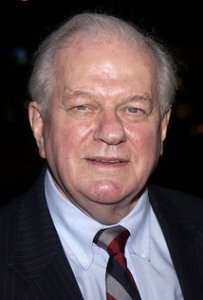 In 1980, future two time Oscar nominee Charles Durning came to Little Rock to film the TV movie Crisis at Central High. In the movie he played Jess Matthews, who was principal at Central High during the desegregation of the school. Girls Vice Principal Elizabeth Huckaby had written a book about her experiences during that time which was published earlier in 1980.
 In 1980, Oscar winner Joanne Woodward came to Little Rock to film the TV movie Crisis at Central High. In the movie she played Elizabeth Huckaby, who was vice principal for girls at Central High during the desegregation of the school. Huckaby had written a book about her experiences which was published earlier in 1980.
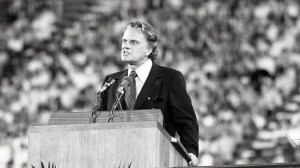 With his death today at the age of 99, a look at two visits Billy Graham made to Little Rock.
 It is possible that journalist extraordinaire Roy Reed appears in archival footage of the Oscar winning documentary “Nine from Little Rock” (Documentary, Short-1964) and Oscar nominated Eyes on the Prize: Bridge to Freedom 1965 (Documentary, Feature-1988). First for the Arkansas Gazette and then for The New York Times, Reed was an eyewitness to history being made. What is not in doubt is that he is a character in the Oscar winning film Selma. In that movie, he was played by actor John Lavelle.
 Little Rock Culture Vulture