Sandwich in History today at the Dan Stowers Building

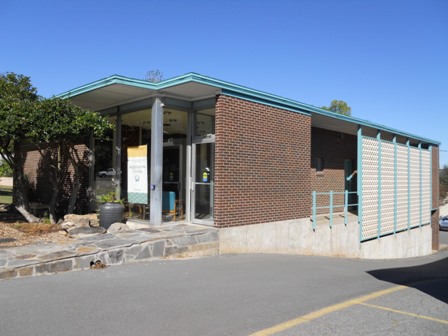
Dan Stowers Office Building_tour_tnThe monthly architectural history program “Sandwiching in History” visits the Dan Stowers Office Building, located at 1516 West Third Street.

Architect Dan F. Stowers, Sr., designed this Mid-century Modern building in 1960 to house his firm. Somewhat unassuming from Third Street, the Stowers Building was oriented to take advantage of the view to the north and provide natural light for the drafting room.

Although the majority of the building’s walls are solid masonry, the northern elevation is composed of a glass curtain wall. This provided the perfect amount of indirect light for the drafting room. Panels of screen block on the building’s eastern side shield an exterior staircase and create an interesting detail.

Sandwiching in History is a program of the Arkansas Historic Preservation Program, an agency of the Department of Arkansas Heritage.


Heritage Month – Chisum House

Chisum HouseBuilt in 1894, the Chisum House (located at 1320 Cumberland Street) is a significant example of modified Queen Anne architecture.  It is notable for its architectural oddity in relation to other buildings in Little Rock.  The Chisum House embodies many of the Victorian period characteristics of irregular shape, towers, and multiple gales and bays.  The Chisum House represents the eclectic manner of late nineteenth-century architectural style in America through its use of these characteristics.

The house was built by and has since been associated with families of long social prominence in Little Rock.  Jason Sowell, who built the house, came from a family who had already been leaders in social life in Little Rock for many years; the family had been one of Little Rock’s earliest families.  Jason Sowell’s daughter married into the Chisum family, who were also among the favored social class in Little Rock and were to remain so for many years.

Sowell’s daughter married Oscar Clifton Chisum in 1892.  Chisum was born in Austin, Arkansas, in 1860.  He was associated with a drug firm in Memphis, Tennessee, until he moved to Little Rock in 1892.  Upon moving to Little Rock he assumed the position of Arkansas-Texas representative of a Louisville, Kentucky, hardware firm.

In 1894 Jason Sowell built a house for himself, his daughter, and her husband at 1320 Cumberland Street in Little Rock.  In 1894, Cumberland Street was considered the “elite” section of town, and residence in the area symbolized social and/or financial success.

The Chisums had one son, O. C. Chisum, Jr., who was born June 13, 1899.  He attended the University of Illinois and later was employed with the Internal Revenue Service.  O. C. Chisum, Jr., was the first member of the Arkansas Industrial Board which was created in 1927 by the Arkansas General Assembly.

O. C. Chisum, Sr., lived in the Chisum House until his death in 1924; his son, O. C. Chisum, Jr., lived in the same house until his death in 1937.

The Chisum House is a significant structure in its architectural style.  It has always been one of the most unusual residences in Little Rock.  The aristocratic style of the house reflects the tastes of the man who built it and of the family it housed for many years.

It was added to the National Register of Historic Places on December 4, 1975.

Heritage Month – Choctaw Station

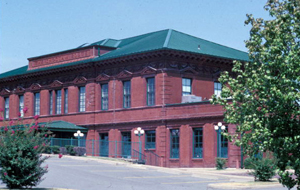
Choctaw StationForty years ago today, on May 6, 1975, Little Rock’s Choctaw Route Station was added to the National Register of Historic Places.

This turn-of-the-century railroad depot is one of the finest examples of railroad, architecture in Arkansas.  This red brick with terra cotta elements building is a two story rectangular structure with one story wings projecting from both the north and south elevations.  A long one story porch covers the passenger loading area along the entire east elevation, with a smaller porch over the entry on the west elevation.

The Choctaw Route Station was built between 1899 and 1901 (records vary) by the Choctaw, Oklahoma and Gulf Railroad.  This railroad amalgamated with many small lines in Oklahoma and extended into Arkansas in the early 1890’s.  Used as a passenger station, the Little Rock terminal building housed two waiting rooms, a baggage room, restaurant and dining room.

When the Choctaw, Oklahoma and Gulf Railroad was sold in 1902, the Choctaw Route Station became the property of the Rock Island Railroad.  Until the mid 1950’s it continued to serve as a passenger station for the Rock Island.  It later served as a warehouse, restaurant and nightclub.

Since 2004, it has been the home to the Clinton School for Public Service as well as Clinton Foundation offices.  Restoration was underwritten by the Roy and Christine Sturgis Foundation. In recognition of this, it is now known as Sturgis Hall.  Former Clinton School Dean David Pryor referred to it as “the little red school house.”

On Earth Day (April 22, 2015), it was announced that Sturgis Hall had received Gold LEED certification from the US Green Building Council.  In August 2009, the Clinton School received a stimulus grant from Governor Mike Beebe to implement sustainable and maintenance practices for reducing the environmental impact of the building. Utility bills costs have already been lowered by $38,000 annually and water usage has been significantly curtailed.

This designation made it the oldest building in Arkansas to be LEED certified and one of the oldest university buildings in the world.  The LEED certification had been a goal of Clinton School Dean Skip Rutherford and Clinton Foundation Executive Director Stephanie Streett.

Heritage Month – Boyle Park

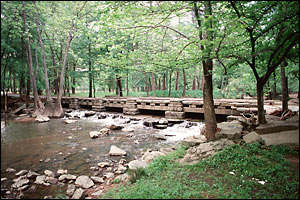
Boyle ParkLocated near the intersection of the western and southwestern neighborhoods of the city of Little Rock, Boyle Park is an approximately 250-acre tract of largely-unimproved woodland donated to the city by Dr. John F. Boyle in 1929. The warranty deed authorizing the transfer of title to the land explicitly stipulated that the park be used for “recreational purposes” only and that should this property ever cease to be used as such the title would revert back to the family and its heirs. At the time of its donation it was only the third public park in the city of Little Rock (the others being MacArthur Park and Allsopp Park).

The park remained largely unimproved until the mid-1930s, when the Civilian Conservation Corps boys arrived (though there seems to be some uncertainty about exactly when the actual construction work began, two different contemporaneous sources reveal that as of the spring of 1935 work had not yet begun, but that by the spring of 1937 work was complete and the unit involved in finishing the work within the park — the 3777th company, originally from West Fork, where they were supposed to be involved in the ongoing construction at Devil’s Den State Park — were wondering where they would be shipped next).

The CCC boys camped at Fair Park (approximately one mile to the northeast) and worked on such improvements to Boyle Park as walls, signage, rest room facilities and a concession building in addition to the resources that survive. Boyle Park forms an historic district that is significant by virtue of its associations with the men that built it, the enrollees of the Civilian Conservation Corps Company 3777, and by virtue of their being outstanding and remarkably intact examples of the Rustic architectural style.

Boyle Park was added to the National Register of Historic Places on September 22, 1995.

Heritage Month – Beal-Burrow Building

Beal BurrowConstructed in 1920, the Beal-Burrow Dry Goods Company Building is believed to have been designed by the architectural firm of Charles Thompson and Thomas Harding (only mechanical drawings are present in the Thompson Archives).

The original owner and user, the Beal-Burrow Company, was founded in 1913 as a wholesale operation and quickly gained prominence on a regional level.  The location of their office and warehouse facilities near the intersection of Main and Markham Streets served to anchor the northern edge of Little Rock’s commercial district.  By 1926, the firm had begun to manufacture work clothes and several floors of this building were devoted to that industry.

In 1955, the Archer Drug Company purchased the building from Berry Dry Goods Company, another wholesale establishment that had earlier bought out the Beal-Burrow partnership.

It is presently part of the Block 2 Development which consists of commercial space on the first floor and loft apartments on upper floors. The Little Rock Tech Park is operating out of space on the first floor of this building.

It was listed on the National Register of Historic Places on June 26, 1995.

Heritage Month – Baer House

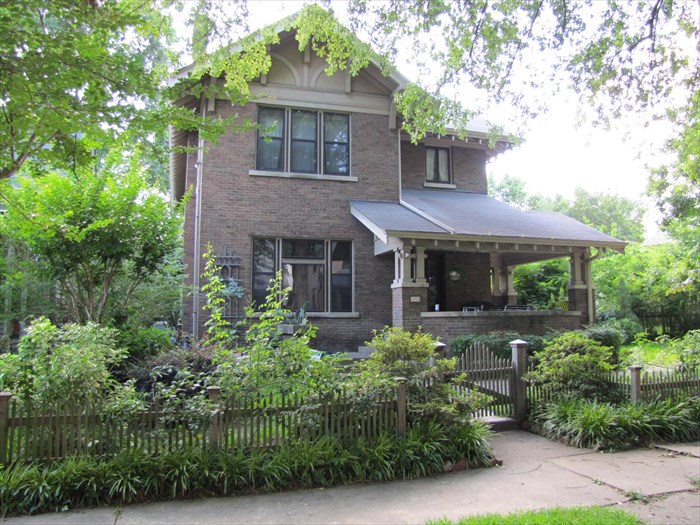
Baer HouseLocated at 1010 Rock Street, the Baer House was designed by the Charles Thompson firm in 1915.

Located in the MacArthur Park Historic District, the house displays a Craftsman Style influence in the abundant use of bracketing and the unusual paired squat box columns resting on brick piers which support the porch, The house has taken an additional historic significance within the district due to the discovery of the original drawings. The Baer House is also an important component of the streetscape and is significant in its representation of the firm’s much used Craftsman design.

It was added to the National Register of Historic Places on June 10, 1975.

Heritage Month – Augustus Garland House

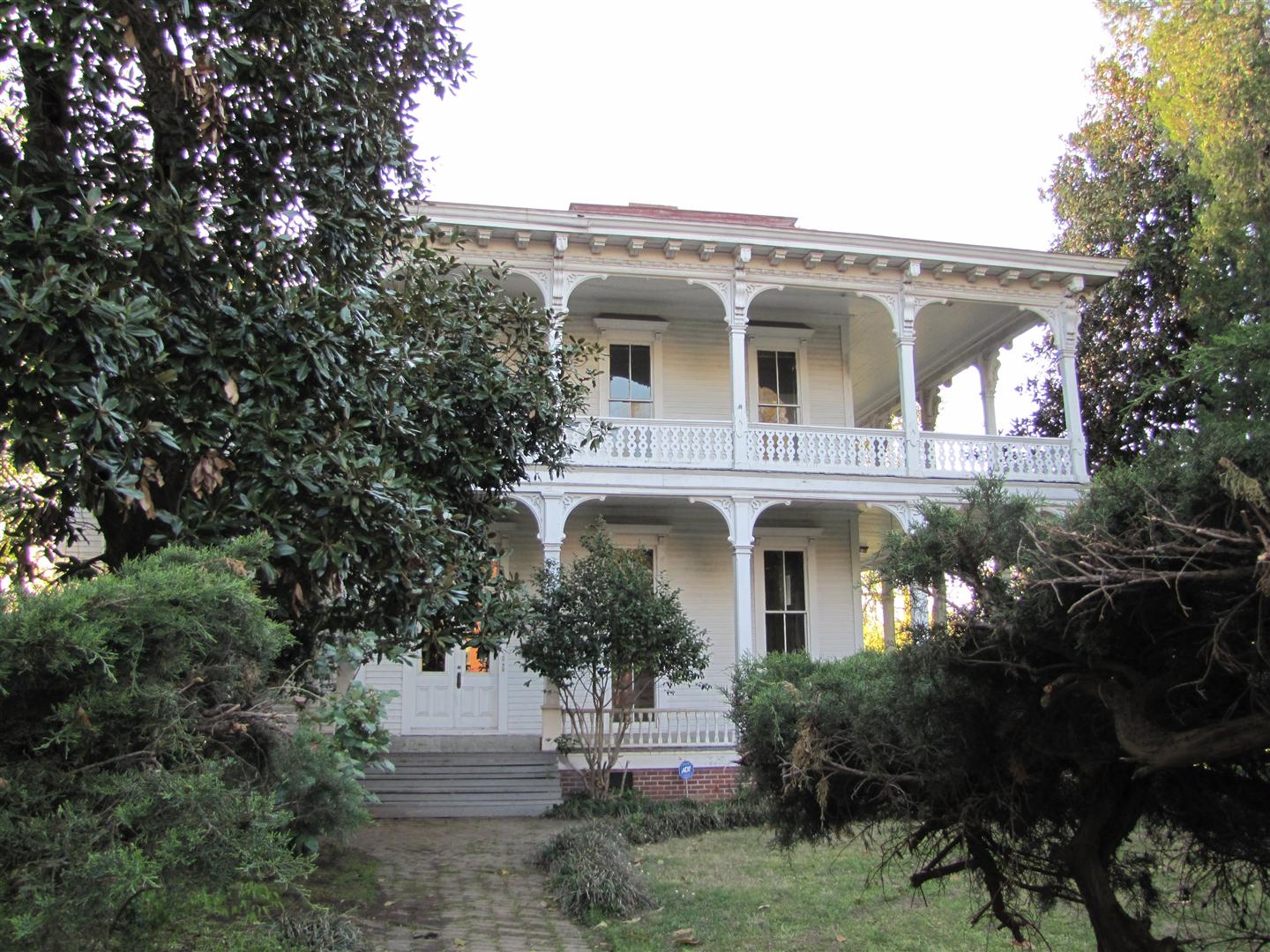
Augustus Garland HouseThe Augustus Garland House, also known as the Garland-Mitchell House, is located at 1404 Scott Street.

Built in 1873, the house has undergone few alterations during the last century. It appears much the same today as when Governor Augustus H. Garland and his family lived there in the 1870’s.  The dominant feature of the house is the two story ell-shaped gallery.

Even though the Garland-Mitchell House has been divided into three separate apartments, the interior still retains its architectural integrity. The wide central hallway which once bisected the entire first floor of the house now terminates at a wall under the stairs which was added in the 1940’s.

Because of the prominent two story porches which are reminiscent of nineteenth century riverboats, the Garland-Mitchell House is locally referred to as “steamboat Gothic” architecture; however, it also has elements of the Italianate Victorian style.

Not only is the building architecturally significant, but as the residence of Augustus Garland, it has other significance.  Augustus Hill Garland was an Arkansas lawyer and politician. He was a senator in both the United States and the Confederate States, served as 11th Governor of Arkansas and as Attorney General under President Cleveland. He was the first Arkansan to serve in the President’s cabinet (and would remain the only one until the Clinton administration). Later, the house served as the residence of Charles Brough while he served as Governor of Arkansas.

It was added to the National Register of Historic Places on June 10, 1975.